The Data Centers Are Coming: Ep. 1 – Planting a Flag
We start at the epicenter: a once-semi-rural Northern Virginia community transformed by Big Tech’s sprawling data centers, sparking a fight for land, autonomy, and transparency.
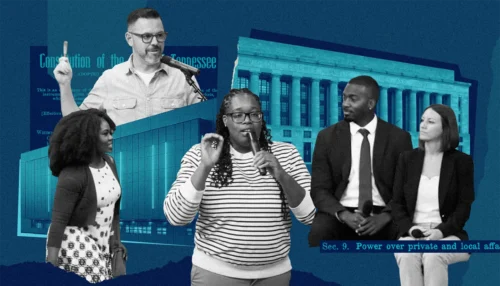
Danny heads to Nashville to emcee a panel hosted by Stand Up Nashville, which has assembled “The Avengers” of the data center fight in the American South. But Nashville has meaningful data center regulations already in place — why is this activist group convening such a powerful panel in a city that appears to have it figured out? First, the Nashville community is demanding more, and who is Stand Up Nashville to rest on its laurels? And second, for the data center fight to succeed, it must grow from a local fight to a statewide, and even a regional one. In talking with these Tennessee changemakers, including a charismatic young legislator making good trouble in the Tennessee House, Danny finds once again that Big Tech’s efforts to divide and isolate us are actually building bridges to bring us together.
In this episode, we hear from:
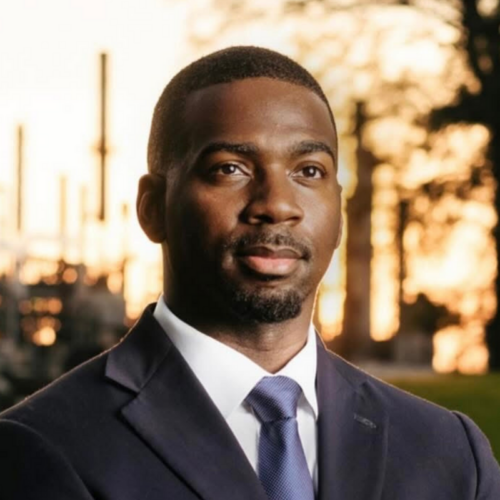
KeShaun Pearson, Director of Memphis Community Against Pollution (MCAP)“What is it that you did when it mattered the most? What did you do when the oligarchs were saying, ‘The water is ours. The land is ours. The air is ours.’ What did you do?”
KeShaun Pearson: And we can’t say it’s impossible Because I’m sitting here My people were brought here on slave ships, shackled together And I’m standing here, sitting here right now talking to you. A future 300 years ago, they could have never imagined, but they died for it. They fought for it. There is a future we have yet to imagine that we have to sacrifice everything in this moment for. Because when we look back, that’s all we will have, is a track record for what we gave, what we sacrificed. What is it that you did when it mattered the most? What did you do when the oligarchs were saying, “The water is ours. The land is ours. The air is ours.” What did you do?
Narration: From the Institute for Local Self-Reliance, this is Building Local Power: The Data Centers are Coming bonus episode two: Fighting for our Lives. I’m your host, Danny Caine.
I’ve always had a soft spot for Nashville. My sister-in-law lived there for a while, which led to some rather rowdy weekend visits. My love for live music kept me coming back, driving the six hours south from Ohio to go to the Bonnaroo music festival, or a show at the legendary Ryman Auditorium, or even for a night or two bouncing around honky tonks in search of some kind of rootsy musical magic.
But it had been more than a decade since I’d been to Nashville, a decade in which I heard the city was changing drastically. I had loosely followed along with this, as I maintain an interest in all of my favorite cities, but I didn’t know, for instance, how the data center debate was playing out in Nashville. This despite this podcast’s careful attention to another Tennessee city, Memphis, and Memphians fight against Elon Musk and his XAi data centers.
That all changed when I got an email from an organization called Stand Up Nashville. They were bringing together data center experts and activists for a convening in Nashville and wanted me to emcee the event. I leapt at the opportunity, and before I knew it I was on a plane.
My first stop in Nashville was at Kahawa, a Black woman-owned African coffee shop with amazing decor and delicious drinks. I was there to sip a delicious lemon and mint concoction, and also to talk to Shani Glapion, who was spearheading the data center initiative for Stand Up Nashville. I started our talk by asking about her advocacy journey.
Danny Caine: Stand Up Nashville isn’t your full-time gig?
Shani Glapion: No. I, organizing doesn’t pay. […] I work with the Equity Alliance, and that was, uh, my first time, like, getting paid to do organizing. But I always have, like, since I moved up here, that was my connection to Black people. Uh-huh. ‘Cause when– my job, it was like all white folks. Uh-huh. And coming from Atlanta, that was a big ch- a big change. So- Yeah … um, that’s how I got into this work of, like, volunteering, and then volunteering just turning to, “Hey, you keep showing up. You want a job?” Oh. And then that also turned into, oh, I’m finding, you know, I love doing this type of stuff. I’ll put things together like this. So, and, and then starting to learn. And then with, with Stand Up Nashville, I’m learning, like, a whole different level of, like, how government works, how, um, bureaucracy works. And so it offers a, a, a different, um, a different angle to the work I’m doing. Sure. Yeah.
Danny: so tell me about, um, Stand Up Nashville.
Shani: one thing I love, and we joke about this, it’s a group of nerds. They’re policy wonks. Like they’re gonna, um, if you say, “Hey, we wanna build this,” we’re gonna do and do the deep dive, and we wanna understand where the money’s coming from, where the money could have went, you know? Um, and then one thing that I bring in is I’m more of the community person, so I don’t deep dive into policy, but I learn a lot from my counterparts and I, um… And so when I talk to them, it’s like, “Hey, how do we make this- Make this palatable for the community. And so, you know, that’s where we are in right now, um, in a bit of with the data center fight.
Narration: I asked Shani how she got into the data center fight in particular.
Shani: at the time, cleaning data centers was my side hustle. So I was in there popping the tiles. I know how cold it is, you know, with all of the cords underneath and, um… And so when they are saying, “These data centers are coming,” I work in telecom, so I have experience in data centers in that aspect, and I, um, have experience with like just cleaning them and know that there are other data centers in the, in the city.
Narration: Through early prep calls with Stand Up Nashville, I learned about two proposed data center projects in the city. One is led by data center developer DC Blox, who hopes to build a 70,000 square foot data center adjacent to the Nashville Zoo. The other is an on-campus data center proposed by Nashville HBCU Fisk University. I asked Shani what Stand Up Nashville’s work around these projects looks like.
Shani: we took it upon ourselves to, like, give people a broader scope, and trying to get understanding of, like, what are these data centers? What types are coming in? What’s the difference between them? And we didn’t want people to just be yelling, like, “No, we don’t want any data centers.” We want you to be able to say why. And beyond, like, right, going right next to the zoo, you know, there was a lot of, like, “The animals, the animals, the, you know, the environment.” I’m like, “Hey, there’s people here too,” you know?
[…] And so as we having communications go out or, um, as we’re having conversations, we are taking it from just zoo and the animals, and it’s like, hey, the community. There’s a broader scope here that’s being impacted. You are impacted. You know? Uh, even if you live in Murfreesboro, which is south of Nashville, I think it’s about 20 miles or something like that, you are still impacted in this because you’re in… Like, we all share the air, you know?
Narration: This inspires follow-up questions about both projects.
Danny: With the, um- The backlash to the zoo plan, was a lot of that driven by people’s concerns over the animals?
Shani: Yes. But also, listen, we find our in. If animals and environment are what, you know, uh, what raises the red flags for you, it’s like, “Okay, well, let’s talk with environmentalists. Let’s…” You know, um, there’s always a bridge into community work, and if that, if crossing that bridge for you is, you know, the animals or the environment and not the people, it’s like, “That’s fine.” You know, “I’m gonna get you over here, but when you over here, we’re gonna talk about the people.”
Danny: And so with the Fisk one, like the school administration just wants to build one on campus? Why would the administration of, like a small HBCU-
Shani: It’s, it’s two parts. So it’s known as the Innovation Center. Um, and you know, people want HBCUs to be this hub. And so I get why, like calling it Innovation Center, like, you know, they’re gonna expand data and, you know, the accessibility to computer programming and stuff on the school.
All of that sounds real great. And if you don’t know anything about data centers or AI or any of that, if I’m coming to sell that to you, I can make it sound really nice. You know, it’s like, oh, and, and this HBCU is living paycheck to paycheck, if you will, right? Yeah. And so I’m like, “Oh, this is gonna be a money maker.
It’s gonna put us on the map. It’s going to,” you know, all of these things that sound real sexy. Um, and then they were also pushing it as a do no harm data center. And we know that, you know, at that size, that’s not, you know, realistic. Um, so I think, I think Fisk, uh, was sold a pipe dream, if you will, and they bought into it.
Narration: Nashville has successfully passed legislation to reign in data center development, largeley in response to these projects. The provisions were passed in July 2026, shortly after the initial wave of controversy around the zoo project. The Nashville regulations include a data center moratorium through the end of the year, as well as banning data centers larger than 500,000 square feet and restricting how close data centers can be built to homes, schools, and parks.
Shani: we do have legislation in place. Um, I would say it’s not bare bones. It’s solid, right? If we had to put it down right now, we have some pretty decent protections for our community.
Narration: This brought up a lingering question I’d had since signing on to help Stand Up Nashville.
Danny: from the outside, like you’ve got pretty good legislation here. Mm-hmm. That’s managed to at least pause, if not stop two major data center projects. Um, so why is Stand Up pushing for more?
Shani: The community needs it, and the community is asking for it. […] it’s because we’ve listened to the community. And so because we’ve done the education or we’ve learned a lot more than the average, uh, citizen, you know, we can- we’re trying to bring them along with this. Uh-huh. So it’s, it’s not Stand Up Nashville like, “Hey, this is what you need.” It’s like, “Hey, you’ve asked for these tighter restrictions, and the legislation doesn’t give that.”
Narration: One animating force behind Stand Up Nashville’s data center work is the idea that this is about more than just Nashville; that to make any significant progress, the data center fight needs to expand from local to statewide and even regional. This makes me think, of course, of Memphis, which we covered in detail in episode 3.
Danny: from the outside, from Ohio, I, I look at Tennessee, I see two major cities, one of which is making progress on the data center issue and one of which is it’s not. Yeah. And like, it’s seems like XAI is kind of having its way in Memphis. Yes. Um, so why– What’s happening in Nashville that’s not happening in Memphis? Like, is there a difference between the cities?
Shani: I mean, the obvious is the Memphis is majority Black. Mm-hmm. So for me, um, the care and concern that doesn’t happen there is because it’s a Black community. […] it’s also, you know, who you elect. Um, I will say we were lucky to have a city council member that wanted to get in front of things. Um, the way XAI came in, I… My understanding is, you know, there was a buy- buyout of, you know, of, uh, political figures there. And so, um- I, it’s not for the people. You know what I’m saying? That, that it’s not the community or the lack of their efforts. It is just really the people that they have in office, and there’s a lot of bait and switch ha- that happens, um, in, in the political space anyway. And I think that that ultimately got Memphis.
Danny: And so then, um, is there a hope that your efforts here can expand beyond Nashville and- Yes … have an impact statewide?
Shani: we as a collective, we as a, a, a Tennessee community need to come together to make sure that all of these pockets, East Nash- I mean East Nashville, East Tennessee, Memphis, everybody is, is covered. And, um, to start that you have to have the, the, the coalition, the, the relationships built. And so we invited a lot of Memphis folks to Nashville because Nashville needs to hear what Memphis is going through with, uh, what Virginia went through, and, and how we all need to come together. And so it’s, you know, it’s locally Nashville now, then Middle Tennessee, then Tennessee, and then it’s the southern region.
And, you know, just build it. If you build it, they will come, that’s what. […] So this is not just a Nashville thing. It’s not even just a Memphis thing. Mm-hmm. Um, it is a Tennessee thing. It is a l- I mean a, a national thing, you know? And so, um, we have to lean on the state.
Narration: At least in Tennessee, leaning on the state is made difficult by one thing: state preemption, or actions by the state legislature that take away local control from municipalities and counties.
Shani: There’s also this preemption, right? Um, anything that we do lo- locally is scrutinized very much by our state government, and they have even, they have preempted a lot of things. […] You just never know with this with this government and this regime we got in this state.
Narration: This reminds me of our friends from episode two in Tucker County, West Virginia – a major frustration they have with trying to prevent the data center in their community is the state’s efforts to circumvent local control of issues like data center development.
To learn more about what it means to try to build local power in a governmental environment like this, I headed straight to the heart of it: the Tennessee State Capitol, a few short miles from Kahawa. I went there because the folks at Stand Up Nashville told me there was a person I simply had to meet: State Rep Aftyn Behn.
As soon as I walked through the metal detectors and found Representative Behn’s office, I had a feeling I knew what they were talking about in saying I had to meet her. In a long hallway of plain wooden office doors, Aftyn’s was completely covered with children’s crayon artwork in support of her efforts to eliminate Tennessee’s grocery tax. While I waited in the hallway, I heard peals of laughter from within. Someone said, “Girl, we have so much tea to catch up on.” Right on time, the door flies open and Aftyn rushes out, young, energetic, and bursting with ideas.
Taking my seat in her office, I noticed a huge Dolly Parton poster over her left shoulder. Over her right was a megaphone, clearly well used, and a biography of Che Guevara. I had to know how a person like Aftyn ended up in the Tennessee legislature.
Representative Aftyn Behn: I’ve been an organizer, legislator. I ran for Congress last year in a really competitive race. And, um, have been living off the leftover money just to, like, fund my organizing, ’cause I’m a organizer first, and I organize legislative campaigns for this office. […] I’m an ethnographer at heart. Uh-huh. And I love storytelling. Yeah. And I’m like, I just, I’m not a legislator that’s gonna have another nonprofit or corporate job. Like, I have to make money doing the things that are gonna move the needle and as the empire collapses.
Narration: Through her work as a legislator and an organizer, Aftyn knows all about state preemption
Aftyn: With state preemption, I, my first, uh, kind of aggressive- egregious, uh, interaction with state preemption. In 2018, I was organizing with Indivisible and in Nashville, uh, a bunch of Black mothers whose kids had died at the hands of police brutality decided to organize and, um, organized to, uh, a petition referendum, uh, and submitted over 40, 50,000 signatures to, to get pol- a police oversight board on the November ballot in 2018.
So, uh, that was a really important step in terms of police accountability for our city and, uh, the next spring, the Tennessee State Legislature came in and defanged it, neutered it, and basically made it a vestige of what its original intention was. And watching that unfold after the blood, sweat, and tears that those moms poured into this effort only to watch it be Uh, dissolved, uh, effectively in front of your eyes is, is a, a jarring experience.
Narration: After talking to Shani and Aftyn, I’m beginning to feel like a city will come up with a good idea and then the state will axe it before anyone can copy it. For instance, Stand Up Nashville folks told me about the community benefits agreement they negotiated with the owners of Nashville’s new soccer stadium, only to watch the state legislature outlaw agreements like it. Or take the case of Chattanooga’s internet:
Aftyn: for example, um, we have one of the few public Wi-Fi networks in the entire country, the Chattanooga EPB system, um, and it’s incredibly popular in Chattanooga, it’s public, and, uh, AT&T and Comcast then lobbied the state of Tennessee to, um, preempt all local control of mu- mu- municipal Wi-Fi networks building, or municipal networks, um, co-ops building Wi-Fi past a certain footprint. So it’s just at any, at any turn, state preemption is kind of staring us in the face,
Narration: I was glad to hear Aftyn bring up the Chattanooga municipal network, because I knew the community broadband folks here at ILSR have worked closely with them. So I asked my colleague Christopher Mitchell to tell me about the network
Christopher Mitchell: Chattanooga is one of the best networks in the United States for internet access. Um, they started offering service in, like, 2010 or somewhere around there. Um, their product that, like… Is, like, the product that most people sign up for, it started off as, like, 15 megabits a second symmetrical. Now I think it’s a gigabit, which is a rise of, I don’t know, like, 40x, and they offer the same price that they did back then. […] I mean, I think Comcast and AT&T literally raise their prices every year or every 16 to 18 months on average, and Chattanooga hasn’t.
Narration: I also wanted to know how exactly the mechanics of state preemption worked in this case
Christopher: The law in Tennessee is, is really quite odd in that T- um, Chattanooga is allowed to offer telephone service anywhere in the state. That’s allowed. But it can only offer the high-quality internet access to where it offers electricity. And so you literally have people, uh, outside the city limits, ’cause Chattanooga’s electric power plant or electric plant board serves, uh, seven, eight communities, something like that, and some rural areas in between them. And so you have people that have the best internet access in America at a reasonable price. I mean, the price hasn’t gone up in, like, 15 years for it. And, um, and then you have people across the street who have nothing, who have AT&T DSL that got turned off
Narration: Many Tennesseans have tried to change the law to allow more networks like Chattanooga’s to be built, as well as the expansion of existing networks. But those folks ran right into a brick wall of corporate power and lobbying.
Christopher Mitchell: There have been numerous attempts to change that law, and in the course of trying to do that, the, uh, like in one case, the subcommittee that was having a vote, there was a vote, and it was, like, nine or 10 people in the subcommittee, and there was 26 lawyers from Comcast and AT&T lobbying it. There was a newspaper article in the Times Free Press that I saw, like, years ago talking about this. It was just… It- That’s the kind of lobbying power that AT&T and, uh, um, uh, C- Comcast would bring, would bring to these fights to preserve their monopoly, basically, to make sure they didn’t face real competition.
Narration: The feeling that the state, at the behest of corporate giants, can overpower local decisionmaking isn’t new; in fact, as Aftyn learned, it’s kind of baked into the structure of Tennessee itself:
Aftyn: there’s also a very interesting genesis story of to why state preemption is so aggressive here. Come to find out my first week in the legislature, we have an incredibly, um, intelligent legislative librarian named Eddie Weeks, who’s upstairs on the eighth floor, and I asked him, like, “Why is… Like, what i- wh- why is it so bad here?” And he said, “Well, uh, in the co- Tennessee State Constitution, the state actually gives birth to the counties and the municipalities. And so there’s an inherent paternalism in the relationship from which the state sees the cities, and that is baked into our Constitution, unfortunately.”
Narration: But Aftyn is seeing cracks in the overbearing power of the state:
Aftyn: I sit on the ag committee, and this year a garbage company, a landfill company, wanted to expand a landfill that was out in rural, uh, Cumberland County. Cumberland? No. Scott County. Rural Scott County up in the upper northeast and almost touches, it does touch the Kentucky border.
And there’s a beautiful, uh, Cumberland Gap State Park, and this company wanted to expand the landfill at the expense of these rural, um, comm- that this rural community who didn’t want it. And the committee chair of the ag- agriculture committee is, he is a corporate, um, he is beholden to corporate power.
And so what you saw was this tension between these local kind of rural, local rural populism against this state kind of corporate rule. And, uh, inevitably they came up almost every week to protest their own party members. They were getting in the, they were pointing in the faces of these Republicans who are, uh, undermining their ability to govern themselves and undermine their, their local needs.
And, uh, it came to a head. I mean, it was really intense and fraught, and I, I couldn’t be more proud of Scott County, and I know that they’ve, they know that they have a friend here in Nashville and, and so forth.
Danny: how does corporate power play into state preemption?
Aftyn: It has everything to do with it. L- corporate lobbyists are the fourth pillar of Tennessee state government, and they are… Unfortunately, they are part of the fabric here, and it’s really, it’s, it’s repulsive to me, and they dictate, I mean, they dictate everything around this building and our legislative agenda. And so I do think that if we neutered corporate power, either making them pay taxes or thwarting their ability to spend money in political elections, we would see, we would see changes in how the state interacts with the local municipalities.
Narration: Living where it’s such a challenge to build local power and local self-reliance takes a toll on residents:
Aftyn: state preemption feels like suffocation. It feels suffocating. You can’t, and I– Nashville is a city that is under occupation from our state government. They have eroded our local control to control our underground They filed a bill to control our underground. They have taken over our airport. They have taken over our downtown. They have mandated that our metro council, uh, uh, be diminished in half. Um, so they, they have… I mean, they’re really, we are under occupation from a m- state force, and I’m waiting for the moment in time when our rural and urban communities across the state understand that this is a fight that involves all of us against this big, bad beast that is the state government.
Narration: Of course, Aftyn is actually a part of the state government, but she’s trying to use that position for good. One way she’s doing that is proposing pragmatic statewide data center legislation.
Aftyn: This is a, uh, brainchild of an intern. […] Crisella, um, who has taken on the data center work in our office, so a few months ago, or, what is time under fascism?
But whenever that was, there was a data center announced in Nashville that would be placed next to the Nashville Zoo. Oh my God, you’re gonna place a data center next to a zebra? Ugh. And the city rallied, and thank God for the communications team from the Nashville Zoo, because they put up that petition, and good for them. […] And, uh, so my interns were super excited about this fight, and they got involved. […] Crisella, uh, wrote a white paper, and what was the, what is the legislative landscape at the state level? […] there was a data center bill that would, um, it forces data centers to either eat the cost, even though they’re getting a sales tax exemption for the energy. But through her research and her white papers, we discovered by soliciting the Department of Revenue that, oh, guess what? They don’t know how much the sales tax exemption is costing us. And so I, in parallel, I’m at legislative conferences all summer with these, these women who are fighting data centers in their own states, and come to find out, oh, Virginia’s, like, going bankrupt over this. And then, oh, to come to find out that Arizona Republican super majority legislature passed a bill to pause the sales tax exemption so they could see the fiscal impact, and then figure out how to move forward and allow the Departments of Revenue to implement the reporting structure necessary to, to monitor the de-aggregated data. So that is what our bill does, and I think it is a moderate bill. It is not one of my messaging f- you know, crazy socialized ideas, right? Which will be implemented once we get rid of kind of this antiquated paradigm up here. But this is a very pragmatic bill. It’s a very pragmatic bill. I think it’ll have bipartisan support, and if the smart Republicans up here see the writing on the wall, they will take my bill and run it, and hopefully pass it
Narration: One factor underlying these legislative efforts is the specter of state preemption coming for data centers and the restrictions communities have enacted against them. I heard from multiple people that this is much more likely if Marsha Blackburn, who’s leading in the polls, is elected governor in November.
Aftyn: with data centers, especially in a state like Tennessee, uh, we’re seeing momentum across the state to define what local control looks like o- over data centers. […] she is not saying this out loud, but her, one of her first policy positions will be to preempt all local control of data centers. Mm-hmm. Uh, and so that is a fight that, and an opportunity I’m excited to be organizing around.
Narration: This is interesting to me – the threat of eliminating community control is actually an opportunity to build community. Again, we see the data center issue threatening to divide people but in actuality uniting them instead. This is confirmed when I ask what Aftyn is hearing from her constituents about data centers.
Aftyn: I have never… I’ve, I’ve been organizing for a decade, and I have never… In, in tough areas, by the way. Uh, not only in Tennessee, but in, in, in tough, especially rural communities across the country. I’ve never seen a more bipartisan disdain for an industry than data centers.[…] It is the fight of the century, and so I’m really excited.
Narration: Through all her data center work, Aftyn is finding that attempts to divide are actually creating community. That’s also the case with Shani and Stand Up Nashville, and ultimately for me too – if not for data centers and big tech’s attempts to divide us, I’d never have come to Nashville to meet all these cool people doing great work.
Aftyn: it’s the opportunity of our generation, and what the sustained fight looks like, I don’t know, because it includes such strange bedfellows. But what I’m hoping this moment provides is a reckoning with the fact that we have more in common than we do Then we don’t. […] and the other side is just taking this opportunity to divide us. But what a… I mean, what an incredible just moment we’re living in. […] I’m hoping it becomes this mass unraveling of thinking and kind of isolated, isolated experiences because the, a tech- unfortunately, technology and corporate monopolization has commodified the public sphere in a way that prevents us from interacting with each other, right? […] Well, guess what? You show up to a town hall, oh look, there’s a local Democratic chair fighting, ch- chair of the party fighting with me against this data center. Uh, and so I really, uh, this decade in particular, especially as the empire collapses, that these corporate projects, especially at the local level, are such an opportunity for us to unravel the authoritarianism that has been, um, has been gifted to us
Narration: All of this – community building, state preemption, data centers – was on my mind later that evening as I headed to Vanderbilt University for the panel I came to Nashville to Emcee. As the panel began, Shani and her co-organizer Manaen Hall did some good old fashioned chanting to rev up the crowd.
Manaen: Can we do a stand up, fight back? I’m gonna y’all stand up and y’all gonna say s- fight back. Stand up.
Crowd: Fight back.
Manaen: Stand up.
Crowd: Fight back.
Shani: Oh my God. All right. Wait, wait. I, I feel like y’all can get a little louder, so we’re gonna just do it one more time. Stand up.
Crowd: Fight back.
Shani: That’s what I’m talking about. Whoo. People, that, that gives me energy.
Narration: During her introduction, Stand Up Nashville executive director Odessa Kelly touched on the concerns about state preemption, proposing as an answer the need to unite across communities in the data center fight
Odessa: we’ve learned over the last couple of years, if we wanna take care of Nashville, we gotta think about what’s going on at the state. And if we wanna imp- impact what’s happening here in this state, where people don’t vote, or vote conservatively, or vote off emotions, and don’t think for the, uh, vote for the things that are best for them, then we gotta think about how we’re connected to every other community across this country
Narration: This theme of making the fight bigger than cities dominated the evening. Shani and Manaen made it clear that this discussion was about more than Nashville
Shani: this isn’t a Nashville thing. We, of course, have, have and had our Nashville fight, but we recognize that this is a bigger picture. This is, um, statewide. This is regionally. This is really nationally.
Um, but you gotta start somewhere, right?
Narration: The first person to speak was none other than our old friend Elena Schlossberg from Data Center Alley, who had this to say about why the data center fight is more than just local, and that states can learn from each other:
Elena: It is a local fight, it is a state fight, and it is a national fight. […] Virginia is your future if you don’t stop it now. Mm-hmm […] You don’t have to- Yeah … recreate the wheel. We’ve done it for you. […] I am NIMBY, not in my backyard. Mm. But you know what else I am? NOTE, not over there either. Mm. And that was a big part of this fight. Mm. If you don’t wanna live near it, you can’t put it on your neighbors either. That’s right. This fight is bigger than everyone.
Narration: Also on the panel was Trey Bussey from the Southern Environmental Law Center. You may remember the SELC from episode three: they’re the organization that took aerial photos of Elon Musk’s Colossus data center to prove that XAi was using twice as many diesel generators as people were led to believe. Trey made a great point about how people power is a valuable tool in this fight, using Memphis’s success in defeating the Byhalia Pipeline project as an example.
Trey Bussey: Even, even from, you know, an attorney’s perspective, uh, people power matters even in the courtroom. […] with our success in defeating the Byhalia Pipeline- Mm. The litigation only went as far a- as the people. That’s right. And it was organizations like Memphis Community Against Pollution and Protect Our Aquifer in the midst of the pandemic, getting people together, getting people to care, knocking on doors, um, showing up to the, the Zoom that the elected state court judge held, and anybody who wanted to could come on, and she went around one by one and asked everybody who their name– what their name was and why they were here. You know, everybody showing up and explaining, um, you know, why they’re concerned about this crude oil pipeline. Yep. Um, you know, judges are people, too. And so, so people power is really important even in the legal world. […] And so I– it’s important for us to connect across the state, especially, you know, in, in the next legislative session or two. This is gonna be on the agenda of, of leadership and, and so we’ve got to be ready and got to be connecting across our communities.
Narration: Also on the panel was Abré Conner from the Memphis branch of the NAACP, who iss suing XAi over pollution concerns in neighborhoods near Colossus like historically Black Boxtown. Abré stressed that connecting across communities means more than Nashville, more than Tennessee, more than even the American South
Abré: So I’m gonna talk bigger picture about the Global South. Um, we know that the climate crisis is impacting the Global South more than everywhere else, um, not just here in this country, but literally across the world. And so when we have a proliferation of data centers and unchecked fossil fuels, um, that are what is causing the climate crisis that we’re in now- That’s right … we risk speeding up, um, the climate crisis that we’ve been trying to mitigate. […] We have also seen disinvestment in sacrifice zones and in places that have not been able to get the money that they need to rebuild infrastructure that has been aging for centuries, and a lot of those places are in the South. Mm-hmm. Um, and a lot of those decisions are because this administration pulled back money that was supposed to go into communities- Yeah that had not been able to get the funding that they needed in order to rebuild. Mm-hmm. And so when we have a convergence of a climate crisis that we’re already in, aging infrastructure, and disinvestment, and then we have data centers that are literally using the very resources that communities need in order to survive, that is the perfect storm for, one, changes in life expectancies, changes in our quality of life, changes in our water quality, our air quality- Mm-hmm um, in ways that I think are pretty clear. […] A lot of these decisions are to try to take that power away- That’s right … from the people who live there. […] Um, and that’s what we’re going to see more of if we have just a few billionaires and a bully in the federal office who are making decisions about our everyday health and environment.
Narration: Next up was KeShaun Pearson, a close ally of episode three guest and “citizen scientist” Sacoby Wilson. KeShaun and his brother Justin are well known in Tennessee politics, and I can see why. In 2023, State Representative Justin Pearson, along with the two other democratic members of the Tennessee state legislature, joined a gun control protest in the Tennessee house chamber. This was in response to a Nashville shooting at a private Christian school that left three children and three adults dead. The majority of the Tennessee House voted to expel the three lawmakers, who came to be known as the “Tennessee Three.” Justin was eventually voted back into his seat and he’s currently running for US Congress in a district Trump won by 21 points – nonetheless, the race is close enough that the Democratic House Campaign arm put it on its “Red to Blue” list of races they see as in play.
But Justin isn’t the only notable Tennessee Pearson: multiple times during the research process for this podcast, I was told I needed to meet KeShaun. Of course, I got that chance in Nashville. And for the record, here’s what KeShaun had to say about his brother:
KeShaun: I taught him how to read, okay? And for the record, I’m the oldest, I’m the tallest, and the best looking. Easy. Okay?
Narration: I’m glad I got to meet KeShaun. Yet again, the threat of data centers dividing us had actually brought me into community with incredibly interesting people – KeShaun and all the other panelists, the Stand Up Nashville folks, Representative Behn. If not for data centers, I would’ve never met them and been inspired by them.
During the panel, KeShaun expanded on what Abré said to stress that this fight is about more than pollution; it’s about community control and democracy itself.
KeShaun: the Global South is where you see the highest concentration of Black people, and you’ve always seen that since we were brought to these shores.
We continue to bear, to bear the generational body burdens, and so we live less. We have chronic exposure to PM two point five and other harms that cause us to have a lower life expectancy. And so imagine a world where we have an even lower life expectancy for the majority of the people in the Global South, and a worsening life expectancy for everybody else Where we once were a country, where we once were a place where you saw health advances that extended our lives, that increased our quality of life, we are looking at the social determinants of health, like air quality and our environment, be weaponized against us.
What is at risk is our democracy. What is at risk is our air quality, our water, and our access to it. What is at risk is also this accumulation of power, this concentration of power at the top, where our voices start to matter a lot less. Our votes start to matter a lot less ’cause they’re being purchased by other folks. Because they– our futures are being determined by dollars instead of by our voices […]
Narration: When we were in the green room before the panel, a Stand Up Nashville volunteer told the panelists to keep their responses to a few minutes because we had so much to cover. In reply, Keshaun quipped “does that mean I can’t preach?” Well, he ended up preaching anyway, and we were all glad he did.
KeShaun: We are literally fighting for our lives. Mm-hmm. This is not something that we can pass off to another generation for another five years, another ten years. We don’t have it. If you’re paying attention to the weather i-in any way- Right. Mm-hmm … we don’t have time. Mm-hmm. Nobody, no one can sit on the sidelines. No one can sit on the fence. Mm-hmm. Everyone has to be in this fight. This is it. There are no redos. There’s not another planet for us. Maybe they’re gonna fly somewhere. But it- High five … not for us. High fives. Right? […] And we can’t say it’s impossible Because I’m sitting here My people were brought here on slave ships, shackled together And I’m standing here, sitting here right now talking to you. A future 300 years ago, they could have never imagined, but they died for it. They fought for it. There is a future we have yet to imagine that we have to sacrifice everything in this moment for. Because when we look back, that’s all we will have, is a track record for what we gave, what we sacrificed. What is it that you did when it mattered the most? What did you do when the oligarchs were saying, “The water is ours. The land is ours. The air is ours.” What did you do? So be consistent and build coalition. There’s no reason that your favorite group chat or your favorite five people don’t know that you’re here right now. Your people are your coalition, and we have to continue to build coalition across regions, whether you’re in Memphis or Nashville, across, uh, all different types of background. Everybody is represented here, and we have to continue to work together.
Narration: At the heart of KeShaun’s impassioned plea was a question we’ve already wrestled with in this series: who has agency, especially in regards to community decisionmaking. One thing that came up again and again during my time in Nashville was the fact of agency being taken away from Tennesseans – that’s the main frustration with the preemption situation, and it’s a frustration shared across the data center fight everywhere it’s happening. Reflecting on this, I remembered one part of my discussion with Representative Aftyn Behn:
Aftyn: they have,[…] ostentatiously, um, again and again, neutered local control and autonomy, um, to the detriment of the people they represent. […] we have […] very few checks and balances. In fact, the only statewide elected state position is governor, so we don’t even have the ability to elect our judges, our secretary of state. We do not have the ability to pass popular ballot measures because our constitutional, um, there are constitutional limitations. and it is, I would, I would deem it an electoral autocracy at this point.
Narration: But even in this electoral autocracy, Aftyn is feeling some hope
Aftyn: So we can’t have anything nice in this state, but in that, uh, I am seeing ruptures in this authoritarian project here.
Narration: On the next season of Building Local Power, can we have nice things? Have any places actually figured this stuff out? And more broadly, what does it mean for the authoritarian project to rupture? I’m about to hit the road to find out, and I can’t wait to tell you what I learn.
Building Local Power: The Data Centers are Coming is a project of the Institute for Local Self-Reliance. This episode was produced by Reggie Rucker and Ilana Nevins, and it was written by me, Danny Caine. Many thanks to Shani Glapion, Representative Aftyn Behn, Christopher Mitchell, Odessa Kelly and all the folks at Stand Up Nashville, and the panelists from Decoding Data Centers: KeShaun Pearson, Elena Schlossberg, Abre Conner, Trey Bussey, plus Protect Our Aquifer’s Sara Houston. Links to all these organizations and more are in the show notes.
If you like what you heard, make sure to subscribe to Building Local Power wherever you get your podcasts. Since we’ll be off researching the next season for a while, subscribing is the best way to ensure you see us when we return.
We also appreciate being in conversation with you, our listeners, so please leave us a review or comments wherever you’re listening. Your feedback helps inform our future work to keep delivering stories that matter to you, so let us have it. Who knows, your comment might even bring me to your town next! Thanks for listening to The Data Centers Are Coming. See you in a little while.
We start at the epicenter: a once-semi-rural Northern Virginia community transformed by Big Tech’s sprawling data centers, sparking a fight for land, autonomy, and transparency.
A proposed data center galvanizes resistance in a small West Virginia community, sparking a fight over state vs. local control.
Elon Musk's Colossus 1 data center in Memphis reflects a historical pattern of corporations siting polluting facilities in poor or Black neighborhoods.
Are data centers making electric bills go up? We ask experts this and other questions about how utilities profit from Big Tech's AI boom.
A panel of experts explores the question of how to build data centers that serve their communities, rather than extract from them.
Do humans use technology, or does technology use humans? The answer frames how to think about data centers and the resistance to them.
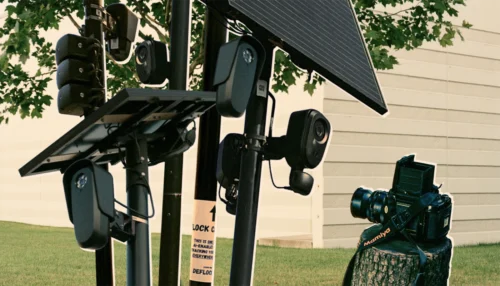
An afternoon photographing data centers reveals insights about communities and how data centers interact with them.