Federal policy failures and incumbent provider neglect are largely to blame responsible for Internet access inequities on Tribal land. Increasingly, Native Nations are beginning to address the digital divide on their own lands and on their own terms.
2022 Tribal Broadband Bootcamp
Building Broadband Networks and Interpersonal Connections
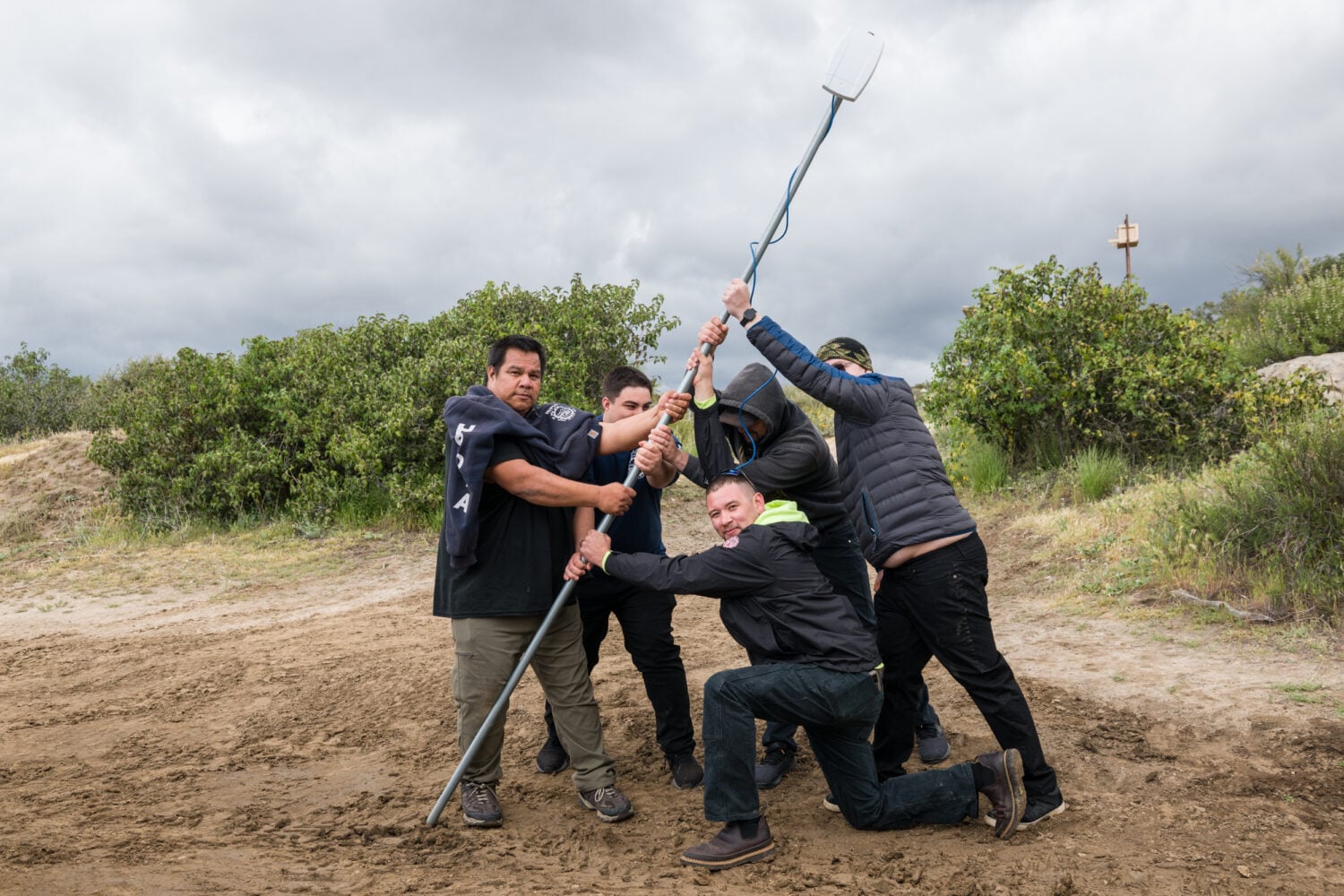
Thanks to the dedicated people who spent years building networks and advocating on behalf of Indigenous connectivity, the last several years have opened new policy opportunities for Tribal broadband. ILSR is home to several of these dedicated individuals as we’ve supported the launch and expansion of Tribal Broadband Bootcamps to help close the connectivity gap on Tribal lands. The program has contributed to the doubling of Tribal networks since 2020, with more planned bootcamps on the way.
New Internet Census Finds Doubling of Tribal Networks Since 2020
The Institute for Local Self-Reliance (ILSR) has released its updated census of Tribal Internet networks, providing a comprehensive look at the burgeoning state of Internet connectivity across Indian Country. The census covers Tribal broadband activity across 202 federally recognized Tribal Nations, spanning nearly every region of the country.
The first-of-its-kind network-by-network census is accompanied by a searchable map, a compendium of entries on each active network, and a detailed historical timeline tracing the arc of Tribal broadband policy and advocacy from the passage of the Telecommunications Act of 1996 to the present day.
USDA ReConnect Amps Up Broadband Funding to Tribal Nations
Colorado River Indian Tribe's award is a reminder that the Tribal Broadband Connectivity Program is not the be-all and end-all of funding for Tribal broadband.