A path to ending food deserts, reviving local grocery stores, and lowering prices.
Mapping Food Deserts and Grocery Consolidation
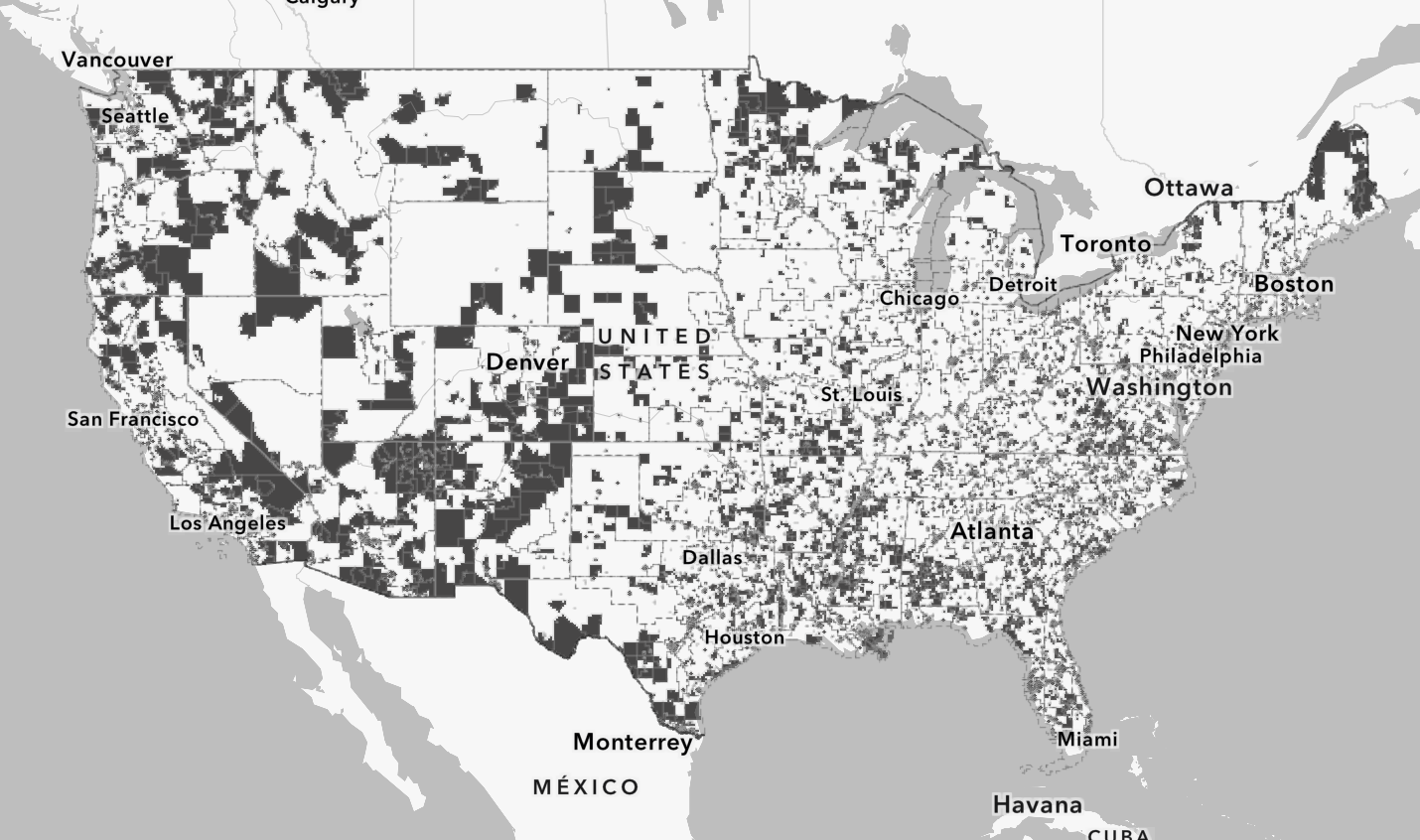
To illuminate how consolidation shapes food access, ILSR created an interactive map that shows food deserts alongside the location of different types of grocery stores — independent, small chains, large chains, and megachains like Walmart and Kroger. By displaying the locations of different types of stores alongside food-desert areas, this map helps users explore how corporate concentration has reshaped food access across the United States.
In The Atlantic, Stacy Mitchell explains the true origin of food deserts in America. Before the 1980s, many neighborhoods that are now food deserts actually had a diverse and competitive grocery landscape. The problem isn’t the neighborhoods themselves; the problem is price discrimination that favors big chains over independent grocers.
The Policy Shift That Decimated Local Grocery Stores
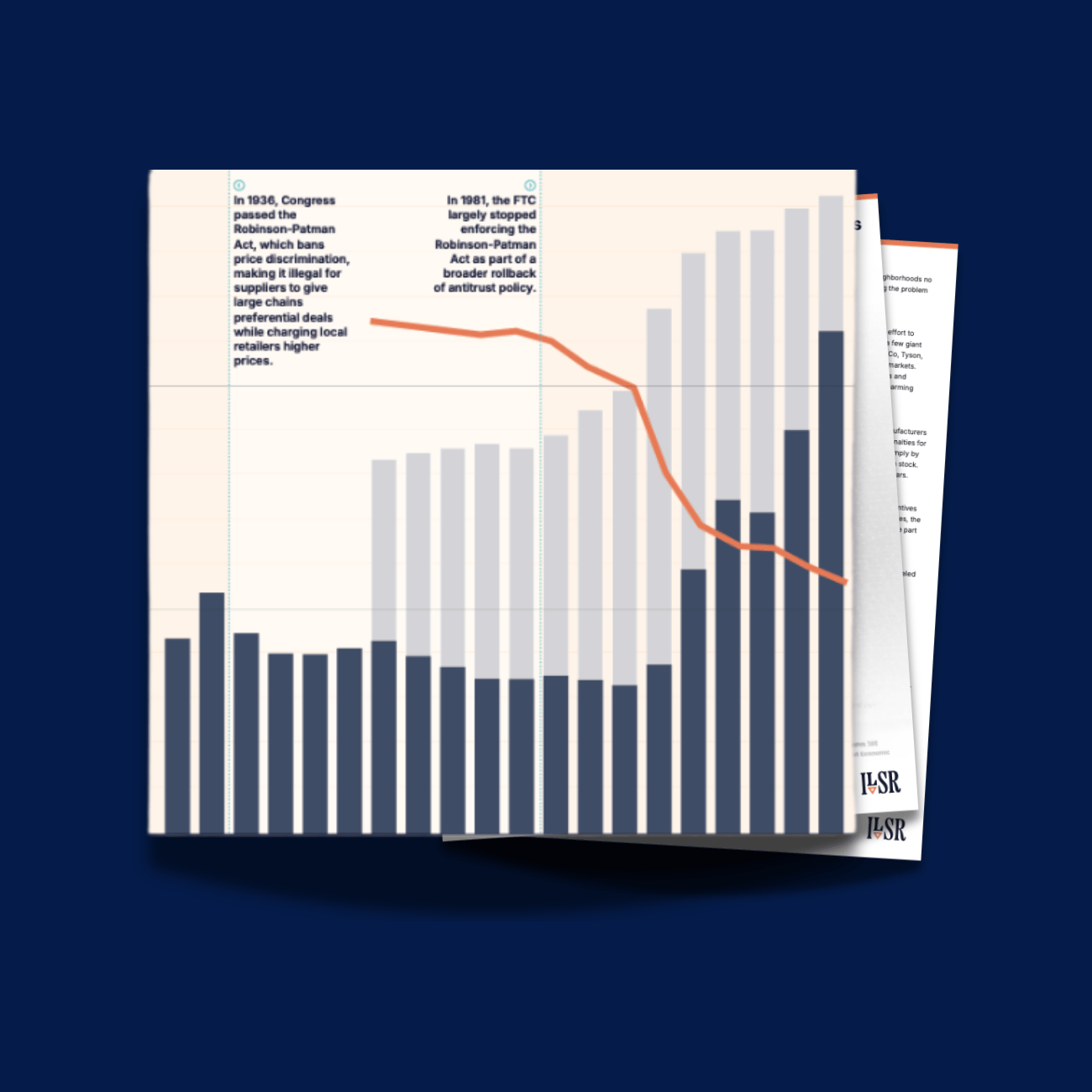
For decades the U.S. grocery industry was remarkably competitive, with independent grocers thriving alongside large chains like Kroger and Safeway. Virtually every neighborhood and small town had a grocery store, and many had several. Then, in the early 1980s, the government stopped enforcing the Robinson-Patman Act, a critical antitrust law that prohibits price discrimination by suppliers. Food deserts and higher prices followed.
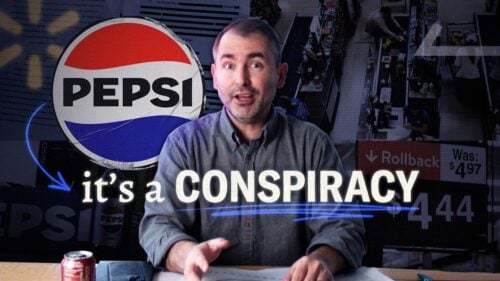
More Perfect Union Goes Deep on the Pepsi and Walmart Conspiracy
A More Perfect Union documentary explains a Pepsi/Walmart price discrimination scheme — exposed by an FTC lawsuit unsealed by ILSR.
Fixing the Food Gap
This virtual event featured Federal Trade Commissioner Alvaro Bedoya alongside community leaders, independent grocers, and advocates—to examine the ways dominant retailers exert their power, how community leaders are fighting back, and what federal leaders must do to cultivate fairness in our food system.
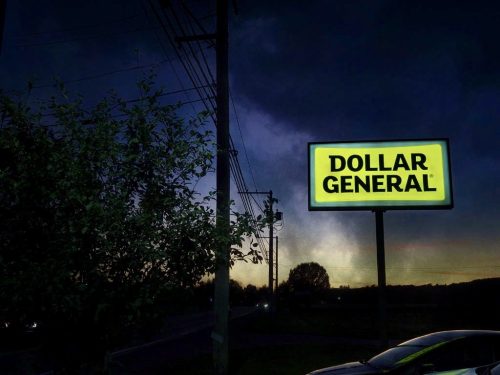
Dollar stores are not merely byproducts of economic distress; they are a cause of it. Through predatory tactics, chain dollar stores are killing off grocery...
Boxed Out: How Big Retailers are Flexing Their Supply Chain Power to Kill Off Small Businesses
Powerful retailers are dominating supply chains. Our report argues it’s time to revive the Robinson-Patman Act to restore antitrust enforcement against predatory buying.
These stores are not merely a symptom of economic distress; they’re a cause of it. Learn how your community can stop dollar stores and join us in calling for federal action to rein in their predatory tactics.
States have a strong history as frontline defenders against the threat of powerful corporations. Learn how states can and do use their power to pass and enforce laws that bring down prices, improve wages, and allow small businesses and farmers to compete.
Independent Business Initiative
Stay Up to Date with our Hometown Advantage Newsletter