The Data Centers Are Coming: Ep. 1 – Planting a Flag
We start at the epicenter: a once-semi-rural Northern Virginia community transformed by Big Tech’s sprawling data centers, sparking a fight for land, autonomy, and transparency.
If you’re anything like me, you’ve been seeing your electric bill creeping up and are wondering: are data centers to blame for this? In this episode, I set out to answer this and other burning questions about the murky way in which public utilities, data centers, and electric bills intersect. Bringing my unanswered questions to energy experts, my neighbors, and my trusty dad, I attempt to discover how exactly utilities make money off of data centers, and what my electric bill has to do with it.
Guest voices + context:
John Farrell, ILSR co-director and director of the Energy Democracy Initiative“We’re in a situation right now where the extraordinary and sort of speculative growth of data centers is just outstripping the regulatory process that was set up for it, which is why you see this really strong public reaction”
INTRODUCTION: WHY ARE MY ELECTRIC BILLS SO HIGH?
Narration (Danny Caine): A year ago I bought my first house. As any homeowner would tell you, the first year of homeownership is full of surprises. Many of those surprises are expensive – just ask my brand new furnace. Another expensive surprise was the size of my electric bills, often exceeding $300 a month. Every time that big chunk of change is drawn from my account, I wonder why the cost is so high. How much of this money is actually paying for my electricity? How much is paying for utility company profits? How much is paying for data centers?
The dads on my street have a group chat. Just this week the chat was abuzz after journalist Marty Schladen wrote a piece revealing the sky-high salaries of Ohio utility CEOs. My neighbor Jim texted everyone: “Just had a buddy who works for American Electric Power inform me that the CEO of the company just made $36 million last year. The previous CEO made 13 million I guess not that long ago. Nice to see where all our money is going!”
It’s not the first or last time the dads chat has boiled with populist anger about electric bills. Is this anger at utility companies fair? Are they really the villains we think they are? What do data centers have to do with it? And why on earth are my electric bills so high? I had too many questions, and not enough answers.
From the Institute for Local Self-Reliance, this is Building Local Power: The Data Centers are Coming Episode 4: Transmission Impossible. I’m your host Danny Caine.
DECIPHERING MY ELECTRIC BILL
Narration: Any time I can’t figure out something house related, I do what many of us do: I ask my dad. I was recently visiting my parents in Cleveland and I brought my recording gear in hopes that my dad could help me answer my electric bill questions. In the days leading up to the trip, I asked my dad to print out his most recent electric bill and one from two years ago.
Kevin Caine: Uh, actually couldn’t go back that far. The– I could only go to, like, Ju-June of 2025 was the last bill that I had access to
Narration: My electricity provider is different than my dad’s so I checked my customer portal, too: I also could only access the 11 months preceding that lovely early May morning. That put up my conspiracy cackles: why would my electric company want to prevent me from doing year-to-year comparisons with my electric bills?
Danny Caine: Like the conspiracy mind in me thinks- like they don’t want you to compare year to year, right? Uh, potentially, or go way back,
Kevin Caine: Yeah. Yeah. It’d just be– ’cause if it’s going up a lot, I would think that, you know, if you go back and say, “Well, two years ago I was paying this,” right? So, but- Right.
Narration: Given that we could only look at recent bills, I decided to switch tacks. Maybe something on the bill itself could help us determine where all my money was going.
Danny: I look at this and it says, like, generation service supply 51.23, transmission service 17.08, distribution service 28.79, $10 customer charge. do you have any idea what the difference between, like, generation service, transmission service, and distribution service is?
Kevin Caine: I, I have no idea.
Danny: Yeah … what does yours say?
Kevin Caine: Um, so mine says, um, I’ve got a customer charge. Um, I’ve got a distribution-related component, cost recovery charge, and a consumer rate credit. So it says current consumption bill charges, and in my case it’s $40 and 53 cents- Okay, in addition to the, the usage, right? So, but… What was the–
Danny: And it’s like, um, they’re not even the same, like, subcategories. Right. Yeah. Two different companies, two different- Right.
Kevin Caine: Yeah, quite a bit different,
Narration: To recap: neither of our electric providers would allow us online access to enable year-to-year comparison of our bills, and both bills had completely different categories of charges, so we couldn’t even compare rates to each other, really. I decided to zoom in and ask my dad about a specific category of billing, just to see what he knew:
Danny: And what’s your understanding of what cost recovery is?
Kevin Caine: I don’t have one.
Narration: My dad’s a really smart guy. If he can’t decode an electric bill, maybe nobody can. I get the feeling that my electric provider wouldn’t be too upset with this fact. Anyway, it was time to take my mom to Mother’s Day brunch, so I packed up the gear and made up my mind to hunt down some experts to help me get to the bottom of this.
Those experts ended up being John Farrell and Cathy Kunkel. John is a co-director of ILSR, where he heads up the energy democracy initiative and has spent a long time trudging through the land of power – both in the electric sense and the corporate sense, and where those intersect. One of the first things he told me was to get in touch with Cathy Kunkel. Cathy is an energy consultant at the Institute for Energy Economics and Financial Analysis. She also ran for congress representing West Virginia in 2020, and she like us has been carefully watching the unfolding data center fight in Tucker County. My first question was for John. If my dad couldn’t decipher my electric bill, could John?
John Farrell: No. Electric bills are almost intentionally obscure in terms of what it is that you’re paying for, and utilities have generally been. Trying to make it even harder. I just wanna emphasize like you not being able to understand what’s driving your utility bill costs is not surprising. It’s sort of by design and utilities have often played games with how we, how they get compensated in order to have less scrutiny by state regulators over how they’re spending money.
Narration: While this makes me feel better about my dad and I not being able to decipher our bills, it still is not necessarily a thrill to hear that the people taking $300/month from me are refusing to be clear about what that money is doing. Which brought me to my second question, which I posed to Cathy:
ARE DATA CENTERS MAKING MY ELECTRICITY BILL GO UP?
Cathy Kunkel: It depends where you live.
Danny: Um, well, I mean, I’m in, I am in Columbus, Ohio, if that helps, but I wanted you regardless.
Cathy: I mean, yes. In Columbus, Ohio, data centers are contributing to higher electric rates and across the Mid-Atlantic region that’s the case. Obviously like some states are more hotspots for data centers than others, and in states where that’s the case, they are definitely putting a strain on the power grid and requiring, uh, greater investment in new power generation infrastructure. And depending on how regulators are handing that, handling that, um, that can cause rates to go up for everyone. Um, and that’s generally what we’re seeing in a lot of places.
Narration: So, by virtue of being an AI hater living in Columbus, I’m on the hook for paying for the energy infrastructure required by a technology I do not like and refuse to use.
Narration: One of the worst things about all this is the fact that many of the data centers driving up my electric bills don’t even exist yet. Utility companies are guessing at how much demand will increase, and the rates reflect that future anticipated demand, not the current actual demand. Here’s Cathy:
Cathy: Yeah, so in the PJM region, which is like, um, electricity market that spans, uh, most of the Mid-Atlantic and, and part of the Midwest, like including where you are in Ohio, uh, the, the grid operator runs, uh. A forward auction to try to ensure that they have enough capacity, enough power, plant capacity on the system, several years in the future to meet expected demand. Um, and so when they’re forecasting a large amount of demand growth as they are now because of data centers, um, that drives up the capacity market price, um, because there’s, you know, higher, higher demand drives up prices in the most. Basic economic analysis. Um, but those prices are recovered from rate payers across the region, not just the data center customers. Who are the ones that are, you know, driving the demand for new power plants.
Narration: These are not small increases. Cathy’s research found that, for PJM, “Capacity prices have soared from $28.92 per megawatt-day (MW-day) in 2024/25 to $329.17/MW-day in 2026/27”. There’s no way an average ratepayer doesn’t feel a rate increase when capacity prices increase by more than tenfold. Even if the actual rate increase isn’t necessarily huge – Cathy says
Cathy: that might translate into like a 10 to $15 a month increase in your bill
Narration: it still really bums me out. For one thing, like I said, I do not use this technology and I think it does more harm than good, but I have no choice but to pay for the infrastructure needed to support its massive expansion. Second, everything is more expensive right now, which makes it even more of an insult that my electric bill is going up for this. Third, utility companies make too much profit, basically gouging captive customers to line their shareholders pockets. John Farrell explains that:
John Farrell: most utility companies are really making significantly excessive profits. That is a huge portion of your bill and is not going to anything useful. It’s not paying for fuel for power plants. It’s not building new power plants. It’s not doing anything other than padding the wallets of shareholders of those utilities on Wall Street. If you went to a bank today and tried to open a savings account, which is a really very, very low risk option, you might get like 3%. interest or something like that, right? Or if you wanted to take out a, you know, buy a treasury bond from the U S government, again, very low risk, safe investment, you’re going to get about that percentage. Utilities are making like nine to 10%, but they’re essentially guaranteed, almost guaranteed to earn that return on investment because they’re the monopoly provider and the commission almost always just rubber stamps, whatever it is they do. So you can see there’s a huge gap between what an ordinary person can expect to get for a low risk investment and what these for-profit companies are getting.
Narration: So to recap what I’ve learned so far: yes, data centers are making my electric bills go up, meaning we’re I’m paying for the rapid expansion of a technology that I don’t like, and that only 26% of Americans hold a positive view of, according to surveys. On top of that, utility companies are making excessive profits on an investment that’s all but guaranteed, because they are monopolies and I have essentially no other choice of where to get my electricity. Some of the money I earn by working hard on this podcast is going to support either an ill-advised big tech arms race, or lining the pockets of rich investors in utility monopolies.
I feel a rabbit hole opening up before me, waiting for me to dive in. It’s that funny mix of anger and curiosity – this thing is upsetting me, so I have to understand it more. So, seeing as I’m trapped into paying for the electricity demand that PJM is predicting from data centers, I might as well understand how exactly utilities make money off this whole thing. Here’s John again to help break it down.
HOW DO UTILITIES MAKE MONEY OFF OF DATA CENTERS?
John: The utilities as they’re doing their planning for the design of the system to build more infrastructure, could also be doing things like saying, well, we think data centers are gonna happen, and we see other load growth from say, electric vehicles. So we’re gonna build new transmission infrastructure, which is large and expensive because we think all of that is going to happen and that will go back into your rates because it will be something that the utility builds and it will be. Partly because of data centers, but not necessarily like a one-to-one correlation. And there’s definitely a huge incentive for utilities to make that kind of investment if they can get away with it, because that’s how utilities make money. They make money by spending money by building big infrastructure. And that’s the thing that I like when I first heard about data centers was my, like the alarm going off in my head was, if utilities can use this to justify infrastructure investments. They’re going to do it.
Narration: Of course, John’s alarm bells rang true. As just one example, Cathy did some research in her home state of West Virginia, home of the Tucker County data center fight and Governor Patrick Morrisey’s data center fast-track bill HB 2014 that you may remember from episode 2 of this series. Because of this environment of state politicians actively courting data center development, Cathy found that $440 million is being spent on new transmission lines. Much if not all of that cost is offset by ratepayers.
I say all this about transmission lines without 100% knowing what they are, so I asked our experts to explain it to me.
WHAT ARE TRANSMISSION LINES AND WHAT CAN I DO TO KEEP THEM OUT OF MY COMMUNITY?
John: The way to think of ’em is like you’re driving along an interstate freeway. Maybe you’re on a road trip. The power lines you see near the freeway, the really tall ones, the steel towers, those are transmission lines. Um, the, and they carry power at like hundreds of thousands of volts for long distance delivery. And it really was designed around the idea that we build power plants far away from where we live. A lot of times ’cause they were polluting and we didn’t want them super close,
Narration: Turns out, transmission lines have a history of being targets for a kind of vigilante resistance.
John: So one thing I learned from somebody who, uh. In the 1970s, he was part of a group of opposing transmission line development in Minnesota, and I can’t remember their name right now, but he told me, uh, I was asking him question about transmission lines and what these little discs are. If you look at the transmission lines, you’ll see that at the. Where, where they connect to the towers. There’s like this stack of little disks, for lack of a better term. They’re about yay, big or so, um, a, a few inches across. And he said that each one of those represents a certain amount of voltage. So like the more of those disks you see, basically the higher voltage, the power line. And they, and then the, the thing he told me that I just loved and why it stuck in my head is he is, and he is like, when you shoot them with a shotgun, they like. Explode really beautifully because in the seventies this is what they were doing. The farmers and rural folks that were opposing these transmission lines, they were shooting them. When the utility company was building them. They were also these groups. This folks were also called bolt weevils because they would undo the bolts that bolted the transmission tower to the concrete pads, so they would fall over. Um, they actually redesigned transmission towers in the United States because of these folks. They’re built in a different way now, so that that can’t, so that normal people can’t. Like detach them. Um, but anyway, that’s part of how I remember the difference between transmission and distribution is those discs and remembering that if you shoot them with something, they will like explode with sparks.
Narration: As much as I understand the impulse to sabotage these transmission lines, I ask Cathy if there are less violent ways to influence the question of how and where transmission lines get built.
Cathy: can do is, is not necessarily the, like, technical arguments in front of regulatory bodies, so much as the community organizing piece and demonstrating the widespread public opposition to these things. Um, because, you know, a lot of these decisions are made. Or at least approvals are needed from like local zoning boards and county commissions. And I think that’s where we’ve seen like the greatest success in getting projects stopped is not so much because of, you know, detailed technical arguments as much as people thinking, oh wow, I’m gonna lose the next election five vote in favor of this data center. Sure. Um, but you know, that said like, uh, certainly there are, uh, you know, these data centers. Should be fought on multiple fronts. Uh, and you know, there, um, there is, yeah, I mean there are, there are many opportunities to testify to, to, to, to public service commissions and to other regulatory agencies about them. And I think, um, you know, there are also a lot of. Organizations nationally that have, are starting to develop a pretty deep bench of expertise on this and can help bring people locally up to speed on what the sort of most, uh, most salient issues might be from the perspective of the power grid and, and things that tend to be a little bit more opaque.
Narration: Cathy’s talk of fighting this local fight on various fronts brought to mind all the people I’ve talked to for this series so far – whether it’s Elena Schlossberg in Data Center Alley, Nikki, Chris, and Shaena from Tucker United in West Virginia, or Sacoby Wilson and Amber Sherman in Memphis. Each of them has found a unique place from which to challenge the march of the data centers, whether it be through testifying, science, social pressure, or political pressure. In fact, as I think back on our tour of Data Center Alley, I seem to have this nagging memory of Elena telling us a story about transmission lines. So I went back and checked the tape from that trip. Here’s a section of our tour where we’re looking at one of the first data center campuses in Loudoun County:
Elena: this is a baby campus, okay? Mm-hmm. This is less than 500,000 square feet. Now then it didn’t seem like a baby campus. But now, we’re dealing with campuses that are a million, 2 million, 3 million, 23 million square feet. And so this one transmission line, I’ll just turn around just so you can see now. Now what you don’t see is a transmission line. And the reason why you don’t see a transmission line stop sign trend is because, um, we fought for, uh, almost four years to have it partially buried through the community and through this small businesses and that was no small feat.
Narration: If I’m being honest, this little tidbit slipped past my attention when we were out in Data Center Alley with Elena. I was so shocked by all the noise and construction and the bleak landscape that I barely registered her mention of a buried transmission line. But my growing understanding of the role transmission infrastructure plays in this fight brought me back to Elena’s story. But before I get to that, I have to check in with John about this idea of burying transmission lines:
CAN YOU BURY TRANSMISSION LINES?
John: If you have unlimited money, you can bury anything you want, Danny. It’s usually what I’ve heard is it’s something like eight to 10 times more expensive to put it underground. So sure you can, but there’s a reason they don’t. Um, u and usually the cities, what, uh, the, the corollary I have is there are. Yeah, not with transmission, not with the big power lines, but with the distribution lines that are smaller. There have been times when cities have fought with utilities about burying lines, and usually the way that the utility deals with it, and that has been approved by the regulators is if the city’s willing to pay for the burying, the utility will bury the power lines. Like they don’t care. They just, they don’t want to have to charge everybody else for that usually is the case.
Narration: With that context in mind – burying transmission is possible but utilities refuse to pay for it – I called Elena and asked her to tell me the whole story of Haymarket, VA’s buried transmission line.
Elena: in 2014, uh, the Haymarket transmission line became a threat to the entire western end with all these different routes, and when I heard that it was triggered by a data center campus, I was like, “Well, first of all, what’s a data center?” And then also, “Really? You can have an entire massive transmission line?” immediately it was like, okay, here are some things that are unusual. It’s triggered by one private corporation. It is absorbing our public utility. It’s triggering a transmission line, and it’s gonna take private property. And all of that was a perfect storm that would create, uh, this pushback that would be unusual. Normally transmission line fight is everybody is like, “Just not in my yard.” Mm-hmm. So they advocate not in their yard, but what does that do, Danny? Pushes it into somebody else’s yard, which was not something that I, even though I was personally at risk for the first time in all these years of fighting and land use, it was coming across my front yard. My position, uh, just philosophically and ethically was not gonna be just not in my backyard. But it was also clear something different was happening here,
Narration: Faced with the then-unprecedented fact of a single facility from a single company triggering a transmission line, Elena’s coalition began to explore options to bury the line. It was a steep hill to climb – they didn’t even know for sure who the company behind this was.
Elena: first in my mind, okay, we’re gonna prove it’s Amazon. That’s not gonna be difficult. We were already engaged in that. The next thing was, uh, although we were saying it, “Pay for your extension cord,” yeah, I wasn’t sure how we were gonna make that happen yet. And so that required this collaboration between a very, very conservative Republican, uh, who was my delegate, and the coalition, getting access to staff at the State Corporate Commission And so he organized a meeting at the, the top floor of Giuseppe’s in Haymarket, which is like, you know Cheers? Okay, imagine Giuseppe’s is Cheers. And so, uh, they make the space available for us.
Narration: the coalition ended up proving it was an Amazon facility by finding a job listing for a data center manager in Haymarket. This evidence in hand, the coalition gathered at the friendly neighborhood watering hole to form an argument. Here’s where they landed: when a residential electric customer needs to run power to a house that doesn’t already have it, the customer has to pay for that work. It’s called the line extension policy. At Guiseppe’s, the coalition asked the utility officials why the line extension policy couldn’t apply to Amazon’s transmission line.
Elena: I said, “You know,” I said, “So but for the magnitude, how do we apply that policy that made us bury it and pay for it to this other customer?” And he says, “Well,” he says, “That would be a novel approach and application of the line extension policy.” And I said, “Well, hmm,” I said, “But it’s never been done before.” And I swear, Danny, I can hear his words in my ear right now, and he says, “Just because it’s never been done doesn’t mean it can’t be done.” And I went, “Okay, game on.”
Narration: The cash-strapped coalition found an attorney to navigate their case pro-bono.
Elena: I reach out to this one attorney, Reen Hurlocker, and I say, “Okay, this is a really important case, and, uh, and you have an opportunity to represent this first ever. And not only is it the first ever, but what is happening here is an injustice, that a public utility is exercising eminent domain- Over private property for the wealthiest corporation in the world, and then making us pay for it? I mean, mind-blowing.
Narration: What was scheduled to be a one-day hearing about the transmission line turned into three days. Part of the marathon was that, initially, Dominion refused to admit that the proposed line was actually a transmission line at all, claiming it was a much smaller distribution project. But Elena and her team found internal documents where Dominion referred to existing transmission lines using the same terms with which they were describing the new project. The coalition had caught Dominion in a lie. Despite the catch, the coalition didn’t get the results they wanted.
Elena: We lose. The judge picks another route, but now on the record, Dan, for all to see, is that there is one customer, the data center industry, that has triggered for the first time ever their own transmission cord and substation. And the reason why that is important is because everything that has flowed from that case is what people are fighting for today. The wealthiest industry in the world- Harming your environmental resources, taking your private property, and making you pay for it. Mm-hmm. And instead of one little transmission line for a 438,000 square foot campus, it’s now an entire nation and an entire industry.
Narration: Despite the setback, Elena and company weren’t done fighting. Eventually, they seemed to wear out the utility company with their persistence.
Elena: Dominion Energy, they’re, like, going into, we’re going into year number four now, and they’re like, “Okay, uh, they are never going to stop.” The coalition is never going to stop, and now they’re threatening to take this to the Supreme Court for the Supreme Court to decide on the line extension policy. Now, did we have the money for that? No. Would we get the money for that somehow? Yes. At that point, Dominion Energy decides they’re going to settle, and so we agree, uh, through negotiations, uh, that they would ask the State Corporate Commission to agree to the hybrid route that’s partially buried. Mm-hmm. But we had to pay for it. . Which all transmission infrastructure is paid for by the rate payers. Yeah. It wasn’t like this was anything new. Um, but we had to decide, do we fight for the line extension policy and forgo the buried route, which protected the community? And so of course we felt like our commitment first was to the community. So we agreed to drop any future lawsuits, and that was how the hybrid route was built. They did deep bore burial. They could do it. They did do it. They pretend like now suddenly they don’t know how to do it, and every single time they say that, I’m there to say, “That’s a lie. You did do it. You can do it. You just don’t want the data center industry to pay for it, because that’s your cash cow.” Because if they have to start… Our position was all along if, if they had to pay for this expensive extension cord, they would have to find a way to innovate.
Narration: If the data center industry were forced to pay for their utility infrastructure instead of ratepayers, they would have innovated by now and adjusted their power needs. But because the ratepayers are on the hook, data centers can continue capturing electric utilities, forcing the construction of major new infrastructure on ratepayers’ dime. It’s just like the passage we shared in episode 3 from ILSR co-founder David Morris saying that if factory smokestacks spewed into corporate executive suites, pollution would have been solved by now.
And so Elena’s coalition got some of what they wanted, preventing at least in part an invasive and dangerous transmission line from going through their community. But because of how the system works, they had to foot the bill. It is possible to bury a transmission line, at least if you’re willing to fight in court for years and deal with higher electric bills.
Elena: people do not understand when, when you say we won, it takes a relentlessness that will consume your life. Mm-hmm. Uh, but, uh, you know, I will say this. We, we didn’t under- fully understand the, the totality of the threat that we would face 12 years later, but, um, I do remark in a Washington Post article about the final, you know, this, this agreement, um, that this was an industry that wasn’t going away, and here we are today. And our elected leaders at every level of government have been feckless to stop it.
Narration: Bear in mind that 2014 is the prehistory of the data center fight. This early battle in Haymarket foreshadowed the huge fights we see today,
Elena: Well, and now it’s not just the transmission, Danny, now it is also the generation. I mean, you can, you can plug your, your, your extension cord into your wall, but if you don’t have any electricity- Yeah … it doesn’t do you any good. So now we’ve just simply followed, you know, down the rabbit hole a little bit more, and now we’ve all gotta pay the hundreds of billions of dollars to create the generation to plug the extension cords into.
WHAT HAPPENS WHEN THE GRID IS FULL?
Narration: I’m beginning to understand why electricity is getting more expensive, and my anger and resentment is growing. Utilities make money from building new infrastructure like transmission lines and power plants. The race for scale that 10 extraordinarily rich tech guys are in the middle of is creating massive new demand for data centers and the huge amounts of power they use. Utility monopolies see this demand and predict that their capacity needs will increase – in the case of PJM, that increase is tenfold. So they build new infrastructure. It’s mutually beneficial – tech guys get more compute, and utility companies get to build things, which is how they make the most money. But the people benefitting the most from this symbiotic race to build things aren’t paying for it. No, much of the cost is being foisted onto the ratepayers, who have nothing to do with this mess.
Put another way, it’s now more expensive to keep my fridge running because Mark Zuckerberg, Elon Musk, and Sam Altman all want more Nvidia mega-chips. How is someone supposed to take this sitting down? No wonder the dads on my street are mad.
But even though this cycle is beneficial for tech companies and electric utilities, the demand for scale is so desperate that the AI race is now outpacing how fast utilities can build new infrastructure. In many places, including Loudoun County, VA, the grid is at capacity and will be for many years. So data center people are building their own power plants. The data center in Greg Pirio’s front yard is so noisy because it has its own power plant. The proposed data center in Tucker County, WV is such a threat because it has its own power plant. Elon Musk’s Colossus I is spewing so much pollution into Boxtown because it has 35 powerful gas generators on site. When tech companies become their own utilities, there’s a risk of them steamrolling right through consumer and environmental guidelines that are designed to protect, you guessed it, ratepayers. Here’s John.
John: We are in this weird situation of utilities are saying we aren’t prepared to build the infrastructure fast enough to get these data centers online. So data center operators saying like, essentially, well, great, we’ll become utilities ourselves. And that skirts around a lot of the protections that we’ve built into this process of developing our power system to make sure that public input is taken and that it’s evaluated fairly.
Narration: I have this thought – maybe tech companies building their own power plants is a way for them to pay for their electricity needs instead of foisting the cost onto ratepayers. Turns out, according to Cathy, that’s wishful thinking.
Cathy: It doesn’t impact rate payers in the same way, but it does still impact them. Um, I would say it impacts them in two ways. One is because if you’re, if you’re building an off-grid natural gas plant, you’re still. Building a natural gas plant, which means you’re like contributing to the, uh, the bidding up of the cost of natural gas plants around the country. So, you know, we’re, we’ve seen, uh, uh, significant increase in prices of natural gas turbines and in like lead times to get them because of the data center boom. And that, you know, impacts rate payers who end up. Paying for those gas turbines when a regulated utility is building them. And so, you know, to the extent that a non-regulated off grid entity is also building gas plans, that contributes to that kind of price crunch. Um, and then the other thing is whether or not these, um, uh. These off grid data centers are actually connecting to the grid to use the grid as backup power, which I think is the case in some instances and, and not the case in other instances. But, uh, if it is connecting to the grid in some way, then like you do potentially have at least reliability issues that could impact other. Rate payers, like if you, you know, if you’ve got a data center with a gas plant and the gas plant suddenly goes offline, and then, so the massive data center is suddenly drawing power from the grid where it wasn’t before, then that could present. Present a reliability issue.
Narration: And so even if tech companies are building their own power plants, I’m still, in a way, on the hook for paying for them. No matter how these huge companies are getting their electricity, it’s still costing me money. This is, of course, upsetting to me as a ratepayer in 2026. But it’s even more upsetting that this isn’t new. Since before America was even established, corporate monopolies have tried to bend regulators to their will while exploiting customers who are trapped with no other choice, no alternative ways to access the services that these monopolies provide. We see this unfold again and again throughout history, from railroads to Standard Oil to Amazon to today’s utility and big tech data center scheme. But for as long as this monopoly problem has existed, so has resistance to it. It’s not impossible to curb and control monopoly power – at points during American history, popular opposition to monopolies has forced changes to the exploitative system.
WHO IS HOLDING DATA CENTERS AND UTILITY MONOPOLIES ACCOUNTABLE?
Narration: And even though many politicians turn feckless in the face of corporate monopolies, that’s not always the case. Way back in 1932, none other than Franklin Delano Roosevelt made an impassioned case for how government needs to protect its people from utility company greed. In a speech, he said “(T)he Public Service Commission is not a mere arbitrator as between the people and the public utilities (but) must act as agent of the public, upon its own initiative as well as upon petition. The regulating commission, my friends, must be a Tribune of the people (engaged in) positive and active protection of the people against private greed!” This comes in the midst of the great depression, a time when reckless corporate greed, speculation, and wealth inequality had massive negative impacts on the finances of everyday Americans. That certainly feels relevant today, no? But is the public commission system that FDR fought for an actual protection against utility company greed in today’s world?
John: utilities are publicly regulated because they’re providing this essential public good. When they wanna build stuff, we get to find out about it. They have to do public filings, um, they have to do. Meetings, like community meetings about, like locations of transmission lines, for example. Uh, they have to get permits from the state. They have to, uh, often apply for what’s called a certificate of need, which is, particularly for a power plant or a power line, is basically to prove, it’s a proceeding to prove to the commission you actually need this thing. Um, I, I don’t wanna give too much weight by describing that as though like there’s. They really often are told no, or something like there’s a way in which it’s performative, but there is a process in which usually this stuff is public.
Narration: So, according to John, even if the process can be toothless or performative, at least it forces things into the public eye. But is that process any match for the insane scale of the AI arms race? When tech companies are becoming their own utilities, can public service commissions keep up? Like, how do we get to a place where Elon Musk needs 150 megawatts so he just stuffs his parking lot with unregulated gas generators? I asked that last question to John directly.
John: I love this question ’cause there’s sort of an implication in the way you asked the question, Danny, as though. What Elon Musk or what other data center operators are doing is actually legal. I think one of the things that we’ve learned from the tech industry is that they’re happy to just go do something and find out later that it’s illegal and just hire a bunch of lawyers and try to fight it in court. So I guess I would start by questioning the premise of what they’re doing is actually legal. I think what we’re in a situation right now is the. Extraordinary and sort of speculative growth of data centers is just outstripping the regulatory process that was set up for it, which is why you see the really strong public reaction to the things we’re seeing happen.
Narration: I feel like I’ve finally found the center of this, of how utility companies, tech monopolies, and feckless government officials are enabling the data center explosion and why it’s making people so mad. Tech companies have long operated under the mantra of “move fast and break things.” They swoop into some industry only to quote-unquote “disrupt” it; of course, what tech companies call “disruption,” other people call “destruction.” Look at Amazon and Bookstores, or Facebook and local journalism. The list goes on. Think about the mess that is trying to watch sports in the streaming era. Ask a professor sometime how it feels to teach during the rise of ChatGPT.
But there’s one thing that makes AI and data centers stand apart from the so-called tech “disruptions” of the past: it’s just too huge. To move fast and break things at a scale that allows for the AI arms race, it’s not just hotels or taxis that stand in the way. It’s the very nature of our electric grid. But that’s not stopping the tech companies from trying to disrupt it, and there are signs that the systems put in place to protect ratepayers can’t really keep up. Instead of threatening taxis, tech companies’ corporate greed is now threatening communities. Here’s just one example: in May 2026, 50,000 Lake Tahoe residents were informed that they’d need to find a new electric utility, because theirs was shifting all of the electric capacity they’ve been using to power new data centers.
Before we finish comparing data centers to past tech booms, we can’t ignore that many preceding tech explosions were actually pops – bubbles popping. Everywhere you look, you see predictions of the AI bubble bursting, and many people think it’ll happen sooner than later.
WHAT HAPPENS WHEN THE DATA CENTER BUBBLE POPS?
Narration: Here are Cathy’s thoughts on the matter:
Cathy: Looking several years down the road to try to figure out what demand is going to be and to, to make sure they have enough capacity to meet that demand. Um, and so, you know, that’s, that’s why forecasting is so important to this. And it’s also very difficult, uh, with respect to data centers because, you know, um, we are just seeing a lot of, uh. Market enthusiasm for data centers and artificial intelligence that quite likely in my view is overblown. You know, we’re seeing, uh, questions about whether or not AI is a bubble. Um, and particularly, you know, driven, driven by the fact that these companies have extremely high. Valuations and are getting tons of investment, but have yet to have a business model that’s actually profitable. And it’s not clear what the pathway to profitability actually would be. And so, um, yeah, you know, it’s, it’s unclear how long investors are gonna continue to be enthusiastic about this. Uh, and if and when that dries up, um, then there’s gonna be, you know, presumably less invested in data centers.
Danny: And that’s like. It’s kind of wild to me. ’cause the, what you said about like, there’s investor enthusiasm, but it’s not profitable yet and they have to figure out how to make it profitable. That’s a cycle we’ve seen time and time again with like tech innovations. It’s like Facebook, Uber, whoever, like it just happens. It feels like it happens all the time with these technologies.
Cathy: One problem is that, uh, regulated utilities. Uh, like to build infrastructure ’cause they earn a profit on it. And so they are pretty happy to be able to say, oh, we’re gonna build like a whole bunch of new gas plants, uh, to power this, these data centers. And you know, if they, if they don’t all materialize, we still profit on the gas plants and every payers pay for it.
Danny: So a lot of this is like hypothetical guessing almost, it seems like, but the impact on rate payers is very real. Like the, the $20 a month added to my electric bill is not hypothetical.
Cathy: Right, a few minutes ago you were talking about Facebook and Uber being sort of originally not, not profitable for a while. And I think the main difference between those thing, those platforms and AI is just the incredible resource intensiveness of ai, like in the real world, you know, which, uh, was not the case for a lot of prior tech infrastructure and like, you know, even going back to the.com. Uh, boom. And so, you know, the, the energy usage and the water usage and the chip usage here is just, uh, astronomical and imposes real costs that the, the prices for, you know, using clawed or, uh, chat GPT or whatever those subscription costs do not cover the costs of the infrastructure that’s actually required.
Danny: So like I feel like the tech company would argue that like, we’re not gonna bother the grid, we’re just gonna do this on our own in isolation, but like, it’s not necessarily actually in isolation from all these other issues.
Cathy: Yeah. I mean, nothing’s in isolation and, and particularly again, if you’re talking about the impact on climate change, it obviously makes no difference whether it’s grid, tide or not.
Danny: say the projections are wrong, data centers cool down the bubble pops. Demand is not as high as people think it will be. Will my electric bill go down when that happens?
Cathy: Not necessarily. I mean, it depends on how the utilities manage this in the interim. I mean, there’s a possibility that your electric bill could go up if your utility has built like 10 new power plants and suddenly has no customers for them, and you know, has all these undepreciated costs that it just pushes off to other. Rate payers.
Narration: Here’s one last thing to shock me: if the data center bubble pops, my electric bill won’t go back down. It might even increase. No wonder data centers have sparked such a nationwide wave of resistance. Here’s what people see: AI companies are in an arms race that’s leading to the construction of huge data centers that require new electric infrastructure just to operate. That system means electric companies and tech companies get to enjoy massive profits, and I’m paying for all that via higher electric bills. Oh, and electric utilities were already making excessively high profits before all this. Oh, and these data centers are going to be noisy and polluting and gobble up insane amounts of my community’s water. I understand why people are mad. It feels obvious to me that this is the wrong way to go about all this. But is there even a right way?
CONCLUSION: IS THERE A RIGHT WAY TO BUILD DATA CENTERS?
Narration: That question brings me right back to something I heard in my interview with Time tech correspondent Andrew Chow:
Andrew Chow: The funny thing is I think there is an absolutely a right way to build data centers. Like it didn’t have to come to all this, it’s just that the. Incredible rush to beat each other. I think there are solutions. In the abstract. Um, but the question is if the forces of the market overwhelm those solutions or make them un seemingly untenable for these companies, these that are building the data centers.
Narration: On the next episode of Building Local Power: The Data Centers are Coming, the right way to build a data center.
Building Local Power: The Data Centers are Coming is a project of the Institute for Local Self-Reliance. This episode was produced by Reggie Rucker and Ilana Nevins. It was written by me, Danny Caine, based on my travels to Baltimore in January 2026 and conversations I had throughout that Spring. Many thanks to John Farrell, Cathy Kunkel, and Elena Schlossberg for their time and expertise.
Please check out the show notes for additional resources, more information on our guests, and a transcript with links to some of the research that helped shape this episode.
If you like what you heard, make sure to subscribe to Building Local Power wherever you get your podcasts. We also appreciate being in conversation with you, our listeners, so please leave us a review or comments wherever you’re listening. Your feedback helps inform our future work to keep delivering stories that matter to you, so let us have it. Thanks for listening and see you next time.
Ohio’s electric bills are high — and so are utility CEO salaries — Ohio Capital Journal
The Policies Communities Need to Confront the AI Data Center Race – ILSR
North Star Data Center Policy Toolkit: State and Local Policy Interventions to Stop Rampant AI Data Center Expansion – AI Now Institute
The People Say No: Resisting Data Centers in the South – MediaJustice
Proposed Prince William data center prompts protest letter to Jeff Bezos – The Washington Post
Outcry grows over proposed Prince William data center – The Washington Post
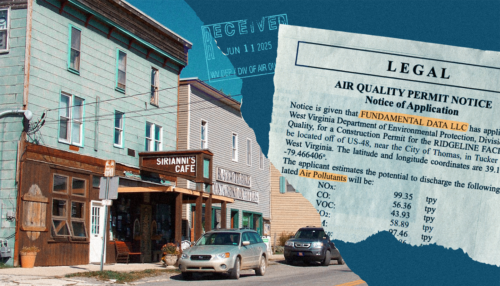
We start at the epicenter: a once-semi-rural Northern Virginia community transformed by Big Tech’s sprawling data centers, sparking a fight for land, autonomy, and transparency.
A proposed data center galvanizes resistance in a small West Virginia community, sparking a fight over state vs. local control.
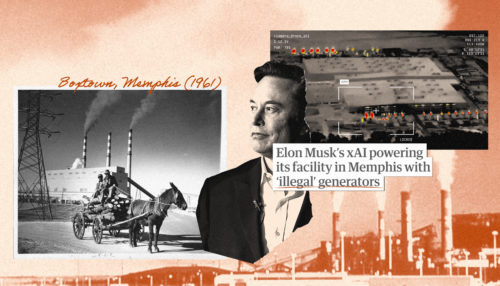
Elon Musk's Colossus 1 data center in Memphis reflects a historical pattern of corporations siting polluting facilities in poor or Black neighborhoods.
Not only does AI technology have severe climate impacts, it exacerbates environmental inequity. UC Riverside professor Dr. Shaolei Ren joins us to explain.