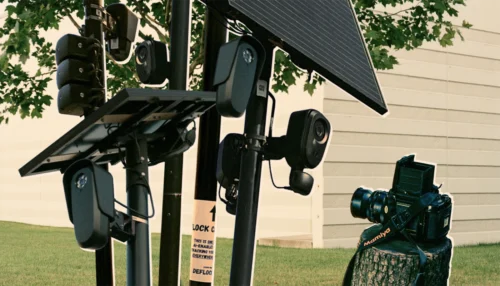
The Data Centers Are Coming: Ep. 1 – Planting a Flag
We start at the epicenter: a once-semi-rural Northern Virginia community transformed by Big Tech’s sprawling data centers, sparking a fight for land, autonomy, and transparency.
How do I make sense of everything I’ve learned about the data center fight in communities across the United States? I start by talking to prolific author and tech critic Cory Doctorow about the centaur/reverse centaur theory of how we use technology and how technology uses us. The insights I gain from the discussion help frame the updates I hear from the places we’ve visited this season, from West Virginia to Data Center Alley to the Boxtown neighborhood of Memphis, Tenn. Ultimately, I learn, the key to protecting communities from harmful data centers, not to mention a destructive burst of the AI bubble, is ensuring that technology serves communities, and not the other way around.
Guest voices + context:
author Cory Doctorow“Let’s not put all of our focus on what this machine does, and step back and ask who it’s doing it for, and who it’s doing it to.”
INTRODUCTION: BOOK TOUR DISCUSSIONS TURN TO DATA CENTERS
NARRATION: I recently spent some time in the upper midwest on tour for my new book, How to Defend Books and Why. The book isn’t about data centers, it’s about the rise of the book banning movement in the United States spearheaded by groups like Moms for Liberty. Still, in conversation after conversation, I ended up talking about data centers every day on tour. It’s not that I was trying to promote the podcast – these conversations happened naturally. I think data centers are just on people’s minds, for one thing. For another, my book talk centers on subjects of activism, organizing, and reclaiming personal and community agency. Naturally, those subjects tend to make people think about data centers.
For instance: over beers at Decorah, Iowa’s Pulpit Rock Brewing company, I talked to my friends Aaron, Kendra, and Sarah. They’re all business owners in the very interesting, very cool Northeast Iowa small town. Aaron mentioned that he wished the resistance to book bans was more feisty, that more folks took bold and spirited action against those who try to limit access to books. He mentioned the data center resistance as an example of that kind of energized activism. There have been discussions in Decorah of a data center ban even though no project has been proposed there.
For instance: all along Route 52 between Decorah and Minneapolis, signs and billboards say “NO data center” with the Google logo in a red circle with a diagonal slash. I screeched to a halt along the gravel-sprinkled shoulder, threw my hazards on, and ran out to take a picture as semis screamed by.
For instance: after another event, I met Kate, a teacher from Pittsville, which she called the geographic center of Wisconsin. During a discussion in her fourth-grade history class, her students made a connection. As Kate was talking about the impact of the industrial revolution on labor and workers, with machines and automation replacing human jobs, the students cried out “it’s like AI and Data Centers!” These are 9 and 10 year olds, making a connection to their lives, and Kate didn’t even intend the lesson to go in that direction. I love hearing stories about how kids are meeting the moment. Inspired by the discussion and brainstorming a later lesson, Kate had Google Gemini create slides for her. She showed them to her students without editing or fact-checking them, and she then asked the students to identify errors caused by AI hallucinations. They spotted the Empire State Building in the background of Washington crossing the Delaware.
Between all of these conversations and my book events, I was listening to an audiobook – that’s how I get through long drives. My audiobook for this trip was Cory Doctorow’s new one, The Reverse Centaur’s Guide to Life After AI. I really loved Cory’s previous book Enshittification for how it broke down the schemes and patterns of Big Tech’s global takeover with humor and clarity, and this new one does more of the same. I know Cory – we’ve done a couple events together, and I interviewed him for my colleague Ron Knox’s Who Shall Rule podcast last year. Cory narrates his audiobooks, so it was almost like having a friend in the car with me through Iowa, Minnesota, and Wisconsin.
Cory’s a really spirited guy – he would probably please Aaron in Decorah with his pluck and energetic activism. I was already feeling ready to start a revolution because of all my time spent with booksellers and librarians fighting for the right to read – in Reverse Centaur’s Guide, Cory calls booksellers and librarians “the secret legislators of the world.” Add to all that Cory’s galvanizing musings about AI, plus everything I’ve learned about data centers and people fighting back, and, well, I was one pretty excited dude flying down the interstate in a rented Hyundai. On those midwestern highways in the early June sunshine, I could feel my closing arguments forming.
From the Institute for Local Self-Reliance, this is Building Local Power: The Data Centers are Coming, episode 6: Closing Arguments. I’m your host, Danny Caine.
CHAPTER 1: CORY DOCTOROW AND REVERSE CENTAUR COMMUNITIES
NARRATION: After getting back home from tour, I called Cory to ask him some questions about his take on big tech and AI. My first question was about this concept of the Centaur vs. the Reverse Centaur.
CORY DOCTOROW: In, uh, labor and automation, we call someone who is assisted by a machine a centaur. So whether that’s you using a spellchecker or riding bicycle or, um, you know, using a, a word processor or a calculator, you’re a centaur. Uh, whereas if you’ve been recruited to serve as a peripheral for a machine that has some part of the task that it can’t do itself then you’re a reverse centaur, right?
NARRATION: Let’s pause to explore this a bit, because I think it’s a really useful framework. Remember that a Centaur, in Greek myth, is a being with the body of a horse and the torso, head, and arms of a human. This mythical being is fast, strong, and powerful, more so than a regular old human. In technology terms, a centaur is a being for which technology serves as the horse part, giving the human abilities or strengths they wouldn’t ordinarily have. But the brain is still human. For example, a human using a calculator to do math is more powerful than a human doing math by hand. A human driving a car is faster than a human walking. A human using a GPS is less likely to get lost than a human with no GPS. Any time a human uses technology to enhance their abilities, we’re talking about a centaur.
It follows, then, that a reverse centaur is a horse’s head on a human body. Clunky, awkward, and less powerful than a regular old human. This is when the machine is in charge, and the human is just there to make sure it runs, occasionally doing something that the machine can’t in the interest of maintaining the machine’s performance. An Amazon warehouse worker, with their handheld GPS device setting a picking rate almost beyond human capacity, is a reverse centaur. Same with the Amazon driver whose van is outfitted with biometric cameras and sensors to make sure they’re delivering at maximum possible efficiency. It’s not fun or healthy for a human to be a reverse centaur.
CORY DOCTOROW: the reverse centaur tends to get worked at the very limit of human capacity because you wanna re-maximize the return on that asset, and the human is the bottleneck. The human gets tired before the machine does, and the human works more slowly than the machine does. And so you’re gonna turn the machine up to just under the rate at which the human, uh, would, would be exceeded in their capacity. And then you as the human have to work at your, at your absolute peak of endurance and capacity until you drop. Uh, so y- y- you know, reverse centaurs, they’re not just used by machines, they tend to be used up by machines. So we can think here of like the most automated warehouses in America are Amazon wa-warehouses, and the rate of injury at an Amazon warehouse, as you know, is three times the national rate. Uh, and that’s not in spite of the automation, it’s because of the automation.
NARRATION: The concept of centaur and reverse centaur were clear to me, but I wondered what happened when the lines got blurred. Where is the boundary between centaur and reverse centaur?
CORY DOCTOROW: It’s tough, right? If you think you know how to do your job and someone shows you a tool and you think, “I could probably make something better with that,” and you do it and it feels like you’ve made it better, right, then you’re probably right. People are wrong sometimes. But that is different fundamentally from your boss saying, “Look, you know how to do your job. I don’t know how to do your job, but I’m in charge of you, and I require that you, uh, either explicitly use this tool or work at a pace that you could only achieve if you use the tool.”
NARRATION: It seemed to me like the question at the heart of the centaur / reverse centaur thing was agency. Which one is the brain, the human or the horse? If the human is the brain – if the human has agency over the machine, they’re a centaur. If the horse is the brain – if the machine has agency over the human – we’re probably in a reverse centaur situation.
So what does this have to do with AI? If you ask Cory, the only way for AI to work – the only way for it to be profitable – is for the technology to make reverse centaurs of countless workers. The financial math of the AI craze depends on it.
CORY DOCTOROW: So where do they get, like, $1.4 trillion every two years from now till forever to, you know, make a go of it? Like, there’s only one place you can get it, and that’s by squeezing labor. AI does not have to be a reverse centaur proposition, but the way that they’ve raised $1.4 trillion is by convincing investors that they can go to bosses and they can say, “Why don’t you fire most of your workers and replace them with software? And we will split the wage savings between the firm that used to employ those workers and the people who, uh, offered them the software.” And the reality of that is that the machine really can’t do your job, and so the people who survive the AI layoff are in charge of marking the AI’s homework and also taking the blame when the AI gets it wrong.
NARRATION: AI companies are making much less money than the money investors are pumping into them. That kind of thing can’t go on forever – investors are going to expect returns at some point. For the math to make more sense for the big tech billionaires and their investors, a lot more people need to lose their jobs to AI. And the people that still have jobs after that will be the reverse centaurs making sure the job-stealing AI can keep running. It didn’t have to be this way. There are ways to deploy AI – to deploy any resource-intensive, expensive technology – without making reverse centaurs of us all.
CORY DOCTOROW: we could have arranged the data centers in different ways. We c- you know, I, I don’t think anyone would be freaking out the way they are about data centers if the way AI had happened was that Sandia National Labs took some desert and built some data centers out there, and paid for the water and paid for the energy, and they were like, “We’re just doing this for the same reason we did the Large Hadron Collider – or we did, you know, the, the Webb telescope or whatever. These are resource intensive, energy intensive, material intensive, you know, scientific endeavors that we do to find out more things, and I don’t think anyone would care. And that’s certainly one of the models we could have had.”
NARRATION: If AI had been framed as scientific progress in the same manner as past technological leaps, Cory thinks it’d be a different story. But the story we got instead involves big tech companies building huge, expensive data centers that extract resources from communities and raise electric bills for millions of Americans. This thought brought me to a realization – whole communities can be reverse centaurs. That’s the big data center model – the community and its resources are there just to make sure the machine can keep running. Rather than the machines serving the communities, the communities serve the machines. The horse brain is trying to seize control from the human brain. I think this gets to the very heart of the data center question: who has the agency, tech companies or the communities they’re trying to extract from? As Cory says many times in his new book,
CORY DOCTOROW: we can, as good technology critics, say, “Let’s not, let’s, let’s not put all of our focus on what this machine does, and step back and ask who it’s doing it for and who it’s doing it to.
NARRATION: That question – who the machine is doing it for and who it’s doing it to – not only shows us that big tech can make reverse centaurs out of whole communities, but it also raises the specter of centaur communities. How can we develop technology to make communities stronger?
CHAPTER 2: CHECKING BACK WITH THREE DATA CENTER FIGHTS
NARRATION: This centaur / reverse centaur communities concept gives me a new way to think about the stories we’ve heard so far on this podcast, whether it be Data Center Alley in Virginia, Tucker United in West Virginia, or the folks feeling the harms of Elon Musk’s Colossus I in Memphis. With my new framework in mind, I called folks in each of those places to ask for updates.
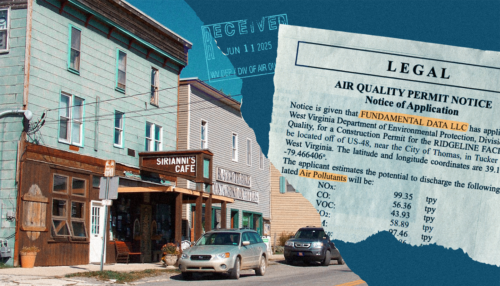
In Davis, West Virginia, Fundamental Data’s efforts to turn Tucker County into a reverse centaur community have ramped up in intensity. Last time I talked to the folks at Tucker United, they were headed to Charleston to try to convince legislators to amend HB 2014, the governor’s signature data center fast-track bill. Tucker United’s Nikki Forrester told me,
NIKKI FORRESTER: nothing happened in the legislative session despite the many promises that were made from our local politicians that they would fix the issues that we had with that bill, especially when it comes to the, you know, lack of local control and really engagement from local communities.
NARRATION: Lack of local control – there’s that question of agency. In West Virginia, the issue is just as much about pollution as it is how much agency communities have to chart their own futures. This is one reason that Tucker County residents were frustrated that nobody from Fundamental Data, the mysterious shell company behind the massive data center project, ever showed up in town. Well, they did finally show up, but their appearance didn’t necessarily help things.
NIKKI FORRESTER: the company itself finally came down here to Tucker County, and they, two representatives were at a town hall meeting that was hosted by the mayor of Davis.
NARRATION: But Fundamental Data’s presence instantly changed the tenor of the meeting. I asked Nikki when she realized that they had actually shown up.
NIKKI FORRESTER: Oh, instantly. We actually sent out a notice and we’re like, “Hey, by the way, community, these guys are here.” Um, but you know, it was so last minute, and people were caught up doing other things, and yeah. It’s unfortunate that people didn’t get a chance to ask them directly questions that they’ve been thinking about and worried about for the last year.
NARRATION: Despite not having time to prep or many members present, Tucker United still managed to press Fundamental Data about their concerns.
NIKKI FORRESTER: But then half the meeting ended up being with these representatives kinda answering questions from community members about everything from the health impacts to the water usage to the site selection to basics about their company, um, you know, if they had a buyer in mind. And I think the general consensus was they’re still being incredibly secretive about their operations. They refuse to answer any questions about who the company is. They refuse to answer any questions about whether they have a buyer or who that buyer is, and they were very dismissive of the concerns that we brought up. They spent a lot of time trying, trying to discredit the Harvard study that we commissioned and basically, you know, wouldn’t be very transparent about their water usage. So it left us with more questions and concerns.
NARRATION: Demanding land, resources, and trust from a community without being transparent about how those resources would be used – that certainly sounds like Fundamental Data is trying to set things up so the machine has the agency and the community exists to keep it running – in other words, they want Tucker County to be their reverse centaur community. This was only reinforced by some startling new revelations about the project.
NIKKI FORRESTER: one thing that they shared was that the phase that, or the project we’ve been fighting is just phase one of a three-phase development that will involve another gas-fired power plant and a nuclear facility and 1,500 acres of data centers, a solar field complex, and other inf- you know, acreage that we don’t even know what that’s gonna be used for. So the total project, they’re now saying, will span 10,000 acres across Tucker and Grant Counties, and it’s just so much more massive than we even thought. Um, so that really came as a shock to all of us here.
NARRATION: All this made me wonder what Davis Mayor Al Tomson thought – he had been aligned with Tucker United’s attempts to stop the project, but the momentum had seemingly changed. Nikki pointed me to some media coverage of the Fundamental Data visit, and one article quoted Mayor Tomson saying “my gut feeling tells me that this is going to happen, and I want to work with them in a positive way.” When a reporter pressed Mayor Tomson about whether he thought Fundamental Data would be true to its word about the facility’s impacts, he said, “I hope that they’re good people with the right motivation that will do the right thing for the community.” This is certainly a change of tune for the mayor – when we talked to him previously, he mentioned that he hoped to move the facility away from Davis closer to the town of Mt. Storm. However, Fundamental Data says there were never any plans to do so. Additionally, Mt. Storm residents weren’t crazy about these discussions.
NIKKI FORRESTER: so they would have moved it to the border of Tucker and Grant County, near Mount Storm Power Plant, which is already there. That’s it, yeah. But someone at the meeting from Grant County did stand up and say, “Hey, stop saying that. We don’t want it either.” So I think there was discussions maybe about the company pushing it further out of town, and the company made it very clear that that wasn’t going to happen. With, you know, Mayor Al changing his stance, I think that… You know, we talked to him about it and, you know, asked his opinion and He sees one pathway forward, and Tucker United sees a different pathway forward. This project has never been the right fit for our community. This business entity has no experience doing a project like this. They have no interest in being transparent and open with us. They have no interest in engaging the community in open public discussions, and that’s not a good fit for Tucker County. And I think we’ve always known that we care about economic development, we care about creating jobs for people, we care about helping Tucker County be a place where people wanna raise their kids and ha- have their kids have a reason to stay here, and this project flies in the face of all of that, and really takes the county in an entirely different direction than the direction that we’ve been building it into being.
NARRATION: Again, we return to the question of agency – Tucker County sees itself as a place working to grow and improve itself, and residents there want to see economic growth serving that. Fundamental Data wants Tucker County to be a reverse centaur, a place that exists to serve its machine. Fundamental Data is increasing the intensity of their work towards their goal, but something else is increasing in intensity: a statewide movement against data centers in West Virginia.
NIKKI FORRESTER: I think one thing that I’ve been really encouraged by is seeing opposition grow throughout the state of West Virginia. So there’s groups organizing in Mason County, in Mingo County, in Berkeley County, and where a lot of these projects have been proposed. And I think that as a state, we, you know, in our own local communities, are growing a lot stronger, and the opposition is becoming louder, and people’s concerns, you know, are being voiced by the people themselves. And I think we’re gonna keep working to expand our coalition and work together with these other groups throughout the state because there really is a fight, not just here in Tucker County, but for all of West Virginians everywhere.
NARRATION: While Tucker County fights to claim some agency and avoid becoming Fundamental Data’s reverse centaur, across the border it certainly seems like activism and legal action have derailed a massive data center project. While we were in Data Center Alley, our local activist guide Elena Schlossberg told us about the Digital Gateway, a proposal that, according to Inside Nova, “would include over 22 million square feet of data centers spread out across over 2,100 acres in western Prince William County. The project would include 37 data centers, roughly the size of 144 Walmart supercenters.” Elena and local activists have been fighting this project for a long time, and the fight has been a roller coaster.
It’s worth trying to chart the twists and turns, because it certainly seems like this massive project might eventually be derailed because of a paperwork mistake. After years of legal fighting between resident groups and data center developers, in March 2026 a judge found that the Digital Gateway Project failed to give proper public notice about the approval process for the rezoning of the project.
ELENA: March 31st, in a unanimous decision, the Virginia Appellate Court crushes the arguments of the other side.
NARRATION: I’m not sure if the failure to provide proper public notice was a mistake or an attempt at secrecy. We’ve certainly seen data center developers try to hide their plans from the people impacted by them, after all. But whether purposeful or not, hiding this information is yet another attack on the agency of people in Data Center Alley. If they don’t know about the project, they can’t do anything about it. But they did find out about the project, and they did do something about it. The attempt to rob them of their agency failed. The folks in Prince William County didn’t rest on the victory, though – a few weeks later, local activists including Elena persuaded the County not to file an appeal of the ruling.
ELENA: we have a press conference before the board of supervisors, and the next week they agree to not pursue an appeal, so they have withdrawn from the lawsuit.
NARRATION: Along with Prince William County, two developers are also on the case – Compass Data Centers and QTS. After the county decided not to appeal, Compass Data Centers also dropped from the case. But before local activists could fully celebrate their success
ELENA: in the 11th hour, QTS decides they want to continue to risk getting their teeth kicked in. So they still want to pursue, um, the digital gateway. And QTS is hoping their argument to the Supreme Court of Virginia is that they have too much money on the line, and it is unfair to apply the rule of law objectively to their case.
ELENA: It’s like we are being held hostage by QTS. And shame on them. It’s… At this point everybody hates them.
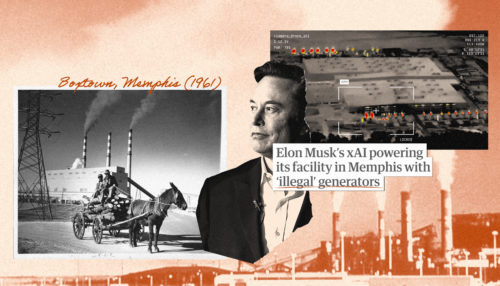
NARRATION: Officials in Virginia say QTS’s appeal to the supreme court could stretch until May or June 2027. note that Elena said they were being “held hostage.” Again, it’s about agency – a hostage has none, because their captor robbed them of it. QTS is persisting in trying to turn Prince William County into a reverse centaur that exists just to keep 22 million square feet of data centers running. Prince William County isn’t the only place where this is happening. It’s happening in Memphis, too, where Elon Musk is continuing his ambitious, expensive, and polluting Colossus project. Memphis activist Amber Sherman caught me up on Elon’s schemes.
AMBER SHERMAN: he also bought another building. So there’s now four data centers. There’s Colossus I, II, III, and IV. Colossus I is being rented out to Anthropic, which is a AI, um, business, but we don’t know much about Anthropic or what they’re doing. And then Colossus II, the Southaven, is really building up power now to be able to actually power the whole entire thing ’cause they haven’t been able to power that or Colossus III in Whitehaven. He also paused the water reuse facility that they were building, so now they’re working on building Colossus II, and they said they’ll come back to it, so they’re still using the water from our aquifer, which is, you know, also a, you know, policy issue because our aquifer is precious water. Memphis has the best water in the nation.
NARRATION: As part of the deal that drew XAI to Memphis for Colossus I, Elon promised to build a recycled water facility that would supply water to cool the Colossus projects without drawing from Memphis’s aquifers. But, Amber tells me, that project has taken a backseat to the construction for Colossus II.
AMBER SHERMAN: But then they just paused it indefinitely and said they’re gonna finish Colossus 2.
NARRATION: It certainly seems to say something about Elon’s priorities – he’ll break his promises as long as he can get his data centers built. This is more evidence of an industry that’s out of control and in need of serious regulation. And indeed, the Tennessee statehouse has made attempts to regulate data centers, but Amber sees them as fairly empty. Though several data center bills were considered in the most recent legislative session, only one of them passed. In spirit, the bill limits the ways data centers can pass cost increases onto electric ratepayers. But according to Amber,
AMBER SHERMAN: realistically it doesn’t do much. There’s no… If they violate that, there’s no fine or fee. There’s no, like, actual repercussion involved. It says you can file a complaint with the Public Utilities Board of Tennessee or with the governing board for that public utility. But realistically, it doesn’t really do much.
NARRATION: Regardless of the bill’s actual efficacy, it doesn’t do anything to curb the impact of Tennessee’s biggest data center, Elon’s massive polluting Colossus project.
AMBER SHERMAN: that bill did pass, but also it doesn’t apply to Elon Musk or his data centers because it only applies to data centers that are entering into new contracts by January 1st, 2027 or amended contracts. It doesn’t even apply to him. So I think that’s also, you know, not really a win. I think obviously it’s a win because they’re thinking of future data centers, but the Republicans just wanted to say they did something about data centers. They didn’t actually, you know, do much that could actually support or help, you know, the current issues that we have in Memphis of us being concerned about our electricity grid and the water use.
NARRATION: While the Elon vs. Memphis fight plays out, much broader forces are conspiring to rob Memphis of even more of its agency. Those forces go as high as the U.S. Supreme Court, which recently gutted the voting rights act. This opened the door wide for Southern states to redraw electoral maps in a way that silences Black voters. Tennessee’s legislature did just that.
AMBER SHERMAN: They also passed this redistricting ordinance, I mean redisti- redistricting bill, which splits up Memphis’ one congressional district that was a majority Black district, the only majority Black district and Democratic district in the whole entire state, to three different congressional districts, which, you know, separates and tries to dilute our Black voting power. I think what’s happening with the Supreme Court and the redistricting that our state sped and almost broke a leg to pass, um, is also just, like, the final step in what I was talking about before around this complete assault on the city of Memphis and our autonomy.
NARRATION: Amber sees Tennessee’s redistricting as an assault on Memphis’s agency, but she’s not sure it’ll actually work. To her, it’s not that easy to rob Memphis’s voters of their voices.
AMBER: we as, like, organizers, like me and other folks in Memphis, um, and Tennessee are really doing a lot to mobilize voters. And a lot of voters are extra very excited because they’re pissed off at how the state is doing us in the first place. Like, they, they don’t like that they did it either. They feel attacked. And so I know that we’re gonna see a lot of people getting out to vote. We’re also gonna see a lot of people trying to get more educated on the different things on the ballot. And so I do think in some ways it might backfire on them,
NARRATION: And so the fight for agency in Memphis has escalated from a data center in Boxtown to the supreme court and the ballot box. But robbing Black Memphians of their agency via the ballot box may not be as done of a deal as the Tennessee legislature thinks. Increasingly, voters are showing that data centers are motivating how they vote. That’s what happened in Data Center Alley in the 2025 Virginia elections.
CHAPTER 3: THE FIRST SUCCESSFUL ANTI-DATA CENTER CANDIDATE
NARRATION: John McAuliff is a lifelong resident of western Loudon County, Virginia – the eastern half of which is what we now know as Data Center Alley. The western half is much more rural than the eastern portion, and John wants to keep it that way in the face of greedy data center developers who’d rather the entire region become a reverse centaur to keep their massive projects running. An anti-data center candidate is a bit of a novelty in the region, which for the most part has worked to ensure data centers are easy to build. John converted his family home into a Bed and Breakfast, and he told me that the permitting process to do this was more involved, complicated, and difficult than the permitting process to build a data center. This is one of many reasons he decided to run for the Virginia House of Delegates on an anti-data center campaign. He won, flipping his seat from Republican to Democrat in the process.
JOHN MCAULIFF: So the part, the, the part of the county that I represent is the rural part of the county. We have four suburban precincts, and everything else is rural. Uh, and I’ve got a half dozen little towns that are all sort of trying to figure out the right way to grow while retaining their charm and their character. And as the data center developers have looked for new parcels, they’ve gone out of data center alley in the east and found little spots throughout the west, and that has led to just watching these towns tear each other apart, neighbor against neighbor, council member against council member, uh, to try to figure out what to do. And so I realized right away before I ran, long before I ran, that this was something that we were going to have to learn how to deal with. Uh, the other reason I realized it is because my background is in energy and climate work, and I realized after I left the, the last administration, the Biden administration, where I was doing that sort of work on their Inflation Reduction Act team, I realized the biggest energy crisis was actually going to be right here, uh, not just in my state, in my own literal backyard. And so I thought actually I might be qualified to try to take this on and talk about it in a way, uh, that we might be able to actually get somewhere. So that’s what we- that’s why I decided to focus on it. It, it took some convincing. Um, we were the first, uh, the first candidate as far as I know, to do a broadcast television ad about the spread of data centers. I’m probably not going to be the last, and I think that says something, right? It means that this is something that folks care about, that crosses party lines, and it’s something that actually matters in an era of affordability. Because I can’t control the president starting wars, I can’t control his tariffs, I can’t control those price increases. I am literally statutorily required to regulate our utilities and control our energy prices. So as much as we possibly can, right? To the extent that, to the extent that the global economy doesn’t impact us.
NARRATION: While a representative of a rural Virginia region cannot control federal policies, he has to control how utilities function and charge their customers. Again, it’s about agency – what can communities control and how. Delegate McAuliff took that responsibility seriously, introducing two data center bills in his first session. The first bill had to do with reining in pollution from existing data centers:
JOHN MCAULIFF: how are we protecting communities where these are already there? Meaning that there are places in my district and there are places in northern Virginia, uh, where they have built up to the playground of the HOA next door, right? And sure, fine, it was just supposed to be a box, but that box has a bunch of diesel generators on the roof, and those have been turned on more and more often, right? So my first method was basically let’s figure out how to address that problem of pollution in the actual communities where these are happening. There’s also noise issues and other ones as well, but this was the one where I was like, “Look, these are, these are kids’ health we’re talking about here.” I don’t think Amazon, I don’t think Google, I don’t think anybody wants to be on the wrong side of that issue, so let’s see if we can solve this.
NARRATION: Delegate McAuliff’s second bill aims to prevent data center costs from falling to ordinary rate payers.
JOHN MCAULIFF: Then the other side is cost allocation. This is the big-picture issue. This is the, if we can solve this, I think we’ve solved 80% of the problem. Uh, which is right now, all of the infrastructure, all of the transmission lines, all of those projects are being paid for on the backs of Dominion, APCO, and other rate payers for here in Virginia, right? So those are, those are the customers, but they’re also the ones now paying for all of this. But they’re not the users of the power, nor are they the users of the infrastructure, right? And so the way that Virginia has done it for a long time is, is large power providers say, “Hey, I’m coming in. This is what I wanna build.” We require our utilities via our state corporation commission to build it. We don’t give them the option not to. So my bill basically said, “If we know who the power’s going to,” meaning a high-energy user such as a data center, “you have the authority to deny the application unless they pay the cost of that infrastructure.” It was a very simple bill, and the goal was basically give the regulators the power to do their damn jobs. Uh, and so we’re gonna keep working on that one next year.
NARRATION: While the cost allocation bill will continue to be considered in the 2027 session, the generator pollution bill had better luck.
JOHN MCAULIFF: Um, but the generator bill, I was thrilled to hear, actually, uh, thrilled to hear, thril- thrilled to participate in, uh, to get that across the finish line, and it’s on the governor’s desk right now. So I can’t say for sure that it will become law, but I hope it’s something that she considers equally as seriously. Um, and I, I think that’s the case. So I’m hoping that that gets done. Uh, and that just basically requires them to use the best technology. Mm-hmm. We don’t say you can’t have them, right? Because they do– they are necessary in certain cases. Mm-hmm. But you have to use the, the least emitting technology you possibly can.
NARRATION: This certainly sounds like a policy that would fall in line with what our experts recommended in episode 5 — requiring the use of the best available technology rather than allowing tech billionaires to cut corners and let the rest of us pay the price. So it’s a bit of good news that the bill, HB507, did get the governor’s signature. Delegate McAuliff not only represents a community reclaiming their agency at the ballot box, but his busy first session represents government taking policy action to regulate data centers. This trend is not limited to Virginia.
CHAPTER 4: THE RESISTANCE CATCHES FIRE
NARRATION: In my home state of Ohio, some folks were surprised to see Governor Mike Dewine announce a pause on tax breaks for data center projects. The same day, the state house immediately introduced a bill that would end the tax incentives permanently. The bill, introduced by past Building Local Power guest Tristan Rader, even had bipartisan support, a rarity for a bill introduced by a progressive member of a body controlled by a Republican supermajority. But even though the Governor’s pause represented some progress, Representative Rader’s bill failed to pass before the summer recess. despite the statehouse stall, Ohio citizens are currently in the midst of a signature drive to place an issue on the November ballot that would create a constitutional amendment banning large data centers permanently. It’s unclear whether they’ll be able to gather enough signatures in time, as Ohio’s petition signature thresholds are notoriously difficult. But I will say I’ve seen folks with clipboards and “ban data centers” tee shirts at every farmers market and large event I’ve been to this summer in Columbus.
Ohio isn’t the only Red State with some movement on data centers. Oklahoma passed the “Data Center Consumer Ratepayer Protection Act,” aiming to shield ratepayers from the cost of AI-related infrastructure. A similar bill is advancing in North Carolina. It is worth noting that these bills sound similar to the Tenenssee bill that Amber considered toothless, but even symbolic action is a sign that lawmakers are feeling pressure from constituents on the data center issue.
Not all data center regulations are toothless, however – some places have passed legislation that will have a real impact on reining in data centers.
The New York statehouse passed a one-year pause on data center construction. At the time of recording, the bill awaits a signature from the governor.
With unanimous support, Illinois passed a bill aiming to require new accountability measures from the biggest AI companies. It’s modeled after New York and California bills, and Illinois lawmakers are hoping it becomes a defacto national standard.
It’s not just at the state level, either – many local governments are taking even more serious action.
Baltimore, where we learned about the harmful legacy of the Wheelabrator incinerator, passed a yearlong moratorium on data center projects. Many other cities have joined – the website US Data Center Moratorium Tracker says 111 data center moratoriums are currently enacted in the United States, with 77 more being debated. And these are often bolstered by a groundswell of popular support: In early June, voters in Monterey Park, CA voted 82-18 to permanently ban data centers in their city.
Many other cities have joined suit. Permanent bans have been enacted in Smithfield, RI, Warrenton, VA, Weaverville, NC, St. Charles, Missiouri, all the land of the Cherokee people, and four communities in New Jersey: Andover Township, Pemberton Township, Monroe Township, and Millville. These places fall across the political spectrum, as do the dozens of cities that have enacted temporary moratoriums. For instance, both Minneapolis, MN and Iron County, UT are currently under active data center moratoriums. Minneapolis had a +58 margin for Kamala Harris in 2024, and Iron County, where “Commissioners cited nonstop public calls/emails” as a reason for their temporary ban, went +57 for Donald Trump.
The new policies represent a move from popular resistance to policy. That popular resistance has had a huge impact, even outside legislative chambers. According to the New York Times and their interviews with Miquel Vila from Data Center Watch, “At least $156 billion across 48 projects with publicly disclosed values was blocked or stalled amid coordinated local opposition in 2025. Opposition “hardened” into legislative hurdles, Mr. Vila noted, narrowing the options for data center developers looking for sites.”
In just the two months since our first episode published, the data center issue has exponentially increased in resonance — Even the Pope is talking about AI. Not only that, he’s warning us about becoming reverse centaurs – in a new encyclical, which deals heavily with AI, Pope Leo quotes a text that says “The need to keep up with the pace of technology can erode workers’ sense of agency and stifle the innovative abilities they are expected to bring to their work.”
CHAPTER 5: THE URGENCY OF JOINING A MOVEMENT
NARRATION: In total, all of this, from state policy to local moratoriums to popular protests to the Pope himself, all represents progress in communities’ fights to reclaim their agency against the AI data center explosion that’s trying to take it away. But it remains to be seen whether it’ll be enough to soften the eventual impact of the AI bubble bursting.
I was shocked to learn that about 30 percent of the S&P 500 is made up of just six companies: Apple, Meta, Alphabet, Microsoft, Nvidia and Amazon, all of whom are staking their future on AI and the massive data centers associated with it. Anthropic and OpenAI are working on historically enormous IPOs, which would only expand the presence of massively valued AI companies in the stock market. A crash in the sector would be devastating. But the growth can’t keep going unchecked forever. Let’s return to my chat with Cory Doctorow, who said:
CORY DOCTOROW: anything that can’t go on forever must stop And so if you are spending $700 billion a year this year, and maybe twice that next year on data centers, but you’re making $50 billion a year, you will eventually run out of people who give you money for this unless you can figure out how to turn a profit at it. And so while it’s not inevitable that we’ll have the AI that the AI bros dream of, it is inevitable that unless they find a way to make money, that most of those data centers are gonna be laser tag arenas, right? Which again, like we c- we can, like one of the things we need to think about when we criticize these data centers is rather than saying, “Jesus Christ, they’re putting this data center next to my house that’s gonna w- you know, roast me and, and fill the sky with smog and make this horrible noise for the next 50 years,” is we should be saying, “Well, they’re gonna build this data center next to my house, and it’s gonna be a, a rotting hulk in two years when the company goes bankrupt.” Right? Because like, you know, if you stipulate that they’re in business for the long haul, well, the, the, you know, dumbasses in your city government who are giving them the tax breaks are gonna be like, “Well, at least they’ll be here for 30 years.” Right? You should be like very aggressively making the case that they might have 36 months or less, you know?. And do you wanna have this giant white elephant in the backyard?
NARRATION: Empty data centers are a real risk, and they’ll be a serious consequence of the AI bubble bursting. The economic consequences will be devastating, too. When we were researching the story about Memphis’s Boxtown neighborhood and Elon Musk’s Colossus data center, we found that More Perfect Union had done some really good work reporting the story. More Perfect Union regularly covers issues that corporate monopoly-controlled mainstream publications won’t touch. We found their Memphis reporting so useful that we reached out to Sam Black, the documentarian behind it. Our conversation ended up ranging far beyond Memphis, and Sam had insights about the global impacts of the data center epidemic. Here’s what he had to say about the perilous economic math of AI:
SAM BLACK: I think there are some interesting u use cases of ai. Um, but what there isn’t are use cases so far that I see that, um, allow these companies to recoup, to make a profit. […] The big question is how are these AI companies ultimately going to impose a. A toll or a tax on these services at what point are we gonna see these companies try to introduce. Advertising promotional features that, um, push people to buy certain products. Uh, we could, you, you could imagine how, uh, manipulative that could be with a AI interface that is mimics the hu another human and, and, and, and becomes their confidant. Um, and I think that. Uh, that’s, that’s, that, that’s the, the, the holy grail ultimately is how, how are they gonna make a profit?
NARRATION: If you ask Sam Black, then, becoming a reverse centaur isn’t just a symptom of the data center epidemic; It’s the disease itself. AI companies need to turn us into reverse centaurs in order for them to make money. They need to use AI to trick us out of our money and replace us at our jobs. Remember Sam Altman talking about turning intelligence into a utility that his company has a monopoly on. For the AI model to work, we have to surrender our agency. And what happens if we refuse that? There’s no other way for these companies to make back the huge investments in these data centers. The bubble will burst. Our friend Cory Doctorow has some sobering thoughts about the cost of that bubble bursting. Turns out, the threat isn’t just economic.
CORY DOCTOROW: They are, they are inflating a bubble that will be hugely destructive when it goes, and that’s the thing that I’m most afraid of, is that when the thing that can’t go on forever stops and a third of the American stock market is vaporized The thing we are almost certainly gonna do in the US and globally is what we’ve done in every financial crisis since the turn of the century, which is austerity. And we know that austerity drives people into the arms of fascism. You know, we, we– There’s a really amazing study recently that measured at a poll level of granularity support for, for the fascist party in the UK, the Reform Party, and its correlation with having your doctor’s office get closed by the NHS because of austerity, and it’s just one to one. You, you, you deprive people of the necessaries of life, and then you tell them that the reason that they’re suffering is because of undeserving others, and they are, they are patsies for fascists. And that is the biggest risk of AI, right? It’s, it’s not the technology. It’s not even the environmental risk. It’s the, it’s that we will create an era of more authoritarian fascism that will make it harder to address the environmental risk and to deal with the environmental consequences, right?
NARRATION: This is pretty bleak, and I think it’s even more sobering when you think about the lack of a robust media landscape where good local reporting can act as a bulwark against authoritarianism by holding politicians and corporations accountable. This realization led me to ask Sam Black, a journalist working hard to do just that despite the thinning and consolidation of American media, what there is to do.
SAM BLACK: I think the question people should think about is where, where is the attention of their neighbors focused? Um, where, because. Although we, there’s a lack of local media, people are still very much tuned in to other, to their community through in different ways. That could be as simple as, I hate to say it as Facebook, Instagram, TikTok, the re YouTube. The reason why more Perfect Union puts everything we do on those sites on social media is ’cause that’s where people’s attention is focused. So if you are someone who’s concerned about some this. Start by, first of all, start by talking to the people you know, but second of all, to, to, to broadcast your, your, your views beyond that. Start, start posting about it, start linking with people through these digital networks. Um, I think you’ll, you’ll find that actually across a political spectrum, people have been really focused not only on the data center issue, but on its effect on electricity prices. Um. On, its on, on its effect, on pot, potentially on water resources, um, on land use. Um, and those are the issues that, um, are that, that definitely cut across political coalitions.
NARRATION: If you get enough neighbors talking to each other, if you empower enough people to tell their stories, all of a sudden you have a movement on your hands. When I asked Cory what to do about the risk of the AI bubble, that’s exactly what he said.
CORY DOCTOROW: Get involved in a movement, right? Don’t– Like, God, 40 years of voting with our wallets has gotten us nowhere, and the only people who like the sound of it are billionaires ’cause their wallets are thicker than ours, right? Shopping is not boycotting, right?
NARRATION: This reminds me of arguments from my first book How to Resist Amazon and Why. The problem of Amazon and other big tech monopolies is, at its core, a policy problem. Politics have allowed these corporations to become so powerful, so the answer to that political problem is politics, not individual spending decisions. Cory agrees.
CORY DOCTOROW: your book is very good because it talks about the political campaign needed to, to deal with Amazon. It’s not about, like, whether you are virtuous or, or, or, uh, full of vice when you order a, you know, widget from Amazon. It’s about how we build a movement that, that, um, stops Amazon, right? It’s not, it’s not personal consumption choices. L- and the same is true of AI, right? Like, just, like, the idea that personal consumption choices are gonna make a difference. You can make a difference to the lives of the people around you, right? You can make better writing if you don’t outsource it to AI. You can keep your local independent bookstore open if you shop there instead of Amazon. Don’t kid yourself that, like, Sam Altman or Jeff Bezos suffers based on your consumption choices. Do your politics politically, not- And an atomized individual way.
NARRATION: I understand the temptation to try to stop the march of AI by not using AI. I certainly don’t use generative AI, and the greed and evils of the industry are a part of that decision for me. But a decision I make all alone at my desk won’t create a movement to stem the harm from these tech corporations and their greedy leaders. You need politics, and the good news is that the local level is the place where it’s easiest to find political agency.
CORY DOCTOROW: it turns out that these are very local issues. And local politics is much easier to get involved with than regional, state, or, or especially federal politics, where it’s just a, a cesspool and it’s deadlocked. Um, you can do a lot on the local level. I mean, if there’s one thing we should learn from Moms for Liberty, it’s that these local offices that nobody pays any attention to can be hugely consequential if you are ambitious. Mm-hmm. And you do not have to confine your ambition to ruining people’s lives. You can, you can have ambition to make people’s lives better. And so get involved in local politics. Like you, I work for a 501[c][3]. I cannot tell you which party to get involved with, but I can say that you should get involved in local politics. Uh, and honestly, you know, one of the things we’re seeing about on, in the data center front is that Republicans and Democrats and the Farmer Worker Party and working families and the, the, you know, Democratic socialists all hate these things. Just, just hate them, you know? So, like, I don’t care where you’re… I, I mean, I can make an educated guess about the politics of the people listening to this, but if you’re like a, you know, fire-breathing MAGA dude, like, there’s a, there’s a home for you in the anti-data center movement.
NARRATION: In becoming a movement, the Data Center resistance has become about more than data centers. This is a fight for agency in the face of out-of-control corporate power. This is a fight against big tech’s efforts to isolate us from each other so they can more easily extract from our communities. Big tech wants to take our agency away and enlist us as reverse centaurs whose purpose is just to serve their machines. But communities can fight – are fighting – to make sure technology works for them, and not vice versa. After spending almost a year researching this fight, talking to people on the front lines, and immersing myself in these stories, I truly believe It’s a fight that can be won.
Building Local Power: The Data Centers are Coming is a project of the Institute for Local Self-Reliance. This episode was produced by Reggie Rucker and Ilana Nevins, and it was written by me, Danny Caine. Many thanks to Reggie and Ilana for their support and inspiration, and much gratitude to ILSR for supporting this project. Many thanks to Cory Doctorow, Nikki Forrester, Elena Schlossberg, Amber Sherman, Delegate John McAuliff, Sam Black, and everyone else who talked to us throughout the series for their time, expertise, and leadership.
Please check out the show notes for some links to valuable resources, including More Perfect Union’s great reporting on the data center issue, Cory Doctorow’s excellent new book, and local coverage of data center fights in Virginia, West Virginia, and Memphis.
If you like what you heard, make sure to subscribe to Building Local Power wherever you get your podcasts. We also appreciate being in conversation with you, our listeners, so please leave us a review or comments wherever you’re listening. Your feedback helps inform our future work to keep delivering stories that matter to you, so let us have it. We’ll be back with more stories soon. Thanks for listening and see you next time.
We start at the epicenter: a once-semi-rural Northern Virginia community transformed by Big Tech’s sprawling data centers, sparking a fight for land, autonomy, and transparency.
A proposed data center galvanizes resistance in a small West Virginia community, sparking a fight over state vs. local control.
Elon Musk's Colossus 1 data center in Memphis reflects a historical pattern of corporations siting polluting facilities in poor or Black neighborhoods.
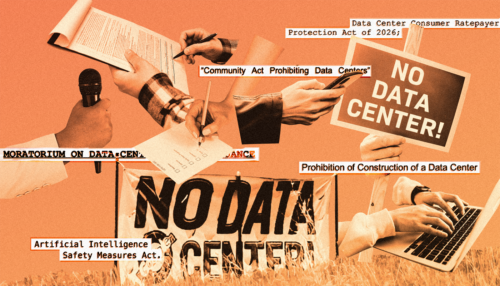
Are data centers making electric bills go up? We ask experts this and other questions about how utilities profit from Big Tech's AI boom.
A panel of experts explores the question of how to build data centers that serve their communities, rather than extract from them.