The Data Centers Are Coming: Ep. 4 – Transmission (Im)possible
Are data centers making electric bills go up? We ask experts this and other questions about how utilities profit from Big Tech's AI boom.
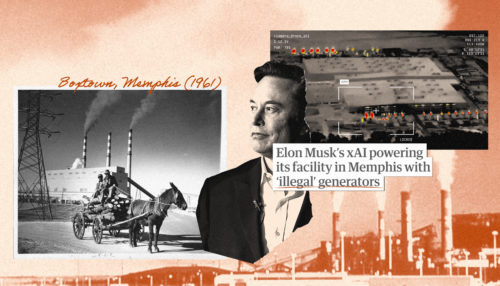
Some residents of the Boxtown neighborhood in Memphis, Tennessee, didn’t know Elon Musk was building a huge data center nearby until they saw city and Chamber of Commerce officials hyping the deal. A historic Black neighborhood founded by freedmen after the Civil War, Boxtown is one recent example of an old pattern: corporations siting polluting, noisy facilities in Black or poor neighborhoods, which the corporations see as less likely to mount a resistance to their plans. We chronicle this history, finding useful context in the decades-long fight against trash incinerators. We also learn what Memphis is doing to fight back, from citizen journalism to liberation science.
Guest voices + context:
Memphis policy organizer Amber Sherman“I think that people power is unmatched. It might take a little longer sometimes, or you might feel like it’s not going as well, but people power never loses.”
ELON’S UNPERMITTED POWER PLAN IN SOUTH MEMPHIS
Danny Caine: Elon Musk wanted 150 megawatts of power, and he wanted it fast. He had found an empty Electrolux factory in south Memphis, and he wanted to turn it into a huge data center called Colossus I to power his Ai initiative, XAi. In his opinion, he had a late start. Anthropic and Google were already surging ahead in the race for AI dominance, as was OpenAi, a company Elon helped to found but left in an acrimonious split with his co-founder, Sam Altman. He was falling behind. To wait for a connection to Memphis’s grid – a connection that could take a decade – would mean failure. To him. Remember: the AI race is driven mostly by tech CEO’s desire for ever more computing power and scale.
So he built an unpermitted power plant from scratch, right next to Colossus. It took the form of several gas turbines, chugging away out there in the open in South Memphis. Musk and XAi were never forthcoming about exactly how many turbines were operating at the time, in part because they had yet to submit permits to operate them, leaning on a loophole that says “temporary” generators – those in place for 364 days or less – don’t need permits. Some estimates said there were 15 of these giant machines belching pollution into South Memphis. But it turns out that the 15 number far undershot the reality. Here’s Memphis activist and organizer Amber Sherman:
Amber Sherman: it also wasn’t until the SELC flew a plane over XAI to show how many methane gas turbines they were actually using that all of a sudden people were like, oh, maybe this isn’t the best idea.
Danny Caine: The SELC – the Southern Environmental Law Center – hired thermal imaging cameras to be deployed over Colossus, and what they found was shocking: rather than 15 glowing red dots, there were 35. More twice as many as people thought there were. That’s a staggering amount of pollution and noise pumping right into the historic neighborhoods of South Memphis. Historic Black neighborhoods. Amber told me what that looked like:
Amber Sherman: I went down to XAI myself and stood in front of it and filmed what the pollution looked like, that now all of a sudden people were paying attention to what was happening when I showed them the, these large plumes of pollution. Then people were like, oh, this is actually a, a big issue. We should probably look into it.
Danny Caine: Take us to the scene. Tell us what it’s like down there. What does it look like? What does it feel like? How close is it to the houses in Box town and other neighborhoods?
Amber Sherman: Yeah, I would say when I was driving there, it was about maybe five minutes from a neighborhood, um, you kind of enter into an industrial park. The roads are terrible, very rocky. Um, once I got to the actual neighborhood of, of like box town in South Memphis, I start smelling a horrible smell. It smells like dying dogs over there. Like it just smells like something is rotten. Um, and then as I got closer and closer to XAI and the other industrial plant is a TVA plant over there, it just got even worse. Like the smell just increased and I think it was obvious that, you know, the amount of pollution they’re putting in the air one is causing this horrible smell.
Danny Caine: It’s possible that the people behind the data center explosion are lying to you about the harms that data centers cause. It’s certain that those harms are often concentrated in poor or Black neighborhoods.
From Building Local Power, this is The Data Centers are Coming episode 3: Contamination without Representation. I’m your host Danny Caine.
Danny Caine: Elon Musk’s logic around powering his Colossus data center is representative of the AI race as a whole. Rather than go through established channels for building such massive, energy consuming projects, he employed shortcuts of dubious legality and certain harm for nearby neighborhoods. This is how things work when you’re in a desperate race for scale. Time magazine tech correspondent Andrew Chow explained it to me:
Andrew Chow: Uh, desperate is the right word. These companies are desperate. They’re ravenous, I would say, for compute, for energy, for water, for cooling. They’re trying to spend as much money as possible to, um. To train these models so that they can be at the, the top of the leaderboard and then they can win market share for their chatbots. Um, so how do you train the ais? You need to train them with these data centers. Um, and these data centers just, they need so much energy. Elon was behind in the AI race, you know, He felt the need to, to move as, as fast as humanly possible. He thinks his legacy is on the line, and that by building as fast as possible is the way that is, he’s going to cement himself at the top.
Danny Caine: What all this means is that a few people have a massively disproportionate impact on communities nationwide and perhaps even globally.
Andrew Chow: The fact is, is that the AI race is being propelled by, you know, basically less than 10 guys who have an inordinate, an inordinate amount of decision making power over how they move forward in this race.
Danny Caine: It’s an unavoidable fact that these ten guys with a disproportionate amount of power are overwhelmingly white and rich; it’s it’s also unavoidable that many of the places feeling the impact of this power are decidedly not rich, and Black. The neighborhoods surrounding Elon’s Colossus are a clear example of this.
Andrew Chow: Memphis is a very black city, box town is a very black part of the city. Uh, it was started by former freed slaves. So this is a community of, you know, um. You know, ingenuity and, and sort of self building upwards. But for decades they’ve been plagued by pollution and by industry coming in and sort of dumping the worst chemicals you can think of, um, on South Memphis, um, of prior of companies and corporations prioritizing profit. Over the real harms of people in the neighborhood. And so you have generations and generations of cop d and respiratory issues, um, of people in the neighborhood of just like waves of, you know, the different types of pollution. Um. And generations of asthma. Before Elon came, there was a company named Electrolux that set up a huge manufacturing facility right on the, the river there. Um, and promised to bring a ton of jobs. To Memphis only for Electrolux to close a few years later and move their factory to another part of Tennessee when you know Memphis no longer was profitable to them. That plant sat unused for several years until Elon came, um, looking for a big plot of land, looking for access to power and looking for water. And Memphis really. Wanted to offer him all of that, at least the powers that B did because, um, you know, Memphis has had a lot of struggles with infrastructure and city officials wanted a big windfall. They, they saw how, you know, FedEx arguably, has done a, you know, lifted up a lot of jobs in the city. They wanted their next FedEx. So Elon comes and the city embraces them.
Danny Caine: The people in Boxtown had little warning that Colossus was coming; in Memphis as in other places, the neighborhoods feeling the brunt of major polluting industrial facilities’ impacts are not privy to the planning process for these facilities.
Andrew Chow: How this has actually played out is just. NDAs nondisclosure agreements up the wazo in, in every single part of data center development. most citizens do not hear about these data centers until they’re excavators or, uh, you know, taking down trees.
Danny Caine: Sometimes people learn about these projects when excavators show up. Sometimes they learn about them through PR campaigns after the deal is done. Sometimes, even elected politicians aren’t aware of these deals until the ink is dry, as we saw in Tucker County, West Virginia when Mayor Al Tomson of Davis learned about a proposed data center at the same time as everyone else. Here’s Amber telling me about how she learned about Colossus I:
Amber Sherman: Yeah, I mean, I like the rest of the city and most of the elected officials here found out because the Chamber of Commerce released a press, uh, release to the news and to the public announcing XAI, and talking about how they were directly involved in bringing them here, how they have created a team of folks who will support them 24 hours a day, seven days a week, who have been available and helping them. To move through this process seamlessly as they hope to build a digital delta, even though none of us have asked for that. No one in the city has asked for that.
Danny Caine: So it’s, it almost sounds like the Chamber of Commerce was basically like making a commercial for, uh, Elon Musk and XAI. Uh, how did it feel to see that?
Amber Sherman: I mean, I was disgusted. I feel like this is kind of a pattern also that we’ve seen with the Chamber of Commerce. Um, but I also think that, you know, the way that they curated it specifically in a way, you know, of this big vision of, you know, what we need here, even though we have not said as Ians that we wanted here. But also in the way that they curated the rollout, you know, sending out these press releases and putting out stories. And showing, you know, photos of this data center, these model photos that don’t actually depict what the data center really looks like. And I also was discussed in the way that the media did no investigation. They were posting the same exact press releases, posting the same exact pictures, even though that’s not what the data center looked like when you went there. ‘
Danny Caine: This, uh, this, this Chamber of Commerce video comes out. Everybody learns about it, citizens Government. It’s the first time anyone has heard. How did city government react?
Amber Sherman: Uh, when this project was revealed, our city and our county government both were supporting it. Both the county mayor, and the city mayor, put out statements of support. Different county commissioners and different city council members put out support. Congressman Steve Cohen, who represents Memphis, put out videos and was interviewed, you know, saying that it was a good project to come here. And it wasn’t until we as citizens were pushing back that some people actually changed tune.
Danny Caine: A question I’ve really bumped up against, I’ve been working on this project for many months, um, is like. It’s really clear to me. Data centers are expensive, they’re polluting, uh, they are massive drains on the resources of the communities that they’re in. Yet politicians love them like it sounds, like the whole, the city of the county. And one of your reps was like, all right, let’s do this. So despite the mountain of evidence that these projects are harmful and don’t even create that many jobs, um, why do you think politicians are still so gung-ho about data centers in general?
Amber Sherman: Yeah, I mean I think that most of ’em are thinking about the economics and that, you know, bringing these data centers here brings, you know, all this tax revenue here. Our Mayor, mayor Young, has talked about it and talked about the amount of tax revenue that it was bringing to the city and how that kind of economic development is what we need. Even though, you know, we as Memphis don’t agree, and I think a lot of times politicians are only thinking in dollars. They’re only thinking in, you know, what financial benefit are folks getting. And they also realistically will never be impacted by the harm. He doesn’t live in south. Our mayor doesn’t live in South Memphis. Our county mayor doesn’t live in South Memphis, Lee Harris. These other elected officials don’t live in the hood. They don’t live in that area.
Danny Caine: To learn more about Boxtown and the Colossus saga, I reached out to Dr. Sacoby Wilson, a professor and environmental health scientist who has done interesting work in South Memphis.
Dr. Sacoby Wilson: traditionally in science, folks do like top down science. You hear the ivory tower, right? And everybody says, oh, you know, you know, we want to do science. That is, that’s very like objective. Uh, dispassionate. I think that’s, uh, I’m, I won’t say any bad words. You know, you don’t have to have a PhD to be a scientist. You just have to use the scientific method.
Danny Caine: Talking to Sacoby, I learned that the issues surrounding Colossus, with rich white businesspeople and developers exploiting a Black neighborhood, are far from new. In fact, they go all the way back to the founding of Boxtown in the wake of the Civil War.
Dr. Sacoby Wilson: It’s an unincorporated black community. So it’s more rural, uh, you know, urban, but you know, also that rural mix. And when you’re unincorporated, you, you, it is taxation, it’s, uh, contamination, not representation. So you don’t have, like, you know, so we don’t unincorporated community, you don’t really have a town mirror. You don’t have like political power, a a lot of voice, right?
Danny Caine: I’m really interested in like the government implications of it being unincorporated and like that being a reason why there’s less political resistance. But just like, tell us, um, about Box Town, it, its history, past environmental issues, and what makes this community like ripe for Elon Musk for his giant project.
Dr. Sacoby Wilson: you have this. Rich history in our country with a lot of Freedmen’s communities, right? That, uh, once they were established. The fight against oppression didn’t stop. Okay? Right. So you could see that many of these communities were still under attack by the, the, the, the former of slave masters, right? They were attacked, uh, by folks who were not supportive of them, uh, being seen as a fully human, you know, not as chattel, right? And so box town. Like many, many freedmen communities around the country, many of those communities from when you think about oppression and, and how racism rear its head, you know, and, and, and impacting their, their, their ability to kind of continue to grow and prosper as a community. You look at zoning planning and development. So, uh, these unincorporated communities, there’s either one or two things. Either they have lack of access of infras, what we call basic amenities, so paved roads, sew and water infrastructure, good housing, and or they also are a state. They be, they be, uh, are used as a sacrifice zone. So you, you, you see that in box town. Um, and so the fact that they didn’t really have a major voice. It’s not by accident. It’s called planning. And so we don’t have a, a town mayor. You don’t have a town council. The their, the admiral least resistance. It’s gonna be harder for them to fight back and easier for the city also to say, Hey, let’s just dump all these, um. Facilities in an unincorporated community, we get the tax revenue right, but they, they get all the harms.
Danny Caine: The fact that Boxtown isn’t rich, the fact that it’s unincorporated, the fact that it’s already home to polluting industrial facilities – tech billionaires see this kind of place and assume there’s less political will to fight back than there is in wealthy white areas. It’s just like the way Fundamental Data, whoever that is, saw a tract of old strip mine land in Tucker County, West Virginia and assumed that nobody would fight back against a data center there. But more and more we’re learning that these communities are tired of being written off, tired of being underestimated. Here’s Andrew Chow from Time:
Andrew Chow: I’ve been talking to, you know, community members across the country and one reframe that I hear is that they feel like they were chosen by these companies because they feel like the companies thought they were the path of least resistance, that they would be able to come into certain communities that maybe haven’t been historically very active or might be disenfranchised and sort of get run over, um, to service these corporation’s needs.
Danny Caine: This kind of thinking isn’t even necessarily secret. More Perfect Union, which makes great short documentaries about their mission of “Building power for the working class,” has some really good coverage of the Colossus story. For one of their videos, they unearthed a podcast clip where a data center booster had this to say about Colossus:
“lost cause” clip: Elon, what he did with Memphis is objectively somewhat dirty. But he’s also doing it in an area where there’s like a bigger natural power plant right next door, and a waste water treatment and a garbage dump nearby. And he’s obviously made the world much cleaner than that one data center.
Danny Caine: I asked Sacoby and Amber to react to the idea that since South Memphis is already polluted, one more polluting facility isn’t a big deal.
Dr. Sacoby Wilson: I mean, dude, horrifying. Like, you know how dehumanizing, you’re basically dumping on folks verbally who’ve been dumped on literally for decades. the dumping didn’t happen overnight. The targeting didn’t happen overnight.
Amber Sherman: Yeah. It’s insane. The other polluting buildings need to go too. And I also say that like the community members there in Box Town and South Memphis and in Memphis in general had been fighting against pollution for years at this point. Like, that wasn’t a new thing. I felt like. Um, and I know a lot of other folks in the community felt like that. You know, Elon Musk thought we were the path of least resistance when he came here. And so he just thought, well, I’ll just go there. They’re not really gonna push back. It won’t really be an issue, and that’s definitely not true.
Danny Caine: It’s clear that the Colossus story is threaded through with environmental racism. This is not a new story, as Amber explains.
Amber Sherman: Memphis specifically is the largest democratic voting block in the state of Tennessee. It’s all also the blackest major urban city in the country. And so those two things combined are definitely a huge threat for a super majority, a Republican super majority.
Danny Caine: So this, um, kind of scapegoating, is Memphis is a black city or is it democratic city? Like, how long has that been happening? Is that a historical thing or is it a new thing?
Amber Sherman: No, it’s a historical thing, but this has been a constant, I mean, really since the inception before Memphis was even an established city.
Danny Caine: One way the Colossus story connects to the history of environmental racism is in false promises of job creation by city leaders who embrace big corporate development projects.
Amber Sherman: there’s been a precedent set that black people in, in our majority black city, don’t deserve good paying jobs. We have a warehouse industrial complex here based off of FedEx ’cause they have a headquarters here. And all these other warehouses that won’t hire people for full-time jobs, they’re mostly all temp workers. They don’t have benefits. And so now that they have that precedent set within FedEx, within these other, uh, the Nike factory and all these other warehouse. Other places that come here don’t feel like they have to provide citizens with good playing jobs. They don’t feel like they have to provide us with benefits or full-time jobs because the precedent that’s been set is that people don’t, aren’t offered those things. And I think that that’s the big thing that folks have to actually take on, which is how do we make sure that we’re bringing economic development here that embraces the full, that provides them with quality jobs and benefits. And that’s not what’s happening.
Danny Caine: The harms from data centers are going to last long beyond the useful life of the facilities. Once the AI bubble bursts, the data centers will still be there. It’s an old pattern.
Dr. Sacoby Wilson: When you think about historically, and a lot of communities I work in, we always talk about these legacy, uh, hazards. So from power plants, gas, coal, fire plants, to incinerators, to petrochemical operations to refineries, they tend to concentrate in low income communities, communities of color, uh, indigenous communities, right? Data centers. I’m framing data centers as an emerging threat. So, but following the same pattern. Of going to the avenue of least resistance. Uh, and, and, and you’re seeing that across the country.
Danny Caine: The pattern that Sacoby is alluding to is one of the things that drew me to this topic to begin with. What types of people and places are targeted for the harms related to corporate power is an animating principle behind my own research, but also the work that the institute for Local Self-Reliance does as a whole. One of my first projects as host of Building Local Power was our Power Play series, investigating the relationship between race and monopoly power, inspired by my colleague Susan Holmberg’s landmark report of the same name. But ILSR’s work on this goes much further back – from the outset, ILSR’s work has occurred at the intersection of environmental justice, racial equity, and corporate responsibility. Here’s ILSR co-founder David Morris giving a speech in 1997:
David Morris smokestack clip: Back in 1970 Congress passed the Clean Air Act. Part of that law was to reduce smokestack pollution. The regulation required industries to raise the height of their smokestacks. The reigning principle of the day was dilution was the solution to pollution. And the result? Well, the result we should of foreseen. The result was that a local particulate problem was transformed into a regional and even an international acid rain problem. Well what if Congress and the regulating agencies were instead guided by our first principle: marry authority and responsibility. They might have asked industry not to raise their smokestacks, but to lower them, to curb the ends and put the ends into the executive suite. And I assure you if they would have done that, design engineers would have created zero emission factories 25 years ago. By forcing those who make the decisions to be those that feel the impact of those decisions, we encourage better decisions.
Danny Caine: Earlier iterations of this fight centered around the technology of trash incinerators. Originally pitched as a solution to the problem of landfill overcrowding, incinerators actually ended up being a very expensive and very dirty response to the trash problem. That didn’t stop them from being cheerfully embraced by city officials looking for a silver-bullet solution. Wildly, many states included trash incineration in their green energy portfolios, and some places still do. The end result, of course, was huge polluting facilities disproportionately sited in poor and Black neighborhoods. My ILSR colleague Brenda Platt has been fighting trash incinerators for decades.
Brenda Plantt: May, 1986. Yes.
Danny Caine: I was born in August 86. So I, I like your ILSR career. I’m also turning 40 this year.
Brenda Platt: I, I was a baby. I, I was just a prodigy. I started when I was a baby.
Danny Caine: I talked to Brenda in hopes of gaining some context for the data center fight based on her long experience with resisting incinerators.
Brenda Platt: trash incinerators in the United States are basically located in communities where people of color, especially black residents, are disproportionately impacted and the largest and the most polluting trash incinerators tend to be in communities of color.
Danny: do you think. These corporations are targeting these neighborhoods deliberately, and if so, why?
Brenda: Yeah, I mean, I think they target areas of least political resistance in the case of incinerators. I mean, while many of them are in low income, predominantly African American, black communities, some are in very rural communities. Mm-hmm. Um, so yeah. They, you know, a lot of them ended up the ones that are in black communities, they’re in urban areas because they’re close to where the waste is being generated. Mm-hmm. But that’s why they are impacting so many more millions of people. Mm-hmm. Because they are located in urban areas. I mean, it’s. So severe in Baltimore where there is an incinerator in an African American community. Mm-hmm. It is the largest source of pollution in the city of Baltimore. Um, and it’s emitting, uh, mercury, highly toxic, heavy metal. It’s, uh, emitting dioxin, which is one of the most toxic chemicals known to man, where there’s no safe. Level that’s allowed and it’s, and, and di dioxin is actually produced during the incineration process, so it doesn’t really largely exist in the waste stream itself. Mm-hmm. So these are highly polluting incinerators that are linked to the pollutants that are emitted or linked to a whole host of, of health issues.
Danny Caine: Just because the trash incinerator fight has been going on for decades doesn’t mean it’s over. In a previous episode of Building Local Power I spoke with newly-elected Baltimore City Councilman Zac Blanchard. During that conversation, which I’ll link to in the show notes, I first learned about Baltimore’s Wheelabrator Incinerator, still active, still polluting its predominantly Black neighborhood. It’s the largest single source of pollution in Baltimore, and I went to see it with Maryland clean water activist Jennifer Kunze.
Danny Caine: Oh, we get to cross this, this giant,
Jennifer Kunze: yeah. It’s a, it’s an interesting area.
Danny Caine: I suppose not many people want to take a walk to the incinerator, huh?
Narration: Once we had found a relatively quiet spot next to the incinerator – emphasis on relatively – Jennifer got to telling me about the facility
Danny Caine: so what’s the history of this facility like? How did it, um, how old is it? How did it get built? Um, tell me the story of how this massive thing got here.
Jennifer Kunze: Yeah, so the, this Traction Center editor was built in 1985. It’s 41 years old this year. The one of the oldest in the country and like the Frederick Incinerator that was proposed back when I was in high school. Like many of these types of facilities. And even like data centers, it was proposed, uh, as a solution to a crisis. Um, there were a number of older and honestly worser, um. Uh, trash incinerators around the city, burning city trash at the time that were much more polluted, had to be shut down. And the local decision makers were looking around for a solution. What’s one easy thing we can build to solve this problem for us? And the waste incinerator industry knocked at the door and said, here I am. And so, despite local opposition at the time, um. The industry was able to get built here, and once a facility like this is built, it’s so incredibly much more difficult to get it shut down or to transition to something better because every decision maker loves, you know, we build this one thing, it’s a magic box that solves our problem. Yeah, but that’s not reality.
Danny Caine:do you know if there was local opposition in the eighties when this was?
Jennifer Kunze: Yes, there was. Yes. Um, there were definitely efforts, you know, to shut down the old incinerator, one of which was close to my home now in East Baltimore Uhhuh, um, because those were massively polluting terrible facilities. And, but there was also opposition to building this new one. Residents at the time did not think that this was a solution. And, uh, one of the saddest. Stories is the reason that this facility ended up here instead of elsewhere in Baltimore City was, or an incinerator was first proposed in, um, further north in Baltimore, closer to wealthier, wider communities, Uhhuh, and those communities were able to prevent it being built there. And so it got put here in South Baltimore.
Danny Caine: Places like South Memphis or South Baltimore are targets because of a perceived lack of political will. But that perceived lack of political will is just a matter of tech bros underestimating residents. These places are filled with people fighting back. We saw it with Tucker United. We’re seeing it in Boxtown. I asked Jennfier how people are doing it in Baltimore.
Jennifer Kunze: I think it really starts with paying attention, um, and talking with your neighbors. So, uh, if you’re lucky enough to live in a community that still has a robust local paper, that’s a good resource. But if not. Your county council, your city or town council is going to be having public meetings where these issues are being talked about. So you can be your own reporter, uh, watch the agendas, live, stream the meetings, even attend a meeting, and don’t speak if you don’t feel comfortable yet to speak, but start to watch with your own eyes what’s happening.
Danny Caine: One thing struck me about what Jennifer said: “be your own reporter.” It’s impossible to ignore the role of local journalism in the data center story. Sometimes good things happen because of robust local journalism. An Amazon data center in Tucson, Arizona was successfully stopped by local activism. The Tucson fight started when a small local nonprofit newspaper trawled through enough documentation to discover that Amazon was behind the project referred to only by the code name “Project Blue.” In Tucker County, West Virginia, Fundamental Data’s mysterious data center project was only discovered when a local resident read her newspaper closely enough to find a mandated air quality permit notice.Groups opposing a major new data center project in Loudoun County, Virginia even scored a major victory simply because a local developer failed to run a mandatory newspaper notice. But as much as local journalism can help the data center fight, a lack of good reporting can hinder it or at least make activists have to fight harder. I asked Amber about the local media in Memphis.
Amber Sherman: I would say like our local news and local journalism sucks. They’re lazy. Um, they’re very much, if it bleed, it leads, they talk about death and murder 24 7. And so they, and I’ve noticed that they don’t really do much deep dive investigation work. Right. Like they don’t really look into things and so it’s easy for them to just repost a press release. I shouldn’t have to become a journalist because the journalists here are lazy and suck up to corporations. And you know, just think that it’s not important enough. But two, we have to do that because if we don’t, then our community is gonna suffer.
Danny Caine: Knowing how much local journalism – or the lack thereof – played a part in this story, I couldn’t let the chance go to ask a reporter at a national legacy publication about it. So I asked Andrew Chow from Time to share his thoughts about whether the disappearance of local media is playing a part in the data center fight, and he shared some reflections from his time reporting in Memphis and Texas:
Andrew Chow: Absolutely. And especially because a lot of these data centers are going up in sort of rural areas, which especially, which have lost any sort of local news coverage. Um, and this is something that I’ve discovered, you know, in going to these Texas towns is. There’s nobody really coming through court documents except for public citizens with a, a vested interest. Um, you know, the trust in media is also at an all time low. people are not likely to, to talk to folks like me. Uh, so, you know, what I found is there are whisper networks through communities where they’re talking about it on, you know, Facebook or, or other means, and. A lot of times the community will be very in the know before media gets wind of it because we’re just, we’re just not there.
Danny Caine: I’m interested in new ways of telling the stories that local journalists traditionally worked on. Amber told me about making Tiktoks at the Colossus site since Memphis newspapers are just recycling press releases from tech companies and the chamber of commerce. And then there’s the folks at More Perfect Union with their great short documentaries. But regardless of effective local media or not, it’s still crucial to organize on a hyper local level to mobilize against corporate power. As Jennifer Kunze told me in the shadow of the Baltimore incinerator:
Jennifer Kunze: Even without that intermediary of a reporter. It’s really important for starting to understand. What’s happening in my community and where are the decision points, where me talking to my neighbors about this could make a difference? And then talking to your neighbors. ’cause some people, you know, people are going to have different strengths. Maybe some people don’t know about it yet, but want to testify at meetings. Maybe some people would want to bottom line putting a rally together. Maybe some people even. Just want to do the childcare or provide the food for a community event. And all of those different moving pieces are really important to pull together to make a change like this happen.
Danny Caine: Yeah. If that’s not building local power, I dunno what it’s
Jennifer Kunze: exactly.
Danny Caine: That’s really good. Thanks. Well, we should probably head back to the cars before we breathe any more of this stuff in
Danny Caine: Though the data center fight feels new and unprecedented – and in some ways it is – it’s crucial to remember that these patterns of environmental racism are not new, as Sacoby Wilson reflected:
Dr. Sacoby Wilson: But we gotta have more guardrails and we need to learn from the past. And we’re not learning from past mistakes when it comes to, uh, in innovation technology, but not take into account the externalities. Uh, that, that are produced and how those externalities get concentrated in certain communities, certain populations, and then they get used to sacrifice zones
Danny Caine: Colossus I is far from the first major polluting project to try to take advantage of a perceived lack of political will in South Memphis. Amber and other Activists in Memphis hope they can repeat their past success in fighting off such projects.
Amber Sherman: Memphis is the same city that defeated the ba hella pipeline, which is a pipeline or oil pipeline that was set to run throughout the country and partially through, um, several states, including Tennessee. And the pipeline would run under South Memphis, which is a majority poor black neighborhood in Memphis, they were actually going an extra 52 miles to run it through South Memphis because they were going around Germantown, which is a suburb. And because they were going in this, I mean, you can see on the map that they were going around purposely around that community because they knew that those white people weren’t gonna be okay with them coming and bringing a pipeline underground through their communities. We pushed back against it hard, like we were out protesting folks were pushing to pass different laws. We got county elected officials on board. Um, and that’s also where Justin J. Pearson and Keshawn Pearson created the Memphis Communities Against Pollution Organization and we’re, you know, getting community members involved to continue pushing back against it. And we stayed on that issue for months and eventually it was defeated. And so I think that if we can do that, we can definitely defeat XI.
Danny: What, um, what about the strategy do you think was successful in defeating that pipeline?
Amber: I think that people power is unmatched. It might take a little longer sometimes, or you might, you know, feel like it’s not going as well, but people power never loses. And we were able to make sure that our community was continued to be heard. And that was enough. People were like, all right, yeah, we can’t keep ignoring this issue. This is like a crucial thing and we’re not, we’re gonna stand with the people. And I also think there was a lot of, um, organizing around flipping elected officials in support. ’cause a lot of them weren’t initially against it. And so trying to get those folks on board, even when our own NAACP chapter at the time was taking money from the ALIA pipeline and was supporting it and wasn’t saying anything against it. So we had even black organizations who weren’t supporting the issue. But luckily now, you know, the NAACP is, you know, heavily against this data center and there’s new leadership in place that also cares about what’s happening. And I think that that’s also a major pivot too, a major change.
Danny Caine: The Memphis NAACP has indeed had a change of heart – in April 2026, they sued XAI over the pollution from the Colossus facility. Legal avenues have always been one path to resisting these projects. Another is community-level science.
Dr. Sacoby Wilson: I do what we call empowerment science. Liberation science. So we use science to empower folks to build the capacity to understand the, the environmental phenomena of social form that they’re experiencing. And then with liberation science, we wanna use the science, translate that data to action, to liberate them from those situations. Right. So and so, a lot of what I do and my team does, uh, we do a lot of what we call hyper-local air quality monitoring. And so we’ve been doing some monitoring, um, uh, near the, near the Colossus facility, uh, in, in box town, um, and trying to measure things like ozone, uh, nitrogen dioxides, particularly in matter in collaboration with mcap. Uh, which is, uh, run by, uh, Keyshawn Pearson. And so the idea is to get the data into the hands of the people so they can translate the data to action. And so, so we wanna raise awareness, raise their environmental health literacy, and hopefully raise their agency so they can be able to do something about it.
Danny Caine: I think it’s pretty revelatory that Sacoby frames this in terms of agency. To many in Memphis and in the data center fight, this is about more than individual data center facilities. It’s about fighting off the tide of monopoly power and even the national drift towards fascism. You can tell by the way that he talks about this – this is about more than data centers.
Dr. Sacoby WIlson: as a, you know, a descendant of enslaved African people since country, and as someone who sees himself, you know, I see myself as. So to contain a legacy of, of, of, not, not to be too bold in this statement, but, but freedom fighters and abolitionists, right. Because that’s part of the, you know, that’s part of, uh, the legacy, right? You know, to whom much is given, uh, much is expected. So, I mean, I’ve been given the opportunity to, to, to do this kinda work. And for those, so the folks that are in those communities, you know, we, we try to, I come from one of those communities, so the idea is to try to work with folks in partnership to help them. But you know, many, these communities, uh, residents have been dealing with this for decades, as I said. And, and, and, you know, we talk about racism, how it shows up, you know, in, in this country. And it’s still, it’s still alive and well, you know, I would say right now with the current administration. Uh, with some of the issues that they’re the dismantling of environmental justice, uh, protections, uh, the, uh, rollback and engagement finding, you know, the rollback, the Clean Water Cleaner Act, uh, you know, roll back the National Environment Policy Act in the end. Who does that hurt the most? The communities that we’re talking about, the communities have already been overburdened, right. So, and I think we gotta, we gotta keep people engaged ’cause it is a social movement. And that was with saying before the legacy of fighting. I think that’s in the spirit. A lot of these folks, you got a lot of people who’ve come out of these, these places who are fighters. They’re fighting for the community. So we have to support them. We have to bridge, you know, uh, you know, and, and build around them. Uh, put our arms around them.
Danny Caine: American history is full of revolutions that started at the local level, starting with the American Revolution and going forward. This history is particularly resonant in Memphis, where Martin Luther King gave his famed “I’ve Been to the Mountaintop” speech in support of a local sanitation workers’ strike the day before his assassination. The data center fight is a clear example of a struggle that has started at the local level and can grow from there.
Dr. Sacoby Wilson: We cannot, I’m not saying listeners, y’all are doing this, but don’t focus only on the federal level. Don’t focus only on the state level. You gotta be multi, multi-level. But the place that you can get the most work done and you have the most power, uh, if you have a a of a social movement, it’s gonna be at the local level and then you, you, you have to build ground up to then get to the state level and then get to the federal level.
Danny Caine: Andrew Chow agrees:
Andrew Chow: local fights can turn into regional fights, can turn into national fights. And so I think that’s actually one of the, the heartening things about this is yes, there have been a lot of communities that have been harmed, but then they’ve been sounding the alarm for, for the rest of the rest of us,
Danny Caine: And the people sounding the alarm for the rest of us are determined and ready to keep going. I asked Amber if the goal was to stop Elon’s second and third Colossus projects, already underway in the Memphis area.
Amber Sherman: I mean, we wanna stop all of them. We wanna stop Colossus, 1, 2, 3, 4, 5, 6, 7, 8. It don’t matter however many there are. We don’t want any of them.
Danny Caine: It’s clear that the people behind the data center race have their eyes on our land, ready to seize upon the communities they perceive as least prepared to fight back. But their ultimate goals may affect everyone, regardless of where they live. Tired of dealing with the rules everyone else has to follow, the data center people want to reshape and rebuild the electric grid. That means more power for them, higher profits for utilities, and higher bills for everyone.
But they should be careful they don’t again underestimate their targets. Data center opposition has already surprised tech companies in how strong and widespread it is. These coalitions can strengthen around the fact that living in America is increasingly unaffordable, and higher electric bills are making that problem worse. Democrat or Republican, rich or poor, black or white, we all pay electric bills.
Dr. Sacoby Wilson: You think about bridging across difference, whether it be race, ethnicity, religion, nativity, uh, uh, political party, whatever, rap payers. That’s the bridge, right?
Danny Caine: More on that on the next episode of Building Local Power: The Data Centers are Coming. Building Local Power: The Data Centers are Coming is a project of the Institute for Local Self-Reliance. This episode was produced by Reggie Rucker and Ilana Nevins. It was written by me, Danny Caine, based on my travels to Baltimore in January 2026 and conversations I had throughout that Spring. Many thanks to Samuel Black, Andrew Chow, Jennifer Kunze, Brenda Platt, Amber Sherman, and Dr. Sacoby Wilson for their time and expertise.
If you like what you heard, make sure to subscribe to Building Local Power wherever you get your podcasts. We also appreciate being in conversation with you, our listeners, so please leave us a review or send questions and comments to [email protected]. Thanks for listening and see you next time.
Inside Memphis’ Battle Against Elon Musk’s xAI Data Center -Andrew Chow, Time
How the AI Boom Sparked a Housing Crisis in One Texas City -Andrew Chow, Time
From Neighborhood Streets to City Hall with Zac Blanchard – Building Local Power
Memphis Community Against Pollution
We Went to the Town Elon Musk Is Poisoning – More Perfect Union
Are data centers making electric bills go up? We ask experts this and other questions about how utilities profit from Big Tech's AI boom.
A proposed data center galvanizes resistance in a small West Virginia community, sparking a fight over state vs. local control.
We start at the epicenter: a once-semi-rural Northern Virginia community transformed by Big Tech’s sprawling data centers, sparking a fight for land, autonomy, and transparency.
ILSR's Sue Holmberg discusses her Power Play report, which outlines the ways monopolies exploit systemic racism and how communities can fight back.