The Data Centers Are Coming: Ep. 1 – Planting a Flag
We start at the epicenter: a once-semi-rural Northern Virginia community transformed by Big Tech’s sprawling data centers, sparking a fight for land, autonomy, and transparency.
Throughout this season, I’ve heard all about the threats and harms data centers pose to local communities. Learning about all this, I can’t help but wonder if there’s a better way to build tech infrastructure. So I invited energy, broadband, and local business experts to discuss how we can build and regulate data centers in a way that keeps agency within local communities. From BYONCE (Bring Your Own New Clean Energy) to transparency, and from antitrust action to community-scaled, locally owned data centers, this episode breaks down all the ways we can reimagine a better future — one where local communities have control over what happens next.
Guest voices + context:
Stacy Mitchell, ILSR co-director“This is a, a process of rebuilding our citizen muscle that’s atrophied so much for many decades […] as we think about how we repair democracy, that’s really where it has to start.”
Episode 5 Transcript
INTRODUCTION: IS AI LIKE ANY OTHER TECHNOLOGY?
Danny Caine, Narration: At the end of the last episode I promised that this one would tackle the question of “the right way” to build data centers. In the time between saying that and writing this, I’ve been thinking about that term – the right way. I fear it makes it sound like I’m endorsing AI, and I can’t do that, especially with how AI is currently being built and deployed.
This question came up in production meetings for this episode. Reggie, the producer of this show, pushed me to take a balanced view of AI as a technology – that, like any other technology, it is a tool that can be used in the public interest, or in the interest of mega-rich tech bros. I get where he’s coming from, but the idea that AI is like other technologies just doesn’t sit right with me. While AI is following the cycle of other tech like Facebook, I think there’s a key difference: what we’re now calling AI requires exponentially more resources. In my mind, whatever actual nuts-and-bolts technology is at work here is dwarfed by the fact that the technology is entirely tied up in a big tech corporate arms race. Because our experience of AI is almost entirely mediated by a small group of tech billionaires in a desperate ego-fueled race with each other, and because that race has an immense impact on communities and their resources, I don’t think AI is like other technology at all. Because of this, I can’t see it as a neutral tool. I simply can’t get past the how of this technology to see the what. Before I can think about any of the technology’s uses, I have to think about how the tech is being deployed and in whose interest. I have to get through those questions before I can even think about the possible uses of the technology.
And so maybe the best way to think about this episode’s central question isn’t the right way to build data centers, but rather a better way. In a perfect world, the data center explosion would have been community-centered from the outset. But because this story has been driven chiefly by big tech greed, we’re past the chance to do it perfectly. I don’t think that means we can’t do it better. Even though the tech billionaires have taken it this far, is there a chance to find a better way forward?
I believe in solutions, and the Institute for Local Self-Reliance does too. We’ve worked really hard over the past four episodes to highlight what’s going on with data centers and how people are reacting to it. We hope you’ve gotten a sense of both the severity of the threat and the scale of the opposition. But now I’m interested in pointing towards community-focused solutions for how to build 21st century tech infrastructure. Are there solutions that rely less on the whims and egos of tech billionaires? Can we build tech infrastructure in a way that allows us to view AI technology as a tool and not as a pawn in some tech guys’ quests for world domination?
I don’t know.
But maybe some experts do. Or at least we can all get together and dream about it.
From the Institute for Local Self-Reliance, this is Building Local Power: The Data Centers are Coming episode 5: A Better Way. I’m your host, Danny Caine.
To wrestle with these questions, I invited John Farrell, Chris Mitchell, and Stacy Mitchell (no relation) to a roundtable. You’ll remember John from episode 4 – he’s a co-director at ILSR and leads our work on energy systems, including duties as host of the Local Energy Rules podcast. Stacy Mitchell is ILSR’s other co-director, and she oversees our work in support of independently owned local businesses. Chris Mitchell heads ILSR’s work on community technology systems with a particular focus on broadband technology and hosts the Unbuffered podcast. I wanted all three’s perspective on the question of how to better build data centers. The conversation was rigorous and thought – provoking. I dare say we made our way to some possible solutions to all this.
THE REAL THREAT OF AI AND DATA CENTERS
Narration: Chris started things off with an important point about the language we use to discuss the data center issue. He explains:
Chris Mitchell: when you say data centers, some people mean gas turbines, and when you say data centers, some people think hyperscaler. And, and then when I hear some fraction of people that are opposing data centers, they wanna stop all existing data centers. And I don’t know how to respond to like something that doesn’t have a shared definition. It makes it really difficult to talk about. […]I haven’t seen a real discernment between productive, well, you know, good data center, um, installations and, and bad. And so it’s a hard question, but I think there is almost no doubt in my mind that most of the data centers that are being planned right now aren’t going to get built, and some of the ones that are aren’t going to be used. And that’s just frustrating, but I also don’t know how one stops this kind of ruinous capitalism that we are currently in.
Narration: I appreciate Chris’s point that, rather than any single type of building or technology, the real threat here is a kind of ruinous, extractive capitalism. The root of the problem is that corporations view our communities as sites for extraction, and the important part is that communities are beginning to fight back. One of the reasons communities are choosing now is that they do not see the AI arms race as happening in their best interest, as Stacy explains:
Stacy Mitchell: it’s, it’s worth asking the question of whether the data center rollout that we’re seeing right now is actually in any kind of public interest. And what you see, you’ve got these big tech companies who are racing one another to try to dominate the sector with the idea that they’re gonna take their existing monopoly power and be able to monopolize the economy in even more far-reaching ways in the future. And so a lot of this is just this mass speculation and, like, racing to build as much capacity as possible. And I think it’s not really clear to Americans what they’re getting out of this. I mean, you know, when we look at where AI is going, what we’re hearing about is job losses. We’re hearing about how AI can be used to, you know, manipulate prices, manipulate wages, you know, charge you more, pay you less. Um, you know, we’re seeing how, you know, all kinds of surveillance can be used, for example, you know, to evaluate all of your online presence to see if you have the right kind of disposition for a certain kind of job, right? So, like, people are looking at this going like, “I don’t get exactly what part of this is beneficial to me.” And, uh, and, and what I– what we see is a handful of companies that are looking to get even more wealthy, and really a handful of individuals that own those companies. So I think the question really has to start there. It’s like, what– how much data center capacity do we need that’s actually in the public interest? And how do we have a big picture conversation as a society about what those needs are?
FEELING POWERLESS IN THE DATA CENTER EXPLOSION
Narration: Of course, I’d answer that question of how to have a big picture conversation by saying a podcast is a great place to start. But Stacy’s point is a good one – people are being asked to surrender their tax revenue, their water, their electric bills, and for what? The people driving the AI race are doing a poor job convincing us that this technology is for the common good, and in fact the technology as they’re building it is not. I think of a clip I saw of OpenAI CEO Sam Altman saying
Sam Altman Clip: “We see a future where intelligence is a utility, like electricity or water, and people buy it from us on a meter.”
Narration: Let that sink in. I’ve heard AI execs say some wild things, but this feels like something else entirely. In Sam Altman’s ideal world,I’ll have to give him money in order to access intelligence itself. And this guy already wants to mess up my drinking water and raise my electricity bill? It’s enough to make someone feel powerless, like I’m just a pawn in Sam Altman’s ploy to take over the world. I’m beginning to realize that this story isn’t just about one particular piece of technology, though the technology of AI and data centers are a tangible metaphor for the bigger issue. The bigger issue is corporate power and its hold on our lives. Here’s John Farrell:
John Farrell: it makes perfect sense to me, when you feel the, like, level of powerlessness that people do when these big tech giants are already dominating our economy in many other ways, right? Our information streams, like, um, you know, the TikToks, the Facebooks, the advertising, the p- you know, the money in politics. I can understand why they’re not interested in figuring out, oh, how do we solve the six problems for them so that these things could, you know, coexist with us peacefully in our community. It’s just like, fuck them. I’m sick of having them around here. I’m sick of feeling like these 10 guys, you know, who are competing with one another are just doing this with no regard for the benefit for community. And what’s particularly frustrating is I actually think about this a little bit like I do autonomous vehicles. The autonomous vehicle is essentially a way to use, like, all this technology to fire a bunch of people. Like, that’s the premise behind the huge investments by these tech giants in them. But the irony is, like, you could make all cars a lot safer by using a lot of the same tech and still have a human driver and, like, actually solve a meaningful problem of how do we make vehicles and, and travel safer for people. And, uh, but, but they’re not interested in it, right? They’re trying to figure out, how do I monopolize something so I can fire all the taxi drivers in the town, and then I become the only deliverer of services with these autonomous vehicles, and I can jack up the rates, and people are now trapped needing us for mobility in a way that they haven’t been before, and people’s– are even more powerless.
Narration: Stacy agrees that the current running beneath the data center fight is people being fed up with how much corporate power controls their lives.
Stacy Mitchell: I just saw a poll that showed that, um, fifty percent of Republican voters and seventy-seven percent of Democratic voters oppose data centers nationally. So this is not just, like, not in my backyard. This is not anywhere. And to me, I think it really speaks to the fact that people– like, the, the, you know, g-great sort of, like, wound and anger in our society about the fact that people don’t feel like they control their lives at all and that there’s so much corporate power and that the big tech companies are at the center of that and they have seen no action from Congress. And so where they are is like, “This is the thing I can get hold of. Like, this is the thing I have the ability to do something about is this data center in my backyard.”
Narration: This feels true to me. Corporate power has too much control over my life, and the government is doing nothing about it (or worse, actively enabling it). So where do I start to fight back?
I think of Nikki, Shaena, and Cris from Tucker United in West Virginia. Big tech, already attempting to shape most of our lives with ads, algorithms, and quote-unquote disruption, wants to build a facility that threatens the community where I live, not to mention its economy. Worse, my state government is trying to make this feat as easy as possible for the greedy corporation behind it. What can I do?
I think of Amber Sherman in Memphis. For years, my city government has courted massive corporations that pollute the city’s Black neighborhoods while failing to deliver on job-creating promises. Then the world’s richest man wants to build the world’s most powerful computer to make pollution in those neighborhoods even worse. What can I do?
I can start by making sure these corporations don’t build a huge data center in my backyard. The data centers are an apt and very tangible physical manifestation of the hold corporations have on communities, so they make good targets.
To fight off a data center in your community is to reclaim some agency in an era where powerful corporations are trying to take it away. I think that’s why these data center fights are so exciting to me, especially when communities win. I see these communities banding together and I can believe that reclaiming my agency is possible. Not many things make me think that these days.
RECLAIMING COMMUNITY AGENCY IN THE AGE OF AI
Narration: And so we arrive at the question of how to do this better. What can people do to reclaim their agency in the era of the data center fight? To start, just have the conversation – with neighbors, with friends, with policymakers – even if you don’t see yourself as an expert. As Chris Mitchell and John Farrell explain, this whole thing is so new and unprecedented that not many folks actually are experts, including the public officials you’ll want to meet with.
Chris Mitchell: when you’re going into this meeting, you’re meeting with public officials, if you haven’t done it before, these are often well-meaning people who have some expertise in one domain and are not experts in other domains, and have been told a bunch of lies by people that they sometimes know are liars and sometimes don’t. And so it’s helpful to figure out how to deal with that and even to kind of play it out ahead of time with some, um, role-playing in order to prepare for different responses that range from someone that agrees with you unexpectedly, immediately, to someone who unreasonably continues to disagree with you. And just having a sense of, of different arguments and ways to try to present them from subtle threats of, “We are going to un-elect you,” to, um, “Hey, this would be in all of our interests to do it this way.” Um, so if you, if you don’t have a history of talking to local officials, though, you have to understand they’re not necessarily smarter than anyone else, but they are people who have volunteered for the community, and they often have a specialized set of knowledge somewhere. Uh, but they’re not gonna be like super geniuses that know the ins and outs of everything.
John Farrell: It’s worth pointing out too that when it comes to this particular issue, very few people at all are experts on it because we haven’t been dealing with it. Like the idea of hyperscaler huge industrial facility in the community financed by big tech. It’s– I’m not saying there’s no precedent for that kind of development, but this is kind of a new issue and one that is intersectional with many other like state and local and federal issues. So I wouldn’t expect your local official to know anything about it unless this was something they were working on before they got elected. […] But they’re definitely gonna pay attention ’cause they know that you’re one of their constituents, that you talk to other people who are their constituents.
Narration: There it is, this idea of agency. Your elected officials are obligated to listen to you, and you can and should go into these conversations with this understanding. Your connection to your community, coupled with their obligation to hear you, is far more important than any facts about data centers you do or don’t know. Stacy Mitchell calls this “citizen muscle.”
Stacy Mitchell: I think that’s right. I hope to see more people– I, I do think there has been a trend of more people kind of recognizing, um, their own actions in local and state government and the power that you have there and what it means to really engage at that level. You know, we’ll see. This is a, a process of rebuilding our kind of citizen muscle that’s atrophied so much for many decades, you know, um, and this sort of, you know, idea of focusing heavily on like, you know, who wins the presidency, but not actually engaging at all in any of the levels of government, um, you know, within your own community that you have access to. And I, I think, you know, as we think about how do we repair democracy, like that’s really where it has to start, and I’m, you know, cautiously optimistic that maybe the data center issue is a way in because we just see so many people across the spectrum, um, you know, getting involved in this and really drawing bright lines about what it is that they wanna see.
Narration: John has seen this citizen muscle at work in his community, where a few people made a big change.
John Farrell: It takes very few people talking to a city council member to convince them there’s a problem that they should address. Um, like five people even. Uh, like you and, and the people who live on your block could be enough to really get them to move and to start to think about an issue. And so just as an example, like I started working with folks in Minneapolis many years ago, and it was about that number, five, to talk to them about the problem that they were gonna have with the future of their energy system when both their gas and electric utility were controlled by for-profit monopoly companies. And what’s happened over the intervening years with kind of some consistent conversations with elected officials, talking with new people when they got elected, getting to know them, explaining the issues, is that the city increased its own sources of funding to do clean energy work that would help to make energy more affordable and to build clean energy in the city to the tune of, like, three to 10 million dollars a year.
Narration: These local advocates used some of that money to push for change at the state level, ultimately resulting in regulations that better served the city. It really didn’t take a lot of people. Just consistent communication.
John Farrell: it took, it took time for those things to develop, but it didn’t take a huge amount of effort. Like, this is talking with a few people on city council who are ordinary folks like you with a fairly small amount– uh, number of people. And the thing that works for those city council members is that they see that those actions that they take get results, that they can actually stand up for their community, and they can tell, like, “Look at the things that we’re changing. Look at the programs that we’re doing. Look at all the businesses that have lowered their energy bills as a result of this. Look at all the residents who have lowered their energy bills because we’ve made energy more affordable and created these new programs. Look at the increase in clean energy resources that’s reduced our dependence on, on natural gas and other resources with volatile prices.” Um, they’re proud of that, and they can talk about that when they face voters again. I think working from the ground up, though, and building that muscle gives us some of that strength in order to, uh, have an impact on those bigger fields.
A CONVERSATION WITH AN IMAGINARY COMMISSIONER
Narration: Okay, say I’m convinced that I have agency, even though big tech corporations are working to strip me and my community of that agency. I also feel empowered to have conversations about data centers and corporate power even though I’m not necessarily an expert. Chris says a good strategy is to role play these conversations in advance. I think I’ll do just that – if you’ll humor me, let me imagine calling up an imaginary county commissioner. Where would I start?
Well, I don’t know if I’d start here, but here’s one thing I’d absolutely love to say to this imaginary commissioner: “you represent me, not big corporate interests like the ones building, say, unpermitted gas turbines adjacent to huge data centers. I am a constituent and I demand that you work for me. I demand a return to bold government action to protect constituents from corporate control. Listen, commissioner, to what John Farrell and Chris Mitchell have to say:”
John Farrell: The federal approach to data centers and AI has essentially been hands-off, let the billionaires do what they want. I guess this is where I think about sort of this idea of the muscular exercise of public power. Uh, you know, and so one thing would just be to say, if those gas turbines are in violation of any law, like an emissions law, a permitting law, whatever, go turn them off. And if they won’t turn– and, and if they don’t follow a court order to turn them off, go bulldoze the lines that supply them, and then fight about that in court. But, like, exercise public power as much as they would exercise the power to, like, break the public trust. And I, I know that this is not really an awesome example, but it reminds me of Mayor Daley in Chicago, who wanted to build a park on a place where they had an airfield, and the FAA wouldn’t give him permission. So he just took bulldozers out there, and he bulldozed the runway one night. Now, is that the way that we generally want our public officials to behave? No. But to me, it is an example of he saw a potential public interest there, and he saw these, um, you know, the, the, the sort of like process that was really not allowing the local community to, like, make this decision that was the best for them. And I look at this kind of in a similar way and say, we need brave attorneys general and governors and mayors who are willing to, like, do something that’s a little edgy themselves in order to enforce the law, in order to protect their communities. And if Elon’s gonna just go fast, like, those turbines are fragile infrastructure. They’re not just gonna keep running if you do something about it. I’m not saying we should go try to, like, blow them all up, but I think we need that kind of attitude of, like, if you do something that’s wrong in the same way that if I was speeding on the freeway and I’m gonna get pulled over and get a ticket, it doesn’t matter how rich I am, I’m going to face the consequences of my actions, and that means my data center, which is being supplied with illegal power, if that’s the case, cannot operate. That is the only consequence that is appropriate.
Chris Mitchell: I do feel like there’s this, there’s this crisis of democracy in the sense that I hear all the time from people this idea that the government is something that is against them, and they, um, they don’t really have a sense of when government works, right? I mean, we have limitless, uh, water that, um, nearly all of us can drink without consequence, um, at a, at a very reasonable price in our homes, and our bodily fluids are taken away from us without a second thought, almost without fail because of these systems. You don’t think of that when you think of government, um, and people are alienated from it. Uh, we need more government to work well and, um, to actually enforce these laws. And, uh, I think that can be done in a way that is very popular, even if it upsets the donor class. Right now is the time, right? Um, 10 years ago, I don’t know that people would have cared as much, but, like, there are changing times, and this is a time when I think elected officials can be bold and upset their donors.
John Farrell: I think it is crucial to rebuilding public confidence in government to show that it can in fact exercise accountability over big tech giants over other lawbreakers. Like, part of the crisis of faith in democratic government is the fact that these folks feel like they can act with impunity. […] But, like, whatever it is that, that local leadership or that state leadership can do that effectively throws sand in the gears of these community-destroying moves by tech giants is really important because even if it’s only temporary, if it– even if it only slows it down by six or 12 months, the fact that they see their leaders actually fighting for them in a meaningful way is really important
Narration: If the imaginary commissioner pushes back on this idea of bold government action, I’d say, “It’s actually not unprecedented in recent times for government to act boldly to rein in corporate power. As Stacy Mitchell explains:
Stacy Mitchell: When Lina Khan was running the Federal Trade Commission under the Biden administration, she was enormously popular as, you know, I mean, she’s running this sort of obscure agency, you know, not the kind of figure that most people would, would know about. Um, but she was hugely popular because she was dusting off laws and actually taking seriously corporate crime and white-collar crime. You know, there’s this way in which the, you know, elected officials, you know, in both parties like sort of defer to the donor class and, and feel like it’s somehow impolite to actually treat criminals as criminals when it comes to white-collar crime and corporate crime, you know? Um, and just the, the repeat, uh, law breaking that many of these companies engage in is just appalling. And, you know, city governments have a lot of tools, you know, and it’s, it’s so much about the political will to go out and use them aggressively, um, and, and the way that those laws are meant to be used
Narration: I can imagine my imaginary commissioner saying, “okay, I get it. But what does bold government action on data centers look like?” My first response would be “Make the data centers pay for their electricity. No, scratch that, even better – make the data centers lower my electricity prices via smart energy use and grid management.” Here’s Chris and John:
Chris Mitchell: one of the things that we should be doing is requiring that these data centers actually lessen the cost for the rest of us for electricity. Uh, electricity costs are determined in part by, um, the cost to deliver energy on the hottest afternoon of the hottest day. And if, um, uh, during those periods, the, um, the amount of solar and storage and other generation is much greater, um, because of the investments of these data centers, that would lower the cost on the utility and, and if law forced them to, it would be passed along to ratepayers. And so there are things, and I think John, in New York, they’ve, they’ve talked about this in terms of trying to set this up so that, um, the data centers would have to pay more and make energy investments, but in a way that actually benefited everyone, created a more resilient grid, rather than being parasites.
John Farrell: there’s two opportunities really with energy. One is to say make data centers conform to a grid system that is driven by peak energy demand. So not only make them, uh, accommodate it by being flexible, which is to say, just t- just say they can’t run those few hours of the year when the grid is already stressed out. Like, there is huge amounts of unused capacity on our grid system, power plants that only run during that time period, and if you just tell the data center, “You can’t run during those hours, or you can only run at 50% during those hours,” that’s enough to make them slot in in a way that dramatically lowers the potential infrastructure costs to the system. It doesn’t zero it out, but it can lower it significantly. The other thing we can do is we have all of this available energy resource in everybody else’s buildings that have already been built. Like, I could be installing insulation and solar and, and batteries on my home to lower my use on the energy system. Data centers should pay other people to do that for them instead of installing a highly polluting, noisy, fossil-fueled resource that that requires two levels of infrastructure investment, new power lines and a new gas line in order to feed that turbine, pay other people to pres- to, to develop, uh, to provide that energy by reducing their energy use or producing energy locally. And it also has this great community benefit, because you can go into a town and say, “We’re gonna build a data center here, and we’re gonna put solar on every building that can host it.” Um, think about how that conversation all of a sudden changes from it being one of, like, “You’re coming into our community to steal a bunch of stuff and to do horrible things ’cause you’re a big tech company,” to, “I’m gonna help lower everybody’s electric bill in this community, and I’m gonna do it in a way that helps to meet the needs of this data center.”
Narration: “That’s good,” my imaginary commissioner says. “What else do you have?” “Oh, I’m not even close to done,” I say. “How about the fact that data centers don’t actually have to be this big? Have you or anyone else challenged the idea that our data needs must be met with these unimaginably huge facilities? How about community-scaled data?”
Chris Mitchell: The data centers being built at large scale all over the place are about this fancy– fanciful idea that we’re all gonna be doing hundreds of AI queries a minute or a day or whatever, and that’s not the way I think w- that AI will benefit people. And so I’m very enthusiastic about the ability of some sciences to move forward more rapidly by having more simulations of chemical processes and reducing pollution and a variety of other benefits. Um, but that’s just a totally different use case than what is being pursued by these big companies that wanna be the ones that own the one tool that we all use because everything is monopolized.
Narration: “You see,” I tell my imaginary commissioner, “big tech wants to turn intelligence itself into a commodity that they monopolize and we have to pay for. That’s not conjecture; Sam Altman is on the record saying as much. That’s the goal of building hyperscale data centers. They’re turning a technology that could have interesting uses into another monopolization scheme to milk customers for as much money and data as possible, and they can’t do it without big data centers. Experts I’ve talked to, like Stacy Mitchell, think there’s a lot that can be done with AI at a much smaller scale, so long as you take monopolization out of the picture.”
Stacy Mitchell: There is a lot of stuff that does not need to be done at that scale, that can in fact be done more beneficially with much smaller scale data centers that can be located close to where people are doing the computing, um, close to the companies or businesses or individuals that are, that are using, um, that server capacity. […] So you can think about, um, independently owned small scale data centers. You could think about, say, a rural electric co-op that locates some small data centers in select towns in its region. Businesses there may like to, uh, have their data and applications in those data centers because they know, “Hey, I’m a competitor to Amazon. I don’t want my stuff on AWS. I wanna have it in a secure location that’s not about, uh, you know, putting it onto one of the big tech companies’, uh, servers.” You know, I think that potential really points to like what is the role of government in actually incentivizing, encouraging, mandating, uh, more of a distributed smaller scale structure to this industry?
Narration: “So that’s part of what I’d like to see from you,” I say to my imaginary commissioner – community scaled data on top of a critical eye pointed at the big tech folks who are saying that the only way to push technology forward is through massive, always-on data centers. I fear their race to build the biggest and most powerful models and the data centers that support them is steamrolling any chance to look critically at this technology. Wouldn’t it be a good idea to stop and think about what this is, what it’s doing, and who’s being served by it?”
“And so, imaginary commissioner, once we pause and make these decisions at a pace that serves communities and not tech billionaires, we’ll have the luxury of time to think about solutions and how to build tech infrastructure in a way that doesn’t harm communities. John Farrell has some ideas about how to do that:”
HOW TO BUILD A COMMUNITY SERVING DATA CENTER
John Farrell: I’ll just start with like transparency. We should always know that somebody wants to build a data center in our community. There’s no reason that there should be a non-disclosure agreement. It should be illegal for public officials to be signing non-disclosure agreements about major economic development stuff.
Narration: “That’s an easy step for you to take, imaginary commissioner – any projects that for some reason need to be negotiated in secret out of the public eye do not belong in our community. We deserve to know what is going to be built here, and what will happen with our resources when that project gets built. But it’s more than that – we deserve to know, yes, but we also deserve to have input into these decisions. That’s why you were elected – to represent us. After all, our tax money is in play here.”
John Farrell: Okay, transparency. That’s kind of the starting point. I think the subsidies thing is another one. Uh, economic development subsidies are already really fraught. I refer to the work of Good Jobs First and many others. Um, at, at a very minimum, if you are gonna even allow communities or entertain the idea of doing subsidies, they should be scaled to the level of benefit you get from the data center, and something that’s empirically based and not in some brochure that they hand you at the city council meeting. Uh, by all accounts, you get more jobs from an Olive Garden than you get from a data center. So, like, don’t give them any more money than you give the Olive Garden, which should be zero, ’cause it’s a chain store. So, uh, save your money for the local independent businesses that really, uh, provide a substantial, uh, incremental benefit to the community
Narration: “On top of transparency and tax questions, imaginary commissioner, we demand that you hold these data centers accountable on other, tangible community harms like noise.”
John Farrell: if you allow them to do stuff that makes noise, hopefully none of it involves fossil fuel energy-producing infrastructure. And at, at the minimum, you’re talking about fans. I’m gonna come back to that when I talk about water. But there should be noise standards for these things, and they should not be ones– And they should account for the fact that the noise is persistent and forever and, like, like, it’s running all the time, and that it can be very disruptive low-frequency noise that carries over a long distance. And some of the solutions, as Steph Speirs has in some of her videos, are really simple, like build berms around the thing to just bounce the noise up. Like, this is not hard. I live by a major airport. My house is actually insulated, uh, extra by the Metropolitan Airports Commission in Minneapolis to account for the noise from airplanes. Like, this is the kind of thing where there are solvable problems. The airlines helped pay for the insulation in my house, as they damn well should have, because those things are fucking loud.
Narration: “Are you still with me, imaginary commissioner? Let’s talk water next. I’ve been researching this issue for many months, and lots of people have talked to me about water. I think that’s for good reason.”
John Farrell: I’ll talk about water use. I mean, part of the issue here is the fact that data centers are sloppy in terms of their design and are doing cooling in a way that is very inefficient and uses huge amounts of water. Um, if they were using water cooling, for example, where they actually, like, the chips are actually being, you know, having a thermal transfer thing that touches them as opposed to using fans, it would be less noisy, it would use less water, and we could just simply mandate that that’s a minimum standard design. In fact, it’s a way that the Environmental Protection Agency has done power plant regulation for a long time. It was called best available technology, and the, uh, the power plant operators were required to adopt it, uh, in order to reduce emissions and to reduce the harms of those plants. There’s no reason we can’t use a similar perspective on terms of water. I wanna say this is one of those ones with nuance. Like, you may even wanna set those standards a little different for a place like Minnesota that has a lot of surface and groundwater compared to, like, Arizona, where water is, generally speaking, very scarce, and maybe even the best regulations we would give in other places are not sufficient.
Narration: “Okay, imaginary commissioner, one last thing, I’m almost done. We need you to demand BYONCE from these projects. I’ll let John explain:”
John Farrell: The last thing I was thinking about was energy. Energy is already regulated at the state level, so this is where state-level regulation I think is super important. Um, I’m gonna say, “Beyonce, bring your own new clean energy.” Um, there’s no reason we should have data centers building any kind of fossil fuel infrastructure. Um, and, and in fact, it really, uh, undercuts the way in which state-level energy regulation has, generally speaking, paid attention to those, um, uh, external externalities from power generation. We all recognize that fossil fuels have all of these harms to other people, right? Whether it’s climate, whether it’s particulate pollution, whether it’s soot, and the idea that we’re just gonna let some industrial use come in and build like, you know, that example of Elon building 15 gas turbines in the parking lot is just ridiculous, especially when most of the clean energy solutions we have, like solar and wind power, are actually gonna be less expensive sources of electricity. So I think you set state standards. You require the use of clean energy. You require these to be flex-flexible resources. You basically require them to merge into the grid safely.
Narration: At this point, my imaginary commissioner has to move on to her next meeting, but I hope my strong and detailed demands have made an impression. I won’t stop trying to hold her and my other local officials accountable in their obligation to act in my community’s best interest.
But now that that meeting is over, I think I want to spend some time pushing my state officials, too. The nature of the data center fight is local first, and much work and progress has happened at the local level. But without strong state action, a data center I kick out of my community might just pick the community next door to extract from. Here’s Stacy with an example of how the state can intervene in the issue of secretive NDAs.
Stacy Mitchell: They negotiate this NDA with city officials so that nobody in the community knows, you know, we, we, we– you know, this happened in Virginia, it happened in West Virginia, it’s happened all over the country with data centers. Nobody in the community knows what exactly this is, and by the time they find out, it’s already gone through the review process, and it’s effectively too late. And so in that case, you might have a state actually sort of stepping in and preempting a city from, uh, negotiating an NDA, but the end result is actually greater transparency and greater democratic oversight. And I would go a step further and say that I think states should, um, enact policies that give– that create, uh, uh, more, uh, review and evaluation. And so essentially require review and evaluation of data center projects and are ve- and very clearly give communities the authority to impose restrictions or to even say no to those projects, and just do that on a blanket wide basis across a state. Because the risk that you run, like, I think that that’s a, a– and again, it’s sort of stepping in at a higher level of government and, and putting in place something that a local government has to do, but I think in a way that’s actually democracy-enhancing and local control sort of enhancing. If you don’t do that, you end up with a situation where the developer is like, “Oh, okay, you don’t let me into this community, I’m just gonna go into the next community,” right? Like, I’m gonna exploit that desperation that often exists at the local level, or that sense that, like, well, if they’re just across city lines, they’re still gonna be hurting my community, so we might as well say yes and get whatever tax revenue we can out of this.
Narration: The good news is that state officials can be the ones to act in their constituents’ best interest in the face of corporate power. There’s been some precedent for that in recent years. Here’s Stacy again:
Stacy Mitchell: there are tools that both state AGs and federal antitrust enforcers have. You know, some of the things that we need to see with regard to data centers and AI are structural separations. You know, part of the way that this industry is developing is you’ve got, you know, Amazon, Microsoft, and Google control about two-thirds of the global, uh, commercially available cloud capacity, so they control the infrastructure, um, to this huge extent. They are also involved in the foundational models. They are also building the kind of applications that get used on top of those. In some cases, they’re building their own chips. And there’s all this integration of different business lines, and what that means is that they’re… And you know, they’ve got all these relationships that essentially make OpenAI and Anthropic kind of their, you know, sort of serfs to these tech companies. And, you know, that means you’ve got a system where there is no actual competition. Everything about how these companies are organizing the system is about maintaining their own power at the expense of everybody else. And that is something we need to break up, and it’s something that can be done both by state AGs and the federal government in going in and saying, “Yeah, if you do this one thing, you’re not gonna do all the other things.” And that’s a way of controlling their power.
Narration: In the last few years we’ve seen numerous examples of state antitrust power with AGs like Minnesota’s Keith Ellison and Arizona’s Kris Mayes. For instance: the recent guilty verdict handed to Live Nation / Ticketmaster in their monopolization trial only happened because state AGs continued the suit after the FTC settled it for what amounted to less than a slap on the wrist. So hold your local officials accountable, yes, but states also have a role in protecting communities from the data center explosion. After all, data centers aren’t just harmful when they’re proposed or brand new. Here’s Chris:
Chris Mitchell: if you think a data center is a problem when it’s operating, you should see it when it’s been abandoned. And Stacy’s done a lot of work on abandoned Walmarts- Yeah … which are like a, like a tiny little size of that. You’re, you’re not gonna put a school in an old data center. Like, these data centers are enormous, and so there’s a very real problem here of what happens when this economy comes crashing down to these facilities.
Stacy Mitchell: You know, that’s a great point. We should add that to Jon’s list. That should be an additional provision, which is, you know, that if your data center doesn’t become operational or goes out of, uh, uh, you know, isn’t used, goes out of business, becomes vacant, that you’re on the hook for the reme- Performance bond.
Stacy Mitchell: Yeah, for the reme- Exactly, performance bond for the remediation of that site Or maybe we just need to bring back what it, you know, the public square where they used to put people in that thing. We could put E- Elon Musk in that thing. The stocks. The stocks, yeah.
Chris MItchell: I think I prefer a performance bond.
John Farrell: No, I don’t know. I was gonna say, I think Elon Musk in the stocks in the town square actually sounds pretty good.
DEMANDING ACCOUNTABILITY FROM TECH BILLIONAIRES
Narration: Even if it doesn’t involve putting tech billionaires in the stocks of medieval times, it’s important to demand much, much more accountability from the people building data centers. Chris agrees:
Chris Mitchell: I mean, I think accountability is a significant concern when it seems like a lot of these data centers are actually owned by a shell company, operated by a shell company, insulated from any entity that has the deep pockets that could be held accountable for harms. And that is an issue of democracy and whether or not we allow wealthy people to play these games where they can take risks and other people bear the risks, and they are always bailed out. And that is something we’ve just seen, it feels like decade after decade, but it is not inevitable, and we need to take steps to deal with that. It’s much greater than, than data centers, but hopefully the anti-data center movement will, will help us to remove this
Stacy Mitchell: The other layer to accountability is the fact that, you know, with AI and, and more broadly what big tech is up to, it’s opaque. You know, and the concerns about like how discrimination gets baked into AI systems, whether it’s around h- hiring or housing or all these different kinds of, uh, you know, things that might happen, it, it’s the systemization of discrimination and, you know, sort of spreading it like a disease across like anybody who’s using, uh, those systems. And then yeah, this lack of accountability because it’s all happening in a very opaque way. Um, and that’s just a, I think, a broader problem with how big tech has been allowed to operate. Like there is no auditing of, you know, what are the algorithms at work on the Amazon site? How do they manipulate prices? How do they manipulate sellers? You know, how does the buy box work? And that’s a very like straightforward example. Nobody outside of a very small number of people within Amazon knows the answer to those questions, and there’s no public oversight. There’s no agency that is like looking under the hood to evaluate whether there are, you know, laws being violated or concerns that are arising that should, should be regulated in the same way, in the same– in some way. Um, and that’s just true across AI, and I think it just points to the fact that we’ve got to have real oversight. Like what is the data that’s being collected to train these models? Like how is that being used? What is allowed in that situation? You know, what are the particular kinds of harms that should just be outlawed entirely? You know, h- what is the review process for, for kind of looking into these systems?
Narration: I would love more accountability from big tech in general, and as Stacy’s point about Amazon’s algorithms emphasizes, it’s been a problem for a long time. But there’s one key way which data centers are different: the resources they require bring new and much more severe real-world consequences. Here’s Chris:
Chris Mitchell: There’s one thing when it comes down to move fast and break things when it’s like, “Oh, like, my friend list might be lost on Facebook,” or something like that. It’s another thing when you’re making a decision to pollute the air of Memphis or Jackson, and we know that if you put this amount of pollution in the air, this amount of children will have lifelong conditions, and this amount of people will die years earlier than they otherwise would have. These are very real things, right? And so, like, this is– We need to take this seriously. I feel like we used to be like, “Air pollution’s inconvenient,” and now we know it kills a lot of people, and the laws should reflect that we’re taking that seriously.
Narration: I do think this question of accountability is an important one in the data center fight. People want big tech companies to be responsible for their impact on communities, to stop viewing the places where we live as simply sites for the extraction of resources, data, and money. We also want our elected officials to be more accountable in protecting our communities from that extraction – this is why I think the data center issue will become a voting booth issue. In some ways it already has. Here’s John and Chris:
John Farrell: I do think, Danny, that your insight about electoral politics is su- is super important here. Like, it’s what, what are the accountability mechanisms for these office holders? It is elections. And so I think it’s actually one of the most promising things that we’re seeing, that people are being voted out of office over this, and that people are having to ask, answer questions about it. I think our job is to figure out how to make sure that these folks know how to actually address the problem correctly.
Chris Mitchell: One of the things that I fear right now is that we have people running for city council or county commissioner on the basis of hating Trump or loving Trump, and this is terrible, right? They should be on the basis of how you deal with the utility if you’re at the state level, or at the local level, it should be on local issues. And so we’ve nationalized politics in a way that means, going back to the West Virginia discussion, you can do terrible things to the people in West Virginia as long as your national politics line up with the voters. And so we need voters to both be more savvy when they’re casting their ballots, but to make better demands outside of that and to m- and to make sure that there are consequences for a person that is screwing the local voters, even if their national politics are right for that, that area.
John Farrell: I do wanna give one example of, like, where we’re seeing this actually have a positive impact. Tom Steyer, running for governor of California, put out a, an ad or a social post saying, you know, “The utility companies are willing to spend ten million dollars to stop me from becoming governor. Why can’t they spend that on lowering energy prices?” And one of the planks of his platform is essentially to take over the utility companies, to make them publicly owned or to break them up. So he is looking right at the heart of that problem. And I find that very encouraging ’cause I have not seen a gubernatorial candidate in twenty years taking on utility company power, which is very integrated with this. Utility companies are monopolies. Now, they’re monopolies in a different way than tech companies, but the way they exercise that power has a similar disempowering impact on communities, and it creates this feeling of helplessness for people who watch their bills just continue to rise. So to have a candidate like that who is saying, “Actually, the problem here, there is a root cause to this problem,” as Stacey said, and we can address it because states have power over utility companies
Narration: Stacy has seen an example of data centers becoming electoral issues in her home state of Maine.
Stacy Mitchell: Whether it’s Graham Platner running for the Senate seat in Maine, and sort of handily, uh, you know, uh, outrunning, uh, Janet Mills, uh, the current Maine governor who dropped out actually after, um, uh, vetoing a, a statewide, uh, ban on data centers. You know, I think she probably knew she was gonna drop out before she made that move because it’s incredibly unpopular in the state of Maine, and I think that would’ve, you know, killed her chances. I think she’d already decided that this was over for her by the time she did that. And so it’s a really interesting kind of illustration. I mean, Janet Mills is a, you know, Chuck Schumer-supported, very Democratic establishment kind of a candidate who does, you know, carries a lot of water for large corporations, and voters in Maine are having none of it right now. None of it.
Narration: On the next and final episode of Building Local Power: The Data Centers are Coming, voters are having none of it. We’ll talk to a representative who flipped a seat in Data Center Alley based on an anti-data center campaign. I’ll also take some time to reflect on what I’ve learned and what I’ve seen, checking in for updates from Virginia and West Virginia, all in an attempt to make a closing argument about where we are with data centers and where we’re heading. I hope you’ll join us.
Building Local Power: The Data Centers are Coming is a project of the Institute for Local Self-Reliance. This episode was produced by Reggie Rucker and Ilana Nevins. It was written by me, Danny Caine. Many thanks to John Farrell, Chris Mitchell, and Stacy Mitchell for their time, expertise, and leadership.
Please check out the resources in our show notes, which are especially stacked with good stuff this week. First of all, ILSR has created a policy framework containing much of what we discussed here and more. A convenient PDF file, the framework can easily be printed and brought to a town hall or other meeting with representatives. Additionally, John mentioned Steph Spiers as a source of common-sense solutions; we’ve got a link to her videos about data centers in the show notes, too. Finally, you’ll also find some good work from our friends at Good Jobs First about ending data center tax subsidies.
If you like what you heard, make sure to subscribe to Building Local Power wherever you get your podcasts. We also appreciate being in conversation with you, our listeners, so please leave us a review or comments wherever you’re listening. Your feedback helps inform our future work to keep delivering stories that matter to you, so let us have it. Thanks for listening and see you next time.
We start at the epicenter: a once-semi-rural Northern Virginia community transformed by Big Tech’s sprawling data centers, sparking a fight for land, autonomy, and transparency.
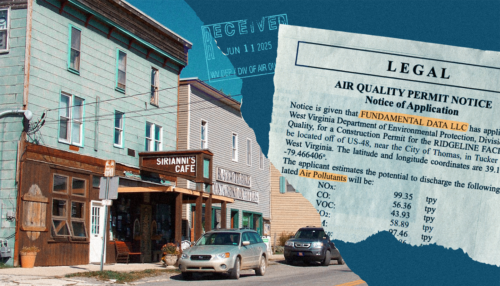
A proposed data center galvanizes resistance in a small West Virginia community, sparking a fight over state vs. local control.
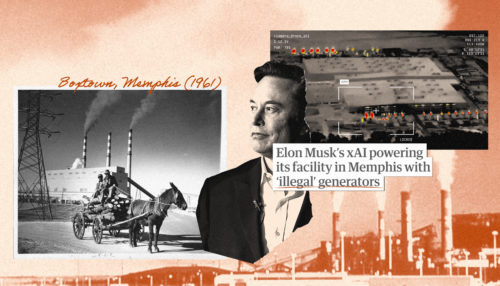
Elon Musk's Colossus 1 data center in Memphis reflects a historical pattern of corporations siting polluting facilities in poor or Black neighborhoods.
Are data centers making electric bills go up? We ask experts this and other questions about how utilities profit from Big Tech's AI boom.