The Data Centers Are Coming: Ep. 4 – Transmission (Im)possible
Are data centers making electric bills go up? We ask experts this and other questions about how utilities profit from Big Tech's AI boom.
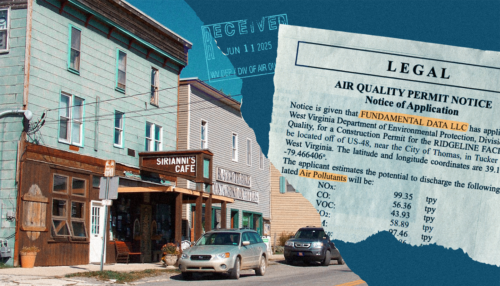
When a notice appeared in a local newspaper about a company applying for an air quality permit for a power plant, it set off alarm bells in the small West Virginia town of Davis. After residents realized that a major data center project, enabled by West Virginia’s hastily passed state preemption bill, was being pushed through without anyone knowing about it the community took action. A coalition of artists, outdoor enthusiasts, and generations-deep mining families formed Tucker United, and we met with them to learn about the state of the fight: why Davis, West Virginia; is the proposed reduction in state income tax and influx of data center revenue actually going to reach the local community; and how do they make sure their voice is heard by local and state government and that corporations are held accountable to them in the face of a politics that is pushing an “abundance” agenda of development with few guardrails?
In this episode, we hear from:
Tucker County resident Linda Bilsens Brolis“You learn about these issues, but then until it’s actually happening in your community, you don’t really, totally, fully appreciate it”
INTRODUCTION: BURIED IN THE NEWSPAPER
Reggie Rucker: [00:00:00] Air quality permit notice. Notice of application notice is given that fundamental data, LLC has applied to the West Virginia Department of Environmental Protection Division of Air Quality. For a construction permit for the Ridgeline facility to be located off of US 48…
Danny Caine: If I had read this notice in the newspaper, I wouldn’t know what it meant. It’s scientific, it’s technical, and if I’m being honest, it’s unlikely I’d even get to the back pages where this is published.
Reggie Rucker: …Regulated air pollutants will be in OX 99.35 TPY. CO 56.36 TPY…
Danny Caine: If I’m being perfectly honest, I probably wouldn’t be reading the print newspaper at all. That’s not entirely on purpose. I have fond memories of reading the newspaper every morning as a kid, serial spoon in one hand, and comics page in the other. But decades of corporate consolidation have decimated the newspaper industry. So two has the disappearance of newspaper advertising brought on first through Craigslist, then through Facebook, Google, and other online advertising platforms.
Add to that, Facebook’s infamous pivot to video, which compelled newspapers to lay off writers in favor of video creators. And you have a scenario in which fewer and fewer Americans are starting their day with a newspaper, and the newspapers that still print and deliver daily are thin husks of what they once were.
So it’s all the more fortuitous that Davis, West Virginia resident, Pamela Mo, saw this routine notice in her newspaper. It’s even more fortuitous that she knew what it meant. Pamela saw right through the scientific figures and wrote bureaucratic language to the actual message if she and her fellow residents didn’t take action. Soon, her beloved Scenic West Virginia town. Would soon be home to an enormous power plant and data center complex from the Institute for Local Self-Reliance. This is building local power. The data centers are coming. I’m your host Danny Kane. Today we’ll hear about my time in Tucker County, West Virginia, where a fight over a proposed data center is fast turning into an existential conflict.
A DRIVE IN DAVIS
Long before I began working at the Institute for Local Self-Reliance, I was a big admirer of their work when I was putting together my book, how to Resist Amazon and Why ILSR Resources and reports were invaluable to my research. Now that I’m at the institute, I’m still in awe of IL SR’S work. I love the breadth and depth of my colleagues’ knowledge and experience.
I regularly learn from them and I find a lot of joy in that. It was in that spirit that I learned about Tucker County, West Virginia from my colleague Linda Bilson Bro List. It’s where she lives, and it’s the site of a data center fight She told me about as soon as she heard about this season of building local power.
The more Linda told me about her home, the more strange it seemed for a data center to be built in this quiet and beautiful corner of West Virginia. Tucker County was just a few hours drive from my home in Columbus, Ohio. So I headed into the mountains to see it for myself. My first stop was Linda’s house tucked into the hills outside the town of Davis.
The original builder of the house was a blacksmith, and the whole thing is built around a massive stone forge, a far cry from my suburban street, but we didn’t linger long at the house. Linda quickly shepherded me into the family’s giant Ford F-150 for a tour of the area.
Danny Caine: We are departing Linda’s driveway.
Linda Bilsens Brolis: Yeah, we’ll see if we can make it the icy hill. It’s all melting, but it still gets kind of icy. So you’re getting a proper West Virginia tour. Everybody.
Danny Caine: Yeah, everybody seems sad that the snow is melting. I guess it’s the snow is big business around here, right?
Linda Bilsens Brolis: It is, uh, in the winter skiing as you see here at the ski barn. But like we took our daughters to the cross, cross country ski spot yesterday. Uhhuh. It was wonderful. So skiing in the winter is a big deal here in the summer months hiking and, uh, mountain bike riding. It’s a huge mountain biking community around here. It’s like a mountain biking festival, at least one a year.
Danny Caine: Your 2-year-old Crest Country skis?
Linda Bilsens Brolis: Uh, she got pulled in the, what’s called a Polk. It’s like a little cart you pull behind skis.
Danny Caine: Got it. Even before I set foot in Davis, I was struck by the beauty of the country driving in. I lost all sense of direction as the roads into town, some barely paved wound around mountains and ravines.
I was listening to a devastating moment in a particularly powerful audiobook in the car, and a show stopping sunset was splashing itself across the sky. Suffice to say, I entered Davis in tears. The landscape got no less. Lovely. As I spent more time there on our tour, Linda explained to me that [00:05:00] there are specific climate reasons for this beauty.
Linda Bilsens Brolis: You’ve probably heard about all the, I mean, the local climate idiosyncrasies that make this area what it is in terms of, it’s like frequently, like some of the coldest temperatures in the lower 48 and like it’s just like a sink. This is the highest valley, the side of the Mississippi, the highest largest valley.
You get all sorts of crazy inversions so often it’s colder down in the valley than it is up where we live. If you had continued past our house, um, going down into the valley, like often it’s colder in the valley than it is up by us, but not always. And so air just somehow gets trapped in there and so snow sticks around for a really long time.
The people that live here, it’s a mix of artists, it’s a mix of outdoor enthusiasts, and it’s also a mix of, uh, like generation deep mining families, people who are still here. Um, families were involved in the mines, which no longer really are active around here. It is a very different culture than what I grew up with in like the suburbs of Chicago and it’s very rich with history and so a long history of being used and abused unfortunately. So I think that there’s like this deep suited mistrust of the government, which unfortunately is being like perverted and manipulated right now.
THE PULL OF TUCKER COUNTY
Danny Caine: Tucker County has two main towns just a few miles apart. Davis and Thomas. Davis has a little downtown full of restaurants and outdoor outfitter shops and boutique hotels, including the Billy, a newly restored mid-century motel with a stellar restaurant called Ish Kitchen.
Thomas’s downtown is carved into Bluffs rising above the Blackwater River. It’s gotta have the most art galleries per capita of anywhere I’ve ever been. It almost feels like half of the businesses in Thomas are art galleries. Aside from a lone gas station, I didn’t see a single chain business anywhere in Tucker County.
I fell in love with a place pretty quick and I was interested in how folks found themselves here. I asked Davis Mayor Al Tomson, how he ended up here.
Mayor Al Tomson: I was sitting in the Pentagon and I was, saw an advertisement for land for sale in West Virginia and I asked my wife if she wanted to make a weekend of it and we went to look at the land. And we fell in love with Davis right away.
Danny Caine: So what were you doing before you retired?
Mayor Al Tomson: Uh, I was a career Army officer. I spent, uh, 36 years in the Army.
Danny Caine: How would you describe Davis to someone who’s never been there?
Mayor Al Tomson: I would describe it as an outdoor paradise. We have four seasons of outdoor activities. We have skiing in the winter, we have hiking, mountain biking and, uh, rafting in the spring, summer and fall. And people come out here basically to visit places like Blackwater Falls, which is I think the second most popular, uh, destination in West Virginia. So the focus is really on outdoors recreation and just getting away from the, uh, the urban environment that so many people find themselves living and working in.
Danny Caine: My colleague Linda, has a similar story of being drawn by the beautiful landscape.
Linda Bilsens Brolis: You know, my husband and I used when we first started dating, we lived out in Colorado. So the love of mountains, uh, has been part of our story in that time, you know, at the beginning of that. And, um, then we traveled abroad for a year, ended up back in DC near his family.
And DC is a great city as cities go, but we are at the type of people that just need like easier access to wilderness uhhuh and this it, I don’t know. We, we lived in another part of West Virginia that’s incredibly beautiful, but much more remote. And having kids there did not make sense for me. Some people make it work beautifully, but we, I was not able to adjust to that.
And so we moved up here to be closer to the community, to like the grocery store schools. Um, and there’s a little Montessori school here that my daughter goes to, which is incredibly close to where they’re proposing the power plant.
THE BEGINNINGS OF TUCKER UNITED
Danny Caine: All this about the no chain businesses and the outdoor recreation and the gorgeous landscape makes it all the more surprising that Tucker County is the proposed site of a giant data center and its associated power plant on land, right between Davis and Thomas. To learn more about the proposal, I met up with Nikki Forrester, a key organizer with Tucker United, a coalition formed to fight the proposed data center. We talked in Ish Kitchen. The restaurant attached to that great mid-century motel, the Billy, it was the [00:10:00] morning when Ish Kitchen is closed, but they offer free French press coffee to hotel guests.
As we talked, a few folks cleaned the restaurant and talked about how they needed to work multiple jobs to stay in Tucker County. In our quiet corner of the restaurant, I asked Nikki what brought her here.
Nikki Forrester: I kinda grew up all around the Appalachian Mountains. Um, it grew up in Virginia. Went to school up in Pittsburgh and then would always come down to West Virginia to go rock climbing and hiking and backpacking and on outdoor adventures.
And then, uh, met my future husband who grew up in Morgantown and he loves snow, so he has always kind of had Davis on his radar. And so we moved here in January of 2018. Um, and yeah, just fell in love with it. Started our own business publishing an outdoor adventure magazine and kind of just getting outside however often we could.
Danny Caine: Then I had Nikki. Tell me the story of how Tucker United formed in April, 2025.
Nikki Forrester: Tucker United was really, that started of April. In April of last year. Um, there was a town hall meeting in Davis. And basically someone who lives here saw a notice in the newspaper, the Parsons advocate about a company applying for an air quality permit for a power plant, and sent it along to the mayor of Davis, Al Tomson.
And he alerted the mayor of Thomas and our county commission. No one had heard about the project or seen any details about it, and so they held a town hall meeting and basically trying to get answers and provide information. To, you know, the residents of Tucker County and about, I think 200, 300 people showed up.
They maxed out the Zoom call. So it was one of the biggest meetings in town history, and people were just really concerned about it, asking questions about air pollution and water use and what’s this facility gonna be and what, who’s this company that proposed it? And there really wasn’t much we knew. Um, but at that meeting, a friend of mine stood up and said if we wanna do something about this, we’re gonna have to get organized. And so the next day, Tucker United formed, we met in town hall and just started talking about a plan for figuring out more about this project.
PIZZA AND LOCAL POLITICS
Danny Caine: Later that day after Nikki and I talked, she and I headed to downtown Davis Landmark Siri’s Pizza Cafe. You could tell Siri’s had been there for decades. It felt broken in, comfortable, and chummy. Everyone seemed to know everybody else. It seemed like there were just as many people there to chat as they were to eat. It was about as different from Data Center Alley as you can get. What’s good here?
Cris, Tucker United: Um. To be honest, what I usually eat is like three meatballs and bread. Um, yeah, they have lots of good stuff.
Danny Caine: Nikki and I met two more Tucker United organizers at Siri’s to share some lunch and stories about their work. Cris Parquet is a lead organizer for Tucker United and she lives in Davis. She tells me the story of how the coalition came together after the discovery of the newspaper announcement that a company called Fundamental Data had big plans for the land behind the dump right outside of town.
Cris, Tucker United: So our town mayor here in Davis, Al Thompson, uh, convened a meeting and brought the other local politicians to come to our fire hall, and there’s like almost 400 people. It was in person and online to try and understand. And share the information they had. They, we couldn’t really understand much because there wasn’t much, nobody from Fundamental Data showed up, but it was a packed house.
It was so packed that people were in the parking lot. I know of one person that had this piece of equipment that he was broadcasting via like a satellite dish out to the parking lot so that people could hear because people couldn’t get in the room, and people were really, really upset. And that includes some of the elected officials being left out of the situation of knowing what’s going.
So that’s how, um, the first knowledge of this came to us. And then shortly after that, I think it was four days after that, um, a group of us said, we have to do something. So we got together at town hall, including the mayor, and we did, um, a petition to Governor Morrissey saying they needed to intervene, they needed to stop, and they needed to talk to us.
I forget now how many was like. At least 5,000 people signed that petition very quickly. We never heard anything from the governor about that, and that was the beginning for us of building a strategy that we needed to get involved and, um, learn more about what was headed our way.
Danny Caine: Also at lunch with Shena Crossland, who lives in Thomas and owns the Sister Witch is crafting company in Davis.
Danny Caine: What’s your impression of why they picked Tucker County for this project? [00:15:00]
Shaena, Tucker United: Personally, like Cris said, I think they underestimated. The people that live here. So do you think, I think that’s one of the reasons. Okay. You thought they could just like, push it through? Yeah. I definitely think that’s one of the reasons. Um, another reason definitely hospital 2014.
Danny Caine: HB 2014 is a central element of this fight, a primary legislative goal of West Virginia Governor Patrick Morrisey. The bill is designed to fast track data center development. It passed in a rush in April, 2025 at pretty much exactly the same time as the Tucker County project was announced.
The bill makes it easier for data centers to build their own power plants as opposed to plugging into the grid. It also allows data center developers to essentially bypass local zoning ordinances that would typically regulate such projects. Perhaps most controversially, the bill sets the revenue split for tax income generated by data center projects, 70% to the state, 30% to the communities where the data centers are built.
A vast majority of the state money goes to paving the way towards the elimination of West Virginia’s income tax. Though the bill passed easily thanks to West Virginia’s Republican super majority, many who voted for the bill expressed misgivings about it. Another factor driving the Tucker County proposal, according to Shawnee, is something that will come up again in this series. The idea that industrial or post-industrial land is already wasted. So adding new polluting facilities isn’t a big deal.
Shaena, Tucker United: There is a lot of land out there. It, it is undermined land. It’s re mine surface land. So those are, those are more kickback. There’s more things, there’s only so much you can do with land that’s already the industry crew. Um, so I think it was easy for them for a lot of ways.
Danny Caine: Earlier that day, Nikki Forrester rejected the idea that post-industrial land was a lost cause
Nikki Forrester: and his old strip mine land. So if you wanna do a big industrial development, sure it might make sense to have these large connected swaths of land where they’re relatively flat. People consider them to not really be usable for other things. Although I will say you could do a lot of restoration and trail development and all sorts of stuff on old strip mine land ’cause we bike on awesome bike trails through old strip mines all the time.
Danny Caine: The assumption that Tucker County residents would accept that this old mining land is wasted was just one way fundamental data tried to sneak things by these passionate West Virginians. Indeed. If you ask my new friends from Tucker United, anybody who thought ramming this project through would be easy, was mistaken. Shaena confirmed this for me.
Shaena, Tucker United: I definitely think they underestimated the people of Tucker County. I think they underestimated the people in West Virginia, and I think that they feel that they’re gonna get a lot of money and nobody’s gonna say, uh.
Danny Caine: How would this project, if built, threaten, what makes Tucker County, Tucker County?
Shaena, Tucker United: So quick back story. Like I said, I’ve lived here for 25 years. I born and bred West Virginia. I was born just 45 minutes off this mountain. I have seen, uh, growth. In the past 25 years, um, when I first moved up here, Thomas through there was really not much.
You know, Sirianni has been here forever. Um, but we’ve seen really great growth. We’ve seen growth in music and recreation and art and all of these really cool things that has taken a town. That once it’s thriving because of industry coal and logging. And it’s, it’s been phenomenal because we have been able to have, um, you know, prosperity and all of these great things, but still maintain the beauty of the mountain.
And since I was able to start a business, you know, I have a beautiful, uh, support system with local residents. Um, but tourism pays a lot of my bills. It also pays a lot of my bills with second jobs. You know, I, I have multiple jobs. I’ve always had multiple jobs living up here. Um, I. One of the biggest reasons why we are able to have things like an art district, recreational activities, um, a music district, all of these small mom and pop businesses is because of the beauty of nature that is around us. Nobody comes to Tucker County to see massive gas fired power plants in Dennis centers. That’s not why people come here. They come here for the solitude, people that live here, people that have lived here their whole [00:20:00] lives going back, generations, they live here ’cause it is the community that it is and ’cause it’s a safe space to be. So to think that something could come, that could jeopardize all of that, that could just be disastrous.
Danny Caine: I was really struck by the passion of everyone I talked to. There’s a lot of fire about this issue. I wondered if there were any other examples of an issue like this, or if the data center issue is unprecedented and its ability to catalyze local organizing.
I wanna return to this point of the governor in the state, like underestimating West Virginians and their organizing. Have either of you done anything like this? Before, like did you have a history of activism? As Nikki says, it’s the first time she’s done anything like this.
Shaena, Tucker United: Have I always been, you know, just kind of your, your basic outspoken person about anything that you felt was not right? Sure. But as far as full on activism, this is the first time I have ever been this involved with anything, especially involving my home. I have learned more about. Politics and big words that in the last eight months than I ever have,
Cris, Tucker United: I come from a union family, Uhhuh. So I was raised, I didn’t cross picket lines and that’s where it started with me, Uhhuh. And I’ve spent my whole career working to end poverty and work on homelessness to try and end that. And also working on addiction and mental health, and those folks are generally marginalized and overlooked. So. I, I think being raised, fighting Uhhuh for Rights has just stayed with me. Um, but I don’t have a background in environmental organizing, which is what this is considered to me. It’s more than just environmental organizing. Yeah. It’s about fighting for fighting for our lives.
Danny Caine: The way the process works in West Virginia, especially in the HB 2014 era, essentially the only bureaucratic hurdle for a project like this is an air quality permit. And at the time I was in Davis, Tucker United had filed an appeal in the time since my visit, they have lost the appeal. As this episode finishes production, Tucker United has taken their appeal all the way to the State Supreme Court. We’ll update you as we hear more, but that’s only one of Tucker United’s paths.
Cris, Tucker United: We are continuing to organize. We’re continuing to bring other legal cases, other parts of the state. They’re bringing other lawsuits, environmental lawsuits, so we will continue to bring fights to the courts. To the legislature. We have a big fight with the legislature on a lot of aspects of HB 2014. We have opportunities on the local level and the county and town levels to help them organize and to, if possible, create uh, exclusions and ways for that. Data centers can’t come in or to create zoning that protects our community. So we have a lot of work, but. The next three months are going to be very, very busy for us
Danny Caine: indeed. In the lead up to the 2026 legislative session, Senate president Randy Smith told constituents in Tucker County that the legislator was planning on addressing controversial parts of HB 2014, including portions limiting local control and local tax revenue. In reality, very few attempts were made to revise the bill and those that were introduced sputtered without a vote. Regardless of legislative setbacks or air permit losses, the birth and growth of Tucker United has made huge political strides in a politically complicated state.
Cris, Tucker United: I think the biggest progress is that we’re seeing people organizing all over the state. You see people in the coal field organizing with people up here in Tucker County, and we’re maligned as being, you know, not really West Virginians or we’re really too close to the DC area. We’re elitist or what have you.
Danny Caine: This is an issue that came up a few times in my Tucker County discussions. The difference between here and the rest of the state, it seems to some people, Tucker County might have a reputation is more wealthy and more touristy with lots of vacation homes and short-term rentals. True or not, I’m not sure it matters to the data center fight, which has a unifying effect.
Cris, Tucker United: When in reality the people here live here and our friends across the state because we’re again fighting for our lives and it’s been great working with them. We’re strengthening our ties. We’re working on strategy together.
I think it is gonna be really interesting to see what happens as. Two different kinds of communities come together to continue to fight together. And as we bring in other communities, because again, this is not going away. The governor opened up West Virginia for business for this, and it’s gonna affect, affect every part of the state.
IMAGINARY SMOKESTACKS
Danny Caine: My lunch with Cris and Shaena brought to mind a moment for my drive with my colleague Linda, because the public part of the permitting process only requires an air quality permit. Much about the project is unknown. For instance, how tall the smoke stacks on the power plant would be. Some folks in Tucker County think based on the size of the project, that they’d have to be sky high and visible for much of Davis and the rest of the county.
To talk about this, Linda and I drove to a spot that’s important to her and her family.
Linda Bilsens Brolis: So this is a playground that, like I used to live down the street from here. This is the playground that my daughters the loves to come to.
Danny Caine: You can see the landfill from the playground.
Linda Bilsens Brolis: Yeah. Like you can see the land behind the land and it’s like, again, we don’t know how tall the stacks are gonna be.But you have to imagine you’d be able to see this giant power plant.
And that’s like something that they redacted the permit so much that like you don’t even know how tall the stacks are gonna be, but if the stacks are tall, like tall enough to keep the pollution from just like sitting in the community, like then you should be able to see them.
You know what I mean? Yeah. But like they won’t even provide that kind of information for people to understand like what’s coming. I feel like I’ve identified as an environmentalist for like. My entire adult life. Like you learn about these issues, but then until it’s like actually happening in your community, you don’t really totally, fully appreciate it. And maybe that’s a luxury that I’m only kind of experiencing it now.
Danny Caine: Now that the reality of the proposed project has hit home for Linda. Literally, she isn’t buying the promises from fundamental data in West Virginia itself about the benefits of a data center in Tucker County.
Linda Bilsens Brolis: So it seems that the state government is trying to put a open for business sign and trying to compete probably with Virginia, like a race to the bottom almost. They’re willing to like sell local control to get to the highest bidder. Basically, you know, like 70% of revenue that will come from that facility, that would come from the proposed facility would be siphoned away from the local community and go to Charleston instead. So that means the local community has all of the costs and very little, if any of the benefits.
THE MAYOR’S PERSPECTIVE
Danny Caine: Nobody knows the community costs of a project like this more than Davis Mayor Al Tomson. After moving to Tucker County from Washington D.C. because of the area’s natural beauty, he now had to contend with a huge project that many said would threaten that very beauty, as well as the local economy that relied on it. I asked him to walk me through what happened when he first heard about the proposal:
How did you first learn about the project?
Mayor Al Tomson: I received a phone call about it and, uh, then immediately looked at the newspaper to see it for myself. I called then the, uh, mayor of Thomas, the city that’s next to Davis, and asked if he knew about the proposal and he said he didn’t. So then I called the president of the county Commission and asked the same question. Uh, they also were totally unaware of the proposal. I called the executive director for the Economic Development Authority and he also was unaware of the proposal. So it blindsided the local leadership, uh, completely.
Danny Caine: I was also wondering why fundamental data was on the application for the data center project. There is very little information online about fundamental data. Their website is just a single page with a big logo you can’t even click on. Juan Tucker County resident drove to the LLCs registered address in Ville, Virginia, right outside Data Center Alley, only to find that none of the offices in the small office park had any signs or other markings indicating fundamental data’s presence.
There was just a construction company owned by Casey Chapman, the person named on the data center application. Fundamental data does not seem like a company that would lead a project at this scale. In fact, it doesn’t seem like a company at all. A data center of this size is much more likely to be run by a tech giant like Amazon or Google than some sort of weird shell company like Fundamental data.
If Google wants a data center in Tucker County, why don’t they just lead the effort to build that?
Mayor Al Tomson: Well, I think there’s a couple of things. I think one is. They wanna test the waters and they don’t wanna do it with their name. Uh, plastered all over the newspaper saying Google is trying to bring this, uh, proposal in and you see a groundswell of opposition, uh, that’s not good for their public relations. So to have a another company go through those steps, I think is advantageous for them. It also gives them a choice as to whether or not they want to be involved, uh, after they see the process come to fruition.
Danny Caine: This secrecy is common. Not only is it often difficult to ascertain the details of a data center project, it’s also impossible to know who exactly is behind it. This secrecy is one of the main weapons big tech companies bring to the data center, fight through bureaucratic, subterfuge, NDAs and shell companies like Fundamental Data.
Big tech companies often obfuscate this [00:30:00] process to the point that community members don’t know. A data center project exists until bulldozers and cranes show up. Despite all this, mayor Thompson is at the center of an effort to publicize and criticize one of these secretive projects. I asked him what he thinks is the end point of this process as of today.
Mayor Al Tomson: The way that I feel right now is that the power plant will probably not be built in the proposed location. Uh, it looks like most people are in favor of the power plant being built near an existing power plant. That’s at a, a community called Mount Storm. Mm-hmm. And that’s about 12 to 15 miles away. It does not have the issues with prevailing winds and temperature inversions, uh, that would’ve jeopardized, uh, Kenane Valley with the proposed location.
So I think that, you know, all the work that’s been done in the interim, in the background and the public standing up and saying, we don’t want this, and being vocal in many different settings. I think is really causing people to take notice and say, we’ve gotta do something different. I really believe that’s what’s gonna happen.
Danny Caine: Do you see the power plant being built in Mount Storm as a victory then?
Mayor Al Tomson: Uh, I would say so. Because, uh, it doesn’t have all the negative characteristics of the proposed location. And it would be an example where. Government has listened to the public. So in that sense, I would say yes, it’s a victory for, uh, for the people.
Danny Caine: This was the first time I had heard of the Mount Storm plan, and it’s unclear to me if it’s feasible, amidst the ongoing legal fight surrounding fundamental data’s proposal. Of course, we’ll keep you updated on the status of this ongoing fight throughout the series. Curious about this alternate solution plan? I asked him how he arrived at it.
Mayor Al Tomson: Part of House Bill 2014 that was, uh, attention getting, so to speak, was the fact that it eliminated any local control. So local ordinances, policies, codes, any of those kinds of issues would not be, uh, germane in the proposed power plant or the building of a micro grid, which is what the law specifically focuses on to have dialogue initially when this first started with the governor’s office and was unsuccessful and. Took opposition to the governor’s proposal, but over time I’ve had discussion with many of the state legislators and they agree and recognize that omitting local control and local participation in the process is a problem. If local government for this particular uh, proposal had been involved initially. Uh, I think that we would’ve come up with an alternate location from the very outset and because the local government was not involved, that didn’t happen. And that was a mistake, and I think it should have been handled much differently.
I wrote a letter to the Secretary of Commerce and that letter, I think generated a response from that office to where they sent the Deputy Secretary of Commerce. To a meeting with myself and I invited a couple, a handful of other people to participate, and it was in that meeting that we learned that the state very much is supporting moving the power plant to a different location. So that was one thing that was very positive that’s come out of that dialogue.
Danny Caine: Aside from a possible alternate location, mayor Thompson’s perspective changed on another HB 2014 issue during these meetings. To him, even 30% of data center revenue is a massive windfall.
Mayor Al Tomson: The other thing is we had a better understanding of the, uh, revenue distribution, uh, 30% of the revenue that would be potentially available through these microgrid and data center processes is huge, and it dwarfs the existing budget that the county has right now. So it would be, uh, a tremendous improvement in our financial situation. One that, uh, because it’s so beneficial in that 30% range, it’s hard to argue and say, we wanna get more because the state. Was very involved in bringing businesses and microgrids to West Virginia. One could argue that they deserve a share of the revenue also, and they wanna break out much of that revenue going back to the citizens of West Virginia by eliminating the state, uh, income tax. There’s pros and cons. There’s different ways of looking at the issue. But [00:35:00] I personally, I can live with the 30%. Now, based on the way it was explained to us,
Danny Caine: Cris had a different take on the merits of eliminating the state income tax when we spoke about it at the Siri’s lunch.
Cris, Tucker United: The other thing that’s interesting about the politics in the state is that like many states that are trying to bring people into the state and also drive people into the state is they’re trying to eliminate the state income tax. Mm-hmm. Which doesn’t make any sense. In West Virginia, we have state income tax pays for things like. Childcare, meals on Wheels, roads, fire and Emergency Services, schools, all the things that are critical.
West Virginia is one of the poor states in the country. We frequently are cited as having the worst water in the country. Infrastructure is really critical. Southern parts of the state, and even up here in Davis and Thomas, we go without water sometimes, and it’s impossible to drink the water in many parts of the state year round in some of the southern part of the state. So why would you create the goal of eliminating state income tax and how this ties to us and what brings us here is that HP 2014. Um, some of the revenue that will go towards that is going to go to fill the state popper so that people don’t have to pay state income tax.
Half the revenue from this bill would go to health eliminate or lower the state income tax. The state income tax reduction only benefits the very, very wealthy. So now you have a bill that is giving away the state to industry and tech bros to come in and do whatever they want in the state, and you’re giving them tax breaks, um, state or income tax breaks, as well as all these tax breaks related to doing business in the state of West Virginia. And at the same time, your voters and the residents in West Virginia are gonna be hurt because eliminating state income tax doesn’t help the average worker.
It doesn’t help anybody who is in that. Less than the area meeting income is. So $45,000 a year, somewhere around that. So eliminating state income tax, double Hertz, west Virginians because one, um, they don’t get any benefit from that because they don’t pay that much in taxes. And two, it eliminates things that they need, like Meals on Wheels, daycare slots. Schools, roads, access to water, things like that that you need on an everyday basis.
CONCLUSION: COALITIONS AND THE DATA CENTER ISSUE
Danny Caine: There are some differences of opinion among the folks resisting the data center project in Tucker County. Everyone from the pragmatic Mayor Thompson to the Firebrands leading Tucker United agree that the proposed data center would prove damaging to Tucker County and its economy.
There seemed to be some disagreements beyond that. Is eliminating income tax, good or bad? For West Virginia? Is 30% of data center tax income enough or is it a brazen state takeover of local control? But I must say, despite the differences, this coalition is powerful and it seems to be making things happen.
The data center issue is galvanizing enough that it holds together a coalition despite political differences and disagreements. People are fired up enough about this issue that political boundaries are being crossed in a time where there’s not much political boundary crossing at all, and all this is occurring in a state that’s often overlooked as a political backwater.
A state under firm Republican, super majority control, but Republican or Democrat, progressive or conservative, everybody pays their electric bills. If one lesson we can take from Tucker County is the power of a broad local coalition. Another is tech companies desperate attempts to keep their data center project secret.
It’s becoming increasingly clear that Americans distrust data centers in the AI technology they power. A March, 2026 poll by NBC News found that AI was less popular than ice. The only things the poll ranked worse than AI were the Democratic Party and Iran. Rather than engaging with the reasons why this technology and these facilities are so unpopular, these companies are doubling down on secrecy and obfuscation.
Instead of talking to impacted communities about the effects of these facilities, big tech corporations are forming mysterious shell companies to try to rush the process of their approvals. Coalitions like Tucker United can work to reverse that and hold tech companies accountable for the staggering impacts they have on communities and their resources.
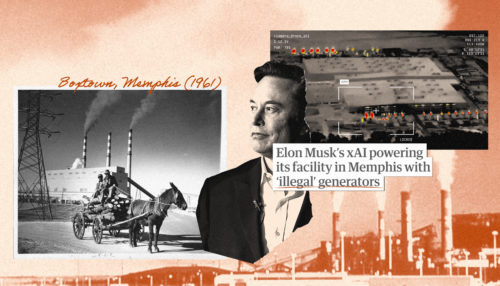
In the next episode of Building Local Power, the data centers are coming. We’ll turn our attention to the Box Town neighborhood in Memphis, Tennessee. Where Elon Musk is telling some of the most egregious data center lies, Elon is not the first to try these tactics. His Colossus data center is the latest in a long line of stories where big corporations cite harmful facilities and places they view as lost causes, places with a lack of perceived political power.
That’s an old story that the data center fight is pushing into consequential new directions. How have places unfairly labeled [00:40:00] as lost causes fought back against big corporations and their harmful facilities? How is this fight evolving in the data center era? Tune in in two weeks to find out building local power.
The data centers are coming as a project of the Institute for Local self-reliance. This episode was produced by Reggie Rucker and Ilana Nevins. It was written by me, Danny Caine, based on my travels to the region in January, 2026. Many thanks to Linda Bilson Brolis. Nikki Forrester, Cris Parquet, Shaena Crossland, and Mayor Al Thompson for their contributions.
If you like what you heard, make sure to subscribe to building local power wherever you get your podcasts. Thank you for listening and see you next time.
Are data centers making electric bills go up? We ask experts this and other questions about how utilities profit from Big Tech's AI boom.
Elon Musk's Colossus 1 data center in Memphis reflects a historical pattern of corporations siting polluting facilities in poor or Black neighborhoods.
We start at the epicenter: a once-semi-rural Northern Virginia community transformed by Big Tech’s sprawling data centers, sparking a fight for land, autonomy, and transparency.
Learn about how this Minnesota lawmaker wants to tackle her state’s energy problems.