How This City Got Low-Income Solar On The Utility’s Dime — Episode 265 of Local Energy Rules
San Diego may be the only city to have secured upfront funding from utility shareholders to make clean energy cheaper.
There’s something that no state in America is doing well. But according to this utility regulation expert, there’s hope.
For this episode of the Local Energy Rules Podcast, host John Farrell is joined by Charles Hua, Executive Director of PowerLines.
Listen to the full episode and explore more resources below — including a transcript and summary of the episode.
Apple Podcasts Spotify YouTube
Podcast (localenergyrules): Play in new window | Download
Charles Hua:
Mayors can be extremely effective spokespeople to elevate these issues and explain how they and their constituents are being directly harmed.
*****
John Farrell:
Hey you’ve stumbled on some bonus content from my two-day, nine-interview podcast recording marathon at the Gateway to Solar conference in October 2025. Consider donating to ILSR to keep conversations like this flowing! Now, here’s my conversation with Charles Hua from Powerlines, where we dove into the issues of getting effective oversight of investor-owned utilities and Charles emphasized the importance of getting city and state elected officials to talk to utility regulators.
*****
John Farrell:
Charles, it’s great to see you here in Minnesota. Thanks for coming.
Charles Hua:
Good to see you, John. It’s not Wisconsin, but it’s still nice.
John Farrell:
Oh, ouch. We’re starting with a dig. All right. I was super excited to have the chance to chat with you while you’re here. Obviously you’re getting a lot of great attention for Powerlines. I just saw about you being in Time Magazine, which is amazing. So you’re the guy to ask. You are talking about the importance of public utilities commissions in order to address the problems that we have in our energy system. Is there any place that you look at and you say, Hey, this is actually where it’s working pretty well. This is a state or states where public utility commissions really are exercising that oversight well, dealing with issues from affordability to demand growth to climate change.
Charles Hua:
Not to start the podcast on a downer, but I would say no, I don’t think there’s any state in America right now that’s doing utility regulation well. And I think it’s helpful maybe to just start why we even have utility regulation in the first place.
As you’ve talked about so many times on your podcast, we set up this system over a hundred years ago because we invented and commercialized this new technology called electricity that we felt was such a potentially transformative and essential service and good for the public. And we said, okay, let’s have a monopoly utility be subject to utility regulation by a public utility commission. And every state started passing laws that basically created the public utility commission structure that we have now. And somewhere along the way, over the intervening a hundred years, we have lost our sense of why we even set this up in the first place, which is ultimately for consumers. And whether it’s due to incumbent interests or misaligned incentives or imbalanced political capital, whatever you want to call it, we lost that purpose and now we’re seeing the consequences, which is 80 million Americans that can’t pay their utility bills, four in five Americans that feel powerless over these costs. And ultimately, in my view, no state that’s doing utility regulation well.
John Farrell:
Well, it is disappointing we have to start on a down note now.
I wanted to ask about one state where I think people were really excited about. So in Connecticut, Marissa Gillette was until very recently, the chair of the Public Utilities Commission. She had been on the Volts Podcast with David Roberts. She had some really innovative ideas about working with utilities to pilot and really advance new kinds of programs. She was also really interested in holding them accountable in terms of delivering for performance, not just in terms of meeting the minimum, minimum standards. And then I guess the way I could describe it is to me it looks like she was essentially forced out by the utilities who were unhappy with being held that accountable. Without getting too much into the weeds of that particular thing. What do you see as the implications of her leaving in terms of our ability to effectively have public oversight of investor utility companies?
Charles Hua:
Well, I think it’s important to take stock of the fact that whatever you feel about any particular public utilities commissioner in her case or otherwise, somebody like her is an extremely dedicated public servant who worked incredibly hard, also did so much work behind the scenes without visibility and tried every single day to advance meaningful utility regulatory reforms that would tackle the fact that Connecticut has some of actually the highest electricity prices in the country. And this isn’t a particularly glamorous role. I mean, as we saw even with somebody like Marissa Gillette that achieved cult celebrity status within the utility regulatory sphere, it’s not like that provided much personal benefit or payoff. And I think that’s actually part of the problem, which is that consumers in this moment who are desperately seeking for leaders who can actually not only name the problems that they’re facing, but also meaningfully propose and implement solutions, we need to create an incentive structure where we’re actually rewarding people for being brave, for being courageous, for actually advancing the consumer interest.
And so I think it’s a bit unfortunate that all of this happened, and it’s not like that many people were aware that this even happened even in the utility regulation space, to be honest. And I think what that also speaks to is the fact that we have a desperate urgency to activate a significant number of consumers across the country to stand up and push their governors, push their congressmen, push their state legislators, push their mayors, push everybody involved. That has some touchpoint in the system to say you need to actually put forth people that are willing to stick their necks out, willing to demonstrate some level of courageousness and actually fight for us as consumers. And that is something that I think was so rare, is so rare, that there’s a reason why you’re even mentioning one specific example of a person because it’s so rare. And I think that is frankly, again, not to continue the downer trend, but that’s the reality of what we’re in right now. But it’s not too late for us to reverse course.
John Farrell:
I love that you mentioned mayors. I’m going to be talking, actually, the next interview I have is with Minnesota representative Katie Jones. She and I serve together on the Energy Vision Advisory Committee to the Clean Energy Partnership, which is a mouthful, but it’s basically a collaboration between the City of Minneapolis and its two energy utilities with the idea that it was going to serve the interest of the city’s reaching its climate action goals. And I’m going to be super interested to talk to her about this because one of the things I’m curious about is we have seen, I think, some meaningful progress from the city spending its time doing some advocacy at the commission. The commission’s not used to hearing from people from cities and people representing cities. I think it made a difference. I think it wasn’t transformative in the sense that these regulatory dockets have their inertia and their weight behind ’em about how they go, but I really do feel like we saw a significant difference in the way that the commission thought about the kinds of issues that were in front of it because the city would come and say, well, we have these climate goals that we’ve set.
The council has agreed to them, they’re in our statutes. They’re officially part of our city’s goals. The city’s investing money in these. We really need the utilities to live up to their regulatory obligations under state law as well. So I really appreciate you talking about that. I think it’s maybe one way in which then ordinary folks can maybe see more of themselves in those decisions if their city is actually taking an active role.
Charles Hua:
I totally agree. I mean, city governments wear many hats. They are themselves electricity consumers, obviously, they have to power their municipal operations. They represent in some cases millions of consumers in one go. And mayors can be extremely effective spokespeople to elevate these issues and explain how they and their constituents are being directly harmed on the front lines of some of these utility rate increase requests and these negative energy decisions. And so to your point, I think mayors absolutely need to be speaking up and so do congressmen. There are in New York now congressmen that are intervening in rate cases because they’re saying that they’re affected parties that need to represent their consumers to protest and reject utility rate hikes. There is a growing level of engagement on these issues from these maybe one degree removed from the immediate utility and PUC venue. And to me, what that says is that a lot of people are feeling the pressure and want to do something even if they don’t know exactly what to do. But I think that’s not happening quickly enough. And I think as sort of a call to action for the listeners here, it’s get your city government, get your congressman, get your governor to start paying attention and actually channeling their platform resources and capacity to making their voices heard on this issue and also formally going through the regulatory process and engaging in these dockets.
John Farrell:
I really love the idea too, because I feel like someone like a congressman, someone like a mayor getting involved, they have sort of an expectation and I think a rightful expectation of I represent a lot of people I should be listened to and to be able to come to the commission with that behind them as opposed to an individual advocate where the commission would be like, well, that’s just one consumer. I can really see the power there. I wanted to ask you about one other thing, which I think is I’m going to be talking to Annie Levenson-Falk from Citizens Utility Board tomorrow. And one of the questions I was going to put before her, and I’m kind of curious your take on this as well, is why do we need a Citizens Utility Board? Why is there this outside nonprofit foundation funded advocate for consumers? I thought to your point, as you kind of opened here, the whole point of a public utilities commission was representing the consumer and the public interest in a situation in which we have a monopoly private company not subject to the pressures of competition. So is that a sign of how our system is working or not working, that we have these independent organizations having to do advocacy ostensibly on behalf of consumers? When I thought that’s the whole point of public regulation?
Charles Hua:
Yeah, well, I think we could have a broader discussion on the role of democracy and representative government, but I think under that framework, even in a representative democracy, you still need participation from the public, I would say, for it to actually be a healthy functioning system that actually works on a sustainable basis. So I don’t think that the existence of a consumer advocate means that fundamentally things aren’t working. If anything, it’s a sign that as long as they’re being listened to, which is an important caveat because not in every case they’re being listened to. And when we think about what hoops, if you are somebody on the street that if you were to even entertain the idea of engaging with the utility regulatory system, let’s think about all the barriers that you have to jump through. First, you need to know what a public utilities commission is and that it’s not just your utility company that sets your rates, but there’s actually a government body that has some control over it.
Then you need to go to their website. And I think that’s where we lose a lot of people is you go to these websites and you’re like, where do I even start? What is docket DL-13642? And then, okay, maybe there’s an opportunity for public comment, maybe not. Let’s say there is an opportunity for public comment. It’s Tuesday at 10:00 AM. Well, I got work and oh, even if I could make it, well, what do you mean it’s not in this part of the state? I have to drive three hours just to get there. And so, okay, let’s say you show up. Well, the law may not actually require or even allow the Public Utilities Commission to incorporate your comment into the public record barring some formal intervention process. Even if you were to intervene, you might not have the resources to intervene. And even if you did, like Minnesota does have intervenor compensation, even if you did have the resources, you’re going up against a tremendous degree of information asymmetry and a tremendous degree of political imbalance.
And so those are just some of the hoops, even all of the hoops. And you can imagine if you’re just somebody on the street who wants to do something about your utility bills being too damn high, where the hell do you even begin? And the unfortunate reality is it’s just way too complicated. So we need to figure out how to make sure that consumers are actually being represented. And there’s an urgency behind this because the utility rate structure is one of the most regressive economic structures in America today. And so who ultimately is most impacted by the decisions of PUCs are the most vulnerable poorest Americans in society. Unfortunately, none of whom are really serving as Public Utilities. Commissioners. I don’t know how many PUC commissioners themselves struggle with paying their utility bills. And I think that’s why they need to hear from people including the most vulnerable populations, and whether or not right now those folks have political capital to me is not a reason why they shouldn’t engage. They should, and we should make it easy for them to engage. And at the same time, we need to figure out how to recreate the regulatory system such that they are ultimately the ones that are central to the decision making of PUCs. Now we’ve got a long way to go, but I think we can get there.
John Farrell:
I love your thought about whether there’s a public utilities commissioner having trouble paying their bills. I was going to say it takes a lot of hot tubs and saunas to get a utility bill high enough for someone on that salary to have a struggle with it, but I guess it’s possible.
I wanted to ask you one last question. You’ve probably heard about, since you’re in the energy sphere like me, that BlackRock and a Canadian pension fund made a bid to buy one of Minnesota’s investor utilities, Minnesota Power. Our commission just on Friday approved that purchase over the objections of the administrative law judge who enlisted a number of reasons why they thought it wasn’t in the consumer’s interest, particularly concerned that because of BlackRock’s commitment to providing a return to their shareholders, that they’re going to be very interested in figuring out how to raise rates on Minnesota consumers.
Maybe you weren’t following it super closely, so I don’t want to put the obligation of you to give your opinion on that particular thing, but I guess I’m just sort of curious. The issue of companies getting larger, having more political power, having more financial weight behind them is across our economy one of the issues I see as problematic to the ability of communities to have self-determination, for people to feel like they have power over their situation. As you mentioned, four and five people don’t feel like they have the ability to really wrestle with or to deal with their electric bill. What would you say about it? What does it say to you when you see this sale to private equity of an investor in utility companies? It’s not like it was publicly owned to start with, but it was a publicly traded company. It’s now going to be privately held. What are some of the implications?
Charles Hua:
I think it comes down to two very basic words that often are buzzwords. And I’ll admit I sometimes when I hear them, it sort of passes by, and that’s transparency and accountability.
Maybe just to sit with those words for a little bit, transparency, people’s utility bills as is are not at all transparent. They don’t know what’s going into them. They don’t even really know that their utility companies, in some cases, for many consumers, they don’t know that their utility companies are even for-profit, let alone owned by a bunch of Wall Street shareholders maybe with these very complicated governance structures. And so I do think that there are significant risks where as this issue becomes more and more politicized, as more and more members of the public engage on this, and more and more people are screaming for solutions and more and more politicians are talking about it, I actually think it’s a huge risk to concentrate power in general.
And I’m not talking about the specific deal, but in general to concentrate power in this moment where actually all of the political and social trends are pointing towards the need for a more decentralized economic system that actually works for consumers. And so I guess on that front, from a transparency standpoint, I think we have to be very clear, well, what are we doing on a continual basis to actually make this very opaque system more transparent for consumers? And if we’re not doing that, then we’re somehow failing.
Now on the backend is accountability, which is regardless of what happens with this going forward, we want affordable, reliable electricity. And is this going to help us get closer? I do not have the answer to that in this particular context. I think a lot of this we’re going to find out together. And the through line though is how do we make sure that there’s enough accountability in the system such that if an adverse outcome were to follow, that consumers can actually make their voices heard.
And I think that there is no better time than now for consumers to be activated and take back in their control how these decisions are being made. And by participating, engaging, and not just engaging individually, but really aligning with organizations that are showing up and within their communities. Again, I go back to the following, call to actions. Activate your mayor, activate your state legislator, activate your governor, activate your congressman, and get them to speak up about utility affordability challenges, make your voice heard, make your proposals and recommendations heard, and utilize the fact that right now, this moment is ripe for reform and that the consumer voice has the opportunity to have the strongest voice that it’s ever had right now, and that’s the most important thing.
John Farrell:
I’m glad we’re ending on an up note Charles. It was great talking to you. Thanks so much for joining me. Really a pleasure.
Charles Hua:
Thanks for having me, John, and thanks for all your work.
*****
John Farrell:
Thanks for listening to one of my nine mini podcasts from the 2025 Gateway to Solar conference, with Charles Hua from Powerlines. We’ll have links on the show page to my report Upcharge and other ILSR resources about utility accountability.
Even these mini versions of Local Energy Rules are produced by myself and Ingrid Behrsin, with editing provided by audio engineer Drew Birschbach, and as always, we’re talking about taking on concentrated power to transform the energy system. Until next time, keep your energy local, and thanks for listening.
“Activate your mayor, activate your state legislator, activate your governor, activate your congressman, and get them to speak up about utility affordability challenges, make your voice heard.”
Utility regulation expert Charles Hua says that no state in America is currently doing utility regulation well. The result is a system that has all but abandoned consumers and left 80 million Americans unable to pay their power bills.
But there’s hope. The depth of the crisis means that the moment is ripe for activating decisionmakers and consumers to start holding utilities accountable.
Here are five ways Hua says we can do it:
“You need to actually put forth people that are willing to stick their necks out, willing to demonstrate some level of courageousness and actually fight for us as consumers.”
See these resources for more behind the story:
This is the 250th episode of Local Energy Rules, an ILSR podcast with Energy Democracy Director John Farrell, which shares stories of communities taking on concentrated power to transform the energy system.
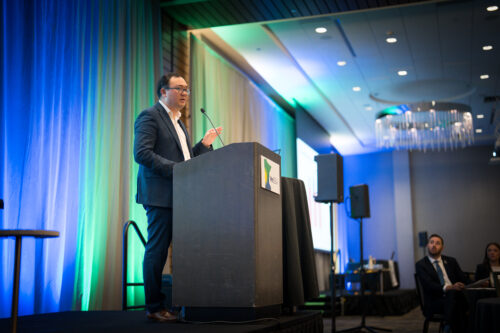
Local Energy Rules is produced by ILSR’s John Farrell and Ingrid Behrsin. Audio engineering by Drew Birschbach. Featured Photo Credit: Mike Madison of Bump Opera Media.
For timely updates from the Energy Democracy Initiative, follow John Farrell on Twitter or Bluesky, and subscribe to the Energy Democracy newsletter.
San Diego may be the only city to have secured upfront funding from utility shareholders to make clean energy cheaper.
Oregon tries to tie utility profits to climate, cost, and reliability targets through performance-based regulation.
Rural electric co-op members should use this new toolkit to swap coal debt for clean, affordable energy.
NOLA’s Community Lighthouse initiative creates local hubs with rooftop solar and portable batteries to save lives after storms.