Xcel Owns the Batteries, You Pay the Bill — Episode 269 of Local Energy Rules
What can we expect from a new utility-owned distributed storage program that made headlines when it was announced over 18 months ago?
Are you one of 42 million Americans that isn’t just a utility customer, but also a member-owner of your utility? Are you one of the 23 million or more of that group that doesn’t realize it?
For this episode of the Local Energy Rules Podcast, host John Farrell is joined by three organizers from the Rural Power Coalition: Chris Woolery, Energy Projects Coordinator with Mountain Association; Aaron Fernando, Co-op Organizer with Shareable; and Kyle Crider, Policy Director at The People’s Justice Council.
Listen to the full episode and explore more resources below — including a transcript and summary of the episode.
Apple Podcasts Spotify YouTube
Podcast (localenergyrules): Play in new window | Download
Aaron Fernando:
And with the kind of limited amount of research that we have, it seems that somewhere between 55% and two thirds of member-owners are unaware that they are member-owners.
*****
John Farrell:
Are you one of 42 million Americans that isn’t just a utility customer, but a member-owner of your utility? And are you one of the 23 million or more of that group that doesn’t realize it? Joining me in January 2026, representatives from three organizations in the Rural Power Coalition joined me to talk about a newly released rural cooperative organizing toolkit designed to help these number owners make their utilities better, finding ways to make energy cleaner and more affordable for everyone. My guests included Chris Woolery, energy projects coordinator with the Mountain Association, Aaron Fernando, co-op organizer with Shareable, and Kyle Crider, who’s the policy director at the People’s Justice Council. I’m John Farrell, director of the Energy Democracy Initiative at the Institute for Local Self-Reliance, and this is Local Energy Rules, a podcast about monopoly power, energy democracy, and how communities can take charge to transform the energy system.
*****
John Farrell:
Welcome all three of you to Local Energy Rules.
Chris Woolery:
Thanks for having us. Thank you. Thank you.
John Farrell:
Well, I always like to start off by asking people a little bit about what’s your story? How did you get involved in developing resources, in this case, to support organizing among rural electric cooperative members? I’ll toss it to Chris first. If you want to then go to Aaron, then to Kyle. It’s a little bit trickier with more of us, but would love to hear each of you give a little bit of your background and getting into this project.
Chris Woolery:
Thanks, John. I was a member-owner for about half of my adult life and didn’t know that and didn’t know what it meant. And I was an Energy Star home builder for a long time and rural electric co-ops helped me get my first Energy Star home certified. But then I lost my home and business in the housing market crash. I was lucky to get work doing energy efficiency and I was able to help build out one of the first inclusive utility investment programs in the country. That’s why I’m doing this work. I want to see more programs like this to help rural folks like my neighbors in Eastern Kentucky with high energy burdens to address those issues.
Aaron Fernando:
Yep. And I was doing volunteer comms and media and organizing for a range of local movements in my area in upstate New York. Eventually found my way to the local cooperative extension office and was doing communications for the climate programs there. I’m also a freelance journalist and was writing for Shareable for a while. And eventually this position opened up where it was kind of a combination of all of the aspects of media, organizing, energy. And I actually didn’t know very much about electric co-ops at all until I started this position. And then that was kind of when I became aware of the kind of untapped potential of getting member-owners more engaged.
John Farrell:
Thanks, Aaron. Kyle?
Kyle Crider:
Well, like many folks who were not raised rural, I came into the world of rural electric co-ops late in life. My introduction actually began in 2019 when I was invited to join a We Own It fellowship, which is all about letting member-owners know that they own it, that they can change their rural electric co-op and the world. It was an eye-opening experience to say the least. And ever since that fellowship, all things rural and electric co-op have been a major component of my work with the People’s Justice Council and environmental justice organization.
John Farrell:
Well, thank you so much. I just love the different ways that each of you had to come into this space. I want to start by just talking about the stakes. One of the other staff at ILSR passed through on this video a couple years ago, and it was start with the why. So I always try to start these conversations with getting at why is this thing important? Why is this toolkit going to matter? And so I’m hoping that you can talk a little bit about what will happen related to affordability or climate change or maybe data centers because of people finding and using this toolkit.
Chris Woolery:
Sure, thanks. I would say that we created the toolkit for much the same reasons that we came together as a working group and later became the Rural Power Coalition. These are the communities we serve and we see the issues that we have, a lack of investment in energy transition, an aging infrastructure that’s expensive and is polluting, lots of debt remaining for that aging infrastructure and a disproportionate energy burden for rural communities who pay a much higher percentage of their incomes towards energy. And so the co-ops had been behind in their transition for lots of reasons, many of which include federal policy, like lack of access to incentives. But if we want our co-ops to change, we have to ask them and we had to give them the tools to do that. So the toolkit helps folks to learn how to ask and the things that we’ve done before have helped provide some of the resources to get those things done.
Aaron Fernando:
Yeah. I’ll also say one thing is where I live, there’s a private utility and an investor-owned utility, and we have a rate case now on top of a rate case that hike rates significantly. Previously with co-ops, it is apparent that there is a lot more leverage that can be applied by people, like people power, because you don’t have to go through these extremely technical kind of removed and often foreign owned entities to try to affect change. So when it comes to things like addressing issues of affordability and addressing issues like energy infrastructure, weatherization, implementing programs, there’s actually more leverage that member-owners have than those who pay rates to investor-owned utilities or potentially even municipal.
John Farrell:
Thanks, Aaron. So it sounds like, just to confirm then, one of the things that you might see happen is if the cooperative is talking about raising electric rates, giving people a better sense of how would I get involved, how would I intervene in that process and also helping them understand that might be easier than, for example, if I was being served by a for- profit utility where I have to work through some sort of state regulatory agency in order to talk to the people who are in charge of the utility.
Chris Woolery:
Yeah. Interestingly, John, sometimes it’s both. Sometimes you have to navigate the co-op structure and the co-op is regulated like it is in Kentucky. And so the toolkit can help folks get the resources they need to navigate both of those systems.
John Farrell:
Thank you, Chris. So one of the things I wanted to ask about is that you just updated this toolkit. For folks who are curious, we originally featured this in episode 89 of Local Energy Rules. And there’s also, one of the reasons we are talking today is that there’s, a limited time opportunity for folks to actually get additional support who are doing organizing or interested in sort of following up and using this toolkit with rural electric cooperatives. So I want to get into that, but I want to start with a sort of question of scope and it kind of alludes to what you said at the beginning, Chris, about not realizing that you were a member. How many Americans are members of their not- for-profit electric utility, and maybe approximately how many of them maybe have no idea that they are in fact members of their utility and not just a customer?
Aaron Fernando:
Yeah. So it’s about 42 million residents in the US are members of an electric co-op and that calculates out, I guess, according to the American Public Power Association, it’s about 13% of the population, and so that’s like one in eight. An interesting thing about that is geographically, it’s a majority of the US landmass that is covered by electric co-ops. And so if you’re in a rural area, especially, especially if you’re in the Midwest or the South, it’s highly likely that you are a member of an electric co-op. And with the kind of limited amount of research that we have, it seems that somewhere between 55% and two-thirds of member-owners are unaware that they are member-owners.
John Farrell:
Amazing to me when you think about at least even just getting your first utility bill, you would think maybe there’s a big letter that comes along with it that’s like, “Congratulations, you’re also a member and also here’s your first bill that you have to pay.”
So one of the things I thought was interesting is I actually just did a quick Google search or whatever and said, “What are the common names of cooperative utilities?” And obviously if your utility has cooperative or member in the name or like EMC, there were some of these kind of common names. If that’s on your utility bill, you should look for that, especially if you live in a rural area, this toolkit can help you and it can help you organize around issues like affordable energy bills for everyone, reducing greenhouse gas emissions.
So it seems like a fair amount of the toolkit as I read through it was about helping people figure out how to share their views as a member with cooperative leaders. Can you talk a little bit about who is actually in charge of rural electric cooperatives, how are they run and how members can influence them?
Kyle Crider:
Yeah, John, I will jump in here and I’ll steal one of Chris’s favorite quotes. If you’ve met one rural electric co-op, you’ve met one rural electric co-op. They’re all different. The one thing that is in common is that if you are a member of that co-op, you are an owner. In some cases, it’s actually the staff in these rural electric co-ops that drive the change, that are the biggest lever for change. But in many, if not most rural electric co-ops, it is the board members that drive change. And so we spend a lot of our time encouraging and providing the resources, knowledge, skills, and abilities for members, member-owners, to run for these board positions. And the bar is often ridiculously low. We’re talking dozens or maybe a few hundred signatures on a petition because many of these rural electric co-ops are fairly small when it comes to their districts and the number of members in those districts.
So now sometimes the co-ops don’t want you to know that you’re a member and an owner, how easy … They may not want you to know how easy it is to change because quite frankly, it’s easy to fall into the good old boy network. We know that many of these co-ops have drifted from the original wonderful co-op mission, but it is far easier for a member-owner to change a rural electric co-op than any of the other kinds of utilities we’ve been talking about, investor-owned, munis, whatever. So bottom line, voting member-owners hold the power, but they don’t always know. And so we are here and this toolkit is here to help them leverage that.
John Farrell:
Kyle, I was really curious about this, about the idea of running for the board. You gave the example of the bar to get on the ballot as it were. A few hundred signatures is relatively small. I was actually curious compared to other public offices like school board or anything, are there any kind of special qualifications that you would normally have as a board member or is it really like anybody who’s a member-owner has a credible offer to make in terms of providing that service?
Kyle Crider:
Well, I can tell you from my very limited personal experience, like I say, I came into this late, so I’m going to defer to Aaron and Chris for the broader part of the question. But I know even here in Alabama with my limited experience, several folk that have tried to run have been disqualified by some of the shenanigans of the good old boy network. So let me kick that back for broader. The plural of anecdote is not data, as I like to say. So let me kick that back to Aaron or Chris for a better answer.
Chris Woolery:
I’ll try to give it a shot. Thanks, Kyle. I’ve worked on a city council campaign before. I’ve not worked on a rural electric co-op campaign, but I think that they’re very likely, very similar. They’re local, they’re nonpartisan, they involve a lot of engagement and door knocking. I have done canvassing around energy issues that wasn’t tied to political runs. So I can tell you an anecdote, right? If you go to a house door and you’re with a city council candidate, folks are pretty guarded. They’re going to have their hand on the screen door. They’re going to give you an opportunity to make a pitch. They might open the door a little bit and they might engage for a few minutes. But when I was asked to go and knock doors and ask folks about their energy bills, John, you would not believe what happened. They got the energy bills.
They came out on the porch. They brought their wives out and their husbands and laughed and commiserated and cursed. And so I imagine that running for a co-op board is kind of like in the middle of those two things, but it’s also kind of wonky, right? Kyle talked about how sometimes co-ops can make it hard to run and to change. So you need to know how the rules are written and applied. It can be very local and specific to the co-op. And so our member orgs often offer help on the ground to candidates and there are other allied orgs and resources that can offer those help. And so you have to get into oftentimes some very wonky things like proxy voting rules, but that’s one of the things that the toolkit’s there for and our member orgs are there for.
Aaron Fernando:
If it’s okay to add one more thing, there’s also plenty of examples in the toolkit and in the upcoming training that we’ll mention later, I think, where you don’t have to run to effect change. There’s increasing engagement and actually kind of being more in communication with leadership and staff and also applying pressure via media campaigns, showing up to meetings if those meetings are open. That is an avenue of change that has been especially effective for some of the Rural Power Coalition members and the allied organizations as well.
John Farrell:
Aaron, I just wanted to follow up on that one thing you mentioned about, you said you can attend the meetings if the meetings are open. And this is one thing that has always continued to boggle my mind a little bit about cooperatives, just having served on a lot of nonprofit boards over the years. So I think it’s interesting that there’s a lot of variation, I guess, is what I would say based on my reading of the toolkit and some of the other information. Some of the cooperatives, you might actually be able to attend a board meeting, at least listen in on the decisions that are being made about this entity that you co-own and pay the bills for. Some of them, on the other hand, won’t even tell you when the meetings are and won’t share minutes of those meetings or anything, which seems awfully strange. I don’t know if there’s anything more that you want to add about how that governance… Maybe that just goes back to the Chris’s quote that Kyle shared about if you’ve met one co-op, you’ve met one co-op, but it seems like you definitely are going to need to get educated about what opportunities there are to listen in and participate at your co-op, and it could vary widely.
Aaron Fernando:
Yeah. There’s examples in the toolkit. One that’s coming to mind is Ozark Electric, where there was a lack of transparency and they felt it required folks to run against incumbents, got some seats, and then have taken steps to increase the transparency. And so yeah, there does seem to be a wide range of transparency and accountability that is in different co-ops. Even on occasional calls, we’ll see people within RPC surprised by something that is shared about a co-op elsewhere. And so yeah, there’s a wide range.
John Farrell:
One of the things I also wanted to talk about that was in the toolkit was that it talks about several programs that cooperative utilities could offer to help members. And I was hoping you could do a preview of a few of the programs that in turn, members who are using the toolkit could lobby their cooperative to offer, and maybe something about what those programs could do for members in terms of affordability, emissions reductions, et cetera.
Kyle Crider:
Glad to, John. So here’s a brief laundry list. We certainly don’t have time to get into the technical details, but happy to explain in more detail as time allows. One program that you may want to advocate for is inclusive utility investments. That is a way of providing accessible non-debt financing. And this is often used for weatherization or other energy upgrades. Next item, virtual power plants are really interesting, but somewhat technical topic, but fun to discuss. One of my favorites is next on the list, agrivoltaics. Agrivoltaic is of course the combination of agriculture and photovoltaic. We joke is solar power and agriculture. Obviously all agriculture is solar powered, but when you can combine agriculture with photovoltaic panels, you can get some really interesting synergies. It’s not mutually exclusive. It’s win-win. For example, solar panels co-located with grazing animal or pollinator ecosystems, multiple benefits. There’s battery energy storage systems for savings and resiliency, and you can learn all about these and more on our Rural Power Coalition resources page. We can post that link in a chat, I hope.
John Farrell:
Yeah, and we’ll be happy to put it on the show page along with a link to the toolkit and any other resources that you want to share.
I would love actually, if you would, to dive in a little bit on inclusive utility investments. This is something that I’ve come across over many different years. And what’s interesting to me is that cooperatives have generally been the leaders on this, these kinds of programs. We haven’t seen them as successfully sort of turned on with for- profit utility companies, but I think kind of what you said about non-debt financing, maybe give us a little more color on why that’s important and how that makes it more accessible for people to have access to energy efficiency and weatherization.
Kyle Crider:
Sure, John. In fact, I will kick this to my colleagues because one of our working partners, Clean Energy Works, is the one to talk to about this.
Chris Woolery:
I’ll jump in, John. As I mentioned, this is how I came to this work. And it’s true that the co-ops were the ones who have led. In Eastern Kentucky, we were able to deploy almost two and a half million dollars into around 325 or so grid edge energy efficiency improvements, mostly residential. And since that time, we’ve had a 99.5% cost recovery rate. And so what those numbers mean are that rural electric co-ops and investor-owned utilities could choose to invest millions of dollars into our homes, our churches, our places of community and our nonprofits and even our local governments instead of creating new generation assets or in addition to, right? And these investments are some of the safest investments you can make because of that cost recovery, and they actually lower the wholesale energy costs of most of the distribution co-ops.
And so as an anecdote, I can share that one of the other leaders in the work, Wachita Energy in Arkansas, was able to actually pass a 4% rate decrease after they made robust investments through inclusive utility investments, and they helped a lot of their commercial accounts get solar. So that’s the kind of good news story that we need to be replicating all across rural America. And it’s an economic engine that turns poor housing stock into local jobs.
John Farrell:
Let me give the contrast. If I’m just an ordinary homeowner and I’m in a utility that doesn’t have this program and I want to make weatherization or energy efficiency upgrades, if I want to do solar, if I want to put insulation in my walls, usually what happens is I talk to a contractor, they give me a bid, they might offer me a financing option or I go to my own bank, but I’m borrowing my own money and doing that to pay back the cost of that improvement. I think the brilliance in this inclusive utility investment is, if I understand it correctly, I have that conversation with the contractor, but then the utility steps in and says, “We will pay for the upfront cost of much of that upgrade because we see the benefit on our side of the reduction in energy use and you’ll pay that back on your utility bill over generally a longer period of time in which the savings from the improvements that you’ve done outweigh the costs of paying it back.” So it kind of ties together those two things about good cash flow and I’m not having to put in my own money and that seems to be the inclusive part of it in my mind. Did I get that right? Is there anything else I’m missing?
Chris Woolery:
You did get it right. And I could add a little bit of color, right? Some of the things that you mentioned in your what if. There’s a couple things you didn’t mention that could happen like you could get scammed by a bad actor, you could get the wrong HVAC or a solar that wasn’t interconnected, or you could get a bad job by someone who didn’t mean to do a bad job. But the beauty, one of the beautiful things about the programs is they offer a quality control component as well. And so that is a hugely valuable thing for a member-owner who doesn’t know which investments necessarily are going to cash flow. They don’t know necessarily which of the contractors have the best quality control. And so the program lowers costs through economics of scale. It allows folks to get the investments that they can afford on their own, and it creates positive cash flow from day one.
And it can even get better. Shockingly enough, it could even get better. I just was amazed to learn recently that in Appalachia, I think it’s Duke Energy in North Carolina. The investor owned utility has now an inclusive utility investment program that even covers maintenance for the HVAC because if that heat pump breaks down, right, we all lose, we all lose in a cooperative system, but this is the type of thing where community helps community.
Aaron Fernando:
I’ll also say that it is a type of program that is beneficial to renters as well. I believe the landlord has to opt in, but it is most likely that the cost recovery mechanism on bills is going to lower energy costs. So that’s great for the renter. It’s also improving the housing stock, so that’s great for the landlord and it’s reducing energy strain. So that’s great for the co-op utility or investor-owned utility.
John Farrell:
Thanks, Aaron. I appreciate that additional context, sort of a win-win for renters.
*****
John Farrell:
We’re going to take a short break. When we come back, I ask my guests about federal programs supporting cooperatives. We also talk further about opportunities for co-op democracy and how co-op members can learn more. You’re listening to a Local Energy Rules podcast with Chris Woolery, energy projects coordinator with the Mountain Association, Aaron Fernando, co-op organizer with Shareable, and Kyle Crider, policy director at the People’s Justice Council. Hey, thanks for listening to Local Energy Rules. We’re so glad you’re here. If you like what you’ve heard, please help other folks find us by giving the show a rating and review on Apple Podcasts or Spotify, five stars if you think we’ve earned it. As a bonus, I’ll gladly read your review aloud on the show if it includes an energy-related joke or pun. Now back to the program.
*****
John Farrell:
I want to pivot a little bit and ask you about some of the coalition’s work on federal legislation and how that kind of ties back into opportunities for the rural electric cooperatives.
So there were at least two programs that were included in the Inflation Reduction Act for cooperatives that haven’t yet, as far as I know, been rolled back by the Trump administration. So I was hoping you could talk about the New Era and the PACE programs and what they do for cooperatives and their members and whether or not cooperatives can still participate in them.
Chris Woolery:
Sure. Thanks for asking. I think this is really a great example of the successes that Rural Power Coalition can claim and can help create because when we were coming together as a working group and COVID came onto the scene, we were trying to figure out what to ask from our co-ops, right? We wanted to know what can the co-ops do to materially improve the situation for their member-owners. And at the same time, right about 2020, the National Rural Electric Cooperative Association asked Congress to finance their rural utility service debt, to refinance the debt, and that would’ve cost taxpayers about $10 billion. And so to give it some context, in Kentucky, East Kentucky Power Cooperative owes about $2.1 billion, and that’s about $30 per month per member and meter served. And so NRECA came to Congress, they said, “Hey, we’re struggling. People are behind on their bills, please refinance our debt. Please spend $10 billion.”
And the Rural Power Coalition said, “Hey, we want to help the co-ops, but we don’t want to double down on bad decisions.” We want to finance a transition that will help lower energy bills rather than double down on the infrastructure of the past. And so we advocated for a debt swap type of program in which we would retire debt, old debt, for every dollar, new dollar invested in energy efficiency, zero cost energy generation, democratization or transparency, and generally lower energy bills. And so Rural Power Coalition worked directly with legislators and helped to create draft legislation that was included in the Build Back Better proposal. And then we were surprised to find and blessed to see a modified version make it into the Inflation Reduction Act.
And so we didn’t get exactly what we wanted or that we needed. We said we needed 100 billion and we said we needed debt forgiveness. Well, the PACE program was the closest we got. It was only one billion, but it did have some of those debt forgiveness mechanisms in there. We also got the New Era program, which was much better financing terms than had been available. Oh, I should also include something called Direct Pay, which is a huge deal as it was a change that was included in the IRA, which leveled the playing field for nonprofits, including rural electric co-ops. So they weren’t able to access the tax incentives that our other utilities had been using to modernize their systems and invest in new energy. And so Direct Pay allowed them to tap into the same incentives and level the playing field that had been tilted against them for decades. And so investor-owned utilities have always been able to deduct their energy investments from their taxes, and now direct pay allows the co-ops to do that too, and other rural nonprofits to access those federal energy incentives.
I guess I’ll wrap it up by saying these three things, New Era PACE and direct pay all show there was a recognition across rural America and a bipartisan recognition at the federal level that in order to remain competitive, we need to modernize our energy infrastructure and we’re willing to make the investments if we get those good terms. And so there is still this ongoing need for huge investments. We called for a hundred billion, we got 10, so now we need 90 billion more, and that’s where we’re at now. Right now, we’re trying to figure out how to get that 90 billion more.
John Farrell:
I’m curious, Chris, how you feel in terms of optimistic or pessimistic with this federal administration, which seems to be fairly intent on getting rid of anything that is related to clean energy, even if it means making Americans pay more for their electricity.
Chris Woolery:
It can be hard to be optimistic, but I am because what we’re looking at is a value proposition, right? It’s math. And as a CDFI, a community development financial institution, Mountain Association has been doing this math for over a decade now. We’ve deployed actually five million if you add in the investments in commercial and local governments that all cash flow from day one, even without federal incentives, they all make our communities more resilient. They pave the way for future investments in battery storage that can leverage the solar investments to make our communities more resilient in the face of extreme weather, in the face of tornadoes and floods, and Kentucky has been kind of been ground zero for many of those extreme weather events over the last few years. And so I’m optimistic despite the federal landscape because we’re doing this in Kentucky and it’s working in Kentucky and that means we can do it mostly anywhere.
John Farrell:
Thanks Chris. One of the Things that I thought was really interesting about the toolkit is actually right at the beginning, there is this list of the Rural Power Coalition members, which are all across the states that have a lot of rural electric cooperatives. I was really curious if one of the opportunities here is for cooperative members to either get help or even join some of these groups if they want solidarity and support for their advocacy with rural electric cooperatives.
Aaron Fernando:
Yep, absolutely. So folks can reach out to us. At the beginning of the toolkit, it mentions the states that we have an organization or organizations in, a member organization or organizations. And there’s different focuses of the different organizations. Some are focused more on grassroots organizing and elections. Some are focused more on perhaps specific programs. And so you could check out the toolkit to see that. You can also look at ruralpower.us/resources. We have a list there. And then I’ll also mention that depending on when folks are listening to this podcast, we’re doing a training. It’s a four-part training series starting on January 22nd and running for four weeks, which we will also, if you missed it and you’re listening to this after the fact, we’ll post the materials online.
And so that will be focused on specifically member-owners that want to understand more about what are the basics of my co-op? How do I understand how to engage with them? How do I understand how to advocate for the types of programs that pertain to affordability and reliability? And there’s an opportunity in that training to actually engage with either rural power coalition organization folks, but also other organizers that are doing this work beyond our coalition. And so that’s an upcoming thing.
John Farrell:
Thanks, Aaron. That’s a great opportunity. As far as I know, if you’re listening to this, it is probably that training time is not over yet. So reach out right away.
I had meant to ask about community benefits plans, which I saw were part of the toolkit, but I didn’t get a chance to read much about them. Can you tell me a little bit more about what that concept is and why it might be important for folks to be interested in as part of the toolkit?
Kyle Crider:
Sure, John. I’ll jump in here. Community benefits plans and community benefits agreements, CBPs, CBAs. These have various levels of legality, but basically these are voluntary. Whether or not they are legally binding, these are voluntary commitments from entities to do right by their community. So CBA, CBPs are a great tool for developers because it’s a great way to get communities engaged. And some of the biggest hurdles, it may surprise you, it’s not just getting the entity, the industry or whatever to buy in, but sometimes it’s getting the community buy-in as well. It’s getting everybody to the table, building trust, building win-win relationships. But this is probably the best way to get the community involved to understand whatever project is proposed for their community and how to get to that all important yes on community benefits. So for example, my organization, People’s Justice Council, PJC, is a member of another coalition called Good Neighbors Alabama. And by the way, that’s a much better naming convention. It used to be the Alabama Coalition for Community Benefits, but Good Neighbors Alabama just rolls off the tongue a little bit.
John Farrell:
Yeah. Love it.
Kyle Crider:
And it’s all about being good neighbors. And one example, this is a rural electric co-op, but Good Neighbors Alabama, our first success was getting an agreement with a company called New Flyer based in Aniston, Alabama, a bus manufacturer. Electric buses, by the way, really cool. So New Flyer was Good Neighbors Alabama’s first success story when it came to a community benefits agreement, in this case, a legally binding agreement. And it really has been win-win. And I would be remiss if I didn’t say, since all of us are dealing with the promise and threat of data centers these days, community benefits plans, agreements are a great way to engage with data centers. If you’re going to have a data center in your community, you need a CBA, CBP.
John Farrell:
Kyle, it sounds like, just to be clear that the community benefits agreements, this is not something you’re necessarily trying to secure with the rural electric cooperatives. They could be involved because this entity that a developer might be building a project for the co-op or a customer of the co-op, but it sounds like this is a more general resource for rural communities, which is figuring out how do you work with developers, business owners, others that may be doing something that has an impact in the community and figuring out how do you make that impact as strong and as positive as possible?
Kyle Crider:
Well, by all means, I encourage CBA, CBPs with rural electric co-ops, but you’re right. It’s not limited to co-ops or any other kind of entity. This is win-win. This is all about being a good neighbor and getting folk to the table to discuss getting DS and win-win early on when there’s still time and fewer hurdles.
Aaron Fernando:
Yeah. In putting together the toolkit, it emerged that it actually benefits the developers to engage in these because it makes there be fewer either threats of litigation or slowdowns or kind of nasty interactions with the community. If there’s a perception that a developer is trying to sneak in a project that of course leads to ongoing problems. Whereas if there’s the perception that the developer is coming in and trying to engage often and early, then it’s like, okay, if they’re doing this, they want this to be good for us as well as them.
John Farrell:
That’s great. Thank you, Aaron.
Aaron, you already mentioned this, that there’s this four-week training opportunity. I think this podcast should be coming out on January 28th, which is going to be a little bit after that starts, but how could people take advantage if they hear this podcast, they’re early in that training period? Should they reach out to you, to someone else as one of the other members that’s on this call, someone else? What might be the opportunity to still take advantage?
Aaron Fernando:
Yeah. If you go to ruralpower.us, you’ll be able to find information about the training. It’s called Power by the People. It runs from January 22nd through February 12th, and we’ll also have some office hours after that. The time is, we try to set it so that it’s available to folks that might be working. So it’s at 7:00 PM Eastern or 4:00 PM Pacific. And yeah, so anyone is welcome to join. If you are just curious about avenues for change at your utility, even if you do pay your bills to an IOU, that’s fine. You can join. But this is specifically the content there is tailored for member-owners who want to either dip their toe or learn more about organizing to affect change at that local utility level, specifically with the lens of affordability.
John Farrell:
Well, I just want to say I just really appreciate the work that has gone into this rural cooperative organizing toolkit. I think it is so important for people to understand that they have these unique opportunities to intervene and to influence their utility. And I think there are so many great examples that y’all have given where that has been really successful, whether it’s inclusive utility investment or retiring debt for old coal plants or whatever. So I just want to say thank you so much for all of that work and thank you for joining me today on Local Energy Rules to talk about it.
Kyle Crider:
Thank you so much for having us.
*****
John Farrell:
Thank you so much for listening to this episode of Local Energy Rules with Chris Woolery, Energy Projects Coordinator at the Mountain Association, Aaron Fernando, co-op organizer with Shareable, and Kyle Crider, who’s the policy director at the People’s Justice Council, all members of the Rural Power Coalition who have just released the Rural Cooperative Organizing Toolkit.
On the show page, look for a link to the toolkit and the available trainings on ruralpower.us, as well as a link back to Local Energy Rules episode 98 about the original toolkit release. We’ll also link to some of ILSR’s other resources on rural electric cooperatives, including two reports on the barriers faced by cooperatives in advancing their community interests and a podcast, episode 196 with recent updates.
Local Energy Rules is produced by myself and Ingrid Behrsin with editing provided by audio engineer Drew Birschbach. Tune back into Local Energy Rules every two weeks to hear how we can take on concentrated power to transform the energy system. Until next time, keep your energy local and thanks for listening.
One in eight Americans owns their electric utility, but most have no idea. Rural electric cooperatives (co-ops) cover the majority of the U.S. by area, serving 42 million people in all. Their member-owners hold the key to lower bills and cleaner air. But up to two-thirds don’t realize they have a direct say in how their utility operates. The Rural Power Coalition’s Electric Cooperative Organizing Toolkit empowers these “accidental owners” to reclaim their utility.
“If you’re in a rural area, especially, especially if you’re in the Midwest or the South, it’s highly likely that you are a member of an electric co-op.” – Aaron Fernando
Member-owners wield more leverage over co-ops than customers do over their shareholder-beholden investor-owned utilities. In fact, a member-owner can run for a co-op board seat with often just a few dozen signatures.
While some co-ops’ entrenched leadership circles might try to block transparency, members can fight back, even if they don’t run for a board seat. For example, member-owners can attend board meetings to voice their priorities, help elect reform candidates to demand accountability, and engage in outreach and media campaigns. Some of the most important problems member-owners can weigh in on now are how their co-ops should tackle aging, polluting infrastructure and the heavy debt that many cary.
“Voting member-owners hold the power, but they don’t always know.” – Kyle Crider
In terms of opportunities, member-owners can lobby their board for better access to bill-reducing services like inclusive utility investment programs. Co-ops already lead the nation in offering these types of programs, which provide non-debt financing for home efficiency improvements and solar upgrades, for example. Through these programs, the co-op or other utility pays the upfront costs, and the homeowner pays it back through their monthly energy bill using the resulting energy savings. This inclusive utility model creates a “win-win” for everyone: renters lower their costs, landlords improve their property value, and the utility reduces energy strain.
“Rural electric co-ops and investor-owned utilities could choose to invest millions of dollars into our homes, our churches, our places of community and our nonprofits and even our local governments instead of creating new generation assets.” – Chris Woolery
Another opportunity member-owners can lobby for is for their co-ops to take advantage of federal programs like New Era and PACE, which offer billions of dollars to help co-ops swap old coal debt for cleaner and more affordable energy options. Direct Pay now also allows tax-exempt co-ops to access the same clean energy incentives as for-profit companies for the first time. Together, these federal programs can help rural communities lower their energy costs, and stay resilient against extreme weather.
“Direct Pay allowed [co-ops] to tap into the same incentives and level the playing field that had been tilted against them for decades.” – Chris Woolery
The new Electric Cooperative Organizing Toolkit from the Rural Power Coalition equips member-owners with a roadmap to navigate these opportunities as well as some common challenges that co-ops encounter. In addition, a four-part “Power by the People” training series, starting late January 2026, teaches members how to advocate for affordability and reliability. Whether member-owners want to lobby for agrivoltaics or secure a Community Benefits Agreement, these training resources give community members the power to transform their local energy system.
“If we want our co-ops to change, we have to ask them and we have to give them the tools to do that.” – Chris Woolery
See these resources for more behind the story:
This is the 263rd episode of Local Energy Rules, an ILSR podcast with Energy Democracy Director John Farrell, which shares stories of communities taking on concentrated power to transform the energy system.
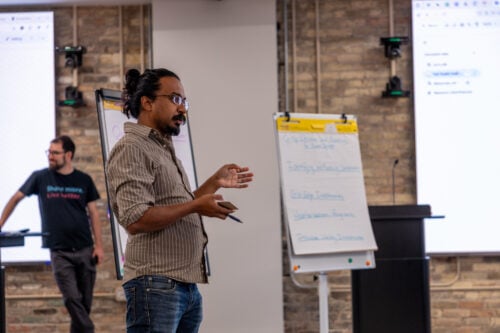
Local Energy Rules is produced by ILSR’s John Farrell and Ingrid Behrsin. Audio engineering by Drew Birschbach. Featured Photo Credit: Rural Power Coalition.
For timely updates from the Energy Democracy Initiative, follow John Farrell on Twitter or Bluesky, and subscribe to the Energy Democracy newsletter.
What can we expect from a new utility-owned distributed storage program that made headlines when it was announced over 18 months ago?
What makes faith communities such attractive hosts for resilience hubs?
How did this coal town ditch gas lines, win grants, and make municipal networked geothermal the cheapest heating option?
Who should pay for upgrades to the high voltage transmission network?