Xcel Owns the Batteries, You Pay the Bill — Episode 269 of Local Energy Rules
What can we expect from a new utility-owned distributed storage program that made headlines when it was announced over 18 months ago?
If utility companies were paid for performance, could it encourage the development of more community solar?
For this episode of the Local Energy Rules Podcast, host John Farrell is joined by Angela Crowley-Koch, executive director of the Oregon Solar + Storage Industries Association.
Listen to the full episode and explore more resources below — including a transcript and summary of the episode.
Apple Podcasts Spotify YouTube
Podcast (localenergyrules): Play in new window | Download
Angela Crowley-Koch:
It’s kind of nonsensical that we give utilities their rate of return based on what they own instead of how well they’re doing in the service that they’re providing.
*****
John Farrell:
If utility companies were paid for performance, could it encourage the development of more community solar? That’s the hope behind some recently passed legislation in Oregon where the legislature aims to shift away from cost plus regulation, rewarding utilities for building things, and instead reward them for meeting goals in the public interest like reducing greenhouse gas emissions or keeping bills affordable. Joining me in January, 2026, Angela Crowley-Koch, executive director of the Oregon Solar and Storage Industries Association, explains why community solar was included in the legislation and what it could mean for community-based clean energy.
I’m John Farrell, director of the Energy Democracy Initiative at the Institute for Local Self-Reliance, and this is Local Energy Rules, a podcast about monopoly power, energy democracy, and how communities can take charge to transform the energy system.
*****
John Farrell:
Angela, welcome to Local Energy Rules.
Angela Crowley-Koch:
Thank you. Happy to be here.
John Farrell:
I always like to ask my guests, how did you get to what you’re doing now? So I’m kind of curious what interest drove your career path to lead you to be the executive director of the Oregon Solar and Storage Industries Association?
Angela Crowley-Koch:
I was one of those kids in the nineties who bought an acre of rainforest to help protect it. So I would say that I’ve always been interested in climate change and what we can do to stop it and slow it down. So right before I joined OSSIA, I worked at a state environmental group here at Oregon, but before that I worked for US Senator Jeff Merkley on the capitol back in the Obama days when clean energy was encouraged at the federal level and so that I’ve always been involved in policy and politics and when this opportunity to work at OSSIA came up, I jumped at the chance and I’ve been here seven years, so I feel like this is my home.
John Farrell:
That’s wonderful. I always love when folks have a connection that leads even back into their childhood to the work that they’re doing. I feel like I’m lucky enough to have some of those connections myself.
So let’s dive right in here. Last year, Oregon passed legislation to pursue performance-based regulation of the state’s investor-owned electric utilities. Just broad brush policies like this are trying to sort of realign how utilities get paid with meeting public interest goals like reducing greenhouse gas emissions or lowering the cost of electricity, producing more clean energy, but having better reliability. In this case, I thought it was fascinating that the legislation actually specifically talked about community solar, and I was wondering if you could tell me why community solar got an honorable mention in performance-based regulation?
Angela Crowley-Koch:
Well, first of all, I really have to thank Senator Khan Pham for sponsoring this legislation and she was really the driving force that enabled this to happen, and I know that her main passion for getting this accomplished is all about climate change and she is a senator that’s on the Senate Committee on Energy and the Environment, and she’s heard me come before the committee many times with concerns about how the utilities are not prioritizing clean energy, especially programs like community solar where they don’t get any financial benefit from that program. And so I think she thought it wise to make sure that community solar was mentioned in addition to the expanded use of distributed energy resources, microgrids, demand response and energy efficiency, all things that utilities don’t make money on, but are really an important piece of where we need to get clean energy and climate change.
John Farrell:
I really appreciate you giving people that particular context, something I obviously pay a lot of attention to. Could you just talk a little bit about how you say utilities can’t make money doing these things, how utilities do make money in Oregon and why things like community solar aren’t as interesting to them?
Angela Crowley-Koch:
Yeah, so we’re vertically integrated here in Oregon. Before this legislation was passed, we had the traditional model of utilities making their money, making their rates based on the assets that they own. Now, community solar is an interesting variation because technically the utilities can develop and build their own community solar projects. However, the program is challenging here in Oregon and we had protested that it was a little too challenging that the credit rate given to build these community solar projects was not high enough. And we can tell that the utilities agree because they haven’t tried to develop any community solar projects on their own. But back to the overall problem, because utilities make their money on the assets they own any customer-sided resources like residential or commercial solar and storage or community solar, the utility does not have a rate of return on those things, and so there’s very little incentive for them to even do something as simple as put out a mailer to their customers about community solar. I think we have three investor-owned utilities here in Oregon, Portland General Electric, so I’ll refer to that as PGE, not to be confused with PG and E in California, very different. Portland General Electric is just an Oregon utility. We also have PacifiCorp and then Idaho Power has a little slice of Eastern Oregon, and so out of those three, PacifiCorp and PGE, I think they each did one mailer to their customers about community solar and that’s not really enough help.
John Farrell:
Can you tell me, I’d love to dive in a little bit more on the status of community solar. So you mentioned there has been a program, but the credit rate wasn’t terribly high in terms of incentivizing people to do development. So do you have any community solar projects? What’s out there so far?
Angela Crowley-Koch:
Yeah, so the authorizing legislation was passed back in 2016, however, the rules for the program weren’t finalized until 2019, and so projects started being built in 2020. The public utility commission here in Oregon made two tiers just to kind of kick off the project. So 80 megawatts was released to be developed in that tier one. After that was filled up, which was pretty quickly, then they released tier two, another 80 megawatts and made some changes that also quickly filled up. And so a unique part of the Oregon program is that we also have something we call the carve out. 25% of the capacity is reserved for these carve out projects, which are either small or they’re developed by nonprofits or they’re, a majority of the beneficiaries are low income residents. The carve out projects, since they’re developed by nonprofits just take longer to develop. And so tier one and tier two for sort of the general capacity was pretty much all gone.
There was a little bit of that carve out capacity left, but all of a sudden that was gone too. And so OSSIA put forward working with the chair of the Senate Environment Committee, Senator Janeen Sollman put together a bill to expand the community solar program in 2025.
Unfortunately, that did not pass, but the Public Utility Commission did give 50 megawatts more of that carve out capacity so that some of these nonprofits that already have projects in the works, they’ve already received funding. Those projects can go ahead, but unfortunately for the general capacity where private developer might come in and develop a community solar project that is at a standstill, we don’t have much capacity left to build those types of projects. So that’s obviously not where we want to be in Oregon. And so really working with the Public Utility Commission to get a better understanding of the actual costs of the program and how we can move forward in the future and still have a program that nobody is worried about having too much cost on non-participating rate payers.
John Farrell:
Is it possible that… you mentioned that the PUC was able to add 50 megawatts for the carve out style projects in terms of capacity, would they be able to add more capacity to the program? Does the original legislation give them the option to do that, or would you have to pass new legislation to expand the program?
Angela Crowley-Koch:
Yeah, they do have the option to do that. We had heard from the commission that they wouldn’t do it until every single megawatt of the capacity was accounted for. And right now there I’d have to pull up the numbers to see where we are this month, but there’s a little bit of capacity left, I want to say in PGE territory, but it’s unlikely to be used just because we have land use constraints. So it didn’t feel like we had heard from the PUC they weren’t going to do this on their own, and that’s why we brought forward legislation. It’s not needed, but it might be faster. Unfortunately, it didn’t pass. Will we try again? I’m not sure. It depends on how that conversation about whether or not there’s a cost shift to the program, we don’t believe there is. The utilities of course, believe that there is. And so we need some objective numbers here on what does this program actually cost and what are the tangible benefits that the grid is receiving to really get a sense of what the costs are.
John Farrell:
A very complex discussion and in any state where it’s taking place. Kind of hearkening back to that conversation we were having about how utilities make their money, that if they’re not making money from community solar, they seem to have a strong incentive not to find a lot of value in that program when they’re asked whether it has a value.
Angela Crowley-Koch:
That’s right.
John Farrell:
Yeah. I was curious in the legislation around performance-based regulation, what are some of the other performance measures that the Public Utilities Commission is charged with investigating?
Angela Crowley-Koch:
Yeah, so there’s kind of a long list. I won’t read them all out to you, but the overall one is the first one, which is reducing greenhouse gas emissions. And I know from Senator Pham that that’s really the main driver behind the legislation.
We have a hundred percent clean electricity standard in Oregon, and so PGE and PacifiCorps are supposed to be at a hundred percent clean by 2040. However, it’s common knowledge that neither utility is on track to meet that, again, lack of incentives. And in the case of the hundred percent clean electricity standard, there’s also a lack of penalties. And so that’s kind the overarching goal here is we need to do everything possible to reach our climate change goals that we have as a state. And so all the other performance-based ratemaking factors here kind of fall under that umbrella, but I’m very happy that distributed energy resources were mentioned, enhancing services for low income customers and reducing costs for rate payers. So overall, I think there’s a really, it’s a short bill, but it really hits all the high points of what we want to see coming out of performance based rate making.
John Farrell:
Is there anything currently in statute that you would describe as performance based before this legislation was passed in terms of how the investor owned utilities were regulated, or is it almost entirely as we call the cost plus, which is to say that utilities spend money and then earn their return on how much they spend?
Angela Crowley-Koch:
I don’t think so. I know that the Oregon Public Utility Commission, even before the legislation had the authority to implement performance-based rate making, but it’s quite a task, and so I think it had been started at one point and not finished. And so no, there’s not really anything we can point to that is in essence, performance-based rate making.
John Farrell:
Is there a timeline or something for implementation given that there was permission before and not a lot of action? I think about in Minnesota, we had this very broad stakeholder process over five years about the future of the electricity system, and the sort of one concrete consensus agreement was we should have performance-based rate making. And then because the stakeholder group consisted of the utilities, the utilities were like, yeah, we really don’t want to advocate for that. And so the whole thing just died. So I get very curious about what are the sort of drivers to actually push this over the finish line.
Angela Crowley-Koch:
Yeah, good question. So one other piece of context is important here, which is that in the 2025 legislative session here in Oregon, there was also a bill passed to switch from annual rate making to multi-year rate making. After the pandemic, the two utilities, PacifiCorps and PGE had pretty large increases several years in a row, which is unusual for Oregon. We have pretty low rates here in the Pacific Northwest, and it was quite the sticker shock for customers to have in some cases, I think one of the rate increases was over 10%. So there was a lot of interest in the legislature to do something to control rates, and this multi-year rate making was one of those things which also helps with the timing for customers. Before that bill was passed, rate changes usually happen January 1st, and that’s really hard during the winter to get a rate increase.
And so the new multi-year effort will address that, but also some other things to make it a more fair process. I think our citizens utility board was really the main driver on that legislation, but that’s relevant because the Public Utility Commission in Oregon, they have great staff, but they’re understaffed and they decided to put together the effort of coming up with rules for multi-year rate making with performance-based rate making. And so they’re doing those two dockets at the same time kind of concurrently. The goal is for both of those to be concluded by mid 2027, and OSSIA will be very actively participating in the process, especially because we’re worried that the focus from the public utility commission is more on the multi-year rate making, and that performance-based rate making is getting kind of shuffled to the side for a little bit of the same reasons that you mentioned. The utilities are more interested in the multi-year rate making conversation, not interested in performance based rate making. So yeah, we have a little bit of a challenge ahead of ourselves over the next year and a half to make sure that performance based rate making and especially the clean energy parts are front and center for the PUC.
*****
John Farrell:
We are going to take a short break. When we come back, I ask Angela about how performance based regulation could improve opportunities for distributed energy and for programs like virtual or distributed power plants. You are listening to a Local Energy Rules podcast with Angela Crowley-Koch, executive director of the Oregon Solar and Storage Industries Association.
Hey, thanks for listening to Local Energy Rules. We’re so glad you’re here. If you like what you’ve heard, please help other folks find us by giving the show a rating and review on Apple Podcasts or Spotify, five stars if you think we’ve earned it. As a bonus, I’ll gladly read your review aloud on the show if it includes an energy related joke or pun. Now, back to the program.
*****
John Farrell:
I was hoping you could talk a little bit about how performance-based incentives would improve the opportunities for distributed energy. So you mentioned they’re called out specifically. When you look ahead to mid 2027 or whenever these rules are finalized, how do you see them potentially helping things like rooftop and community solar and microgrids?
Angela Crowley-Koch:
Let’s just start with rooftop solar and net metering. So Oregon is one of the states that still have net metering for residential and commercial under two megawatts. So that of course means that it’s a one-to-one. Everything you generate, you get a credit for, whether you use it at that particular moment or whether you save that credit and use it in the winter. That’s what we feel is most fair to customers, especially in a state like Oregon where it’s very dark in the winter, raining every day on the west side of the state, and in order for it to pencil out for customers, we really need to have a true net metering system where customers can keep those credits from the solar that they generated. In other states of course, rooftop solar has moved to something called net billing, which means that you get the full retail rate of your solar if you’re using it in that particular moment.
And if you’re not using it at that moment, if you’re exporting it to the grid, you get compensated at a much lower rate, sometimes half or even a quarter of what the retail rate is. And we’ve seen that have devastating effects in places like California and Oregon has much less solar adoption than California. It’s just a very different circumstance. And right now the utilities need every possible megawatt of renewable energy to help them get to their clean energy goals. And so I think that with performance based rate making, if they have meeting those clean energy standards as part of their goal that they’re recouping their investments on, I think that’s going to stop the effort of moving to net billing and just keep net metering so that more customers will go solar. And that’s really needed, especially now that it’s 2026 now, and we don’t have that federal residential solar tax credit anymore.
So we feel if the utilities are really serious about meeting their clean energy goals that they need to keep those customer side investments front and center. And I’ll also add, while we’re speaking about customer investments, battery storage is a really important thing, not only for the customer, but the grid and utilities. Utilities can get a lot of benefit from those customer side battery storage systems. And so we expect, and we’ll advocate for that to be part of performance-based rate making. My organization is also working on a bill for virtual power plants for those three investor-owned utilities in Oregon. And so these things kind of all go together. If the rate making is about their performance, including clean energy goals, meeting their greenhouse gas reduction goals, then distributed energy resources are a really key part of that.
John Farrell:
This is really helpful kind of understanding how this policy would impact some of these. I’m kind of thinking in the weeds a little bit about virtual power plants, and maybe you haven’t gotten to this level of granularity yet, and there aren’t that many states, sadly, where we’ve seen these policies enacted where you have customers having solar and storage and other smart thermostats, other devices that can kind of respond to software to increase or decrease energy use, all getting networked together to provide energy services is your thought that what will happen is utilities will have an incentive now under performance based regulation to meet these climate goals, meet affordability goals, both of which can be served by virtual power plants, and that therefore you’ll see them creating programs where folks can sign up for and provide those services to the grid and receive meaningful compensation.
Angela Crowley-Koch:
That would be great. So I do have to give a little credit to PGE. They have a good skeleton of a virtual power plant program, but it’s been stuck in a pilot phase for about six years. And so I think that performance-based rate making is the piece that’s missing. If we already had performance-based rate making, they probably would have a formal virtual power plant program and it would be more accessible to more customers, but it’s been stuck in the pilot phase for six years. And so yes, definitely hoping that performance-based rate making would change that, but we’re not waiting until mid 2027. We are again going to try to get our virtual power plant program bill passed in the upcoming legislative session. Oregon has, we’re such a small state, so we have in the odd number years a long session, which is six months, and then the short session is an even number of years, and it’s six weeks, and so that starts in February, and we’re going to try again to pass our virtual power plant program to really kick things off quicker.
John Farrell:
I can’t imagine trying to do that in six weeks. I wish you the best of luck. It seems like no matter how long this session is, they’re always going into overtime or to the very last second. So yeah, it’s incredible.
Angela Crowley-Koch:
Yeah, we’ll see. We have a pretty good coalition built up. There’s a lot of interest among environmental groups. I think labor groups will also be interested. Yeah, there’s a lot of good possible outcomes. So we’re going to give it our best shot.
John Farrell:
And I think you might’ve said this before, but will you also be working on the community solar legislation again during this session, or is this one where you have to sort of pick priorities given the limited amount of time?
Angela Crowley-Koch:
Yeah, not this session. We do have to pick priorities. Legislators can only introduce two bills, and so that really restricts the number of concepts that can go forward. And like I said, we really need to have some kind of objective third party really look into their costs and benefits of the program. And I’m working with the PUC now to figure out the best way to do that, but I feel like we really need that before we know how to move forward.
John Farrell:
Well, I’m sure that there will be other jurisdictions, other states, other programs that’d be very interested in that analysis as well. I know that that’s kind of a common discussion happening in many different places.
I’m especially interested too though, to see the way in which, as you mentioned, battery storage as one of the technologies that you’re hoping to see enabled with the performance-based regulation, but also virtual power plants. It seems like we had this sort of transition from the first phase of customer owned clean energy was I’m going to just produce some clean energy myself and I need some compensation for it. It seems like the next phase is I’m going to offer to use the lingo dispatchable clean energy, which is to say that I can more reliably tell you when I’m going to produce it or I can produce it in a particular place or time that is particularly valuable to the grid. It seems like that’s a very exciting kind of next phase here and that batteries really make that possible
Angela Crowley-Koch:
Agree. Yes. Batteries are definitely a game changer for renewables and especially for places that are seeing more climate change related power outages. So we call it climate change and not global warming because climate change means things like increased precipitation. And in Oregon, on the west side of the state, when we have rain all winter long and the temperature does drop below 32, we get these ice storms. And that is becoming more, it’s happening more and more frequently that we’re having outages due to ice storms in the winter. And then of course, it’s getting hotter every summer. More Oregonians have air conditioning that never had it before. I’ll include myself in that category. I’ve lived in Oregon for, this’ll be 26 years, and I just got air conditioning last year. So there’s more outages happening in the summer as well. Forest fires. So all of this is to say that battery storage is even more important than it has been due to all these outages that are happening with more frequency. Plus, of course, data centers coming on board. The utilities need more help with regulating the voltage on the grid, and that’s something that both solar inverters and battery storage can help with through a virtual power plant.
John Farrell:
Well, I had the pleasure of visiting Portland this last summer in August when it got to a hundred degrees. So I’m very sympathetic to why you need air conditioning more so than you may have in the past.
Angela Crowley-Koch:
Yep. It’s that, and we can’t have campfires anymore in the summer, which is new in the last few years. We used to. Oregon has wilderness and forests everywhere, and we can’t have campfires while camping anymore due to forest fire. So we’re feeling climate change. It’s a bummer not to have a fire when you camping.
John Farrell:
No doubt. And I think about Minnesota for example, has been relatively insulated from climate change in a lot of ways, but we’re getting more freezing rain instead of snow in the winter, and then we get wildfire smoke from Canada and from other places that are experiencing terrible wildfires. So yeah, definitely having some personal experience as a lifelong Minnesota resident. But I’m getting off topic.
Maybe just to wrap up, what advice would you have for folks in other states? I guess maybe more broadly, do you think performance-based regulation is a good way to approach broadly these issues of climate and affordability and reliability and resilience? And would you recommend that other folks who are doing advocacy around clean energy look at that approach, or do you have specific advice that you would give about how you approach these issues?
Angela Crowley-Koch:
I think performance-based rate making is always worth looking at. It really just, it’s kind of nonsensical that we give utilities their rate of return based on what they own instead of how well they’re doing in the service that they’re providing. It just really doesn’t make any sense. So I think it’s always worth looking at. We are just starting the rulemaking process, and so I can’t say yet how it will actually turn out. Will we have meaningful rules and key performance metrics, which is really the core of performance based rate making. I can’t say yet. I hope that we do OSSIA will be working hard to make sure that it’s a good program. So yeah, stay tuned.
John Farrell:
Well, Angela, thank you so much for taking the time to chat with me. It was just so interesting to see performanc-based regulation come up in the context of clean energy and climate change in a way that, I mean, I guess I’ve seen in Hawaii is the one other place that has substantively moved in this direction and just was fascinating for me to see that called out. So thanks for kind of walking through how you’ve seen that included. And I’m wishing you the best of luck through the rulemaking process. I hope that I can have you back on in a couple of years to talk about the great rules that you have developed as part of that process.
Angela Crowley-Koch:
Me too. I would love to see this turn out well for Oregon and then potentially be a model for other states. That’s the dream.
*****
John Farrell:
Thank you so much for listening to this episode of Local Energy Rules about the connection between community solar and performance-based regulation of utility companies with Angela Crowley-Koch, executive director of the Oregon Solar and Storage Industries Association.
On the show page, look for a link to ILSR community solar resources, which includes our quarterly tracker of community solar projects in Oregon and 12 other states. We’ll also have a link to my podcast with Isaac Moriwake about the launch of performance-based regulation in Hawaii, the only other state to have fully implemented the policy.
Local Energy Rules is produced by myself and Ingrid Behrsin with editing provided by audio engineer Drew Birschbach. Tune back into Local Energy Rules every two weeks to hear how we can take on concentrated power to transform the energy system. Until next time, keep your energy local and thanks for listening.
As in many other states, Oregon investor-owned utilities (IOUs) have been allowed to follow a profit model that is unnecessarily costly to residents. The utilities do this primarily by making money on the physical assets they own.
This traditional “cost plus” model rewards utilities for spending money on infrastructure. But it dismisses customer-side energy like residential and community solar because investor-owned utilities see no financial benefit from these types of distributed programs.
Especially in an era of climate chaos, Angela Crowley-Koch, Executive Director of the Oregon Solar + Storage Industries Association (OSSIA), knows this system is broken and is working to change it.
“It’s kind of nonsensical that we give utilities their rate of return based on what they own instead of how well they’re doing in the service that they’re providing.”
Now, OSSIA and other aligned advocates are throwing their weight behind performance-based regulation. This alternative approach to utility regulation, Crowley-Koch explains, aligns utility earnings with public versus shareholder interests.
For example, performance-based regulation can reward investor-owned utilities for reducing greenhouse gas emissions, improving reliability, and lowering costs. Given that Oregon’s major utilities are not on track to meet the state’s mandated 100% clean electricity by 2040 goal, performance-based regulation can be both the carrot and stick that help them bridge that gap.
“If the rate making is about their performance, including clean energy goals, meeting their greenhouse gas reduction goals, then distributed energy resources are a really key part of that.”
One way Oregon’s IOUs could do this is to stop getting in the way of more ambitious community solar goals. Oregon’s community solar program began in 2016, but rules were not finalized until 2019. Once open, capacity tiers filled up almost immediately. The state’s utilities have tried to squash program expansion despite evidence that programs like net metering are essential to meeting the state’s climate goals.
Private community solar development has reached a standstill because no capacity remains for new general projects. While some capacity is reserved for nonprofits and low-income residents, these projects tend to develop more slowly. Crowley-Koch’s team advocated for expanding the program through legislation, but the bill failed.
That hasn’t stopped her from continuing to push Oregon’s Public Utility Commission to recognize and reward the tangible grid benefits of local energy.
“We have a little bit of a challenge ahead of ourselves over the next year and a half to make sure that performance based rate making and especially the clean energy parts are front and center for the PUC.”
“If we already had performance-based rate making, they probably would have a formal virtual power plant program and it would be more accessible to more customers.”
Another customer-centered effort she and OSSIA are championing is regulatory support for Distributed Power Plants (DPPs – also sometimes called Virtual Power Plants). DPPs network home solar and batteries together to act like a single power plant that supports the grid during peak times.
One Oregon utility, PGE, has operated a DPP pilot for six years, but it remains stuck in the pilot phase. Crowley-Koch believes performance-based regulation will finally make the DPP program permanent, and plans to push new DPP legislation in the upcoming legislative session.
“If the utilities are really serious about meeting their clean energy goals, they need to keep those customer side investments front and center.”
“We need to do everything possible to reach our climate change goals that we have as a state.”
Oregon’s experience with climate change includes weathering increasingly severe ice storms, extreme heat, and devastating forest fires. All of these events trigger frequent power outages. Battery storage offers a critical lifeline for residents during these emergencies. Crowley-Koch insists that IOUs need to rise to the occasion, and do their part to ensure grid resilience by supporting distributed energy storage initiatives.
Oregon is currently drafting rules for its performance-based regulation approach, with a goal of finishing by mid-2027. If successful, the state’s template could lead the way for the rest of the nation.
“I would love to see this turn out well for Oregon and then potentially be a model for other states. That’s the dream.”
See these resources for more behind the story:
This is the 264th episode of Local Energy Rules, an ILSR podcast with Energy Democracy Director John Farrell, which shares stories of communities taking on concentrated power to transform the energy system.
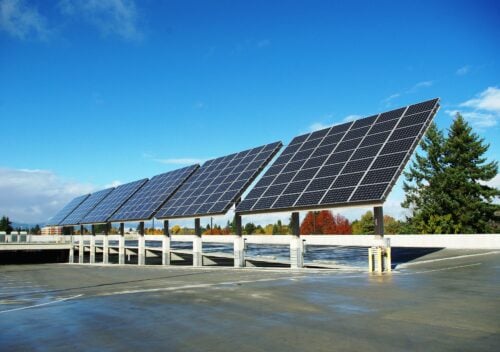
Local Energy Rules is produced by ILSR’s John Farrell and Ingrid Behrsin. Audio engineering by Drew Birschbach. Featured Photo Credit: M.O. Stevens via Wikimedia.
For timely updates from the Energy Democracy Initiative, follow John Farrell on Twitter or Bluesky, and subscribe to the Energy Democracy newsletter.
What can we expect from a new utility-owned distributed storage program that made headlines when it was announced over 18 months ago?
What makes faith communities such attractive hosts for resilience hubs?
How did this coal town ditch gas lines, win grants, and make municipal networked geothermal the cheapest heating option?
Who should pay for upgrades to the high voltage transmission network?