A 2nd State Puts Utility Performance Over Profits — Episode 264 of Local Energy Rules
Oregon tries to tie utility profits to climate, cost, and reliability targets through performance-based regulation.
Giving access to solar incentives for non profits, from cities to churches, was one of the crowning achievements of the Inflation Reduction Act. How have the solar tax credits fared under the Big Bad Bill?
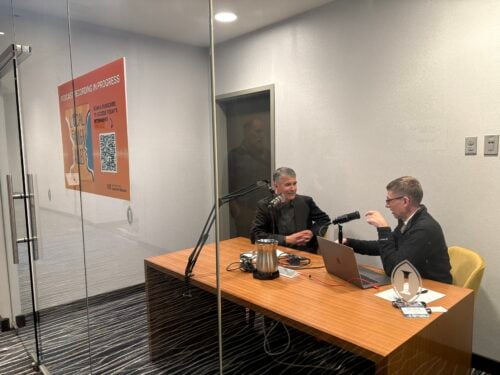
For this episode of the Local Energy Rules Podcast, host John Farrell is joined by Jeremy Kalin, co-lead of the impact council practice at Avisen Legal.
Listen to the full episode and explore more resources below — including a transcript and summary of the episode.
Apple Podcasts Spotify YouTube
Podcast (localenergyrules): Play in new window | Download
Jeremy Kalin:
Even with the freezing of the Solar for All grants, illegally, I think we’ll continue to see really good work happening in low-income residential solar through the Direct Pay in the ITC.
John Farrell:
Giving access to solar incentives for nonprofits — from cities to churches — was one of the crowning achievements of the Inflation Reduction Act. So when President Trump signed his Big Bad Bill for clean energy, I was curious whether it ended Direct Pay and transferability — the policies that enabled these clean energy financial benefits for community-based projects.
Joining me in August, 2025, Jeremy Kalin, co-lead of the Impact Council practice at Avisen Legal shared the good news: these incentives remain. For a few more years at least, and they’ve already been helping many communities seize the clean energy opportunity.
I’m John Farrell, director of the Energy Democracy Initiative at the Institute for Local Self-Reliance, and this is Local Energy Rules, a podcast about monopoly power, energy democracy, and how communities can take charge to transform the energy system.
*****
John Farrell:
So Jeremy, welcome back to Local Energy Rules.
Jeremy Kalin:
Great to see you, John. Great to be with all your loyal listeners and thanks as always for doing the great work on the podcast and broadly, you really do advance the industry and provide a lot of great information, so happy to be back.
John Farrell:
Well, thanks so much. As I alluded to before, and it was in episode 213, which was in May, 2024, the IRS had just finished releasing the rules about Direct Pay and you came on and gave us the deep dive on what it meant, like how this would work in practice, the ownership requirements in order to have Direct Pay, what it could mean for communities in terms of cutting out the middlemen, and having some kind of tax equity partner. Is this typically the case, some sort of partner that can use the tax credits?
So I was hoping you could just give us a refresh on how big of a change that was in order to have those provisions from the IRA, the Inflation Reduction Act, after years and years and years in which the only way you could really capture tax credits is if you had some sort of partner who is for-profit and paid taxes. So these non-taxable entities were kind of locked out. So if you could just talk briefly what did Direct Pay mean? What did it mean to have this legislation and these rules to allow these non-taxable entities to go solar and to collect those tax incentives directly?
Jeremy Kalin:
John, you asked the question in past tense, and I’m going to actually do a little spoiler alert because we can continue to answer it in present tense of what Direct Pay means. And Direct Pay continues to be a really powerful tool for churches, nonprofit organizations, municipalities, everyone from very, very large entities to tiny little library districts to be able to just proceed with their clean energy projects, particularly solar, let’s talk about solar and storage, to continue with their solar projects and be able to rely on getting 100% of the value of the solar tax credit as a direct payment from IRS. And so it really has meant a very different kind of development and risk profile, and development , be able to just continue to proceed to count on for projects under one megawatt, a 30% investment tax credit, even without having to show prevailing wage and apprenticeship requirements, et cetera.
And even for tax exempt entities that are owning large projects and developing those, or large portfolios, to again be able to just count on a hundred percent of the tax credit value being paid by the IRS within months of the project being completed and filing the appropriate forms for the tax credit.
So it’s just been a really powerful tool to sidestep a really cumbersome and challenging part of that development process. And the finance process you just described, John, of beating the doors not only about finding the right kind of investor who has the right kind of tax appetite and can provide a decent rate of return or a decent discount actually to the decent price for that credit that they might buy. It’s actually getting them to understand why community-scale projects and community-benefiting projects that are smaller are actually worth their time when they’re doing traditional tax investments. So it’s totally sidestep a lot of the rigmarole and a lot of the challenge and it continues to be a really powerful tool.
John Farrell:
Do you have a few examples of how Direct Pay was starting to be used? I know that have already you’ve provided legal advice specifically to certain projects. I don’t know if you can talk about any of those or if you just have some kind of examples that you like to trot out when people ask you what is this starting to accomplish?
Jeremy Kalin:
Yeah, I mean I can talk about, for instance, rooftop solar projects benefiting low income homeowners in Georgia and the city of Baltimore. So my client is a 501(C3) tax-exempt nonprofit corporation, a charity that does consumer lending and consumer protection, and realize that to address energy poverty and energy challenges, energy affordability, they could be one of the first nonprofit organizations at scale to own solar on the roofs of low-income homeowners, provide them zero upfront cost and a significant discount in providing both solar and batteries. And this was right before hurricane season that their first pilots rolled out in Georgia. And so the client was able to fund the entire development process and finance it, take out a loan, and then lease the roof and build that solar for the homeowner, put in the batteries. Literally within weeks of their first projects being completed, a hurricane comes through and cuts off everyone else’s power.
And of course the low low-income homeowner who previously would’ve lost power now had solar and storage and they were able to keep their lifesaving medicine cold during the sweltering humid heat afterward and literally saved lives by doing so. And then that nonprofit has made their claim for the Direct Pay tax credit and will get the tax credit for both the solar and the batteries.
I’ve got dozens and dozens of those sorts of stories. City of Baltimore, I mentioned a very similar program that Civic Works has operated there, been doing dozens and dozens of projects on behalf of the Washington State Department of Commerce and Washington State for clients from the Port of Seattle to tiny library systems that have gotten their Direct Pay tax credits. And then I think one really interesting thing, John, given your great work on Community Solar, because we don’t have the official email, I’m literally waiting for the official email to declare that the construction loan is closed any moment, but I have a 70% tax credit project that’s got 20% low income bonus credit, 30% base solar credit, 10% domestic content, and 10% energy communities. So all the possible credits, 70% tax credit, it’s being owned by a nonprofit. They’re leasing the space, leasing the land from group of nuns, a group of sisters, and this very large project, community solar project, will be the first of its kind in the city and I think in their state. And so they’re going to get a 70% direct tax credit payment when they’re completed on the project next year or early in 2027. And so they’re now actually taking out a loan that is secured effectively by the tax credit. So totally different kind of financial stack, totally different kind lending posture, and we have not needed to spend hundreds of hours and tens of thousands, if not a couple hundred thousand dollars on accounting and lawyering to do a traditional tax credit structure. Instead, it’s just find the loan, get the work done, get the credit.
John Farrell:
That’s amazing. Thanks for sharing some of those.
Jeremy Kalin:
Isn’t it? It’s like a unicorn. We found a unicorn, John.
John Farrell:
I know, right? So it hurts my heart then to have to ask you this next question, which is President Trump recently signed what is effectively a big bad bill for solar and clean energy and tax incentives.
The headline, I think that’s been really wrapped up for everybody is that it’s going to be ending solar tax credits, although there’s some nuance around the dates. Can you just help by giving us some highlights of what’s happening? There are tax credits for commercial entities. There’s tax credits for residential properties. So let’s start broad here and then we can kind of narrow back down to some of the things that we particularly were talking about that we’re aiding these nonprofits serving very vulnerable and deserving communities.
Jeremy Kalin:
Yeah. One of the worst pieces of legislation that I’ve seen in my 20 years of being involved in public policy and politics just unconscionable across the board, and I think in particular for folks that gave lip service to energy security, Republican Congress and President Trump made this country less secure through the bill, made us less energy secure, will put more junk in the air, in favor of things like giving a tax credit to coa,l of all things, a 10% tax credit to the production of coal, which is going to make electric bills much more expensive, anywhere from 10-30% over the next decade. It’s just a stupid, stupid, stupid bill. And the places where job losses will be hit the hardest in our industry are in those consumer-facing credits. So in particular, the residential solar credit, the 25 capital D credit, the 30% credit for putting solar on the roof of your homes that will terminate years and years earlier than was current law. So you have to have projects completed and installed by the end of this year, 2025, that’s going to be tens of thousands of jobs lost. There are many, many companies here in the upper Midwest and Minnesota specifically who will have a very hard time surviving.
The other things like the EV charging credits or the EV credits, excuse me, for purchasing EVs, both consumer and commercial, those are terminating very quickly. The EV charging credit for putting in charging stations, those have to be completed by the middle of 2026. And so just carnage all over on that front.
On the investment tax credit front for commercial projects, particularly solar storage wind and other zero greenhouse gas emission projects. I’m really proud of our industry. We fought like hell, we told the stories about Direct Pay, about transferability and about the credit itself. And in large part, we’re still standing, bruised a little bit, but still standing and then some.
So let me talk a little bit specifically, and I’m just going to talk about solar projects first, because you’re right about all these deadlines and timelines, and it does get complicated, but including the guidance issued by the White House by Treasury, excuse me, August 15th. We’re recording this on Monday, so it was last Friday. The guidance just clarified a couple of deadlines and a couple of the requirements. So I’ll just talk broadly. Any solar project that is finished and placed in service so that it’s energized, witness tested, the switch is flipped to on, any project completed by the end of 2027 that should be eligible for the investment tax credit gets the investment tax credit full stop. You could start a project November 1st, get it fully permitted, witness tested, placed in service and everything. By the end of the 2027, you will get the investment tax credit.
John Farrell:
If you’re able to do that in two months. By the way, I want to talk to you about how fast you’re able to tackle the project. Exactly, exactly.
Jeremy Kalin:
Yeah. So largely like the sales process kind of needs to be completed Q1 Q2 of 2027, but for planning purposes, rock and roll, baby, keep trucking. And then other good news, if you start construction before the one year anniversary of the bill, that’s July 4th, 2026. If you start construction by that one year anniversary, you have until the end of 2030 to complete your project and place it in service. So this is what I had believed Congress intended and was very pleased to see the initial guidance on the timelines and ramifications that they preserved this thing called the continuity safe harbor. So it depends on each taxpayer’s situation. Nothing in the tax code is very simple, but basically if you are on a calendar year and you start construction in 2026, you’ll have until the end of the fourth year after that, so the end of 2030, to place your solar project in service. That gives us a good runway and protects us against delays on things like interconnection, utility delays that I know that you’ve been really harping on and looking at as a huge problem. And even things like financing challenges and natural disasters, et cetera. We have plenty of room and then there are excusable delays if for some reason you have to go beyond that period and show that you made all these continuous efforts. So a really reasonable series of guidelines that are the result of us showing our heft and showing the value of all these projects for grid stability, for affordability, for job creation, for air quality. Those arguments actually resonated in certainly Republican senate circles and some Republican house circles. And of course every Democrat stood strong in protecting these credits too. So I’m really pleased by the work that we have in front of us and the opportunity to just keep developing projects.
John Farrell:
Just to take a quick aside here, do you have any thought about why the difference between the 25 D credit for residential solar and this credit, why they didn’t just pick the same date for everything?
Jeremy Kalin:
I mean, I think there was significant tension between the far right and the very far right in the Republican House caucus particularly. And so the House Freedom Caucus basically took the bill hostage and said, we’re not going to vote for nothing unless you kill solar. And it was largely a paper exercise. And I can’t remember, I don’t think we talked about this on your podcast, but I’ve talked about it at length in other places of Republicans needed to find four and a half trillion dollars to pay for their continuation of their tax cuts that largely benefit the millionaires and billionaires in this country. And so to balance their balance in quotes, their budget, they had to find every dime under every couch cushion. And then the electric vehicle consumer credit, the EV credit as well, were both easy price tags to be able to put on paper savings.
And then I had this feeling when I saw the appointments of the nominees for the cabinet in the second administration by the president, that they really come from a Wall Street and finance background. And while Direct Pay has really benefited communities, and I’ll describe a little bit the politics that went into defending Direct Pay, transferability, which is the ability to not need to put together direct tax credit investment into complicated partnerships before a project gets completed and placed in service. But actually afterward, I was just working on documentation for a community solar developer here in Minnesota that sold a couple million dollars of tax credits at something like 90 cents on the dollar and did it many, many months after the project was finished in place in service because they had the additional time to do so and could finish the project in place in service.
Well, a lot of the purchasers of those tax credits under transferability have been very large corporations and big finance Wall Street institutions, which is interesting in that my practice continues to be translating the benefits of community-focused, community-owned, community-benefiting projects to traditional finance folks and for them to see how much more stable and de-risked these projects are. And so transferability has actually been a really important tool, particularly for cooperatives and mission-driven for-profits that are not eligible for Direct Pay. So I think all of that in the soup of Google, apple, Berkshire Hathaway, US Bank, Wells Fargo, Fifth Third Bank, all these national institutions have been just reducing their tax bill by buying tax credits. The interesting thing is I just call that federal funding of solar projects, because that’s what the tax credit is. Every dollar that we can leverage of the tax credit is a dollar of federal investment in climate projects and in particular Direct Pay and others in community benefiting projects. So it was kind of a way to use their familiarity and the popularity of this tool to advance our goals, which was really fun and really exciting to see this result.
John Farrell:
And it’s funny because transferability basically reduced some of the friction and the costs of doing that kind of transaction that was taking place beforehand, but you had to set up actual partnerships and legal agreements, and now you’re, when you say 90 cents on the dollar, I think I had been told before it was more like you might get 50 to 70 cents on the dollar for your tax credit if you were an individual that didn’t have the tax appetite in order to capture it. Now, just even though the end result is still, I’m selling my tax credits to some Wall Street firm, I’m getting to keep a lot more of it than I used to. So even that provision is still very exciting and the fact that it’s sticking around is also great.
Jeremy Kalin:
And one of the things that you and I have been talking about for 15 years has been how do we attract new players into the tax credit marketplace that are not from multi-billion dollar institutions? And we’re seeing that as well. Is that because, I mean literally this fairly complicated transaction that had a list of 40 documents of due diligence? Well, those are just project documents, most of them. A few of them needed an accounting ledger and a couple of other pieces. But in general, for this couple million dollars tax credit sale for these community solar projects, the tax credit sale agreement was 16 pages. And the tax filing addendum is three pages that needs to get signed by both parties that then get filed with both parties taxes just as a mirroring anti-fraud mechanism in the credit rules. So much more manageable structure, much more manageable documents.
I mean, my standard tax credit partnership document is 55 to 70 pages. It’s largely doing a prenup of saying, Hey, we do agree to all these accounting rules that’s 45 of the 55 to 70 pages and a non-lawyer or a before practicing,Jeremy would’ve looked at it and thrown it out the window. We don’t have to do that anymore. And so you’re exactly right, and it just makes it easier for new community focused players to enter the tax credit marketplace for things like for-profit cooperatives, et cetera, but Direct Pay — man, the fact that Direct Pay survived and is set to thrive and all the bonus credits survived as well for forward-looking solar projects. So domestic content 10%, energy communities 10%, and the low-income bonus credit program, provided the DOE still administers it for 2026 and beyond, but we’re seeing them administer it successfully in 2025. All of that is just a testament to some really good storytelling and advocacy.
And there it is, you get a hundred cents on the dollar, less a little transaction costs, because as you sort of hinted upfront that we talked about in episode 213 that you do the tax, the nonprofit project owner does have to truly own the system for five years at least for the recapture period. So it’s not like a free free credit. And certainly we’re putting together audit-ready packages to be happen files so that it’s easy to respond if there’s an inquiry from the IRS, and we expect it, we just document ’em well and Direct Pay’s alive and well.
*****
John Farrell:
We are going to take a short break. When we come back, I ask Jeremy about what the impact will be like when the tax credits sunset, whether this expiration will drive more attention to residential solar costs, and Jeremy answers my questions about the construction deadlines that projects must meet in order to secure the tax credits. You’re listening to a Local Energy Rules podcast with Jeremy Kalin, co-lead of the Impact Council practice at Avisen Legal.
Hey, thanks for listening to Local Energy Rules. We’re so glad you’re here. If you like what you’ve heard, please help other folks find us by giving the show a rating and review on Apple Podcasts or Spotify — five stars if you think we’ve earned it. As a bonus, I’ll gladly read your review aloud on the show if it includes an energy related joke or pun. Now, back to the program.
*****
John Farrell:
There has been a long history of tax credits and tax incentives for clean energy expiring, getting renewed, expiring, getting renewed. Does the residential credit at the end of this year go to zero or does it go back to like 10%, which is sometimes what happened in the past? Similarly, for the investment tax credit, does it go to zero after 2030? If it doesn’t go to zero, then do some of these other things like Direct Pay and transferability survive?
Jeremy Kalin:
So I’m not worried about what happens after these three sprints right now on the investment tax credit, including Direct Pay side. So we have a sprint till the end of the year. So that projects that can begin construction, and we should talk about what that means in a second, but projects that begin construction before the end of the year can get a statutory waiver from this anti-Chinese foreign entity requirement limit. And so that’s the first sprint is let’s begin construction on every project possible by the end of this year. And then there’s the begin construction by July 4th to have this longer timeline to get projects finished. And then there’s the sprint to get projects finished that need to by the end of 2027. So those are kind of three sprints that we’re facing and that’s what I’m really focused on. I think there’ll be a chance to do the next round of politics and the next round of advocacy, knock on wood that we have good elections, fair and free elections in the United States, and that the voice of the people is heard and expressed at ballot boxes and we have different majorities.
What I do know is that there was such broad support for the tax credits that the last amendment before the final amendment, the reason why the bill was changed the way it was in the Senate under what’s called the manager’s amendments, because Senator Joni Ernst and Senator Chuck Grassley had introduced an amendment that would’ve gotten at least 60 votes, so every Democrat plus 13 Republicans apparently, to have an even better regime going forward of the credit. So the political will is there to deal with the investment tax credit going forward. So I’m just for now on that side, let’s just keep doing projects that qualify. On the residential credit, I do expect, I saw that there was a bill introduced Friday or Thursday that would reinstate the 25 D credit. Not that it’s got a chance in heck of moving right now, but I don’t expect, I think people are so pissed and so broken across the House and Senate from the way that this budget bill got passed and promises have been already been broken and good luck to Congress trying to pass anything more right now to this Congress.
And in the past we’ve seen that kind of solar coaster of credit deadlines, et cetera. We’ve seen advocates really say, Hey, you don’t get nothing on a budget bill unless you can include the restoration of these credits. So I don’t expect we’re going to see the 25 D residential credit get reinstated before the end of the year, but I do believe that we will see it again soon. So I think where I am on the solar coaster kind of broadly is to just work, put our heads down and work. And one of the things that we did see, of course, is that there was going to be a bar, the house that included language that could have actually put a bar on residential power purchase agreements. So you couldn’t get the ITC if you were serving like that Georgia low-income homeowner I described, well, that was stricken from the bill. And so there are ways to do residential solar just selling to middle and upper middle class and professional folks who can pay for it. We won’t get a credit for it, but certainly doing low-income solar and other strategies really does make sense through third party structures, even with the freezing of the Solar for All grants illegally. I think we’ll continue to see really good work happening in low-income residential solar through the Direct Pay in the ITC.
John Farrell:
Have followed for years the discussions about the falling cost of solar. It’s kind of one of those top line things people like to talk about is, oh, the cost of solar has fallen by 90% over the past 10 to 20 years, but we’ve reached this really interesting point where there’s really not a lot more room for the hardware costs to go down. I mean, they could, and they may still, because there will probably still be innovation, which is terrific. But so much of the cost of solar in the US on residential, in particular on homes or small businesses, is the permitting and all these other things. I guess one of the things I’m just sort of, I don’t know if optimistic is the right word, maybe out of the silver lining I’m looking for here is maybe with the lack of the tax credit, it will drive some other advocacy focused on the solar cost side of things.
And there’s already one of the things that, I remember doing a report in 2012 called Rooftop Solar Revolution, and I looked at this issue of solar costs, the cost to generate solar from a home rooftop reaching parity with electricity prices in various places. And it didn’t quite get to 2025 where we are now, but I mapped it out over the next decade and somewhere like half of Americans were going to live in places where it was likely going to be at parity. I think maybe it was $3 a watt or slightly less for the installed cost. We’re around that. We’re still a little bit higher than that, on average, but I guess I’m looking at some of the activity that people are focused on permitting other things. I guess I just want to ask, you’re in this space a lot. Do you think there’s opportunity there? Not saying yes, we’re all happy that the tax credit will be gone, but do you think there’s opportunity there where we’re going to get more focus on actually driving down those soft costs as they call it, around permitting and other things, and actually get to a point where solar is cheap enough that it really won’t matter as much whether or not the federal tax incentive gets restored?
Jeremy Kalin:
I mean, in short, yes. And there’s very clear conversations. I’ve been involved with several of them in several states right now. They’re saying, okay, we want to just continue to demonstrate all this progress at the state level and below. And so what’s available to us? What are the good ideas that are already on the table and what new good ideas do we have? So we’re talking about things like there are public revolving loan funds that originally came from federal funds 15 years ago that still have to do federal compliance on those funds. So what happens when you defederalize those funds because they’ve revolved eight times. And so you reduce a layer of compliance there. What happens when you make permitting easier and faster and more routine? What happens when the finance world is easier? So things like Direct Pay are making it a little bit easier. And then what happens when you have kind of uniform loan docs?
John, you and I have both bought and sold residential properties and nearly every state, I think it’s every state, has a uniform contract that’s just written into law. Why? Because we’ve said that that’s a priority for home ownership, that you don’t need to spend $5,000 on lawyering for what is a standard very common transaction. So I think those sorts of soft cost pieces are going to continue to be really important. And I think the Inflation Reduction Act spurring of the domestic clean energy manufacturing revolution means that we are far more resilient and that I actually think we’re on the cusp of seeing another jump down actually, because we don’t have to worry about shipping costs and tariffs and other uncertainties here with domestic supply of all sorts of components too. So yeah, I think we’re continuing to, I don’t know that we can shave another 30%, because that would take us from $3 a watt to $2.10 a watt, but I certainly think that getting 10-15% for the reduction — totally possible.
John Farrell:
I don’t know. I look at Australia, I interviewed Chris Nelder in that episode recently, and they’re like a buck a watt. And I know that there are some components of that that are different, but I especially keep thinking about the permitting and just, I think the thing that was fascinating though, this lesson learned that we had, we did some research on permitting issues in Minnesota that we released back in the fall of 2024. And I think the biggest surprise for me about it was that I had always thought, oh, solar installers, the solar in development community will be really powerful advocates for lowering permitting costs because it’s a big cost that they have and it’s a cost that they have to pass on to consumers. And the thing that I found sort of surprising, and I don’t mean to imply that any of them don’t care about it, because I don’t think that was true, but the way I heard them talk about it when we were asking about what is the permitting process, what do you have to go through, et cetera, was well, we’re a business and this is just part of the cost of doing business for us.
We put together our spreadsheet to document what the permitting process is like and all the different places. And the thing that really blew my mind is how lots of cities have worked on making their permitting process easier, but they haven’t worked on making their permitting process the same. So to your point about uniform loan documents, it’s like, does it really matter if Minneapolis and St. Paul both have easy permitting processes if they’re just different? And so I have to note that as I’m getting the customer, I have to check my database about, well, how are the requirements different? So I became, sort of ironically, much more convinced as someone from the Institute for Local Self-Reliance that maybe we shouldn’t let cities have all these different ways of doing it, that this is a very standardized thing. I was not aware of the fact that these documents that we got, the pages and pages when you’re buying a home are actually standardized. I can’t imagine what it would be like if they weren’t like, oh my goodness. So that’s a really interesting lens on this, and I really appreciate you sharing that.
Jeremy Kalin:
Yeah, I mean, I work with real estate lawyers who are brilliant, and every time we talk about a residential agreements, they’re like, why are you asking a lawyer? You ask your realtor, that’s uniform. They’re more trained than almost every other lawyer. Yes, the outlier silly things you need a lawyer for, but in general, realtors get trained, they have ethics rules, they need to follow them.
John Farrell:
Right
Jeremy Kalin:
And I think that that’s probably where we get in the solar world. And I think you’re spot on. I think we’re a few years away from that, but that may be one of the good things that comes out of this.
John Farrell:
First of all, thanks so much for giving us the very detailed rundown of kind of what’s still possible. It’s very exciting to hear that Direct Pay and transferability will live here with the ITC till the end of 2030.
The thing that we didn’t talk about though was kind of like what does getting into construction mean? So what does it mean to start construction? I’d love to hear about that briefly. I’m also interested to hear about, you mentioned some anti-Chinese rules here. We have the tariffs, so there’s that. There’s some other components. I would love to talk about that. Why don’t we actually start with that and then we can end with the conversation about what does it mean to start construction?
Jeremy Kalin:
I mentioned this first sprint that we have is to begin construction before the end of the year to take one of two actions to get what I refer to as the statutory waiver because it’s in HR1, it’s in the big bad bill. And so if you meet one of the two tests I’ll describe in a second, by the end of this year for your solar project or your battery project or any other investment tax credit eligible project, you do not need to show compliance with what’s called the Prohibited Foreign Entity rule or the Foreign Entity of Concern as it was written on the House. So if you want to ask what the FEOC — FEOC is the acronym that many of us came up. So what the FEOC means, if you start construction January 1st of 26th or later each year, your threshold gets lower and lower for the cap on Chinese, Iranian, north Korean and Russian products and components that are in your project.
And because I don’t know of anybody buying products from Russia, Iran, or North Korea, it’s China. So if you start a solar project in 2026, no more than 60% of your products can come from China and there’s no circumvention. You cannot buy from Vietnam as many people were doing to avoid tariffs. This is just anything that is produced in China in any meaningful way and not assembled here in the United States or somewhere else, you trace all the way back. It’s fairly complicated. We’re working out the rules, but because they don’t apply to projects that begin construction in 2025, it’s sort of in the next tier of the legal handbook, especially for community-focused solar projects. And that goes down to 55% in 2027 projects and then is really kind of irrelevant beyond then. Storage is a little bit more rigorous. So if you have a battery project, you can’t have more than 45% of your components in 2026 projects, et cetera.
So it’s really aggressively monitor that. There’s no way that we could in a three to four minute segment get into the details of the Foreign Entity of Concern piece. But the other piece of the Foreign Entity of Concern is control or ownership stake in the project entity. And this is where community benefiting projects and community owned projects, we can very easily show that no more than 25% of the equity is owned by any prohibited foreign entity or foreign national that’s not a US citizen or permanent resident. So is the Institute of Local Self-Reliance as a nonprofit entity going to have a total of 40% of your ownership stake owned by Chinese entities or nationals? No. Right? As far as I know, like we work with the Port of Seattle, for instance. I don’t think the Port of Seattle needs to worry about any ownership percentage or payments going to prohibited foreign entities or their subsidiaries.
So again, Direct Pay just becomes a really pretty straightforward compliance regime on that front. That’s really the Foreign Entity of Concern piece. And the two ways to secure the waiver are either do physical work of a significant nature that’s either onsite by pouring foundations or putting piers in the ground for a ground mount solar project or offsite like preparing the specific racking structures for this specific project, but some sort of physical work of a significant nature — ordering of bespoke specific piece of transformer of the transformer that is getting built. And the other is to spend 5% or more of the final cost called the 5% safe harbor. So I like to think of it as 10% because every project I’ve ever worked on has cost overruns. The budget grows, whether it’s my own solar project on my own house or a hundred megawatt solar project, they all just get bigger, more costly.
So just think about 7-10% of the final current budgeted costs; spend that before the end of the year on a legitimate contract. And there are certainly rules around that. So that’s the first step for the statutory fiat waiver. And then the good news we got out of notice 2025-42, this begin construction interpretation is very similar for projects that are 1.5 megawatts and smaller nameplate capacity ac. So these smaller projects can take advantage of both the physical work test or the 5% safe harbor by July 4th of this coming year, 2026. And again, you’ll have the four years of continuous safe harbor, continuity safe harbor, to complete your project. The larger projects can’t do the expenditure test only. They have to do physical work. So I think you’ll see a lot of transformers getting built. You’ll see a lot of switch stations getting ordered and started work, and you’ll see a lot of foundations getting poured. So mere site prep work doesn’t count. You have to actually put something in the ground that’s part of your final energy property. That’s part of the final project. So that’s what the begin construction rules look like to have this longer period to finish your project. But by and large, the kind of continuity of rules that we were after has been achieved through this first round of guidance at least.
John Farrell:
I love to think of these deadlines as like the construction pouring incentive rule of 2025. Right? Exactly.
Jeremy Kalin:
Exactly.
John Farrell:
Just get the truck out there and start putting something in the ground.
Jeremy Kalin:
I had a project in the south. I have a project in the south. It’s a really awesome project, and there was some credible intelligence that the bill was going to have an effective date immediately to place in service. So literally over the weekend, we made contingency plans for me to fly down on a Monday or Tuesday with my potter clothes and literally for the 6, 8, 10 of us to just be out there with shovels, paying lawyers’ rates, to just be sweltering in the heat for 12 hours to dig the foundations. Fortunately, you and I have to dig 42 or 48 inches down to do real footers to avoid frost heaving. In the south you don’t have to do that much. So it was not going to be a fun three or four days, but the value of securing a couple million dollars of credits for a couple days of good physical labor was going to be, that was, I just going to be a raw laborer just sitting there digging. And there’s exemptions under union rules to be able to do so apparently. And it’s like, okay, off we go. But fortunately, we’re not in that kind of crazy deadline.
John Farrell:
I love it though, the fact that you were prepared to fly down, pick up a shovel, and to dig in order to get that project through that hoop if that had happened.
Jeremy Kalin:
Full service lawyer, John.
John Farrell:
Yeah, and a pretty good anecdote about what in general is going to have to be done over the next couple of years in terms of hoop jumping. So I just really appreciate you taking the time to describe those hoops to us, Jeremy, and to make it clear about where do we stand in terms of the incentives and Direct Pay and everything. It’s so grateful that there are folks like you who are paying attention to these details and making sure that we can make the most of these opportunities. So thanks again for joining me to give us that rundown.
Jeremy Kalin:
Oh, happy to do so. And why don’t we end on some good news on the Direct Pay claims that have been made to date. Of every Direct Pay tax credit claim that I and many, many other partners that I’ve worked with, accountants, lawyers, advocacy groups, all across the board, every credit that’s been properly submitted to the IRS has been paid. Some of them very fast, some of them with some delays, but where they’ve been delayed, the IRS has followed the law and actually written bigger checks because they have to pay interest on the credit that has not been paid. So there are folks like Giraffe Financial, Clifton Larson Allen, Deloitte, others, Novo Cratic that are providing really good assistance for Direct Pay filers. I think for community folks, your first call might want to beat a Giraffe Financial. They’re kind of set up to do smaller deals more than any others, just to make sure that you have ’em submitted properly. But the IRS is paying. If you want basic information, Lawyers for Good Government, the nonprofit law firm that I partner with on lots of things, they have a phenomenal Direct Pay information page and FAQs, including even annotated tax credit forms for the three main forms for solar projects. So check those out, make sure you’re submitting it right. But the IRS is paying and they’re following the law, and they will continue to do so. Because it’s the tax code they have to.
John Farrell:
Celebration of our times. That following the laws are ending on the good news, Jeremy. But it’s great news to hear that those credits are getting out the door just as they were anticipated to. So thank you again for joining me to talk about it on the podcast. I really appreciate it.
Jeremy Kalin:
And thank you for continuing to be an awesome source of information and for doing deep dives on topical issues like this. And let’s just keep building solar and keep strengthening communities and community ownership and community benefits from ’em.
*****
John Farrell:
Thank you so much for listening to this episode of Local Energy Rules with Jeremy Kalin, co-lead of the Impact Council practice at Avisen Legal, where we discussed the good news that Direct Pay and transferability remain to support clean energy projects owned by not-for-profit, community and public institutions. On the show page, look for a link to my prior conversation with Jeremy episode 213, where he provided a deep dive on the mechanics of Direct Pay. Also look for ILSR’S research on solar permitting barriers, where I’m now buzzing about the idea of uniform rules, just like the uniform home purchase contracts. We’ll also have a link to Lawyers for Good Government resources on these topics.
Local energy rules is produced by myself and Ingrid Behrsin with editing provided by audio engineer Drew Birschbach, tune back into Local Energy Rules every two weeks to hear how we can take on concentrated power to transform the energy system. Until next time, keep your energy local and thanks for listening.
“[It’s] one of the worst pieces of legislation that I’ve seen in my 20 years of being involved in public policy and politics… just unconscionable across the board.”
Giving access to solar incentives for non profits, from cities to churches, was one of the crowning achievements of the Inflation Reduction Act (IRA). But Trump’s Big Bad Bill brought “unconscionable” changes to the fight against climate change, undoing much of the IRA’s gains.
Specifically, Kalin mentions the new coal tax credit, and the ways in which the bill obliterated consumer clean energy incentives. The residential solar credit (25D) ends early, for example, requiring project completion by the end of 2025. EV purchase and charging station credits also face rapid termination. These changes will by extension precipitate thousands of job losses in the solar and related industries.
“This is just a stupid, stupid, stupid bill.”
“Every dollar that we can leverage of the tax credit is a dollar of federal investment in climate projects.”
While the recent legislation has undone much of the climate ambitions laid out in the IRA, the solar industry largely managed to defend commercial investment tax credits for solar, storage, and wind.
Specifically, Kalin explains that any solar project energized by the end of 2027 qualifies for the full credit. Projects starting construction before July 4, 2026 receive an extended completion deadline until the end of 2030, thanks to a “continuity safe harbor.”
And direct pay and transferability, two policies that enabled clean energy financial benefits for community-based projects, have survived largely unscathed.
“We fought like hell, we told the stories about direct pay, about transferability and about the credit itself. And in large part, we’re still standing. Bruised a little bit, but still standing.”
“Direct pay continues to be a really powerful tool for churches, nonprofit organizations, municipalities, everyone from very, very large entities to tiny little library districts to be able to just proceed with their clean energy projects.”
Direct pay has revolutionized clean energy project development for non-taxable entities. As Kalin explains, this powerful tool has empowered churches, nonprofits, and municipalities to pursue solar and storage, receiving 100% of the solar tax credit value in the form of a direct payment from the IRS. It makes solar accessible by allowing nonprofits to bypass previously required complex finance processes to have access similar to for-profit entities.
According to Kalin, direct pay de-risks projects by providing a reliable funding stream. It enables community-scale initiatives, including those under one megawatt, to secure a 30% investment tax credit. Tax-exempt entities that own larger projects also benefit, receiving full tax credit value within months of completion. In Kalin’s experience, the IRS consistently pays direct pay claims, sometimes with interest for delays, confirming that the system works as intended.
“Direct pay — man, the fact that direct pay survived and is set to thrive and all the bonus credits survived as well for forward-looking solar projects… All of that is just a testament to some really good storytelling and advocacy.”
“Literally within weeks of their first projects being completed, a hurricane comes through and cuts off everyone else’s power… [it] literally saved lives.”
Direct pay has transformed lives and stabilized communities. Kalin shares stories of how the policy mechanism has helped nonprofits own and install rooftop solar and battery storage for low-income homes, offering zero upfront costs and significant energy discounts.
In Georgia, for example, solar and storage systems enabled by direct pay provided critical power during a hurricane, keeping life-saving medicine cold for residents. Another “unicorn” community solar project, owned by a nonprofit in Baltimore, projects a 70% direct tax credit by combining multiple bonuses. This project’s loan is secured by the anticipated tax credit, easing project financing.
Kalin outlines three critical “sprints” that the solar industry now faces in order to reap remaining tax credit benefits:
For the first sprint, projects need to begin construction before the end of 2025. If they do that, they can get a waiver from the Prohibited Foreign Entity rule, which would otherwise impose increasingly strict limits on components from countries like China starting in 2026. To meet this “begin construction” requirement, projects must either undertake significant physical work on or offsite or spend at least 5% of the final budgeted cost (known as the 5% safe harbor) by the year’s end.
The second sprint focuses on projects that begin construction by July 4th, 2026. Smaller projects 1.5 megawatts and under can meet this “begin construction” threshold through either the physical work test or the 5% safe harbor expenditure test. This deadline is crucial for projects to secure a four-year continuous safe harbor, affording developers a longer timeframe (typically until the end of 2030) to complete and place their projects in service.
The third sprint centers on the ultimate deadline for projects to be placed in service by the end of 2027. “Placed in service” means that the solar project is fully energized, has been witness tested, and its switch is turned on. Any project completed by this date will be eligible to receive the full investment tax credit.
See these resources for more behind the story:
For concrete examples of how towns and cities can take action toward gaining more control over their clean energy future, explore ILSR’s Community Power Toolkit.
Explore local and state policies and programs that help advance clean energy goals across the country using ILSR’s interactive Community Power Map.
This is the 244th episode of Local Energy Rules, an ILSR podcast with Energy Democracy Director John Farrell, which shares stories of communities taking on concentrated power to transform the energy system.
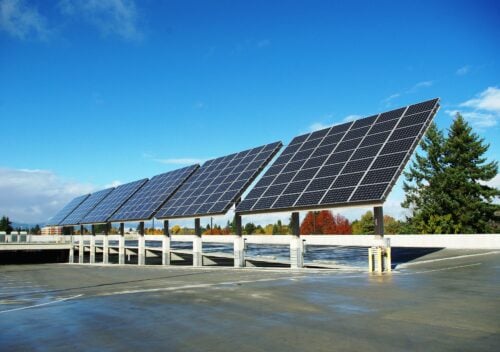
Local Energy Rules is produced by ILSR’s John Farrell and Ingrid Behrsin. Audio engineering by Drew Birschbach. Featured Photo Credit: Spotlight Solar via wikimedia.
For timely updates from the Energy Democracy Initiative, follow John Farrell on Twitter or Bluesky, and subscribe to the Energy Democracy weekly update.
Oregon tries to tie utility profits to climate, cost, and reliability targets through performance-based regulation.
NOLA’s Community Lighthouse initiative creates local hubs with rooftop solar and portable batteries to save lives after storms.
These plug-in devices bypass utility hassles to offer cheap, convenient power for everyone.
Learn about pending Minnesota legislation to enable distributed power plants and their potential impact on energy affordability.