A 2nd State Puts Utility Performance Over Profits — Episode 264 of Local Energy Rules
Oregon tries to tie utility profits to climate, cost, and reliability targets through performance-based regulation.
What tool can help address resilience, rising energy demand, provide more clean energy, and even give communities a greater say in their energy future?
For this episode of the Local Energy Rules Podcast, host John Farrell is joined by Dylan Kruse and Alex Clingman, President and Clean Energy Program Manager, respectively, of Sustainable Northwest.
Listen to the full episode and explore more resources below — including a transcript and summary of the episode.
Apple Podcasts Spotify YouTube
Podcast (localenergyrules): Play in new window | Download
Dylan Kruse:
If you’re losing power for days at a time or multiple times, that has real consequences in terms of disruptions to business, in terms of spoiled food, in terms of emergency management issues. And it starts to become a public health and safety issue.
*****
John Farrell:
What tool can help address resilience, rising energy demand, provide more clean energy, and even give communities a greater say in their energy future? Joining me from Sustainable Northwest in September, 2025, Dylan Kruse org President and Alex Clingman, Clean Energy Program Manager, celebrate the passage of Oregon’s community microgrid legislation and how it can give communities more choices for their energy future. I’m John Farrell, director of the Energy Democracy Initiative at the Institute for Local Self-Reliance, and this is Local Energy Rules, a podcast about monopoly power, energy democracy, and how communities can take charge to transform the energy system.
*****
John Farrell:
Dylan and Alex, welcome to Local Energy Rules.
Dylan Kruse:
Thanks for having us on, John. Happy to be here.
John Farrell:
So I always like to ask a little background question on my guests. I saw a story about you, Dylan, that you ended up as president at Sustainable Northwest actually after you started as an intern in college. I would just love to hear what attracted you to the place and what keeps you there.
Dylan Kruse:
Yeah, yeah, it’s maybe a little bit of an unconventional path, but happy to have been on it. So I’m from Colorado originally and just through a couple of coincidences, ended up visiting Portland, Oregon, looking at schools out here. I just fell in love with it. Once you kind of got past 300 days of sunshine to 300 days of rain, a little bit of a different vibe, but I went to Lewis and Clark College for my undergrad work and just a beautiful, beautiful city, great school, great experience. I was actually an international affairs major, which is kind of funny that I ended up doing very local domestic stuff after this, but the combination of work related to politics and economics and resource conflict and things like that, I graduated. I graduated in the depths of the Great recession in 2009, so there wasn’t a lot of opportunity, but came across this internship at Sustainable Northwest and just thought, this is such a cool thing right in our backyard here in the Pacific Northwest where we’re talking about all of these issues in a way to actually make a difference right here.
And so started as an intern doing some policy work with the organization. Fortunately they were able to bring me on in 2010 full time, and then I’ve just worked across all of our program areas, forests, energy, rangelands water, and then wood markets. So real kind of trial by fire and getting on the ground and meeting people and working with them, which is an experience that you’re not always going to get, I think in a lot of organizations. And I was very fortunate to have bosses that really empowered me and said, get out there, learn about these places, learn about these people, develop these skills. And that’s something in my role as president now that I want to continue to pay forward. Sustainable Northwest is really unique in that we’re very entrepreneurial organization. If you have a vision, if you have a goal, you want to make something happen and we can put the resources together, you can do it. And so for me, what we do is key, but it’s also how we do it. I think it’s really the most durable form of conservation that’s really rooted in people and place and local economies and that focus on the triple bottom line in all that we do. And so we’ve had amazing successes. I’m really proud to continue to carry the torch for the organization forward and it keeps me excited every day that I wake up.
John Farrell:
That is awesome. Alex, I have a bit of a different question for you. I looked up your bio and I am fascinated about your time in Chile, but also your time harvesting grapes in New Zealand. How does this lead a person to working on something like community microgrid policy in Oregon?
Alex Clingman:
Yeah, sure. That’s a great question. And I’d say it leads a person here to Pacific Northwest with a cup full, figuratively, and literally some great experiences down there in South America as well as down in New Zealand. But I’d say really, I got my start in local wine production in undergrad with App State over in Boone, North Carolina, and I’ll mention I live in Hood River, Oregon by way of New Hampshire, by way of North Carolina, by way of Colorado. So it’s been a bit of a winding path there. But really the time that I spent down in South America where I actually met my wife was just kind of a pivotal experience in a young person’s life, just seeing how the world looks from a different perspective and being able to also start to work on this interconnected value chain, of a globalized operation. So taking that experience in the mountains of North Carolina abroad really allowed me to see some common threads there with resilient value chains and as well as strategic partnerships.
So that actually eventually led me to working with Sierra Nevada Brewing Company out in Asheville, North Carolina. And that was just an absolutely transformational experience working every day in elite platinum facility, which I think at the time was the first in the United States as a production level facility just learning about closed loops and energy efficiency and onsite generation. And that really inspired me to move out of my role working more in marketing and partnerships and actually pursuing an MBA in corporate sustainability and climate science, which then put me back on track to working with Sierra Nevada with their sustainability team. So I got to look into climate risk and what that looked like with hot water, barley, and energy use, as well as kind of differences in state policies and how that impacted clean energy both onsite as well as distribution in California versus North Carolina where those two breweries were located.
So kind of a long story short there, I joined the North Carolina Sustainable Energy Association. So Sierra Nevada was a partner of that nonprofit, and I was able to really just get my hands dirty and learn so much about clean energy policy incentives, the importance of education, storytelling, and awareness. And as Dylan mentioned, I think I was fortunate to have a mentor by the name of Matt Abel, who is now their executive director, just kind of teach me the ins and outs of how do you get policy to work with clean energy and how does that impact local communities? So eventually my wife and I decided to head back out west and had fallen in love with the Pacific Northwest and some climbing trips in the North Cascades and Sustainable Northwest had been on my radar for years, and I was fortunate enough to join them as a clean energy program manager about two years ago now with the organization, I’m still able to work with those partners and manage our Making Energy Work Coalition.
So as of now, that’s about 600 participants from across the region be that farmers, ranchers, rural community members, tribes, energy developers and state agency staff, all working on just innovative approaches to clean energy production and consumption. As part of that, I also help lead our policy committee, which was instrumental in the bills that we’ll be talking about today. But yeah, really all in all just I’ve been drawn to working with companies and organizations that have been in operation for 30 or 40 years and have demonstrated the ability and willingness to innovate and take new approaches to tricky problems. And so that’s what brought me here today.
John Farrell:
Terrific. Thanks so much for taking the time to share a little bit about your background. I just love hearing the way that people come to this. Telling it just makes me laugh thinking about what you said about starting in international studies. It’s the beauty of the liberal arts really is that you think you’re doing one thing and then you leave and you’re like, but I’m still qualified to do something else, speaking as a fellow liberal arts major.
So let’s dive into the community microgrids issue. So you have a great press release that talked about the adoption of the legislation in Oregon. It sounds like the big benefit really is around resilience. So that ability, as I hinted at earlier, having power available when the larger grid goes down, is that a widespread issue in Oregon or is this a case of it being the right time to take advantage of this maturing technology? Is it both of those things? Why does resilience factor so highly in the way that you talked about community microgrids?
Dylan Kruse:
Yeah, that’s a great question and I think it’s both. I will say that the resilience issue is certainly top of mind for a lot of the communities and partners we work with. Now, Alex talked about the Making Energy Work for Rural Oregon coalition that we manage, which is hundreds of rural and tribal advocates and interests. And consistently this issue of resilience is coming up both in terms of natural resources as well as energy, climate change. Obviously extreme weather events that we’re seeing right now are pressing not just here in Oregon, but across the western U.S. The big one that we’re seeing a lot of is related to wildfire obviously, and especially wildfire and the way that utilities are managing the transmission system is we’re seeing a lot more of these public safety power shutoffs right now where the utility needs to turn down the grid so that they don’t start a wildfire and we don’t see expanded wildfires, but also floods, extreme weather events like ice storms.
I live just outside of Portland. We lost power for over four days in an ice storm a couple of years ago. So we’re talking about a lot of rural areas with this, but even suburban and urban areas are seeing more of this. And then simultaneously you’re just seeing that increased demand and strain on the grid as we’re seeing so many more users, we’re seeing big data centers come online, we’re seeing aging infrastructure and then new mandates related to clean energy production that the utilities are trying to meet. So all of these things are really straining things in terms of increased costs, in terms of reliability and resiliency. And communities are saying if the lights are going to go off, if the rates are going to continue to go up, we’ve got to have some options here. We’d like to have a little bit more self-sufficiency, we’d like to think about reliability, we’d like to think about affordability, and we still want clean energy.
But you have communities, southwest Oregon for example, that a couple of years ago during the summertime, they lost power over 50 times in a single summer because of those wildfire events. So yeah, it’s inconvenient when the lights maybe go off for three or four hours and you kind of put on the blankets and do the little house on the prairie thing with some candles. But if you’re losing power for days at a time or multiple times, that has real consequences in terms of disruptions to business, in terms of spoiled food, in terms of emergency management issues. And it starts to become a public health and safety issue where cities and communities and businesses are saying, this is the new norm for us and we’ve got to think about a different model. And so that’s really kind of what spurred these conversations around resiliency and grid reliability and these options related to microgrids and how they can help solve some of those problems.
John Farrell:
I just love the context there. The image that you painted in my head for me is like, this is costing us a lot of candles, but obviously the problems of losing power are much more significant than that. But just thinking of how many candles am I going to have to go through or do I need to stock up on?
Dylan Kruse:
And they’re not cheap. They’re not cheap, and they’re only getting more expensive. And so yeah, the costs are real and people are seeing their power bills and they’re not happy and they’re definitely not happy if the lights aren’t on. I think it’s an evolution of the energy system that we’re seeing in the states right now, and we’re going to continue to see this forward progress and momentum in the coming years for sure.
John Farrell:
So Oregon just passed legislation to facilitate development of community microgrids. So let’s start with definitions. What is it that distinguishes a community microgrid from just a regular microgrid and why does Oregon need more of them? Although to be fair, it feels like you’ve kind of answered that second question already, but let’s start with the definitions and what it is that were some of the drivers for this policy change.
Dylan Kruse:
We’ve got microgrids now. It’s existing technology, and just think about first off, what is a microgrid? I think of a microgrid as almost a mini power plant. Basically it’s a singular energy generation source and then usually has a battery connected to it, so it could be multiple sources of energy that produce it. We look at solar a lot of times, that’s a pretty common one. And then it’ll be on a facility, hospitals, a municipal building, a fire station, a community center, a single building basically. And when the lights go off, that microgrid can disconnect from the grid and it can continue to provide reliable power during an emergency event. And then when things are going well, it’s connected to the grid, the utilities might actually have a spike in demand. If it’s a really hot day, everybody’s running their air conditioning and they say, I need a little bit more power, and they can pull it from these other energy sources that they have.
So it’s a nice little tool for demand management as well as emergency services where we start to expand the concept here to bigger and broader benefit is when we talk about community microgrids, and that’s when we’re actually cutting across multiple property lines to service a larger area. So in this case, think about an entire neighborhood that may be receiving the benefits of a microgrid. I think about like a downtown business district where multiple businesses are on a main street. It could also be a municipal center where you have lots of different civic buildings that are connected in a single area, or it might be like a business park where you have a lot of businesses or industrial centers that are located and when the power goes out, that’s really costly to them to have services go down. What the legislation does though is it starts to expand this and to say, a microgrids great, but how do we do this for a bigger area here?
And it’ll actually allow a community to step forward with some goals to work with local government and to say, we want to designate this area is a microgrid zone and there’s a reason for that. There’s multiple benefits for this that we need to make sure the lights can stay on. And then the legislation is basically creating the rules of the road for how we get there, who can own them, who can operate them, how does cost recovery occur, and doing that in a transparent way where there’s more local say and local ownership in the decision for broader benefit as opposed to a single unit in a single building.
John Farrell:
That’s great. Maybe we’ll get into this some more, but I’d love you to come back if not to some of the rules around ownership, like how that decision making process for picking a microgrid zone might work.
Dylan Kruse:
Well, that’s basically what I think when people say, what did this legislation do and what barriers is it removing. Right now we can have microgrids in Oregon and we’ve got a couple small ones that are owned and operated by the investor owned utilities. But what we don’t have is this bigger look, and there’s a lot of questions about the regulatory framework on this. And so this legislation really creates the rules of the road, the operating framework. Who can own, who can operate a microgrid, how do you pay for a microgrid and what’s the rate recovery structure on that? And we’ve worked with a number of communities, third party developers, tribes, municipal interests that want to do this, but the legal framework and the rules around this are really murky and it’s actually been challenged and held up in court a lot because there’s disagreements about how it interfaces with the utility system and the existing grid.
And so that’s what the legislation’s really designed to do is to basically say, here’s the definitions, here’s what we mean. Here’s how you create a microgrid zone and what are the land use and the regulatory rules that come with this, and here’s how the rubber meets the road and how we’re going to pay for and build these things and who benefits from them. It also creates some unique authorities to allow some third party engineers to come in and do interconnection studies and reviews. A lot of that really nitty-gritty kind of wonky stuff that happens to get clean energy projects built, but the utilities are so overextended and so strained to meet the growing demand that we’re seeing that they can’t provide the labor and the studies that are necessary in a timely fashion. So we’ve got all this great pent up demand for clean energy projects to get built at the local level, but we’re waiting months or even years at a time, and this is an attempt to kind of streamline that and create a more efficient, functional, transparent framework for local developers and communities to get on board and achieve their clean energy goals.
John Farrell:
Let’s get a little bit of context here. You mentioned that there are some utility-owned microgrids right now. I’m curious just in round numbers, are we talking like there’s 20 microgrids, there’s a hundred, there’s a thousand. You mentioned there are some owned by the utility. Are there some that are third party owned? And I guess so in addition to sort of where is it happening now, where is there interest in doing it?
Alex Clingman:
That’s a great question and also an interesting one, and I think it really plays into what Dylan was discussing. Definitions certainly do matter. I think it’s hard to place just a specific and exact number on how many microgrids are in Oregon, if not the nation. I think that plays into resilience hubs in the solar and storage that we’re seeing really a big uptick in the United States and globally as more and more communities look to find ways to power critical of the structure.
However, here in Oregon, we have no true community owned and operated microgrids operating in 2025. We hope to change that with these bills, and I think we’re seeing willingness to collaborate across the board with stakeholders, be that the Oregon Public Utilities Commission, utilities, both investor owned, municipal, as well as co-ops, and tribal governments and municipalities just interested in developing microgrids. So these definitions certainly took months, if not years, many amendments to work through with our coalition and other partners as we refined these bills.
And so today there are certainly other microgrids operating in Oregon as well as these resilience hubs that are in the planning phases, early phase development as well as operation. But the vast majority of these systems, as mentioned, are owned and operated by the investor-owned utilities. So by no stretch of the imagination is Sustainable Northwest or our coalition imagining a world where IOUs are not part of this. It’s crucial that this existing infrastructure, this guidance, I think we can work hand in hand as technical collaborators as we look to enhance and increase the amount of microgrids and emergency preparedness that we have in the state. So I think that we are seeing more and more across the state of Oregon, local governments, farmers, ranchers, tribes, hospitals, you name it, schools beyond that are looking for ways to be able to respond to and recover from grid disruptions that are impacting the safety and livelihoods of residents.
So from coastal communities facing a threat of earthquakes and tsunamis to our valleys, foothills, and mountain towns that experience extreme temperature swings as well as ice storms and wildfires, folks are starting to realize that there are solutions available to them and they want to get involved. I’d say that is certainly true, and I think that microgrid and energy solutions derived from local sources are just a piece of that puzzle, but really have the power to help us achieve higher levels of resilience, economic stability as well as importantly energy independence.
So I think a great example, what we’re seeing here is actually looking at the house Bill 3630, which is part of the Oregon Department of Energy. So ODOE back in 2023, this came out to help provide $50,000 of non-competitive funding to all counties in Oregon. So 36 counties, to pursue energy resilience plans. It’s called the County Energy Resilience Grant program. And to date, you see 19 of 36 counties take advantage of this funding. So that’s about a million dollars. And if you look at a state map, this programmatic footprint literally stretches from the high desert plains of the east to the rocky coast of the Pacific and all around the volcanic peaks of the central part of Oregon. So we’re seeing increased awareness and interest to get involved in not just microgrid development but other energy resilience solutions in Oregon. And I anticipate to see that continuing to trend moving forward in the years to come.
John Farrell:
First of all, I just have to say as a recent visitor to Oregon, I remember staying in Newport on the coast and you just driving along the main street in the town and it would say, you’re entering the tsunami evacuation zone and now you’re leaving the tsunami evacuation zone. So just there’s this vivid reminder of like I’m living in this place where something really crazy could happen and the idea that I might need resilience. And then we ended our trip in Portland before we came home, and I think it was a hundred degrees the day that we left, which also again gives you a sense of those really outside the norm kinds of events that can happen and the need to be prepared for them.
I want to come back to this issue of barriers a little bit. The one key barrier that we haven’t talked about yet, I think Dylan, you were kind of giving us a hint of this around a legal barrier for community microgrids, is in most states you have this sort of default legislation or rule that says the incumbent utility or Portland Gas and Electric or Pacific Gas and Electric down in California or Xcel Energy in Minnesota, they’re the only ones that can deliver electricity to multiple customers.
Anybody else, if you want to serve yourself, you want to put solar on your roof, that’s totally fine. One of the major barriers to microgrids when I looked at them two years ago and even more recently, continues to be this issue. So I assume that’s one of the pieces here. When you’re talking about communities designating a microgrid zone, there’s going to be some sort of exception to that rule saying, Hey, in this area it’s okay to have essentially a duplicate provider of electricity, someone who’s going to be providing that service in parallel with the utility and then available to provide electricity when that larger grid is not available.
Alex Clingman:
John, I think that’s a great point here. And legacy rules and SORC business models focus on centralized power. Certainly that is a hurdle to community microgrid development. However, I think that’s also an opportunity. I think other things that need to be figured out as we’re hearing communities in Oregon express not wanting to kick the can down the road any longer. There are question marks here. There’s uncertainty. And so we’re really looking to the Oregon Public Utilities Commission to help us define and clearly figure out what needs to be changed in terms of regulatory clarity about who can own, develop and operate microgrids as well as other energy systems. So I think it’s important as we have these conversations to also keep this approachable to small scale renewables and other projects that are looking to move forward in the state of Oregon. I think reliability standards, that’s huge.
Information sharing as well as security. These are all parts of the equation, parts of the formula that we are also hoping to figure out how does that work in tandem with communities taking more of a role in their energy planning features. As Dylan mentioned, this aging grid in the state of Oregon, that’s not just unique to where we are here in Pacific Northwest. We see that across the nation. And so how can we use these systems to help enhance grid reliability as well as decrease costs? I think in Oregon that population centered distribution, so maybe energy being produced more in the east and consumed in the west, how can we look to producing energy in our backyards, especially for these frontline communities that have risks of being shut off from the grid for five days to two weeks or longer. We haven’t mentioned the Cascadia earthquake here, but that has the potential to bring the grid down for over a month if not months, if and when that does take place. So we’re looking to be proactive in our energy planning future, and I think that’s important as we discuss these hurdles.
Finally, I’ll mention capacity and awareness. That’s certainly something that we see not just in microgrid development or clean energy, but across the board with some of this holistic sustainability solution ideation is how can we help develop workforce? How can we increase expertise of energy planning? And if we are able to start building out more of these microgrids and complex energy systems, how can we have trained professionals there on site that are being able to know how to interact with the grid that is as it goes in and out of service and knowing when and where to divert power. So I think that’s all really important. And these issues, as I mentioned, they’re certainly shared across the nation, but I really do think that Oregon’s exposure to these natural disasters that cause widespread grid disruptions and really certainly to its diverse geographic makeup, these magnify the challenges as well as potential positive impacts of microgrid development.
Dylan Kruse:
I’d just add to that, John, there’s obviously the tactical issues around let’s build community microgrids in Oregon, which is great, it’s fun. But this conversation we’ve had for the past few years in the state has really been a catalytic one that I think daylights a lot of broader issues that you and Alex have talked about here. And when we pass this bill, and I think this is the most ambitious microgrid legislation in the country, certainly, but the amount of interest that it generated from California, Washington, Idaho, Montana, Minnesota, D.C., we’ve had dozens of states and advocates reach out to us and have said, we’re dealing with the same challenges with our utility system, with natural resource issues and disasters and resiliency issues. We haven’t been able to get over that hurdle. How’d you crack the nut, how did you guys do this? What can we learn from on this?
And I think it’s really kind of indicative of this conversation that people are having right now, which is kind of like what is a grid for? And this conversation we’re putting in front of the Public Utility Commission that is broader than just can you provide the cheapest, most cost effective power possible? That’s the bottom line, and that’s the most important thing that our grid should be providing. But the PUC here and a lot of other interests are actually eager for this discussion and happy these bills passed because it allows them to start looking at some of these more complex issues like the resource value of resiliency. When the grid goes down and people lose power there is a social and an economic cost there, and we need to think about not just affordable power, but we need to think about reliable power so that we don’t have these disruptions. And if we’re going to have more of these and we’re going to have more strain on our systems and we’re going to need more distributed energy generation, how do we get there and what do we expect? And so yeah, it’s great that we’re creating rules to build microgrids, but ultimately it’s this conversation about the future of energy generation and grid management that’s really exciting. And I think this has spurred a lot of interest in that discussion
John Farrell:
You mentioned before about public safety power shutoffs, and I do think that this is for those of us in the Midwest who haven’t experienced this, and for folks in most of the country, this idea under whatever fancy marketing name they came up with, that the utility, whose job it is to provide electricity, is allowed to shut it off. And I won’t get into trying to argue the details of whether or not it’s necessary or not. That’s above my pay grade when it comes to an engineering question or whether or not some of this could have been prevented, blah, blah, blah. But I think it does, like you said, it really in some ways opened the door to this conversation of, like you said, what is the grid for or what is the utility for? Well, if the utility is not for providing electricity in certain circumstances, but we all think it’s an essential service, then who is going to provide it and what are the ways that we can do it?
And I think you’re right. I think this community microgrid approach is so crucial to that broader conversation of, okay, well if we can’t do it the way that we have been doing it with big power plants and big transmission lines, and I find it really interesting that you described the east west divide. I was just interviewing someone from Puerto Rico where they have a south north divide population centers on the north side of the island, big power plants on the south side of the island connected by transmission lines that go through the jungle, mountainous terrain when Hurricane Maria hit destroyed a lot of the transmission infrastructure. And again, that idea of being far away from your power plant was a real problem. So I a hundred percent agree. I think you’re asking really crucial questions about what is this grid for, what are utilities for and how community microgrids can help answer that question.
Alex Clingman:
And I would jump in there too, John, and say, I think Dylan brought up a good point as we’re working with other partners across the nation, they’re coming to us to say, what has been done here? How did you all get House Bill 2065 and 2066 passed? But I’d also say it’s a two-way street where we and our coalition are also looking across the state to California, to New Jersey, to Michigan, Hawaii, Colorado, Alaska, some states where we are seeing some great movement in microgrid development and saying, what are some of the lessons learned as we continue to move this water forward here in Oregon and hopefully expand that to other parts of the Pacific Northwest. But I’d like to think that this is certainly a collective movement where one win can benefit all, and that’s what we’re looking to really bring forward as we work with the Public Utilities Commission, with the state legislature, with the utilities, trying to figure out ways that we can make this work for all
John Farrell:
I wanted to follow up on, I’ve asked you a couple questions about barriers specifically, and you’ve responded to both of them already, I think pretty well. Maybe you can help me understand a little bit better. What are some of the barriers, if any, that were explicitly removed in the legislation versus maybe mentioned in the legislation is like these are topics for the Public Utilities Commission to consider. Can you give me some context for what did you try to solve in the bill where you’re working with legislators whose technical understanding is fairly limited and where did you say, okay, these questions do need to be answered, but we’re going to defer to the Public Utilities Commission and kind of a rulemaking process to help further develop, for example, these microgrid zones.
Dylan Kruse:
There’s a mix of both. The bills, if you read ’em, they’re actually pretty brief, and it basically said, this is important and we’re going to do something about this. And so it created some important foundational definitions to be clear about what is a microgrid, what is a community microgrid and what do we expect to see as part of that? The idea that you can have an independent operator, the idea that you can have a community microgrid zone and how that’s designated, what are some of the land use and the oversight and approval regulatory rules that are going to local governments as part of that. And then it did things like saying, and if you’re going to do this, you’ve got an option to use qualified third party providers to do your engineering and your interconnection studies. So it basically said, here’s what our vision is and our goals and what we mean by it.
And then a lot of the key work that’s going to make this go is going to go to the Public Utility Commission, and that will be a process, and that will be a process over the next one to two years here to get this right, and we need to make sure that we get it right and that it’s consistent with legislative intent and community intent. But that is really where we are going to answer some of those harder questions about what the ownership structures look like, how they’re operated. Obviously revenue rate recovery is the big piece of this. So it’s kind of those three Rs, the roles, the responsibilities, and the revenue. And those are going to be the discussions in the PUC investigation where advocates, community members and utilities are all going to sit down and basically say, here’s how you pay for these things. Here’s how they’re going to run during good conditions and bad conditions, and how we make sure that it benefits and operates the way we intended. And there’s not unintended consequences because you don’t want people paying for these things if they’re not receiving the benefits. So we need to make sure that we’re not sticking people with a bill for a service they’re not receiving. So that’s really what the PUC is going to be working with us on over the next year or so.
*****
John Farrell:
We are going to take a short break. When we come back, I ask my guests how community microgrids address affordability, how they might include community ownership, and we get an example of a promising community microgrid idea in northeastern Oregon. You’re listening to a Local Energy Rules podcast with Dylan Kruse and Alex Clingman from Sustainable Northwest.
Hey, thanks for listening to Local Energy Rules. We’re so glad you’re here. If you like what you’ve heard, please help other folks find us by giving the show a rating and review on Apple Podcasts or Spotify. Five stars if you think we’ve earned it. As a bonus, I’ll gladly read your review aloud on the show if it includes an energy related joke or pun. Now, back to the program.
*****
John Farrell:
It sounds like affordability was one of the big motivations for the legislation. I was hoping you could talk a little bit more about the specific ways that this can help make power more affordable, clean energy, reducing pressure to build other infrastructure. What are some of the things that you had in mind?
Dylan Kruse:
I mean, power ain’t cheap, right? News flash, and it’s only going up even in the Pacific Northwest where we’ve seen really low historic numbers. But as we’re just seeing the need to update the infrastructure and the grid as we’re seeing inflation, wildfire mitigation costs, clean energy mandates, new infrastructure that has to get built. Yeah, you’re seeing that in the price tag on your bill. This is about more options. This is about more opportunities for efficiency to get there because again, customers want affordable, reliable, and clean power. And we’ve seen that consistently here in Oregon and beyond. What’s nice about this is that these types of projects allow for third party developers to come in. And rather than just using standard rate recovery that you see in the conventional utility model, we’re looking at some blended finance options. So you could look at debt financing, you might look at some grants, tax credits that are available at the state or the federal level if they’re still there. And then you’re looking at rate recovery too. So you’ve got a mix of financial options here to hopefully bring more private capital to the table and make sure that these systems are a little bit more cost effective.
And then the big conversation here too, around affordability is also those other consequences associated with the power going off. And there is a real price tag associated with that. And that’s when we talk about the resource value of resiliency. We’re thinking about every hour that the grid is down that a business can’t operate. We’re thinking about low income individuals whose food might spoil. We’re thinking about individuals that might not be able to get access to medical attention and medicine and things like that. Every minute, every hour that you’re operating in an emergency condition as a municipal supplier, as a city, as an emergency responder is expensive. And so we’re trying to minimize the amount of time that we’re in an emergency situation and all of the resources and costs that are shifted towards responding to those as we’re seeing a lot more of ’em. So yeah, there’s the idea that we can build power more cost effectively in a distributed way and create a little more competition. And then there’s also just the bottom line cost savings to make sure that we don’t have more emergency events that we also flip the price tag for.
John Farrell:
It’s so interesting too. One of the things I’m going to be interested to hear more from you in the future about this is as you go to the Utilities Commission and talk about how the rules will work for these projects, one of the things we’ve seen in other states, and I was just remarking on this earlier today. So California has this very successful virtual power plant program or distributed power plant program. So you’ve got solar and energy storage and all these kinds of devices in different places, all being coordinated to help lower energy demand for the grid. And it’s big, it’s like a natural gas power plant’s worth of capacity that all of these things added up are doing. But it was being, interestingly, it was being paid for through the legislature instead of through the Public Utilities Commission. It was run independently through the Energy Commission, and it was both the most successful one that California had seen, and it was also not run by the utility.
And the reason I’ve mentioned this is that this seems to be sort of this inherent tension where we’ve designed a utility system, and I think Oregon is still in this structure too. You have vertically integrated monopoly utilities, which is to say they own everything from the meter on your house, the power lines, the power plants, all the infrastructures is generally utility owned. And then they make their money through this what’s called plus regulation, which is to say they invest capital and then they earn a return for their shareholders on that capital investment. And community microgrids seems to fall into one of these categories like a lot of other distributed assets like rooftop solar where, I mean, I don’t see you selling it this way just to be clear, but you might have this opportunity to meet local needs with local resources in a way that then, oh, the utility doesn’t have to make an investment.
I think you’ve made a really compelling case where the utility has so much on its plate right now that actually could be helpful, but I’m just curious if you have any initial thoughts about do you think they’ll find that helpful? I have found, unfortunately, that utilities are often really, there’s somebody in the back of the room for them always whispering in their ear rate of return, rate of return. We need to make the investment ourselves, even if the outcomes for consumers could be better. I’m just kind of curious if you have any initial thoughts about how that regulatory process might go.
Dylan Kruse:
I anticipate that we will have a healthy discussion as part of the investigation with the Public Utility Commission. And I think you’ve raised issues that everybody knows are a reality, right? But I do want to underscore what Alex mentioned is that we really do view the utilities as partners in this. This is not a war. We’re not declaring the end of the utility monopoly as we know it. We have to work together and we are absolutely still going to need large kind of industrial scale power generation. We support large scale grid hardening. We advocate for the utilities when they’re going out to get grants and funding to make this happen. But again, like you said, John, they’ve got too much on their plate and they can’t do it alone. And so it’s going to create some need for some alternative innovative approaches to get there.
And again, this is just about options. Life’s all about options, and it’s saying, we can still meet those goals. We can still provide affordable, reliable, and clean power, and here’s a different way to do it, and we’re going to do it with you and we’re going to balance this with the grid and you’re going to get some benefit and communities are going to get benefit. But it’s also an evolution, right? I mean, these are public services that are being provided. It’s a regulated monopoly and communities and business and individuals are saying, I need a little bit more from it because things are changing, and the old model’s a little out of date, and we need to get with the times. And again, this is going to allow us to have some of those conversations to say, how do you pay for these things? How do you value these things? And how do you meet these shared collective goals that we have?
John Farrell:
It’s always nice to have some folks out there that are more diplomatic than I am when it comes to some of these conversations.
Dylan Kruse:
The backdoor conversations may not always sound that way, but that’s the way I’m going into this and I hope it is a productive and constructive conversation.
John Farrell:
I’m sure that it is.
Alex Clingman:
I’d jump in as well, and I’d say with some of our strategic advisors and our policy committee that work across the board, not just in microgrid development, but also some of these age old questions around energy planning and small scale renewables, not just in Oregon, but yeah, the classic avoided cost, fair valuation, what is the role of a community and third party in the energy planning process? These are things that we are hoping to continue to explore, but really more than anything, it’s also just opening the pathway to communities that are interested and have the resources and want to pursue higher degrees of energy resilience and energy independence. So I think importantly, John, we’ve kind of alluded to this, it’s making sure that if you have community buy-in, not just ownership but also interest, they are engaged in the decision-making process. That community is the one that is going to be investing in pursuing that microgrid development, be that from pre-feasibility and feasibility studies all the way to interconnection processes and initial construction.
So we’re trying to find ways to get these projects just off of the whiteboard and be that shovel ready or at least a few steps down the road closer to becoming a reality. And I’d say when it comes to engaging with utilities across ownership structure, so investor-owned utilities, COUs and MOUs, it’s making sure that we engage early and engage often, that we’re being honest and transparent, both sides of the table. I think they’re sharing information to make sure that we are moving forward and not back. I think now more than ever, we’re seeing the importance of local and state leadership here in Oregon, and we’re proud of some of the successes that we had this legislative session. And I think that is clear that I mentioned capacity, and that’s certainly a thing across the board, but it’s finding ways that now how can we find shared spaces and synergies as we have had the Oregon Public Utilities Commission testify in support of these bills, this is a priority for them, and they see this playing a part be that microgrid development, microgrids can help other parts of this truly complex problem that is facing much of the grid as a whole in Oregon, and that’s ensuring affordable and reliable energy to all of its residents.
John Farrell:
You mentioned ownership a little bit there. I know you were doing it in the context of utility ownership structures, but I was just wanting to follow up. Community ownership seemed like it was one of the desired features here of community microgrids. I don’t think you said anything specifically about the legislation carving anything out, but it did sound like that was part of the charge that’s going to the utility Commission for conversation is what might ownership structures look like? And it sounds like that could include public ownership, it might include some form of community ownership. Can you talk a little more about that?
Alex Clingman:
Yeah, sure. So I’d say bottom line is that we feel as though House Bill 2065 and 2066 can fundamentally transform how Oregon communities can boost emergency preparedness as well as energy resilience. So they can establish these clear guidelines, define timelines in collaborative frameworks to help keep those local priorities at the forefront of the decision-making process. While, and this is important, while respecting utility operational expertise and responsibilities. So we want to find a way to increase that technical collaborator relationship as we have more communities stepping up into this ownership structure as well as elevated role in the decision making process. With this microgrid zone that we keep on alluding to that is part of 2066, and I don’t mention those three Rs of roles, revenues and regulations, but it’s making sure that we’re clearly defining who is benefiting in interacting with this microgrid or microgrids, plural, if we are talking about a district level microgrid who is paying for it, making sure that we are not focusing on cost shifting or having other communities having rate increases from these energy systems being built out.
So that’s important. And I also wanted to mention, I kind of alluded to this, but as we’re seeing federal grants or other funding sources starting to dry up, it’s how can we establish enduring compensatory mechanisms to benefit local communities? So we’ve seen not just in Oregon, but also in other states, across the river up in Washington, that have made great strides in microgrid development. Just being fully transparent here, but the theme of BRIC grant is kind of what I’m alluding to here. There was a project moving forward that kind of hit full pause, hit a wall, because that grant was pulled, and so we’re trying to find ways to diversify that funding stream and both in blue and black sky conditions, having those microgrids being able to benefit local communities
Dylan Kruse:
Is, to put a fine point on this, I think what Alex’s getting at is, yeah, there are some novel concepts here that are going to challenge the status quo a little, right? The idea that a community of interests individuals, a city, a tribe, a third party developer can come together with a proposal and say, I want to create a microgrid zone in this area. The idea that an independent operator can operate that microgrid is different. And so there is both more local ownership and control. There’s more local benefit and engagement in the services that we’re receiving. There’s also increased transparency though, and that’s really, really important is that there’s transparency, accountability, and how these things are paid for and making sure they’re delivering the services that are promised. So the idea that we are disaggregating that utility approach to this or that conventional large scale IOU approach to this and saying, you guys take the reins and tell us what you want to do and who’s going to run it. Yeah, that’s different. And that’s the conversation that we’re going to have in the PUC. And I think where this legislation’s really pushing the envelope.
Alex Clingman:
Dylan brings up a good point here that there is not a magic wand that has been waived. Right now we’re looking at an 18 month investigation with the Oregon Public Utilities Commission leading. After that, and this is going to be a phased approach, starting with utility owned and operated microgrids, moving into community owned and operated microgrids, and finally third party. So we see this being stepping stones as we look to really clearly define what does the future look like in Oregon for microgrid development. This is going to be a highly iterative process with numerous stakeholders that have been mentioned in this conversation, and we hope to get this right, but it is not like these bills have been passed and all problems have been solved. Rather the door has been open to really dedicate some resources, some time, some energy into solving these complex and difficult questions.
John Farrell:
I realize we’re running out of time, so I want to make sure I get to my last question, which is, do you have an example of a great community microgrid, maybe one that you’ve seen somewhere else that inspired you?
Alex Clingman:
I think there are certainly some really cool microgrids, not just in the United States, but also abroad, and then rather I’d say, than focus on some maybe really cool tribal led projects up in remote parts of Alaska or some sort of cutting edge microgrids over in the Blue Ridge mountains of North Carolina after Hurricane Helene. I’d love to have more of a conversation there. I’d like to focus here on Oregon and Wallowa County, if you’re familiar with Wallowa, that’s up in the northeast part of the state, so kind of where Washington, Oregon, and Idaho meet. It’s absolutely beautiful — Alpine Lakes, mountains, huge open spaces, but with that, it also has extreme weather swings, high temperatures, low temperatures, extreme winter weather, and lots of grid disruptions. I think last year they had 31 public safety power shutoffs caused by wildfires burning and neighboring counties and put that on top of 120 miles of power lines, serving 7,000 residents across the county.
That is just absolutely devastating when the power goes out to those local businesses, to those farmers, to folks trying to keep the lights on and keep their medicine cold. So they identified as a community, as a county, energy resilience, energy security, and energy independence. That was a top priority for them and decided to invest in a pre-feasibility and feasibility study to identify critical infrastructure that they wanted to keep powering during the event of a grid disruption. So to date, Wallowa County is now exploring three different microgrid futures or scenarios, one being a facility level microgrid, which would serve as an anchor project and resilience hub for the region in the event that the brief goes down. Scenario two would be a partial or full feeder level microgrid or microgrids, which would be powering critical loads or entire distribution circuits. And then finally, scenario three would be this community level microgrid, which would be capable of providing resilience power for all distribution circuits inclusive of these two scenarios that I just talked about. And I’m hopeful here. I think that this legislation that we’ve been discussing today, it could play a huge role in enabling scenario three to become a reality in not just Wallowa County, but also other parts of the state, if not the region.
John Farrell:
Well, Dylan and Alex, thanks to both of you for all of the work that you’ve put into this concept of community microgrids, and I think the groundwork you’ve laid, frankly for a lot of other advocates who would like to see this in other places across the country, as you said, I think this really is a collective effort, and thanks for taking the time to come on the podcast and to share more about the work that you’ve done so far and the hopes that you have for it in Oregon.
Dylan Kruse:
Well, thanks so much for having us. Thank you for your interest in this and sharing the story and helping us to continue spread the enthusiasm about this work. It’s an exciting time. We’re seeing a lot of interest in this. And the last thing I’ll note on this one is these bills passed with almost unanimous support within the legislature, so I think it’s really indicative of an important conversation and direction that we need to be looking at and we need to be having right now. So we’re happy to be a small piece of this work, and we’re really looking forward to seeing the way that this conversation continues and evolves in the coming years. So thanks for being a part of it.
Alex Clingman:
John, thanks so much. And I’d also just like to add, if folks are interested in getting involved in this effort, maybe joining the coalition, please do reach out to Sustainable Northwest, get involved. The process is starting, and we’d love to hear your experience, your feedback, your interest as we move forward with microgrids in Oregon and beyond.
John Farrell:
Perfect. I’ll definitely include some contact info in the show notes for folks that would like to follow up because I’m sure there will be several. Thanks again, really appreciate your time.
Dylan Kruse:
Absolutely, John.
*****
John Farrell:
Thank you so much for listening to this episode of Local Energy Rules with Dylan Kruse and Alex Clingman from Sustainable Northwest about community microgrids.
On the show page look for a link to the Sustainable Northwest announcement about the nearly unanimous adoption of community microgrid legislation in Oregon, and some background information on these community resilience tools. We’ll also have a link from the way back machine to episode 30 of Local Energy Rules Podcast with Chris Villareal about microgrid regulations.
Whoa, you’re still here. And it’s almost the end. Since we share an interest in great research and storytelling to advanced energy democracy, keep in mind you can support this work yet ilsr.org/donate. And don’t worry, we didn’t scrap the credits and here they are.
Local Energy Rules is produced by myself and Ingrid Behrsin with editing provided by audio engineer Drew Birschbach. Tune into Local Energy Rules every two weeks to hear how we can take on concentrated power to transform the energy system. Until next time, keep your energy local and thanks for listening.
“[Electricity] is a regulated monopoly and communities and businesses and individuals are saying, ‘I need a little bit more from it because things are changing, and the old model’s a little out of date, and we need to get with the times.’” – Dylan Kruse
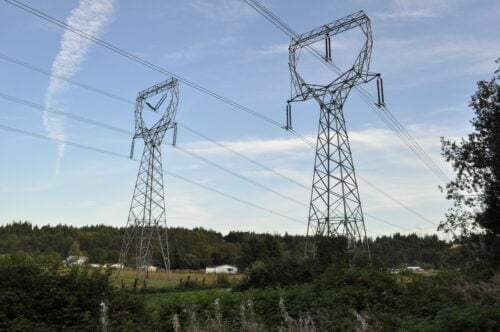
Oregon communities face mounting threats to their power supply. Increasingly frequent extreme weather events like wildfires, ice storms, and floods are straining its aging infrastructure. Southwest Oregon, for instance, endured over 50 power losses in a single summer due to wildfire events.
“How can we look to produce energy in our backyards, especially for these frontline communities that have risks of being shut off from the grid.” – Alex Clingman
Furthermore, utilities frequently shut off power to reduce their risk exposure during fires. But when the power goes out, sometimes for days, the consequences are dire: spoiled food, public health risks, and business disruption. As a result, Kruse and Clingman hear from a wide range of Oregonians – including tribal and rural advocates — a growing desire for local energy self-sufficiency and reliability.
In response to these hazards, earlier this year the Oregon legislature passed HB 2066. The bill provides foundational definitions and establishes the operating framework, or “rules of the road,” for community microgrids.
“I think of a microgrid as almost a mini power plant.” – Dylan Kruse
A standard microgrid functions as a mini power plant, typically consisting of a generation source (often solar) and a battery. It usually serves a single facility, such as a fire station or hospital, disconnecting from the main grid during emergencies to maintain power.
The critical leap to a community microgrid involves cutting across multiple property lines. This expanded system can benefit an entire neighborhood, a downtown business district, or a municipal center. This approach expands reliable power access for larger areas when the grid fails.
“Ultimately it’s this conversation about the future of energy generation and grid management that’s really exciting.” – Dylan Kruse
“The costs are real and people are seeing their power bills and they’re not happy and they’re definitely not happy if the lights aren’t on.” – Dylan Kruse
The push for community microgrids is not just about keeping the lights on. It’s also about affordability. As the cost of power keeps rising, due at least in part to investor-owned utilities’ revenue models and regulators’ lackluster oversight, community microgrids offer more efficient options. Specifically, they allow for a blended financing approach that could combine, for example, private capital with bonds, grants, and tax credits.
Furthermore, these systems dramatically reduce the social and economic costs associated with outages, which Clingman and Kruse call the “resource value of resiliency.” Minimizing emergency conditions saves money on municipal response and prevents losses from business interruption and spoiled food.
“This legislation really creates the rules of the road, the operating framework.” – Dylan Kruse
As Kruse and Clingman explain, HB 2066 was an effort to clarify previously murky legal questions about system ownership, operation, cost recovery, and interface with the existing utility grid.
Crucially, the bill allows communities to designate a “microgrid zone” and enable independent operators. It also streamlines development by allowing qualified third parties to conduct necessary engineering and interconnection studies to boost local energy resilience and emergency preparedness. Nationwide, this legislation is the most ambitious of its kind.
“We’re hearing communities in Oregon express not wanting to kick the can down the road any longer.” – Alex Clingman
While Oregon has yet to power up a community microgrid, Kruse and Clingman believe that the state’s new regulation will change that. Wallowa County, for example, which saw 31 power shutoff events last year, is already exploring a community-level microgrid capable of powering all distribution circuits.
“As we’re working with other partners across the nation, they’re coming to us to say, what has been done here?” – Alex Clingman
In terms of next steps, the Oregon Public Utilities Commission will oversee an 18-month investigation to define three difficult specifics: the roles, responsibilities, and revenue (the “three Rs”). In the meantime, Clingman and Kruse and other community microgrid community advocates are continuing to learn from and share insights with fellow community microgrid trailblazers.
See these resources for more behind the story:
This is the 254th episode of Local Energy Rules, an ILSR podcast with Energy Democracy Director John Farrell, which shares stories of communities taking on concentrated power to transform the energy system.
Local Energy Rules is produced by ILSR’s John Farrell and Ingrid Behrsin. Audio engineering by Drew Birschbach. Featured Photo Credit: US Forest Service via Flickr.
For timely updates from the Energy Democracy Initiative, follow John Farrell on Twitter or Bluesky, and subscribe to the Energy Democracy newsletter.
Oregon tries to tie utility profits to climate, cost, and reliability targets through performance-based regulation.
Rural electric co-op members should use this new toolkit to swap coal debt for clean, affordable energy.
NOLA’s Community Lighthouse initiative creates local hubs with rooftop solar and portable batteries to save lives after storms.
These plug-in devices bypass utility hassles to offer cheap, convenient power for everyone.