Data Centers, Energy Affordability, and the Case for Homegrown Power — Episode 278 of Local Energy Rules
How household power can solve the energy affordability crisis.
There have been some fairly hysterical forecasts of rising electricity demand from AI data centers, so the Homegrown Energy report from Rewiring America felt like a breath of fresh air when it was released last fall.
For this episode of the Local Energy Rules Podcast, host John Farrell is joined by Kristin Eberhard, VP of Policy at Rewiring America.
Listen to the full episode and explore more resources below — including a transcript and summary of the episode.
Kristin Eberhard:
California has, I think it’s the biggest operating VPP in the country, and it has saved the grid at key moments where other more traditional resources were more expensive or actually less reliable than the VPP.
*****
John Farrell:
There have been some fairly hysterical forecasts of rising electricity demand from AI data centers, but the homegrown energy report from Rewiring America felt like a breath of fresh air when it was released last fall. Joining me in June 2026, Kristen Eberhard, vice president of policy at Rewiring, explained their new policy blueprint, which catalogs six key policies that states can adopt, build grid capacity, and lower customer bills by investing in clean energy for homes and businesses.
I’m John Farrell, director of the Energy Democracy Initiative at the Institute for Local Self-Reliance, and this is Local Energy Rules, a podcast about monopoly power, energy democracy, and how communities can take charge to transform the energy system.
*****
John Farrell:
Kristen, welcome to Local Energy Rules.
Kristin Eberhard:
Hi, thank you. I’m so glad to be here.
John Farrell:
So I always love to start off with kind of a softball question to ask my guests, was this what you wanted to do when you grew up? How did your career bring you to doing policy with Rewiring America?
Kristin Eberhard:
Yes. So this might sound like a weird thing for a little kid to be hoping to do, but I did always hope to work on how we use technology and technological progress to really further human flourishing. So my undergraduate major was the perfect major for me. It was science, technology and society. So it was really about how technologies land in a cultural context and then how the values of the culture really get translated to how we use those technologies and how we develop them.
And early in my career, I did some research that really brought that together, which was looking at uses of renewable energy in rural areas of Chile in South America. And I looked at one village that had solar-powered electricity, and it ended up that actually kind of reinforced patriarchal structures. So the big man in the village got enough power to power a TV and a radio, which nobody else had.
So then they had to come to him to get their entertainment and their news. So it sort of reinforced his status instead of democratizing the status. And then I looked at another village where there were women who had gotten a solar oven. So it’s just a very self-contained little technology. And it really changed the culture of that village because the women now could earn extra income. They weren’t spending all their time walking back and forth to get wood. They weren’t burning the wood and poisoning themselves and their children, in their households. So some technologies, you can drop them into a cultural context and they can really change the way that things work.
John Farrell:
That’s amazing.
Kristin Eberhard:
I’d say another theme for me is just thinking about local control and resiliency versus being part of a bigger civilization. So I think this is why I love rooftop solar and batteries, but being grid connected because it’s giving you that local control and resiliency, but you’re still connected to this grid. You’re still benefiting from being part of a bigger society and the progress that we’re making together.
John Farrell:
Well, I love that on so many levels. One is because that’s exactly the idea behind the Institute for Local Self-Reliance’s approach to energy, which is not self-sufficiency, but self-reliance is sometimes how we’ve had to explain it to people who are like, “Oh, you just mean going off grid?” We’re like, “No, no, no, no, connection is great.” But building more of that local capacity is really important. So I really love that. I also just really love, I can imagine that with your background, we could spend an entire hour talking about artificial intelligence as a technology that’s going to impact society and culture. So maybe we’ll come back for a second episode to dive into that conversation.
Kristin Eberhard:
Yeah. Talk about rapid technological change and uncertainty about how it’s going to mix with our cultural values. Yes, a rich topic.
John Farrell:
Oh my goodness. Yes. Well, I will contain myself and instead we’ll talk with such a little bit on the AI thing, mostly about the impact of AI data centers. So I’m going to set aside the large and meaningful impacts of data centers on society, whether we’re talking about culture or even localized community impacts, and just talk about the electricity they demand, which obviously is something that for you and I and many others who work in the energy policy space has been a really big issue. So the thing that really drew me to your report, not just the approach of talking about using local resources, was that you offered this rather stunning conclusion that most, if not all of the energy that was being demanded or at least speculated to be demanded by AI dinner centers could actually come from other energy system users. And so I was hoping you could tell me just broadly about the benefits of this approach for the electricity system, the climate, but most importantly for the consumers who are really feeling the pinch of higher costs right now.
Kristin Eberhard:
Yeah. As you so kindly mentioned about our report, we released this last year and it really helped change this conversation about rising demand. There’s an increasing worry about the demand and how we’re going to meet it from these data centers. And we presented what was kind of a novel idea that actually that demand could be met with household upgrades. So we looked at for roughly the same cost as a new centralized gas plant, what could you bring online faster and also getting direct benefits to communities and households? So where this comes from is Rewiring America, our starting point has always been the kitchen table. So helping households lower their bills, take control of their energy use, be more resilient, reduce pollution. And our mission is to put American households and communities at the center of an affordable, resilient, all-electric future and all of those things come together.
So to your question, the benefit of meeting this new era of load growth with households is that we don’t have to rely solely on that centralized infrastructure that’s expensive, often slow, often polluting. There actually is another path. So we do need those. We do need clean energy generation. We’re going to need some transmission upgrades, but advances in these kind of household technologies and rooftop solar and batteries and heat pumps have really opened up this other cheap, resilient pass that benefits households. What our report shows is that these home upgrades can really reduce peak, shift load, store energy, provide flexible capacity that is just as meaningful to the grid as building a new gas plant. It lowers the peak, increases reliability, and gives us actually kind of a bridge because these household upgrades can really be brought online faster than a new gas plant that’s going to take five to seven years, but you can do a household upgrade in months.
And then you mentioned, of course, the climate benefits, meeting this load growth with electrification, solar storage, the flexibility of heat pumps and heat pump water heaters. All of those are clean technologies that can displace new fossil generation and the gas plants and also can replace right now people are burning little fossil fuel plants in their homes. Your HVAC system and your stove is like a little burner burning that fuel and off gassing it right into your home. And so that’s also a huge benefit of actually having a healthier, more comfortable home environment while also reducing your energy bills.
John Farrell:
There has been this assumption that meeting the forecast energy demand of data centers requires big players to address it. It requires utilities or it requires data center owners. Why do you think so many people have overlooked this approach to looking to existing users to do this instead of being. I mean, I feel like most of the news is focused on, oh, how are utilities doing this? Or at worst case scenario, how are the data center owners like Elon Musk just plopping down gas turbines in marginalized communities and polluting? Why haven’t people been thinking of this approach?
Kristin Eberhard:
There are a lot of groups, a lot of smart people who’ve been working on distributed energy, VPPs, demand flexibility for a long time. VPPs in particular are just getting a lot more interest and attention. So that is happening. But I think what we did with this report last year was just connect the dots more directly and say, look, we’re having this data center load growth conversation. People are feeling kind of overwhelmed and are just turning to their usual toolbox of a big gas plant, a new transmission line, but there actually is this other tool set that’s also getting developed over here and let’s just connect the dots and connect those things up and be honest that it’s not just about centralized supply. There are these other options. And of course, some of the blockers are look, utilities, their business model is to build infrastructure and earn a rate of return, and then households pay for it through their bills.
And so just because of their structure, they have really historically treated household resources or distributed resources as kind of small, peripheral, maybe a nice little project, but not really about serious resource planning.
And some of that is their business model and some of it is the technology. 20 years ago, rooftop solar, batteries, were not so cheap that they really could be seen as a scaled solution for everyone. And those prices have dropped and it really is a much more scalable solution at this point. I think one other thing that changed is just the load growth. For decades, we’ve been cruising along at a flat demand. And so utilities were just investing in their infrastructure to meet that demand and passing that along in bills. And so with this sudden load growth, and it’s not just data centers, it is our industries are electrifying, homes and businesses are electrifying. So there’s multiple causes for the load growth, but it has caused a, oh my God, what are we going to do? How are we going to meet all of this? So it was a good moment to say, look, just new gas plants isn’t the only solution. Households also can be infrastructure in this system.
John Farrell:
I was hoping you could walk through what are some of those specific improvements that home and business owners could install. You kind of jumped through them fairly quickly before, but for each one of those, could you talk about what’s the benefit for the home or business and how it expands capacity on the grid?
Kristin Eberhard:
Yeah. So households have a few key decisions to make related to energy. How you power your vehicle, how you heat and cool your home, how you heat your water, your food, and dry your clothes. So those are kind of the big energy uses that most households have. And each one of those can now be done efficiently and cleanly with electricity. So then when you take those home machines and power them with rooftop solar and with batteries and then manage the loads, it becomes actually a significant resource for the homeowner and then also for their neighbors because some of the big costs of the grid right now is really in the transmission and distribution systems. But if you can manage these loads on the distribution side, then that’s actually a benefit to the whole community. So for households and businesses, this is because these appliances, by moving electrons around instead of burning a fuel and then using that inefficiently for heat, all of these electric appliances are much more efficient.
So that directly lowers bills. And then when you pair that up with managing the load with rooftop and solar, then you also now are getting, because you can sell during the peak and buy during the low time, you get even more benefits for the household through that managed energy resource.
And then I should mention, there’s also jobs benefits. So our analysis finds that implementing this policy package could create more than a million durable community-based jobs that aren’t outsourced or automated. There’s a benefit to the customer because they’re getting lower the household because they’re getting a lower bill. There’s a benefit to the community from the jobs. There’s a benefit to the utility of actually being able to provide that power at a lower rate because it’s making more efficient use of their bigger infrastructure. And utilities, although they are incentivized to make big investments in infrastructure and earned a rate of return, because electricity rates are going up so fast right now, utilities actually are under a lot of pressure to figure out other ways to control those prices, and this is an excellent option for them.
John Farrell:
I’m glad you mentioned that because I was going to push back and just say utilities have already been fighting solar and energy storage. I know that electrification offers them something in return essentially of higher sales for the use of all of these appliances, even though they are very efficient, but we’ve definitely seen them resist. But instead of having to make you dive into that now, I think we can just touch on it when you talk about the actual policies because some of those address that specifically, which I think is really the other part that I think is so great here is that you’ve not only thought of where does this energy come from and how does it benefit households to be able to install and to have these devices that are using clean electricity? But you’ve also thought about how do we actually change the market structure and the incentive so that this stuff can actually happen, which I think is terrific.
So in your report, in the homegrown energy report, you described six policies that could help unlock this opportunity. I would love to do a quick overview about each one, how it helps to unlock this possibility and where does this policy get adopted? Is it a state policy? Is it a federal policy? Is it a public utilities commission, regulatory commission thing?
So the first one was described as reducing soft costs, which to a nerd like me, I was like, “I know what that means.” But what you’re really talking about is streamlining permitting for rooftop solar. Is that right?
Kristin Eberhard:
Yeah, it’s primarily about rooftop solar and storage, but also heat pumps. There is sometimes some permitting required for those. And permitting is one part, but it’s also the inspection and interconnection, which are additional steps beyond permitting. So when you put all of those together, that really slows down solar. So we’re saying let’s cut some of that red tape and just make all of that go faster. And because we know that then if that goes faster, it also is a lot cheaper. And probably your listeners all hear this, but since our co-founder Saul Griffith is Australian, I am obligated to mention that in Australia, rooftop solar is less than a dollar a watt. So a fourth of the cost of the United States. And so that is basically what happens when you can reduce all of these soft costs. It just gets so cheap that it’s like, why not? Why not put this on?
John Farrell:
Yeah, I feel like if you’re obligated as a Rewiring America employee to talk about it, I feel like he should also make you do it in his accent, which is part of the fun of listening to him talk about cheap solar.
Kristin Eberhard:
I need some more training. He actually has built though an AI Saul. So anyone who wants to hear Saul talk about rooftop solar can now listen to AI Saul talk about it.
John Farrell:
Oh my gosh, that’s amazing. Maybe we’ll have a link to that in the show notes because I think that would be really fun to share. Let me ask you a follow-up though about the cutting soft costs. I’m familiar specifically at Permit Power and some other groups. I interviewed folks from Permit Power about solar permitting for the podcast previously, and I can link to some of that related content in the show notes, but they were talking specifically about state laws that would guarantee that you could do either instant permitting or third-party permitting that could then be done very quickly. Imagine doing it on an iPad right away on site as opposed to having file paperwork at the city at city hall, wait for someone to come out, et cetera. I’m curious if you could talk a little bit about how that works for heat pumps as opposed to solar. Maybe it’s the exact process. And then I’d love you to talk a little bit about the interconnection process because I actually wasn’t familiar with some of the ideas that you had around interconnection, but I think that’d be very interesting.
Kristin Eberhard:
It’s a similar idea for heat pumps and Permit Power has been looking into adding heat pumps to the Solar App Plus database with a similar idea that if you have all the information about the household and you can do a virtual inspection or walkthrough, that there’s no reason to do a truck roll and come out and have somebody have to actually inspect the space before you can get your permit for your heat pump. So very, very similar idea.
John Farrell:
Well, that’s exciting.
Kristin Eberhard:
And then the interconnection. Yeah, so the permitting is something that happens through the city building electrical code, but then the interconnection is something that happens through the utility. And so sometimes you get your permit from the city to put the rooftop solar on, but you’re still waiting on your interconnection from the utility itself. And there are real reasons that the utility wants to have the interconnection though obviously they are tasked with keeping the lights on and making sure that everything’s safe and they want to make sure that this isn’t going to overload their local circuit. But a lot of that nonetheless can be done more automatically. If they know what their circuit looks like and they know what your address is, they don’t have to take a month to figure that out.
John Farrell:
No arguments here. And I think we’ve seen a lot of prior research showing that utility interconnection processes are unnecessarily slow. I actually just did a great interview with folks from IREC about their freeing the grid report, which looks at model interconnection policies, which I imagine would overlap very closely with what you’re looking to do.
So we’ve talked about soft costs or cutting red tape or permitting. The next two policies that you had both are focused on getting more money for consumers to help install energy improvements to cut their bills. So I was hoping you could talk through a little bit about how we get number one, data center owners to put in the money to help invest in these resources, and then talking about inclusive utility investment, which is an intriguing way that it would help people pay these upfront costs.
Kristin Eberhard:
Part of the conundrum here is that although these electric machines save the household money over time on their bill, you still have to pay to put them in. And so these are both two mechanisms that we have for how do you cover that upfront cost then to get the customer into the place where they’re saving on their monthly bill? So one of those is data centers helping pay for the cost of the installation. And there’s a couple different ways this could be structured. So it can be a tariff where part of the tariff is actually being used towards some clean energy capacity. And then there’s within that clean energy capacity, there’s a requirement that some of it come locally. And so then there’s a pot of money that’s dedicated to clean local energy. What is that? That’s community or rooftop solar and batteries.
There’s also just a fee structure. I mean, so that the tariff is a tariff structure and then you can just have a fee where they just have to pay a surcharge and then that fee goes into a pot. This is happening in, you’re in Minnesota, right?
John Farrell:
I am in Minnesota, yes.
Kristin Eberhard:
Yes. So there’s a bill in Minnesota requiring large data centers to pay into a pot that’s going to be used for low income efficiency upgrades and grid modernization.
And then another possibility is to give them credit in the capacity markets. So we’re looking at PJM right now where the capacity markets are drawing a lot of attention because they’re exceeding their caps and it’s just the prices are so high. And so there’s a lot of interest in how to fix that. And one solution that we have is to allow some of these distributed resources to actually be considered in the capacity market. And so then there’s just a straight payment of if you prove that you’re providing capacity, then the data center can pay for that capacity in the market.
John Farrell:
That’s fascinating. I never thought about the capacity market thing in particular, but that’s interesting.
Okay, sorry, wrapping my head around all of these different way data centers could do this. Let’s talk a little bit about inclusive utility investment. So this is something I have definitely been familiar with before. The basic idea is essentially we get the utility pay for stuff upfront as these are electric appliances and the utility has a benefit. There’s a public interest benefit in having them pay for them, which is lowering energy demand or bringing online flexible resources. But if there’s more to it than that, please expound on this and tell me a little bit more about how this inclusive utility investment will help cover those upfront costs.
Kristin Eberhard:
Yeah, that’s the basic idea is that utilities are fronting the cost and then you’re getting enough bill savings that basically you’re paying back that upfront cost on your bill, but still your bill is lower than it would’ve been otherwise. And there’s been different attempts at this model with on-bill tariffs or on-bill repayment. And a thing that’s important here is inclusive utility investment is designed to be protective of the customer so that the sort of repayment is attached to the bill, not to the customers. The customer isn’t taking on the debt and the debt isn’t following you, but you’re getting the benefit of utilities generally have a lower cost of borrowing than market rates. And so taking advantage of that low cost of borrowing to actually benefit customers who wouldn’t be able to access those rates on their own if they were just trying to get a loan to do that home upgrade.
So yes, this idea is not new, but I think the opportunity has just expanded with, again, previously during this era of flat load, there was sort of limited incentive to be helping increase efficiency even further. So utilities were really being forced to do it. But now there is possibly this. Some utilities with a lot of data centers planned in their territory really are scrambling. They want to accept the data centers, but they don’t have the power to power them. And so this now gets a little extra juice as an opportunity to actually create a little bit more headroom on your grid to get more growth.
John Farrell:
I was involved in a very specific case in Minnesota. We were trying to get the gas utility here to do it, and it would’ve include money for investments in electrification. And it’s just because they were willing to play nicer with the city of Minneapolis when we were having discussions. But the thing that sort of broke down the whole conversation was the utility was really interested in earning its rate of return on top of the repayment of the borrowing costs, which at that point then was not cheaper for customers than borrowing the money. I’m just curious if you’ve gotten to that level of detail yet with folks or how that’s playing into this.
Kristin Eberhard:
We have testified in favor of this program in a couple of states and would not champion that model. The whole point of this is that it should have a lot of bumpers to ensure that it is actually beneficial to the households that are participating, that they are getting both an upgraded house and a lower electricity bill and a lower rate. So we would not want to be passing onto them the utilities rate of return.
John Farrell:
Yeah. Great. All right, we’re halfway through the six policies. Thanks for indulging me with a deep dive on all of these. We’ve talked about red tape. We’ve gotten through how data centers could put money into these investments and also how inclusive utility investment could get utility money in to cover the upfront costs.
You also then have a recommendation about how we change electricity rates to lower costs for people that heat with highly efficient resources like heat pumps. I’m excited to hear more about this. I am a Minnesota customer. I’m actually on one of these rates in Minnesota because I have a heat pump. So I’m curious, can you just explain a little bit about why that’s important? And then are there other ways that you think we should be considering rate design that would help get more of these resources invested, bring more capacity online?
Kristin Eberhard:
Yeah. So there are, I think, a lot of places that historically have a winter heating rate from utilities that we’re trying to increase their throughput or their load during the winter. We have been framing this as not so much a benefit to electrification as just a fairness issue.
So in a lot of places they are summer peaking and so their winter load is easily met with cheaper resources, and yet they’re charging the same in the winter in the summer, even though the cost to the utility is lower in the winter. So we have been framing it as that those are unfair overcharges and that we’re just correcting the rates to be more reflective of the actual cost to the utility. And by the way, that also makes it cheaper to be using that cheap electricity in the winter instead of natural gas, which natural gas prices of course go up in the winter because of the seasonal usage.
So it’s kind of a benefit to the customer that you’re getting a lower bill and in some ways a benefit to the system that you’re better utilizing that underutilized winter and then reducing the demand on gas that gets scarce in the winter.
John Farrell:
I have a follow-up question about the summer peaking thing, but were there other rate design components or is that the primary one is just focused on the winter use?
Kristin Eberhard:
Yeah. Yeah. So we’re particularly focused on that just because it’s such a winner. It’s such a no-brainer. If you’re overcharging and it’s actually beneficial to the utility to have more people doing this and it’s beneficial to the customer, everybody should just do this if you’re in a summer peaking place.
But in addition to that, we’re supportive of just general seasonal rates under a similar principle and time of use rates. Again, under the principle that the demand is going up and down during the day. And so the cost of meeting the high demand is higher, that time should charge more. And then the benefit is if you’ve got a heat pump water heater that the tank can sit there heated up when electricity rates are high, and then you just go back to heating it when electricity rates are low. So yeah, there’s other mechanisms for making sure that rates are both beneficial to customers and more reflective of costs. But the main one we’ve been focusing on is that winter overcharge.
John Farrell:
Yeah. So let me ask the follow-up on this one. I live in Minnesota, as you noted. I am on the winter heat rate. Xcel Energy, my utility is definitely still a summer peaking utility, but I know I’ve read some of the reports that have said if lots of us get heat pumps, and especially if it’s all air source heat pumps, which are somewhat less efficient at very cold temperatures, that some northern climate utilities may become winter peaking. How does that impact the thought about the rate design here? Or are there other tools that we have in the toolbox that we can use rather than focused on the rate design piece broadly?
Kristin Eberhard:
Yeah, the rate design piece, there is somewhat of a timer on it because as you point out, a lot of states are expecting with increased electrification that they will shift from summer peaking to winter peaking or to dual peaking in the next couple of decades. But those are decades away and these appliances, a lot of them last 10 to 15 years. So our philosophy is we need to fix this now. And then as places start to shift to winter peaking, we’ll sort of figure out the next iteration of what works best for the grid.
John Farrell:
I do think for what it’s worth, given that this study was sort of sparked by and is contributing to this conversation over AI data centers, which have giant load that by all accounts is extremely flexible or could be extremely flexible. One perhaps does not need to worry so much about whether me as a homeowner can dial down my heat pump, but rather whether Elon Musk can suffer going from a gigawatt to 900 megawatts of power for his AI compute.
*****
John Farrell:
We’re going to take a short break. When we come back, I ask Kristen about the final two policies that Rewiring recommends about gas infrastructure and virtual power plants. And we also find out which states are already doing exciting things to make this concept easier.
You’re listening to a Local Energy Rules podcast with Kristen Eberhard, VP of Policy at Rewiring America.
Hey, thanks for listening to Local Energy Rules. We’re so glad you’re here. If you like what you’ve heard, please help other folks find us by giving the show a rating and review on Apple Podcasts or Spotify. Five stars if you think we’ve earned it. As a bonus, I’ll gladly read your review aloud on the show if it includes an energy-related joke or pun. Now back to the program.
*****
John Farrell:
All right, two more policies. Another key feature that you talk about is reducing the money that we’re spending on methane gas pipelines. Can you talk about why that is important to this?
Kristin Eberhard:
Yes. So gas utilities are spending upwards of $20 billion a year in investing in their gas infrastructure. And this is of skeptical benefit to rate payers because as things are electrifying, there are going to be, even without any other policies, heat pumps are outselling gas furnaces, so people are electrifying. And so that gas infrastructure is going to have fewer people buying the gas, but they’re still going to be having to pay back these infrastructure investments over the course of decades. So every dollar that these utilities spend now is locking customers in to repayment over the course of decades, even if they decide that gas is not the best fuel for them. So we think that we should be looking at that a little more carefully and saying, if you’re going to spend some dollars, is this gas pipeline the best place to spend those dollars?
Or might we be able to shut down that gas pipeline and instead electrify the homes that are on that line? Or if you’re expanding the line, maybe you don’t need to expand it if some of the homes on the line are electrifying and so it is not in fact going up in usage.
And then some of these utilities are dual fuel, some are not. We did establish in Colorado a framework that the regulators there required the gas only utility to invest in electrification. Gas utilities have fought that kind of fuel switching requirement in the past, but the regulators said, look, this is kind of a ticking time bomb for your customers if you keep investing in this gas infrastructure. So where it makes more sense to invest in electricity, that’s where the dollars need to be flowing.
John Farrell:
I find this such a fascinating conversation because it’s sort of like we’re, just to give an example, where it’s the horse and buggy era versus the automobile era, except that the horse and buggy is a legal public monopoly. And now you have regulators trying to figure out, do we have to save the horse and buggy industry? And I’m like, well, arguably we shouldn’t be trying to save this industry. We should be managing their decline appropriately because we all know that it’s going to be cheaper and better for the climate and better for pollution and people’s homes and et cetera, et cetera. Better for national security if we don’t have to rely on these fossil fuels.
Kristin Eberhard:
Yes, but that transition, and I think part of what we’ve been looking at is if left unmanaged, if we’re just like, well, I don’t know what all happened. Yeah, utilities just keep doing what you’re doing. It could lead to terrible results both for the utility shareholders and for customers. So we need to be proactively thinking about this transition and looking carefully at these investments to make sure they’re not digging us further into a hole.
John Farrell:
And maybe just to play that out really specifically, what’s going to happen is eventually half the gas company’s customers are going to cut the cord effectively. So the fixed costs of all those investments, I think you said $20 billion a year that they’re spending right now, those are all still there. They charge them on the remaining customers, so rates just keep going up and up and up at an escalating rate, which gives people more of an incentive to jump off. So basically they’re all going to declare bankruptcy 20 years from now if we don’t do something different, and then we’re going to be stuck holding the bag anyway, so might as well act now.
Kristin Eberhard:
Yes, yes. And I think that’s key that we’re going to be left holding that bag. This isn’t just a like, oh, well, let them go bankrupt and it’s done. It will redound to customers.
John Farrell:
All right. I’ve made you walk me through five out of the six of these proposals, which has been great. Thank you.
The last one, the last policy proposal is about virtual power plants, which is effectively a way to deliver power to the grid that coordinates lots of resources together. So it could be rooftop solar, batteries, electric vehicle chargers. Can you talk about why that is a crucial piece of this?
Kristin Eberhard:
Yeah, in some ways this is kind of like an umbrella or maybe an enabling mechanism for a lot of the other things. So basically this is a mechanism by which you actually translate these distributed resources into something that a utility can plan on. So a virtual power plant, a VPP, is taking a thousand homes with batteries and EVs and thermostats, and then coordinating them to be able to then bid into a market or deliver to a utility. Actually, we’ve got this many gigawatts available for you at this time because I got 500 of the thousand households that are signed up for this program to turn their thermostat down at this time. Some of our other policies are like a funding mechanism or a cutting red tape. This one is more of like, let’s just increase this coordinating mechanism that’s already happening, but it’s kind of nascent. It’s not scaled up yet.
John Farrell:
And there are a couple of states like California and Texas that have operational policies. And interestingly enough, there is sort of a financial component to it because there are third parties that organize these resources to do, as you say, we have 50 megawatts or 100 megawatts, it’s available, we’ve got them coordinated, but then they can also get paid through those states markets, which very few sadly states have markets like that yet, which is why this kind of policy seems so important.
Kristin Eberhard:
Yes, yes. And California has, I think it’s like the biggest operating VPP in the country, and it has saved the grid at key moments where other more traditional resources were more expensive or actually less reliable than the VPP.
John Farrell:
So I want to come back to the issue of how utilities make their money. We’ve touched on it a couple of times, but just to really go at this specifically, as you said, utilities make their money by spending their own capital. But a lot of the sort of win-win solutions for the grid and consumers that are outlined in this report, the heat pumps, the rooftop solar, the utilities don’t make any money doing that.
So I’m curious, what has been the reception so far from utilities and utility regulators to this report? Are they looking at it and saying, great, we actually do need to take these actions and it’s not our problem that utilities can’t make money doing this? Or are we seeing resistance as we have maybe when we just talk about them individually like rooftop solar?
Kristin Eberhard:
This is obviously a real tension. The utility business model is rewarding that capital investment and it’s rewarding them owning things and building things, which is part of why these distributed household resources haven’t gotten as much attention because they aren’t making the money for the utilities.
So there’s a couple things. So one is some utilities are jumping in or interested in a model where they do own or have an ownership interest in some of these. So the model of SparkFund, I think also in Minnesota. Minnesota’s just the hotbed. So they have been working on this utility-owned distributed resource model where SparkFund is going out and procuring these resources, and then the utility is putting in the money and is making back some rate of return so that it actually is the same difference to them, whether they’re investing in that or in a gas plant, which then does create an easier flow of money. So that’s one model.
And then even in a non-utility-owned model, as I said, in places where the rates are going up fast, there is more openness than there has been in the past to the idea that maybe we make some investment in this, maybe we don’t make our regular rate of return, but the benefits in the grid reliability and rates and customer satisfaction are nonetheless worth that investment for us.
And then just the final point is part of this data center’s pay model is the utilities don’t have to make the decision. The data centers are kind of putting up that cash, and then the utilities are just running a hopefully more reliable and resilient grid, which they do like, and that is a benefit to them.
John Farrell:
I’m kind of curious actually, and this question is dreadfully specific, but there are a few states that have what they call sustainable energy utilities or an energy efficiency utility. I think Vermont has Efficiency Vermont. I think Delaware has a sustainable energy utility, DC. Is there a way in which those entities could partner with data centers? Because some of them are already doing consumer-facing services under that model. I’m curious if you’ve explored that at all.
Kristin Eberhard:
Yeah, we haven’t explored that much. We have worked with Efficiency Maine and Efficiency Vermont because they’re doing a lot of great work on investing in pushing heat pumps and making them more affordable. But certainly that the green banks have a potentially important role to play here as that community-facing funder mechanism that maybe the data centers could just go through. But we don’t have extended discussions about that specifically.
John Farrell:
It’s really intriguing. I should say for people who are interested in learning more about the utility-owned spark fund model, I do have a podcast that I did with Will Kenworthy from Vote Solar and Shannon Anderson from Solar United Neighbors, all about it. I will spare you from a lot of my opinions about it right now, other than to say ILSR was involved in that docket and strongly opposed it for a lot of reasons that I won’t list here. But I appreciate that that’s one of the models where it’s helpful to understand for those who are curious about how that business model works, why utilities would be interested in that particular approach. And for what it’s worth, just in terms of details, that particular proposal that got approval here from the commission in Minnesota, the projects will be sited on customer property, but because they’re in front of the meter, they will offer no benefit in terms of management or bill discounts really for the consumer. I guess there might be some lease payments or something, but it’s not the way that you described for a residential customer where that battery is helping them manage their own load. It’s a little bit more removed than that, at least in this initial example, although I’m sure they’re going to try some other things.
So we’ve talked about those six policies. We have the removing red tape, solar permitting stuff. We’ve got how data centers can pay inclusive utility investment. We’ve got VPPs, the gas pipeline issue, and then the electricity rates. I’m curious, is there a state out there that’s nails all six of these, that is moving along, has really solved this? And if not, where do you see real movement? Where are states that are making a lot of progress on these policies that you’ve outlined?
Kristin Eberhard:
Yeah, nobody has all six, and we don’t necessarily expect anybody to go all the way on all of them, but each of them helps, and then a lot of them really work complimentary together. The VPP works really well with the data centers pay.
But just a couple examples. So New Jersey and Virginia are really leading the way on automated permitting. And then Texas also has third-party permitting and inspection for solar and storage. Texas has been very like, let’s just get this stuff online in general. Inclusive Utility Investment, Illinois has a program, and then I think I mentioned Illinois’s also been working on a large load tariff for data centers to be putting more money in.
On gas planning, Massachusetts has really been out front on thinking more strategically about how they’re investing in gas. And then they also have a heat pump rate that we’ve worked on there. So Massachusetts is kind of putting some things together.
Colorado is a place where a lot of things are moving. So they have a clean heat program, which kind of requires their utilities to invest in electric heat. They have a non-pipeline alternative requirement for their gas utilities. They are considering a large load tariff for data centers. So Colorado’s kind of a hotbed.
And then, oh, Minnesota. So Minnesota has that data center fee to benefit low-income households, and they’re also thinking about large load tariffs, especially with, there’s a Google Xcel joint proposal there. So a lot of things moving. Some places have more than one thing moving, but nobody has the full policy stack yet.
John Farrell:
Is there anything that’s come up in this conversation that you’re like, oh, I should totally mention this thing or a question that I didn’t ask you that you were hoping that I might?
Kristin Eberhard:
So we released this report in September that just put out this idea that we should connect these dots between the load growth from data centers and then how we can actually meet that with households. And then we just released our policy blueprint in May that’s really trying to put some teeth on that.
So that’s all of these six policies that we just worked through. We’re kind of giving willing states or legislative champions a roadmap of if you want to really look at your households as energy infrastructure, here’s some of the mechanisms that you could enact. So we’re hoping that now that we have that blueprint out there, that we’re going to get more interest in that full stack and more folks, especially as affordability continues to sort of be the watchword, that in the upcoming elections there will be more champions who are like, “Oh, okay. Yes, I want to make this real. I want to really improve affordability for the households in my district, and now I’ve got kind of a roadmap of the actions, these six actions that I could take to make that real.”
John Farrell:
That’s terrific. Kristen, just thank you again for the work that Rewiring America has done putting this report together, which I just think is a terrific analysis of how we can meet energy system demands as we electrify in general, and particularly to address this thorny issue of AI data center demand. And thanks so much for coming to talk with me about it today.
Kristin Eberhard:
Yeah, thank you.
*****
John Farrell:
Thank you so much for listening to this episode of Local Energy Rules with Kristen Eberhard, VP of Policy at Rewiring America.
On the show page, look for a link to the Homegrown Energy Report and Policy Blueprint and see for yourself the remarkable breadth of the opportunity.
We’ll also have several related resources from the Institute for Local Self Reliance, including the Community Power Scorecard, which can already tell you which states score well on interconnection and inclusive utility investment. And when updated this fall, it will also include grades and state policies on permitting and virtual power plants.
If you can’t wait on the permitting, Local Energy Rules episode 272 with Elizabeth Ridlington talks about Frontiers Group’s evaluation of solar permitting rules in their just released solar permitting scorecard. You can also see a link to ILSR’s research on the permitting problem. Local Energy Rules episode 269 is the one we talked about, about Spark Fund with Shannon and Will about the Spark Fund utility-owned battery project in Minnesota.
Local Energy Rules episode 199 with Matt Flaherty talks about inclusive utility investment if you want a deep dive on how that policy works to cover the upfront costs of customer sited improvements. And Local Energy Rules episode 241 with Shannon Anderson from Solar United Neighbors goes into a deep dive about virtual power plants and how we make them work effectively.
Local Energy Rules is produced by myself and Ingrid Behrsin with editing provided by audio engineer Drew Birschbach. Tune back into Local Energy Rules every two weeks to hear how we can take on concentrated power to transform the energy system. Until next time, keep your energy local and thanks for listening.
Data centers are driving an unprecedented spike in electricity demand, and utilities keep reaching for the same old tools: build more gas plants, earn a high return on equity, and hike up rates.
But Kristin Eberhard of Rewiring America argues there’s a faster, cheaper alternative already sitting in America’s garages and basements.
The organization’s research shows that household technologies, like rooftop solar, batteries, heat pumps, and smart water heaters, can supply about as much flexible capacity as a new gas plant for less money, and faster. This solution also lowers bills, reduces air pollution, and fortifies the grid.
“These household upgrades can really be brought online faster than a new gas plant that’s going to take five to seven years, but you can do a household upgrade in months.”
Investor-owned utilities have long dismissed household energy resources as viable alternatives to utility-scale generation facilities.
That’s because their business model rewards big capital projects, not small distributed ones. Regulators let utilities get away with earning a guaranteed rate of return on infrastructure they build and own, so a customer’s rooftop solar panel simply doesn’t pay shareholders the same way a new gas plant does.
“Utilities, their business model is to build infrastructure and earn a rate of return, and then households pay for it through their bills.”
Decades of flat demand reinforced that habit. Now, Eberhard argues, sudden load growth from data centers and a nation-wide uproar over electricity prices has forced utilities to reckon with distributed energy resources as a compelling alternative.
Rewiring America’s blueprint lays out six concrete tools states can use to both unlock the potential of distributed energy resources, and create long-term local employment.
States can:
“Implementing this policy package could create more than a million durable community-based jobs that aren’t outsourced or automated.”
No state has adopted the full policy stack yet. But there is progress, nevertheless, scattered across the map.
New Jersey, Virginia, and Texas are automating permitting. Illinois has moved on inclusive utility investment and large-load tariffs. Massachusetts is rethinking gas planning alongside heat pump rates. Colorado is advancing on nearly every front at once. Minnesota’s data center fee funds low-income efficiency upgrades, with more large-load tariff work underway.
The six-pronged approach that Rewiring America has outlined aligns affordability and grid reliability rather than framing them as competing goals.
As the midterm election year approaches, and energy affordability pressure grows, Eberhard expects more legislators to pick up these tools, and help support more households to become the energy infrastructure the grid actually needs and ratepayers can afford.
“Home upgrades can really reduce peak, shift load, store energy, [and] provide flexible capacity that is just as meaningful to the grid as building a new gas plant.”
See these resources for more behind the story:
This is the 278th episode of Local Energy Rules, an ILSR podcast with Energy Democracy Director John Farrell, which shares stories of communities taking on concentrated power to transform the energy system.
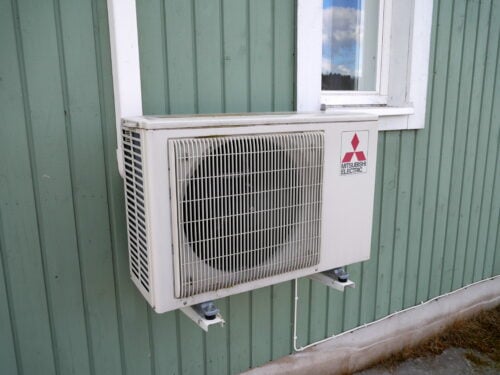
Local Energy Rules is produced by ILSR’s John Farrell and Ingrid Behrsin. Audio engineering by Drew Birschbach. Featured Photo Credit: Santeri Viinamäki via Wikimedia Commons.
For timely updates from the Energy Democracy Initiative, follow John Farrell on Twitter or Bluesky, and subscribe to the Energy Democracy newsletter.
How household power can solve the energy affordability crisis.
A Minnesota community solar cooperative earns trust and delivers savings in manufactured home parks.
Utilities profit by spending more. An independent distribution system operator could change that.
How New Haven financed a municipal geothermal network with a Green Bank loan and tax credits.