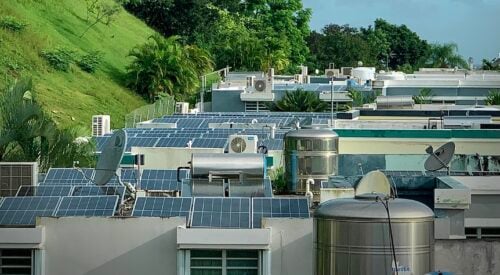
When it comes to delivering what the electric grid needs, well-coordinated distributed energy resources like smart thermostats, solar panels, and batteries provide very real value. In fact, distributed power plants (DPPs) can deliver similar grid benefits, from capacity to energy, at as much as a 60% discount over traditional capital investment.
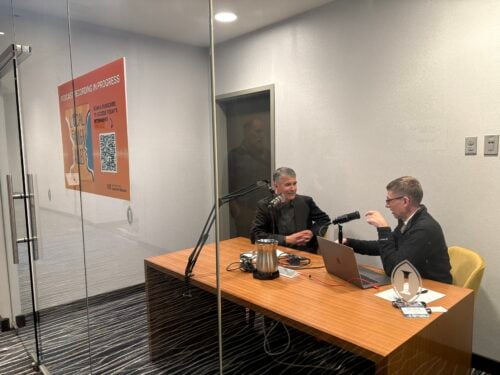
For this episode of the Local Energy Rules Podcast, host John Farrell is joined by Shannon Anderson, Distributed Power Plant Policy Director at Solar United Neighbors.
Listen to the full episode and explore more resources below — including a transcript and summary of the episode.
Available On:
Apple Podcasts Spotify YouTube
Podcast (localenergyrules): Play in new window | Download
Shannon Anderson:
But overall utilities, we think, should be looking at these programs as a way to address the number one complaint utility and regulators are getting across the country these days, and that’s their rising electricity bills of customers.
******
John Farrell:
When it comes to delivering what the electric grid needs well-coordinated distributed energy resources like smart thermostats, solar panels, and batteries provide very real value. In fact, they can deliver similar grid benefits from capacity to energy at as much as a 60% discount over traditional capital investment. That’s why Shannon Anderson from Solar United Neighbors (SUN) as the very real title of distributed, not virtual, power plant policy director, where she leads the charge for better policies and markets to tap this crucial resource for affordability and clean energy. She joined me in June, 2025.
I’m John Farrell, director of the Energy Democracy Initiative at the Institute for Local Self-Reliance, and this is Local Energy Rules, a podcast about monopoly power, energy democracy, and how communities can take charge to transform the energy system.
******
John Farrell:
Shannon, welcome to Local Energy Rules.
Shannon Anderson:
Yeah, thanks so much, John. I really appreciate being on and excited to talk to you.
John Farrell:
Well, thank you again for joining me. I just want to start by asking how did you get into this work with a title like Distributed Power Plant Policy Director? That is not a title I’ve heard before. How did you get there?
Shannon Anderson:
Yeah, so it is a brand new position at SUN and it’s new for me as well. About a year ago I was staring down yet another presidential election and like most Americans, I was really getting tired of partisan politics. So I was doing a lot of reflecting on my work and how I could spend my time to make the most difference working on issues that are inherently cross-partisan. And then this job announcement showed up from an organization that I really respected and it just seemed like the right opportunity to make a shift and focus on solutions to our energy problems full time. So yeah, SUN has launched a whole new campaign around distributed power plants. We really see it as a critical opportunity for solar homeowners and solar supporters to really build the solar future that we want and need for the grid.
John Farrell:
I just have to ask before we move on, what did you do before this? What qualifies someone to be a distributed power plant policy director? Were you working in the solar industry already? Were you working for a utility? What is it that made you an attractive candidate for SUN to come in and fill this role?
Shannon Anderson:
Yeah, so 17 years prior to SUN, I was working for a statewide conservation group. I’m a lawyer by trade, I was a lobbyist. I ran campaigns on energy issues. And so it’s sort of the combination of all of those things that I bring to this role. So we do a lot of regulatory work, we do a lot of lobbying and legislative work, and then ultimately we’re running a campaign. So we’re trying to get people engaged in the work, excited about the work and allowing them to then talk to their legislators and regulators to make it happen.
John Farrell:
I love that and it makes a lot of sense. I’m sure as we go through this conversation, people will see all the sort of different touch points of that experience that you have and those skills that you have and how this is going to play out. So before we get too much into the weeds of definitions about distributed or virtual power plants, can you talk about what the opportunity looks like? What will it mean for electric consumers and for our electricity system and for our climate if we see more distributed power plants?
Shannon Anderson:
So everyone wants to have affordable electricity bills. They want to live in a place that’s comfortable and safe. And people, including me, want to be able to have some independence and freedom in achieving those basic values. So in that regard, distributed power plants help people do things they already want to do: Consumers want to save money, they want to stay cool in the summer, they want to stay warm in the winter and they want to be able to take some control in their own lives to make that happen. So distributed power plants are real, they’re here and they’re already providing measurable benefits for the grid, for utilities, and for all of us who pay power bills. Distributed power plants cost up to 60% less than any other energy source because they rely on resources that people have invested in themselves versus the utility just building things on its own and then charging all of us as rate payers for all of the things that they build. So distributed power plants are also dispatchable, they’re reliable. They operate just like fossil fuel power plants and that means that they address some of the core complaints you typically hear about solar energy, the often-told refrain “the sun doesn’t shine all of the time.” So when you couple that solar energy with battery storage, you then create this dependable source of energy this’s available when the grid needs it the most.
John Farrell:
I always have to laugh when people talk about ‘the sun doesn’t shine’ thing just because humans use more energy when we’re awake, which tends to be when the sun is up anyway, so it’s like, you know what, even though the sun sets, a lot of us are sleeping when it’s down anyway, and there’s a lot less energy use as a result of that. So…
Shannon Anderson:
Yeah, very true. And as a solar homeowner, I know that my solar system produces power even on partly cloudy days and in the winter when it’s snowing even as long as the panels aren’t completely covered.
John Farrell:
I’ve read a few research papers on the subject of distributed power plants. My sort of working definition is that it’s essentially any collection of devices that could be solar panels, batteries, even electric car chargers or appliances that it can either supply more or demand less electricity when it’s needed to in some coordinated fashion. How would you edit or add to that definition in any way?
Shannon Anderson:
Yeah, so that’s basically it. Distributed power plants network distributed energy resources like rooftop solar, powered batteries and smart thermostats. So they network them together to save energy and or provide energy to the grid, and it’s really that and/or that’s key. So you’re both often reducing energy from a personal kind of load management perspective in your home, but where you get a lot of the value is actually when you have these devices inject energy into the grid. So when solar-powered batteries are actually able to provide capacity for a utility just like a traditional power plant, so the power comes from the fact that these are often resources that already exist in people’s homes and apartment buildings. So it’s just making most of the devices not just for the people that have them, but for their neighbors and communities as well.
John Farrell:
I think just to give people a little bit of a picture of how long we’ve been doing this kind of stuff, one of the things I thought was amazing in some of my research, a general example and then a personal one: So in Minnesota there’s a cooperative called Great River Energy that’s like a co-op of co-ops that serves like 27 different member distribution electric utilities, and they have something like a gigawatt, which is a nuclear power plant size worth of electric water heaters all networked together that they’ve been able to use as sort of a distributed power plant forever, just basically on adjusting when those water heaters are running. And as you said, that’s just one way that is reducing the demand then coming from those water heaters and now we have other options. The other thing is a lot of people are probably familiar with, and maybe even participate in, is a simple demand response program with their air conditioner. I know I had one on my house for years and years and years where there was just a simple radio control, and when it was really hot and there was lots of demand in the electric grid, the utility would just send out a little signal and cycle off my air conditioner for 10 minutes out of every hour, a barely noticeable thing. And I got some money for that and they got some benefit out of it and the grid got some benefit out of it. So we’ve been doing this kind of stuff forever. I think it’s kind of important to emphasize for people, it’s just now that we have lots more technology that we can use to do it.
Shannon Anderson:
That’s right. And a lot more devices for sure.
John Farrell:
So let’s talk about the devices. What is the simplest version of a virtual power plant so that you can paint a picture for folks about how easy they are to construct?
Shannon Anderson:
So I was actually going to give the example of the smart thermostat because I think it is something that resonates with a lot of folks. They have them in their homes, they know how they work. So for instance, Arizona Public Service, they have a program called Cool Rewards. So you get paid to be cool and it gives customers discounts for having their thermostats automatically turned up just a few degrees for a few hours on a hot summer day. And so the behind-the-scenes work to make that happen occurs through a distributed energy resource management system, which is essentially a contractor of the utility that communicates with the thermostat companies and their customers to control all of those devices in unison. And then last summer, Arizona had its hottest July on record. Not surprising, most of us hit hottest ever every single summer now. And so the over 90,000 thermostats enrolled in that program provided 160 megawatts of power that ensured the light stayed on and power stayed as affordable as it could be for that whole summer for Arizonans. So it is just connecting these devices, orchestrating them together and making sure that that provides value to the grid.
John Farrell:
For context for people, I seem to remember that the peak energy demand in my home city of Minneapolis, which is like 400,000 people, is maybe like 600 megawatts. We’re talking like a mid-size city worth of energy saved just by networking 90,000 thermostats. That’s pretty amazing.
Shannon Anderson:
That’s great. Yeah, I mean, again, it’s taken a fossil gas plant off the grid or not having to spend billions of dollars to make one in the first place.
John Farrell:
So I think you already kind of gave this example, maybe you have another one that you’d want to give, but an example of a distributed power plant that’s making a measurable difference to the community and the grid. Maybe getting into the weeds a little bit on the technical benefits that it provides to a utility as well as the financial benefits it provides to the participants.
Shannon Anderson:
Yeah, sure. So thermostats are great and they’re definitely making a difference, but as we’ve talked about, there’s real value in adding battery storage and other devices that actually inject power into the grid. So naturally at SUN, we’re particularly excited about the capacity that solar powered batteries are bringing, and will continue to bring, to distributed power plant programs. So in other words, a distributed power plant with batteries doesn’t just reduce customer demand, but it injects that power into the grid. So just last week Sunrun reported that its network of tens of thousands of home batteries dispatched 340 megawatts to the grid and distributed power plant programs in California, New York, Massachusetts, Rhode Island, and Puerto Rico. Again, hundreds of megawatts of power that is already being injected in the grid through these programs. And on the money side, the Connected Solutions program in Massachusetts and other New England states estimates that customers can earn around $1,500 a year for participating with their home battery system.
One of the main utilities in the program, National Grid, reports that the program has provided over $300 million in system benefits by reducing the build out of power plants and reducing energy use at expensive peak time. So $1,500 a year for customers, $300 million a year for all of the customers of the utility and system benefits. So real tangible money that can be seen from these programs. And that’s something that can happen all across the country because every utility has times of lower priced energy and higher priced energy. And that’s essentially what these programs are built upon. So for instance, in Utah, Rocky Mountain Power runs a battery dispatch program that charges up batteries using low-cost solar during the day, which in the western US is really cheap solar energy. And then you store that energy and you deploy it to the grid later on when solar isn’t available and energy costs as much as 10 times more. So you get that 10 times monetary benefit for storing the energy and then deploying it when the grid needs it. And then that’s all passed along to all of us as rate payers in these programs.
John Farrell:
So we’ve talked mostly at this point in the examples you gave about just sort of like commodity kilowatt hours, electricity. So in the example you just gave, I think it’s awesome and already I think powerful about the kinds of benefits that are being offered just on that basis. You can charge the batteries when energy is cheap coming off those solar panels. You use it later when maybe in the afternoon or evening there’s not as much solar energy, but there’s still a lot of air conditioning use just to use that summer example. My understanding though is that with these distributed power plants, you actually, maybe it’s not as common yet in the markets, but there are other services that can be provided that help support the grids basic operation. We need to have a consistent voltage in order that all of our electric appliances continue to work appropriately. There’s something called frequency regulation, which I’m just going to dodge trying to give a definition of here, but my understanding is that there’s some of these other services that are also kind of expensive sometimes to provide that virtual power plants or distributed power plants could also do especially using batteries and inverters and solar panels.
Shannon Anderson:
Yeah, that’s exactly right. And as these programs scale up and we get more hundreds of megawatts on the grid, we’re just going to discover even more about their benefits and what services they can provide. So it’s often referred to as “grid services” and you can defer often transmission and distribution costs because of them. You can help manage utility systems and it really facilitates electrification. And so often we’re hearing about electrification of buildings and homes as a challenge for utilities, but really they can provide a benefit as well. So as people install heat pumps and other devices in their homes, if there’s a way to network those together and provide value, then again, that helps save customers money, saves utility money, and also helps to integrate all of those devices without expensive grid upgrades.
John Farrell:
Maybe just to put some specific color on that, I have a plugin electric car and I have solar panels. The solar panels produce on an annual basis a little bit more than my electric car tends to use on an annual basis. And so when we talk about electrification, it’s important for people to think about, they can kind of net out. And if I coordinate that, which I’m going to confess, I do not right now because my utility does not have a program that encourages me to do so, but in theory, I could charge my car when those solar panels are producing electricity and basically make it so that the utility doesn’t have to worry about finding more supply for my electric car if the right incentives were in place to encourage me to do that.
Shannon Anderson:
Yeah, that’s exactly right.
John Farrell:
Alright, want to take a quick detour here, but keep me from getting too far into the weeds, I noticed in your bio that you serve on a library board, so let’s take a quick mental break and I just want to ask you to tell me three reasons why libraries are awesome because I think they are, and I just think it’s terrific that you serve on a library board.
Shannon Anderson:
Oh, thank you. Yeah, I love libraries so much. So it’s exciting to talk about them and it’s hard to pick just three reasons, but here goes. First, libraries are publicly funded, so they’re a public resource, they’re open to everyone and accessible to everyone. Second, library staff are pretty amazing people. They have tremendous knowledge and information and they’re ready to share that with patrons. They’re dedicated public servants who unfortunately don’t often get paid nearly enough to do the great work they do in their communities. And third libraries don’t just have books, they have community events, art shows, movies, and as we’ve been talking about, actually cool air in the summer and backup power. So they’re often a community resilience center for times of extreme weather.
John Farrell:
I love that you were able to tie it back to energy. I was just thinking to myself, shoot, I should have asked her to do that, but you are 10 steps ahead of me. I love it.
Shannon Anderson:
No problem.
John Farrell:
So one of the things that’s really clear about distributed power plants is that a lot of the components of them are essentially off the shelf, right? Solar panels have been around for decades. Smart thermostats have been on the market for years. Air conditioners have been around forever, heat pumps have been around forever. So it seems like the technology itself, like the devices, is not the challenge here, but there are sort of two major challenges in terms of bringing distributed power plants from concept to market. So let me start with the first one, which is how do you coordinate these resources to respond to what the grid needs? So for example, some utility employee or some contractor has to somehow send out a signal or an email or a Slack message or whatever, it says, we need support here. And then the virtual power plant operator has to in turn send a signal to its participating homeowners or residents and their devices to do something to address that request. Is that problem solved? Is that out there? There’s an off-the-shelf solution. Is that technology licensable or does that have to be customized for every utility system? So oh, maybe we figured it out in Colorado with Rocky Mountain Power, but now we need a completely new software solution for National Grid in Massachusetts.
Shannon Anderson:
So it does vary a little bit utility by utility because every utility is different, but essentially the software and technology does exist today and there’s quite a few companies that are really leading in this space. You’ll often hear the names of companies like Energy Hub, Good Lead, Virtual, Peaker, Uplight, you hear them a lot because they’re the ones helping utilities manage all of these tens of thousands of devices. And then you have companies like Sunrun who lease solar and battery systems to customers and that greatly increases access and affordability of distributed energy resources. And because they’re technically the owner of those resources, they’re able to operate them together essentially like a power plant. So communication protocols are safe, they’re easy, and private sector innovation is really making these programs better and better. So as long as the utility doesn’t try to overcomplicate things, which they tend to do sometimes, there are effectively very low administrative and overhead costs for these programs. And so again, they’re providing a lot of benefit to all rate payers of a utility for very low cost actually.
John Farrell:
The second major question that I was coming across was this question of how do you compensate participants for providing energy and grid services that utilities have traditionally supplied as part of the cost of service? Numerous studies have already shown that virtual power plants, distributed power plants rather can provide these kinds of services at a lower cost with less pollution than the traditional utility techniques. So how do we set up the market? What are the key components we need in order to make this transaction between customers and utilities possible so that we can capture all these savings?
Shannon Anderson:
Yeah, that’s a great question. So utilities are on board, but what they really need is a bit of a policy push because they’ll see how easy it’s to run these programs, but they need policymakers to point them in the right direction to get them on board. So last summer’s SUN developed a model piece of legislation and a model utility tariff that aims to create consistency and scalability and distributed power plant programs. The compensation piece in particular is critical because if you want people to participate, you need to compensate them, but naturally utilities do feel a bit threatened by the loss of control and regrettably the loss of revenue because with distributed power plants in place, the utility won’t have to go out and build and manage as many traditional power plants. So SUN and our partners in this work are also thinking a lot about things like performance-based rate making for other incentives that could address some of the core financial blocks investor-owned utilities often have to distributed energy resources like that rate of return issue, but overall utilities, we think, should be looking at these programs as a way to address the number one complaint utility and regulators are getting across the country these days, and that’s their rising electricity bills of customers. Folks are seeing double digit increases to bills and utilities really need to take stock of that and find solutions, and this is one of the ways they can do that.
John Farrell:
I want to dive in a little bit on this issue about utility interest in distributed power plant programs. I thought it was really interesting. I saw an article in PV magazine, we’ll link to it in the show notes, but it was about community solar in Illinois. This article and a ComeD utility spokesperson was quoted as saying We’re all for it. I thought this was amazing because this has not often been the case with community solar and other things where you have sort of third party development of power plants, but Illinois is one of the about 15 states where utilities don’t own power plants, that the system has been restructured. Does that mean that the states where utilities are likely to be most interested in distributed power plants because they don’t have that sort of competing desire to build power plants of their own?
Shannon Anderson:
Yeah, I would say it’s a both and for sure. So there’s a role for distributed power plants in a wholesale market or a partially deregulated state like Illinois. And of course Texas naturally has been leading the way because of their unique unregulated system. So there’s all kinds of really fascinating players in Texas that are doing really great work, but SUN is especially interested actually in distributed power plants for those vertically integrated utilities because the compensation will probably be the highest for participating customers. And so essentially you’d get compensated for the power you provide to the grid at a good rate that would provide real savings for you as a customer. We’re just kind of unsure a little bit about what the compensation’s going to look like in a wholesale market or a partially deregulated state. You hear a lot about things like FERC 2222, which is an order from the federal regulators to basically allow people to aggregate distributed energy resources and deploy those resources to the grid. So exactly what we’ve been talking about, but from the wholesale market perspective.
And utilities and regulators are a little bit behind the eight ball actually getting that kind of up and running. And so we’re excited to kind of test out these programs really in the vertically integrated states. And then if there’s additional opportunity that comes from a MISO or a PJM or a retail transmission operator, then so be it. And it’d be great to get some additional benefits, but yeah, we can get these deployed now I think in many places.
John Farrell:
I’m going to try to ask some intelligent questions about this. This is one of the areas of for me, like a learning edge. So the FERC order applies to wholesale markets, which are these organized markets that don’t cover the entire country, but much of the country, the acronyms people will hear, the shorthand will be like MISO or PJM or New England ISO Cal ISO, Texas with ERCOT is its own beast, but these are the markets where electricity is traded between utility companies and non-utilities in a sort of non-discriminatory way. There’s open markets and the federal regulatory order, FERC order 2222, is supposed to be moving us toward a place where we can see the benefits of distributed power plants in those wholesale markets. But as I understand it, that’s been very, I think as you alluded to, very slow going. And then you have these places where you have vertically integrated utilities, so all of the services that are provided to customers, the retail sales, the metering, the power plants, so whatever, all controlled by the same utility, Excel energy is a good example of that. It serves as a Colorado subsidiary, a Minnesota subsidiary, but in those cases, in those states, the distributed power plant is basically just transacting with that one utility. It doesn’t have to worry about the wholesale market rules or FERC or anything like that. It’s just saying we’re going to make a plan and a tariff that allows people to work with that one utility. Is that right?
Shannon Anderson:
That’s right, yeah. It’s a little bit more transparent for customers like where they’re getting benefits and then also how they’re contributing I think to the grid, whereas you throw in a regional operator and it gets a little bit more complicated. We’re also honestly a little bit worried about utilities setting up programs, and then say batteries inject power into the grid, and then the utility then ends up trading that in a PJM context, and so they end up getting revenue from customer batteries that maybe don’t pass all the way back through to the customer. Again, I think from a transparency perspective, the vertically integrated utility is probably the easiest for people to understand both the cost and benefit perspective from participation. But we’ll see what happens with FERC 2222, it definitely presents an opportunity, particularly for utilities that maybe aren’t generating their own power or have different financial incentives in place to make these systems work.
John Farrell:
Let me ask you a very specific question. So in Minnesota, Xcel Energy at the end of their last resource planning process, said, Hey, we want to do this what they want called a distributed capacity procurement, which initially sounded like we just want to buy a bunch of solar and storage and put it in the front of the meter to capture the benefits of distributed energy resources, which is very exciting for utilities to actually admit that this is a good way to develop things. Just speaking from a historical perspective, we haven’t heard that very much, and so that’s lovely. They just filed an additional update about this program and thank you for the notice, Shannon, because I got an email from you about it where they were saying, here’s the money that we need to set up our initial pilot, and they were very clear that they want as the utility to own those resources and then they’re going to handle sort of the dispatching of them in such a way that would have system benefits.
Can you talk a little bit about how does that kind of program design fit in or if not fit in with SUN’s vision for a distributed power plant tariff? What are of the, are there upsides to that? Are there downsides to that? How should we be thinking about this as Excel comes forward with their full program proposal here in October, and as I imagine, other utilities that are vertically integrated like Excel and who make their money, as we’ve talked about in many Local Energy Rules podcasts, they make their money from building and owning assets. I think we’re going to see more of this. So how should we be thinking about it in the context of distributed power plants and making sure that the benefits are widespread?
Shannon Anderson:
Yeah, I mean that is an excellent question. Very timely one for Minnesota and other places. So at SUN, of course, we believe in the freedom of everyone to be able to produce their own energy and to be able to own those resources for your own individual benefit. So the independence and freedom of solar homeowners is a critical piece of the core ethic of SUN and what we believe. So we’re quite concerned actually about the move for utilities to start owning, particularly if it’s a residential distributed energy resource. And so in this case, again, we’d be talking about utility-owned resources that are cited on residential property. So as opposed to… you and I are both solar homeowners… so as opposed to us actually owning those resources or leasing them from a private party, our utility would actually own those resources so they would own effectively a part of your roof, which is problematic from a number of perspectives.
One, because utilities typically don’t do things the cheapest way possible and when they inject themselves into the market, they have that power of monopoly behind them. And it’s really like the thumb on the scale of market opportunity for the private industry. And for you and me as solar homeowners to be able to go to an installer that we trust and know and be able to have that system installed for a price that we find to be acceptable and affordable. It just creates a whole different system that utilities have never been a part of, they don’t know much about, and they haven’t been in that world. So we’re a little concerned about that.
That said, there could be a role for, in some situations, a very limited, as you’ve mentioned, front of the meter, so resources that don’t necessarily directly reduce load or have a connection to that individual customer. In that case, it’s more, I think of it as a utility scale solar program that maybe the utility can’t find an open rural piece of land to site. And so they’re using a rooftop of a large industrial facility to effectively do their utility scale solar program. So in that case, to some extent that makes sense to me. And as a Wyomingite, we have a lot of public land issues and citing solar everywhere is a concern and a challenge. So if it’s overcoming a utility-scale solar siting issue that may make a lot of sense to be able to use rooftops and effectively then it’s just like Brownfield solar development. But yeah, it’s unclear what exactly Excel wants to do and how deep into utility ownership of distributed energy resources they really want to go.
There was another utility in Maryland just recently actually that got kicked back by their utility commission there. They tried to propose a program very similar as an energy storage procurement program, and they wanted to have utility-owned residential customer-sited storage facilities in that program. And the utility commission said, I don’t think so because it doesn’t make sense for the market to have you as a monopoly utility play in that space. So let’s see what the market does. If the market doesn’t get you to where you need to be, then come back to us and talk to us. But we’re pretty sure the market’s going to perform and you’re going to be able to get the resources you need on your system
John Farrell:
For people who want to dive in further onto some of these issues. I did a nice conversation with Lynne Kiesling who used the phrase “quarantine the monopoly” to talk about this issue of areas in the market that are already competitive and then sort of allowing the monopoly utility to come in and some of the challenges that presents. I also did a good interview with Michael Murray for Mission Data. He talks about that a lot, about the data that utilities have about where to put things on the distribution system that doesn’t really belong to them. The reason that they have it is simply because they’ve been selected as the operator of the grid, but they tend to treat it like it’s their data, and that creates kind of a competitive disadvantage then for anyone else that might want to participate in the market. So I’ll share in the show notes some of the links to some of these other podcasts to get into some of these issues about monopoly power that can impact these decisions.
Shannon Anderson:
Yeah, that’s really helpful and it’s always good to remember that utilities are regulated monopolies and they only act with the social license of all of us. They are effectively created by the government to serve the public, and so they can be regulated, they can be controlled, and there should be a limit on what they’re able to do.
John Farrell:
I think there’s a few utility executives that might need to hear that, Shannon, but we’ll see that for another time.
******
John Farrell:
We’re going to take a short break. When we come back, I ask Shannon about strategies to engage vertically integrated monopoly investor owned utilities in doing distributed power plans. She also offers ideas to make the energy savings accessible to people with a wide range of incomes, and we learned which states have leading markets. You’re listening to a Local Energy Rules podcast with Shannon Anderson, Distributed Power Plant Policy Director with Solar United Neighbors.
Hey, thanks for listening to Local Energy Rules. We’re so glad you’re here. If you like what you’ve heard, please help other folks find us by giving the show a rating and review on Apple Podcasts or Spotify, five stars if you think we’ve earned it. As a bonus, I’ll gladly read your review aloud on the show if it includes an energy related joke or pun. Now, back to the program.
******
John Farrell:
So I want to just talk specifically here about vertically integrated utilities. They make their money in many ways, but mostly by deploying capital to build stuff, right? Power lines, power plants, et cetera. So customer owned solar and batteries are competition for them, not in sort of the traditional sense of who they’re selling to, but just in the sense of it competes for their ability to go out and build things because if more customers install solar as in a previous podcast, it’s going to be released on Local Energy Rules, in California, there’s 15 gigawatts of customer owned solar out there that has saved the utility the trouble of building it. Well, if the utility made money from building the transmission lines for large scale solar or for building those solar power plants themselves, that’s a lot of money for their shareholders.
So you talked before about recognizing this issue and you mentioned briefly that performance-based regulation could be one way to address this. Let’s talk a little bit more about that because it relates to this Excel energy proposal. Excel is saying we want to own this stuff, because that’s how we’ll make money, doing distributed power plant deployment. Do you see some other way that utilities can get behind these? As we talked about, these are regulated utilities, so regulators, if they were feeling brave, which sometimes they’re not, unfortunately could just tell the utility, this is much more cost effective than what you have to offer, building it yourselves, you just have to do it. But is there a way that the utility can actually see a financial advantage here? Are there ways that we can change the incentives that would make it work better for them? Are there places where we’re doing this already?
Shannon Anderson:
Yeah, I think we’re exploring it in a few states. Oregon actually just passed a performance-based rate making proposal that’s pretty exciting. It will allow their commission to look into it, develop rules, think a little bit harder about what that will look like there. And I know other states have really dived in a little bit to performance-based rate making as well. But essentially it just sets up some requirements for the utility to meet certain standards of customer care, performance, affordability, reliability. And as long as the utility is meeting those standards, then they’re able to get some additional compensation from the regulators. So again, there’s something called this rate of return, which is you mentioned utilities get when they deploy capital. So because they’re essentially the bank for building large assets, well, actually you and me, as rate payers are the bank, but anyway, they like to think of themselves as the bank that they have access to capital. And so they go and they build these resources and then they do what’s called “rate base” them back to us, and then we pay for them. And it’s sort of like buying a car. You don’t only pay for the power plant, but you pay for the interest to build that power plant. And so that can end up costing rate payers an extra 10 or 11% in some cases, which is a lot of money actually. And so there’s ways to reduce that rate of return. There’s ways to decouple it from capital expenditures. And then again, there’s ways to allow a utility to earn a reasonable rate of return, provided they do certain things that actually do benefit rate payers and customers. So that’s the essential gist. Again, I’m more with you where it’s like legislators can just give them a policy push, enable their utility commissioners to have that political capital. I call it political capital, not financial capital, but political capital behind them to do the right thing. They do it and everybody benefits, which makes a lot of sense to me, but I am not a utility shareholder.
John Farrell:
Yeah, I do have to say hearing you describe it, it always makes me smile every time I listen to someone describe how performance-based rate making works, right? Oh, well, we’ll give the utilities some things that we want them to do, make energy affordable and reliable and do more clean energy and we’ll reward them for that. And I think to myself, why don’t we do that now? Because the contrast is really stunning. Like, oh, you mean that’s not what we pay utilities for right now? And that is the absolute truth. In 99% of cases, the way that utilities get money now is not in fact by meeting these different thresholds. Now there are administrative requirements for earning their rate of return, and certainly if they do a very bad job, they might not earn as much as they would otherwise. But as utilities like Pacific Gas & Electric have noted, you can burn down a great portion of your service territory and still be in charge and still make money. It is really extraordinary I think that we are in this situation where this idea of meeting performance metrics seems really crazy and novel after a hundred plus years of doing it a different way.
So anyway, I want to get us back though to the distributed power plants and particularly SUN’s model legislation and the model tariff that would create the kind of contractual relationship between a participant in the program and the financing. Is there any utility service territory or state where we have a market that in practice looks a lot like what the model policy looks like? Who is kind of closest now? Who can we look to and say, Hey, if we want a good distributed power plant market, this is who we should pay attention to?
Shannon Anderson:
Yeah, that’s a great question. So the SUN model policy was largely based on a program in New England and operates in Massachusetts and other states. It’s called Connected Solutions. And so utilities there anticipate in this program is often referred to as what’s called a “walkup” distributed power plant, or “open access” distributed power plant, meaning customers and third party aggregators of devices like a Sunrun or a battery manufacturer bring devices to the program and the program allows them to connect. So you walk up to the program, the program says, oh, you have a device, let’s bring you in. And then you’re brought into that program. So in other words, it allows the most customer choice and accessibility as well as creating the most market competition, which drives down those costs, because you don’t just have one battery manufacturer in the program, you have as many as you possibly can.
So as a customer, you’re able to choose from all of those manufacturers. And then we think of the market. And so all of those battery manufacturers are competing for your business. And so that helps to drive down costs ultimately.
And then another part of the policy that works really well is that it allows customers to opt out of any single event without penalties. So you just won’t get compensated that day if you don’t turn down your thermostat or you don’t discharge your battery into the grid. So that allows people to use their devices in the way that they want and maintain that control. So you often hear conspiracy theories, honestly, about distributed power plants, like someone’s going to come and control your thermostat and it’s this kind of scary specter, but that’s not really how it works. And again, as a customer, if the program’s designed right, you have the ability to kind of opt out and say, actually, I kind of want my house a little bit cooler today because maybe I’m hosting a party with 50 of my best friends, or whatever personal reason you have going on there.
And then the program also says that if there is an extreme weather event about to happen, and that is likely to cause a grid outage event or blackout, or maybe you’re in an area where a utility is going to shut off lines in advance of a wildfire, you get to keep your battery fully charged. So it’s available for backup power to meet personal resilience needs.
So what I love the most about distributed power plans is it’s solving multiple problems at once, and you kind of think of two of these problems being a personal resilience. So you have backup power if the grid goes out and grid reliability. So it’s not only providing additional power for the grid and creating reliability, it’s allowing you to be resilient from a personal perspective if there’s extreme weather and grid outage events.
John Farrell:
Thank you for sharing that about the Connected Solutions program. It’s a name I’ve heard cropping up a lot, and it’s useful to know that that’s sort of the best in class at this point. Is there anything about that program that you think could be improved upon? Just sort of thinking about getting us to this ideal where there’s more and more participation, more and more benefits, kind of optimizing the operation of the grid in terms of cost effectiveness and participation?
Shannon Anderson:
One of the criticism that you often hear about that program is it doesn’t really have a lot of equity considerations built into it. The SUN model policy kind of takes a lessons-learned from that and the incentives that we have for customers in our policy, there’s adders or additional incentives available if you are low and moderate income, so you’re an income qualified customer, and then that both applies at the time of enrollment in the program. So that helps you have a system that’s may be a little bit more affordable at the upfront level and then also allows you to get additional utility bill savings as the program continues. So one of SUN’s core principles of energy democracy is that we want to make sure that these resources are available to the people that need them the most and that we design policy that helps make that happen.
John Farrell:
That’s really great. I feel like that’s one of the often overlooked components there of getting these policies right.
What else do people need to know about distributed power plants and where can they learn more?
Shannon Anderson:
I definitely encourage folks to check out SUN’s website. We have a blog posting on distributed power plants, which as you mentioned has our model policy, and information about how people can get involved to advocate for that policy. So SUN’s actively involved in state legislative campaigns. We’re before roughly a dozen utility commissions right now trying to advocate for smart policies, and we’d love to get more people involved in that work. So check out our website, give me a contact, and I’d be happy to kind of connect you with our state program staff or other folks that are out there doing the great work that we’re doing and hope to get everyone involved in that. Oh, and then I would also say one of the best resources on distributed power plants was the Department of Energy Liftoff reports, and so there was a series of reports the Department of Energy did in the last administration that helped to explain the policy, talk about lessons learned, exemplifies some programs. Those reports are unfortunately no longer on the Department of Energy website, but if you would like a copy, I’d be happy to give you one so we can make it available as well.
John Farrell:
I also downloaded those after being warned that they might disappear, so I will make sure they’re linked on our show page. If I can’t find any of them, I’ll reach out. But yeah, we’ll make sure that they’re available along with all the other resources and things that we’ve talked about.
Shannon Anderson:
Great.
John Farrell:
Well, Shannon, thank you again. It’s lovely to be given this vision of a grid that is more effective, more affordable, that there’s this real powerful tool out there that we can use that’s off the shelf that has all these benefits like individual benefits, resilience, lower bills, lower energy bills, like grid benefits, that we can target toward those that are the most vulnerable. Yeah. I hope that you’re very successful in finding ways to get these distributed power plants up and running in other states because it seems like it’s a win-win win.
Shannon Anderson:
Yeah. Thank you so much. I’m really excited for the policy and excited to talk to you about it. So thanks so much.
******
John Farrell:
Thank you so much for listening to this episode of Local Energy Rules with Shannon Anderson, Distributed Power Plant Policy Director with Solar United Neighbors, where we talked about the big affordability and consumer choice benefits of distributed power plants and how to unlock their opportunity.
On the show page, look for links to the distributed power plant model policy and model tariff from Solar United Neighbors, as well as links to several studies about the cost slashing benefits of tapping these distributed resources, from smart thermostats to solar panels to batteries. We’ll also have links to several related Local Energy Rules episodes, including episode 195 with Lynne Kiesling about quarantining the monopoly, episode 155 with Michael Murray about the essential need for data, episode 182 with Brian Callnan about the Transactive Energy Rate being used by the New Hampshire Electric Cooperative to encourage customers to sell back energy to the utility.
Local energy rules is produced by myself and Ingrid Behrsin with editing provided by audio engineer Drew Birschbach. Tune back into local energy rules every two weeks to hear how we can take on concentrated power to transform the energy system. Until next time, keep your energy local and thanks for listening.
What Are Distributed Power Plants?
“Distributed power plants help people do things they already want to do: consumers want to save money. They want to stay cool in the summer, they want to stay warm in the winter, and they want to be able to take some control in their own lives to make that happen.”
Distributed power plants (DPPs) network various consumer energy devices like rooftop solar, batteries, and smart thermostats to either reduce energy load, or inject power directly into the grid.
For example, Arizona Public Service’s Cool Rewards program gives customers bill discounts for having their thermostats automatically raised by a few degrees for 2-3 hours on hot summer days, which reduces demand on the grid. Last summer, when the state experienced its hottest July on record, the over 90,000 thermostats enrolled in that program provided 160 megawatts of power. That savings ensured that lights stayed on and power costs stayed reasonable.
The People Power of Distributed Energy
Distributed power plants offer big benefits for consumers, the electricity system, and the climate. These systems empower communities by helping consumers save money, stay comfortable, and control their own energy — participants who enroll their smart thermostats in a DPP, for example, can override automated adjustments.
According to Anderson, distributed power plants cost up to 60% less than any other energy source because they rely on resources that people invest in themselves. In contrast, in an investor-owned utility model, the utility just builds things on its own, often at 10-11% rates of return, and then charges rate payers for what they build, whether it’s needed or not.
“We want to make sure that these resources are available to the people that need them the most and that we design policy that helps make that happen.”
Tangible Benefits and Grid Services
“As these programs scale up and we get more hundreds of megawatts on the grid, we’re just going to discover even more about their benefits and what services they can provide.”
Beyond just lowering demand, DPPs that include batteries actively inject power into the grid. For example, Anderson points to Sunrun’s network of tens of thousands of home batteries which have recently dispatched 340 megawatts to grids across California, New York, Massachusetts, Rhode Island, and Puerto Rico.
And in New England, Anderson shares, the ConnectedSolutions program estimates customers can earn around $1,500 annually for enrolling their home battery system as part of a DPP. According to Anderson, National Grid has reported that the program has delivered over $300 million in system benefits by reducing the need for new power plants and cutting expensive peak-time energy use.
“As people install heat pumps and other devices in their homes, if there’s a way to network those together and provide value, then again, that helps save customers money.”
Device Coordination Is Effectively Seamless
The underlying backend technology that enables DPPs is already well-established. Companies like EnergyHub, GoodLeap, Virtual Peaker, and Uplight help utilities manage tens of thousands of consumer devices. Anderson has found the communication protocols connecting DPP devices to already be safe and easy. And private sector innovation is also constantly improving these programs. As long as utilities avoid overcomplicating things, these programs incur very low administrative and overhead costs, offering substantial benefits to ratepayers.
The Policy Push for Widespread Adoption
Given the extensive benefits that DPPs provide, policymakers should be giving utilities a strong ‘policy push’ to increase their deployment. In her work at Solar United Neighbors (SUN), Anderson has helped develop model legislation, emphasizing customer compensation. She opposes utility ownership of residential distributed energy resources because of utilities’ monopoly power and their lack of experience in the distributed energy space. But she acknowledges utility ownership might serve a limited role in large industrial rooftops.
“Utilities do feel a bit threatened by the loss of control and regrettably the loss of revenue because with distributed power plants in place, the utility won’t have to go out and build and manage as many traditional power plants.”
Anderson also advocates for performance-based rate making, like Oregon’s, which links utility pay to customer care and reliability, which DPPs can increase. She highlights New England’s ConnectedSolutions program as a gold-standard ‘open access’ DPP program. It gives customers choices, fosters market competition, and allows opting out. It also takes into account impending extreme weather events, ensuring participating DPP batteries stay charged. The SUN model DPP policy also foregrounds incentives for low- and moderate-income customers.
“Utilities, we think, should be looking at these programs as a way to address the number one complaint utility and regulators are getting across the country these days, and that’s their rising electricity bills of customers.”
Episode Notes
See these resources for more behind the story:
- Review Solar United Neighbors’s distributed power plant model legislation and model tariff;
- Explore links to several studies about the cost slashing benefits of tapping these distributed resources, from smart thermostats to solar panels to batteries;
- Listen to related Local Energy Rules episodes, including:
- Episode 195 with Lynne Kiesling about quarantining the monopoly,
- Episode 155 with Michael Murray about the essential need for data,
- Episode 182 with Brian Callnan about the Transactive Energy Rate being used by the New Hampshire Electric Cooperative to encourage customers to sell back energy to the utility;
- Read the DOE Liftoff Report, which estimates that tripling the current scale of DPPs by 2030 could save ratepayers more than $10 billion in annual grid costs.
For concrete examples of how towns and cities can take action toward gaining more control over their clean energy future, explore ILSR’s Community Power Toolkit.
Explore local and state policies and programs that help advance clean energy goals across the country using ILSR’s interactive Community Power Map.
This is the 241st episode of Local Energy Rules, an ILSR podcast with Energy Democracy Director John Farrell, which shares stories of communities taking on concentrated power to transform the energy system.
Local Energy Rules is produced by ILSR’s John Farrell and Ingrid Behrsin. Audio engineering by Drew Birschbach.
For timely updates from the Energy Democracy Initiative, follow John Farrell on Twitter or Bluesky, and subscribe to the Energy Democracy weekly update.