Big Tech Stole His Book and Wants Your Town, Too — Episode 281 of Local Energy Rules
Why data centers are sparking a nationwide backlash as big tech tries to turn communities into reverse centaurs.
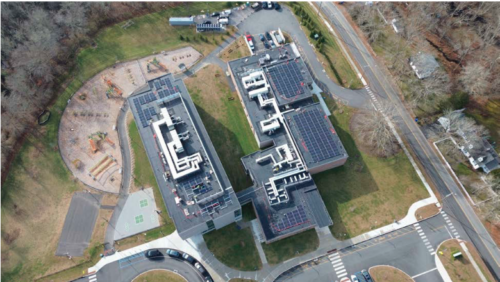
When solar on schools took off in Connecticut, it wasn’t driven by federal tax credits or state grants. Instead, it was the launch of a public solar development program by the state’s innovative green bank. Its lesson was clear: to do more cost-effective solar faster, and to deliver it on projects with a range of positive payback, public financing and development worked better than leaving schools to figure it out in the private market.
For this episode of the Local Energy Rules Podcast, host John Farrell is joined by Jason Kowalski, executive director of the Public Renewables Project.
Listen to the full episode and explore more resources below — including a transcript and summary of the episode.
Jason Kowalski:
And a lot of the schools who benefited from this program stood up with the Green Bank and said, “You had a shot and we liked this option better. It was fundamentally different product. They’re not competing with you. We weren’t going to do this project until we talked to the Green Bank.”
*****
John Farrell:
When Solar at Schools took off in Connecticut, it wasn’t driven by federal tax credits or state grants. Instead, it was the launch of a public solar development program by the state’s innovative Green Bank. Its lesson was clear. To do more cost-effective solar faster, and to deliver it on projects with a range of positive payback, public financing and development worked better than leaving schools to figure it out in the private market.
Joining me in July 2026, Jason Kowalski, executive director of the Public Renewables Project, talked about how the public finance model, common in public water utilities or libraries, could unlock faster and deeper investments in clean energy with greater benefits for everyone.
I’m John Farrell, director of the Energy Democracy Initiative at the Institute for Local Self-Reliance. And this is Local Energy Rules, a podcast about monopoly power, energy democracy, and how communities can take charge to transform the energy system.
*****
John Farrell:
Jason, welcome to Local Energy Rules.
Jason Kowalski:
Hello, John. Great to be here.
John Farrell:
I love asking this question of people, which has taken me a little while to refine, but was developing models for publicly funded renewable energy what you wanted to be when you grew up? How the heck did you end up doing this really cool work?
Jason Kowalski:
How did I end up here? Well, as a kid growing up in Buffalo, New York, I actually lost one of my childhood friends to cancer at a young age. It really rocked my world and made me start asking questions like what causes cancer? And some of the answers I received about air pollution, toxic chemicals made me start thinking about corporate power. How could they get away with this? And what can everyday people do to stand up to them? It took me a while to figure that out, but the best answer I found was building social movements. And that’s what I’ve been working on for most of my career, building powerful social movements to fight for the interests of ordinary people and then connecting that movement energy to the formal levers of power and government.
John Farrell:
I love it. I didn’t expect you to start with something that was so sad as an origin story for getting to public financing, but I love that it shows some clear meaning in your journey professionally to what you do now. And so thank you for that work and for helping other people to make that connection. Let’s just start really 50,000 foot level. What is it that we stand to gain as a society if we build a lot more clean energy through public financing?
Jason Kowalski:
Great question. Well, I’ll first just say that the Public Renewables Project is a new climate organization calling for publicly financed, publicly developed renewable energy. We work with states and cities to stand up public renewable energy developers, and that is our offering to this question. If we succeed, we can create a nationwide network of financially self-sustaining engines of decarbonization that will keep building renewable energy projects regardless of who holds power in Washington.
John Farrell:
So in other words, a lot more clean energy and probably at a very reasonable cost given that it’s coming through public financing.
Jason Kowalski:
A lot more clean energy and a lot more public benefits, whether you are a building trades worker who’s installing the system or a teacher at a school who’s lucky enough to have a publicly installed set of distributed batteries or solar on the roof or a thermal energy network.
John Farrell:
Jason, so could you give me what are some prominent examples of publicly financed energy resources historically and currently? Why might have heard of some, but not others?
Jason Kowalski:
I’ll first just say that public finance as we know it in the United States is a product of social movements. The progressive era and the New Deal era gave us the public finance ecosystem that we might not be that visible today. What is visible is public schools that work, a water system that works, airports that work. 100% of the international airports in the US are publicly owned and publicly developed. The same with 87% of our water systems and our public school system that folks are probably very familiar with. These are all innovations that would not have been possible if we did loans and subsidies and asked the private sector to plan them. In fact, that was the system before the New Deal and its failings resulted in the New Deal coalition that came together to call for something different.
John Farrell:
I actually saw a video this week where someone was pointing out, was responding to people talking in a derogatory frame about communism or socialism. And he said, “If you looked at this idea that there would be an institution that would lend the books for free with this lens, you’d be like, that’s crazy. And yet that is exactly what the public library is.” So I loved your other examples too, but just wanted to make a pitch for libraries here too as part of that infrastructure that we publicly fund and provides incredible benefits and we all love it and it wouldn’t have been possible previously.
Jason Kowalski:
Yeah. I will just say a lot of climate policy and energy policy in recent years has succeeded at building all sorts of new renewable energy projects and that success is worth celebrating. But we saw that happen with electricity projects and water projects before the New Deal as well. What we also saw is that development was spotty. It happened in wealthier places. It happened in cities, but not in rural areas. People and communities were left out of those new technologies. And that’s a similar dynamic I think many of us saw with recent climate and energy policy. Who’s left out? What are we building and what are we not building? A public water system allows every neighborhood within a city to access clean, abundant drinking water. A public renewable energy developer allows every community to benefit from solar, from geothermal heat pumps, from batteries, similar to how a publicly financed water system allows us to do the same thing.
John Farrell:
So the initial framing in my head about this was about specific projects, and I like that you went and challenged my thesis right away and generalized and said, this is not about one particular place like the city of Minneapolis, but it’s all of this infrastructure that we have across the country in many different places.
One of the things I’m curious about though is the New Deal, notably you had the Civilian Conservation Corps, you had other programs like the Public Works Administration that were building large projects. So for example, I in recent years took a trip down to the national parks in Southern Utah, came into Nevada and I was like, “Oh, there’s Hoover Dam. I never even really knew where this was, but since we’re driving by it, let’s go take a peek at it.” I guess I’m kind of curious, do we miss, is one reason, is it because that kind of stuff is in the history books? Is it because the scale of those individual projects was so big? Is it because the New Deal era politicians were hella good at marketing and we are bad at it for public things these days? Why do you think it is that there’s this enduring legacy and remembrance of those era projects, but it feels like we don’t have the same appreciation for the publicly built or publicly owned things today, but we have this veneration for the ones that were made during the New Deal?
Jason Kowalski:
I think one of the surprising things I’ve learned digging into the history of the New Deal is that the way its crafters sought success was not just in the projects that were built only in that era, but in the new institutions that were created that could continue to build projects again and again, rinse, repeat, in perpetuity that are still chugging along today. The way we finance schools with bonds, the way we finance water systems with bonds, the way we finance airports with bonds, all of these are done through what seems like local and state finance agencies, but in fact were created entirely by federal systems in most places where state constitutions, state legal codes had to be updated to allow for this kind of financing in the first place. That’s the type of federal innovation I would love to see.
John Farrell:
Hold on. I just have to interrupt for a second because you are saying I was not aware that the sort of public financing infrastructure was part of the New Deal. I’m also fascinated that there had to be changes in state laws and constitutions to enable this to happen. Wow, you’re blowing my mind here.
Jason Kowalski:
Absolutely. I mean, one of my favorite things about learning this is it really affirmed to me something I was already seeing with Biden era climate law implementation, which is that money’s not enough sometimes. It’s not enough to do tax credits and loans. What we need is state capacity. What we need is people who can take the mess of potential projects and turn them into real projects that get built.
John Farrell:
So I was hoping you could maybe walk our listeners through an example that you gave on a webinar that was in part the inspiration for me having you on the show, which was solar on schools in Connecticut. And I think this kind of gets right at what you’re talking about, about that capacity, because I remember the slide you had up and it was kind of like, here’s what happens if you do it through a private developer. Here’s what happens if you have the school have to figure it out for itself, and then here’s what happens if you have that public developer. And it was really powerful.
So I was hoping you talk about how did that public development process make it work where these other models didn’t? And I was hoping you could walk through that development process, the different steps where having that one developer actually sort of checks a lot of the boxes so that the school district is really more making a decision like we want to have solar or not as opposed to how do we get the tax credits? Who’s going to build the project? Where’s the project going to go? Et cetera, et cetera.
Jason Kowalski:
When I started looking into how to get solar on schools, I really had the assumption that it was just a money problem. I had the assumption that what was needed was more loans, more tax credits, larger amounts. And what I learned when I spoke with solar schools organizers, and particularly the Connecticut Green Bank, is that that’s not the full story. What schools need is not just money, they need easy.
And the real breakthrough that happened at the Connecticut Green Bank with their public option solar program for schools was that they figured out an easy button for getting solar on schools. That term was coined by an organizer, a friend of mine who wasn’t familiar with the program. And when she heard about it, she said, “Wow, this makes the job of a school a lot easier.” And she said that because she knew that if a school wants to own their own solar on their own roof, they need to do the feasibility study, they need to have board conversations, they need to do a competitive bidding process for different solar installers.
They need to figure out a capital stack for that project. They need to figure out debt and equity. They need to figure out a bridge loan for the IRS tax credit, figure out how to do Direct Pay. It’s a lot of work.
It’s less work if you choose to work with a private solar developer who will own the project for you, monetize the tax credit for you. You lose a lot of the material benefits of that project if you allow a private developer to own and operate the project instead of you, but it is less work, but it’s still not zero work. The school still needed to do a feasibility study. They still need to do a competitive bidding process with different developers. They still need to do a contract negotiation that requires staff time, that requires money, and schools are busy. They’re not focused on new projects like this.
They’re focused on educating our children, and that’s excellent. What the Connecticut Green Bank figured out after they had tried the typical playbook, they tried tax credits, they tried loans, and what they found was that buildings the size of schools, like big box stores with flat roofs and no tree cover were going solar and the schools were not. And they asked schools why not? And they learned that it’s because it wasn’t easy for them. So they figured out a way to make it easier, which was to create public-public partnerships with the schools. The Connecticut Green Bank would approach schools and say, “Hey, would you like solar at no upfront cost and we do all the work?” Schools who had already received proposals from private developers and said no, said yes to this proposal because it was less work and because they knew they had an aligned set of values with the public developer.
They were both mission-oriented public entities. The Connecticut Green Bank would do a bidding process for them. They would combine their purchasing power with other schools and do a batch procurement with 20 solar projects at a time that cut costs, it increased trust, and it allows a lot of schools to get to yes who had not gotten to yes beforehand. The Connecticut Green Bank’s analysis of this is not that they saved schools money versus a private developer, but that they brought projects online that otherwise never would’ve been built. Once they started doing this for solar, they kept it going. They now do it for storage. They’re now doing it for solar and storage on all municipal buildings, state-owned buildings, low and middle income housing. And it’s worked so well that even if it’s attacked, it has a built-in legislative coalition to defend itself. Some of the developers who work frequently with Wall Street banks stood up and said, “Hey, if you publicly develop all these projects, you’re competing with the private sector.” And a lot of the schools who benefited from this program stood up with the Green Bank and said, “You had a shot and we liked this option better. It was fundamentally different product. They’re not competing with you. We weren’t going to do this project until we talked to the Green Bank.”
So they have a built-in political constituency, happy schools. If schools save money, you end up with teacher’s raises, new art teachers, expanded playgrounds, right? You also end up with a good deal for workers. A lot of these procurement contracts, the Green Bank made sure that they were practicing high road labor standards. They made sure that they’re building a homegrown local renewable energy installation business for solar, for batteries. So that built-in political dimension of it was particularly appealing to me as a student of the IRA, as a student of the Biden area climate laws, seeing how quickly policy could come and go. And then looking at the Connecticut Green Bank and how their policy was tough under fire made me think, wow, this looks a lot more like the New Deal than a lot of what we just did at the federal level.
John Farrell:
Which notably was mostly focused on tax credits and other forms of financial support, but not capacity building in the way that you’ve been describing it.
Jason Kowalski:
And just to put a finer point on that, if you looking at the data right after we passed the Inflation Reduction Act at the federal level, solar shot up nationally. It went up by 23% in one year, right? That’s a big number. That’s exciting. That’s good news. When I looked at schools though, I though, wow, if it shoots up that much at schools, that’s going to be so good for the political feedback loops we wanted to see from climate legislation. That’s a lot of local jobs, that’s a very visible project. And solar did go up right after the Inflation Reduction Act was passed, but by only 4%. And it went up by 4% the previous year as well and the previous year as well. The gains that were related to the tax credits were disproportionately brought to certain types of projects, projects on private businesses, projects at larger scales, and community scale projects, especially projects on sites overseen by democratic decision making, nonprofit boards, church boards, synagogue boards, school boards.
Those projects did not move as quickly when tax credits were introduced as projects on a big box store.
John Farrell:
That’s fascinating, and I really appreciate that you are, as I think too few people are, paying attention to that difference between institutions whose benefits then from clean energy have spillover benefits, as you said. If you put solar on a private business, you cut their bill, which does matter and is important to the community and some of that money then gets recycled throughout the community. You cut the electric bill for a school with solar, you’ve got more money for art classes, for teachers, for playgrounds, things that really benefit anybody, all the kids in the community, all the families in the community. I wanted to ask maybe one more specific question about the Connecticut Solar Schools program. Can you just talk a little bit about the scale? How much solar was happening on schools in Connecticut before the Green Bank stepped in with this program, and then what was the result then after they did in terms of how many schools were able to do solar?
Because it sounds like there was quite amplification in the growth.
Jason Kowalski:
Definitely. I will say having loans and tax credits accessible to schools didn’t mean nothing, but it meant that Connecticut was on par with similar states. Once the Connecticut Green Bank adopted a public developer approach, then they became in a league of their own compared to similar states. That approach made them the number one school in the mainland US for getting solar on their schools. And about 30% of the solar projects in the state in the last 10 years have been publicly developed and at one time or another publicly owned by the Connecticut Green Bank.
John Farrell:
You suggested that there was initially some political conflict about private developers saying like, “Hey, you’re coming into our space with the public development.” But it sounds like it’s not that it’s stealing the job per se. I mean, there’s certainly a role in the development process that’s now public instead of private, but Connecticut Green Bank doesn’t have its own solar installers, it doesn’t sound like. It just sounds like they’re the ones who are aggregating the bids for the projects. So private solar companies are still involved in this process. It’s just they’re not as involved as they might’ve been edge to edge prior to there being this option where schools were able to say, “Hey, we can’t make it work with a private developer. We don’t have the staff capacity, for example. We made it work in this case, and we’re still hiring a private solar company to do the installation.” Am I getting that right?
Jason Kowalski:
Absolutely right. And I think the core point I would make is it’s kind of a renegotiation between what’s public and what’s private. A lot of the way I see it is that the planning function for the energy transition downstream of policies like tax credits and loans is placed entirely in the hands of the private sector. And in some cases, the private sector is planning a renewable energy build out, and in some cases it is not. The incentive for an individual private solar developer is to go to the places where they can make the most money. It’s not to look at a map of all the schools in the state and say, “How do we decarbonize that sector of the economy?” And it’s definitely not thinking about how to decarbonize it equitably. So the way that Connecticut Green Bank sees this is that they actually expanded the total amount of private activity installing renewable energy in the state by introducing a public option.
The way that green banks typically see their interventions is identifying and filling market gaps. The way they see it is that there are a lot of technologically feasible, financially feasible projects out there that aren’t getting built and they ask why, and they try to fill that gap. So the intervention as they see it is that they’re expanding the total number of solar and battery installation jobs in the state. They’re expanding private activity from developers, and they’re targeting that extra economic activity to in-state industries who otherwise wouldn’t be able to expand that much.
John Farrell:
I love that that’s where you go with this because that’s kind of where I was seeing this going, but I think that explanation is so helpful in understanding what this could mean if we have a broader vision of green banks. I think about Minnesota has a green bank that’s not called a green bank. I can’t remember what name we have for it, and some other states have them. And when you talk about gap filling, they think of their job as like, “Oh, the market doesn’t reach low income folks. We’ll figure out how to serve low income folks.” And I love that what it sounds to me like what’s happening with the Connecticut Green Bank here is a vision that is gap filling in a different way. It’s saying there are, let’s say a hundred projects that are happening in a year. We’re looking at that and saying there could be a thousand projects happening this year and they could be better serving all residents of this state, all businesses in this state.
We’re going to make sure that all thousand of those projects happen. And it means yes, the private developers maybe have a smaller role per project, but there’s a lot more solar going on, which means a lot more economic activity. So it’s like everybody’s winning here. I mean, I actually wonder if after some experience with this green bank program, would the resistance from private developers actually shrink because they’re like, “Hey, actually we have a smaller range of activity, but we got a lot more business than we used to have.”
Jason Kowalski:
I think that’s absolutely right. And the green banks that are doing the most innovative work are looking at market gaps and they’re also looking at scale. And one interesting thing about revenue positive assets like airports, like water systems or like solar cells or batteries is that the bigger the scale, the more you can benefit from the economies of scale, the cheaper your cost of capital, the cheaper your transaction costs are, the larger the bids can be for in-state developers. There’s a big benefit for the in-state economy when you do that. There’s also a big benefit for rank and file teachers at a school that has new battery and solar installations. This is also the logic of how other public infrastructure in the US works. When we talk about bond finance, people will talk about bond ratings or you can’t spend too much or you can’t borrow too much, but with a bond backed by a revenue positive asset, actually the more you build, the cheaper the capital gets and the more you can do and the easier it is to do.
So a lot of what these green banks are trying to do, and Connecticut in particular, is try to build a new market where it doesn’t yet exist, build enough public renewables that we can make that a more mainstream part of the market and how it works in the same way that lots of public school bonds are a mainstream part of how the market works.
*****
John Farrell:
We’re going to take a short break. When we come back, I asked Jason about the impact of recent federal clean energy policy rollbacks, what the feds could do if they wanted to help public financing, and whether public financing is a useful alternative to the limits of private financing. As described in a recent book, The Price is Wrong. You’re listening to a Local Energy Rules podcast with Jason Kowalski, Executive Director of the Public Renewables Project.
Hey, thanks for listening to Local Energy Rules. We’re so glad you’re here. If you like what you’ve heard, please help other folks find us by giving the show a rating and review on Apple Podcasts or Spotify. Five stars if you think we’ve earned it. As a bonus, I’ll gladly read your review aloud on the show if it includes an energy related joke or pun. Now, back to the program.
*****
John Farrell:
We’re in such positive territory talking about what has been happening in Connecticut and the possibilities here. So I hate to ask this question, but I’m curious what impact the Trump administration and their broad war on clean energy, how that has impacted public financing and if it’s done so had a deeper impact on the public financing than the private ownership.
Jason Kowalski:
We don’t fully know all the answers to that right now. What I will say is that if you look at the history of the Connecticut Green Bank’s public developer model, it performs really consistently across different policy environments. It’s consistently built renewable energy year upon year, regardless of what was happening in Washington DC with tax credits, regardless of state house control within the state of Connecticut. And that’s a hallmark of a lot of these public finance authorities, whether you’re financing school renovations or financing water systems. A lot of these institutions were built independently as independent entities for the purpose of insulating them from these political shifts. So for a problem like decarbonization where we can’t afford these pendulum swings in sync with what’s happening in DC, building independent institutions that can keep decarbonization going year in, year out a pace seems really favorable to me.
John Farrell:
Who among the states is doing public finance and development well? Who has the infrastructure in place to do it? It sounds like Connecticut is maybe an outlier, but at least a leader. Are there other states that have infrastructure like this in place?
Jason Kowalski:
The Connecticut Green Bank is the first and only public renewable energy developer at the community scale that we have right now. At the Public Renewables Project, we’re in touch with many other public finance institutions in other states, in other cities who are contemplating how to follow in Connecticut’s footsteps in a way that is uniquely suited to their state. Luckily, all 50 states have either a green bank or an economic development agency, some existing public finance entity that could adopt a public development posture toward new renewable energy projects. So this doesn’t need to be something that starts completely anew from whole cloth. We can do this within our existing institutions and we can do it fairly quickly.
John Farrell:
That part is really exciting. I was coming into this expecting that I had to have specific new legislation passed to create some sort of economic development authority. But when you mention it in those terms, I’m like, oh yeah, every state has that. They’re usually busy handing out tax credits to data centers, but man, we could probably redirect that into some socially useful activity.
Jason Kowalski:
Yeah. And not only do they have them, they understand exactly how they work because the public finance infrastructure that I’ve been describing that’s in use in Connecticut, if you’re used to water or airports, you’ve been doing this for a hundred years. You know exactly how this works and you probably have the staff to make it happen.
John Farrell:
I want to come back to the federal side of things. We’re obviously at a moment where the federal government is known for trying to undercut public ownership of things. Well, I mean, they’re trying to undercut many things other than sort of private profit off of federal government activity. All right, enough of my editorializing. In a circumstance in which the federal government was looking to solve problems around energy, what more could the federal government be doing to support public financing and development?
Jason Kowalski:
Well, I think a lot of what I’ve learned from the last round of climate policy is that money is good, but not enough. What’s better than just loans, just tax credits is money plus new institutions. And I take that lesson to heart in particular from the New Deal lessons where FDR actually conditioned a lot of the money for the Public Works Administration to shifting state laws to allow for new public finance entities like school districts that could issue bonds or public water authorities or airport authorities. A lot of the New Deal projects didn’t move forward until states passed the appropriate legislation to get the federal money. I think a regime like that could make a lot of change really quickly and make it really clear that it was a public intervention that made the change and could build the sort of political coalition as they operate that we need to defend against backlash.
John Farrell:
I have two thoughts about this. One is we sort of already see this federal highway money, for example, has often been conditioned on passing, for example, legislation about drunk driving, I think was one of the things in terms of the blood alcohol level. So a way that federal money can motivate. I think more recently there’s been sort of the infamous example of states refusing federal Medicaid money to expand these public programs to serve more people. I don’t know, out of some desire to leave more people sick, it obviously seems to be a little bit more about political posturing, but I love this idea of thinking about how do you create a connection? I mean, it’s so interesting to think back on the IRA and to say, “Oh, what if the Solar for All program conditioned funding on the passage of legislation to make solar compensation for onsite projects good or required instant permitting, which I know is a big thing now that we’re talking about in terms of policy change that can streamline design.
And there’s probably three or four other policy ideas you have about what states might do with that kind of conditional federal money. So it’s really exciting to think about how you can be using the power of the federal government there for good on two levels. One is not just the money or tax incentives, but also that institutional support that makes it durable, as you said.
Jason Kowalski:
Absolutely. I took a trip recently on an airplane and I looked down and I saw a lot of flat roofs with no tree cover and no solar on them. And I thought to myself, wow, if there was a public renewable energy developer here who could look at Google Earth and just look at the flat roofs and knock on their doors, has somebody offered them a deal like this yet to get solar on their roofs, to get batteries on their property? I think the key lesson for me is if there’s no institution responsible for getting these institutions to yes for the planning function of society that we need, money alone won’t make it happen. So when I think of the next round of federal legislation, that’s what I’m thinking. How do we quickly scale up the new institutions needed to deliver clean energy to communities where people live in an electorally relevant timeline such that people know that the benefit they received is a result of that federal intervention?
John Farrell:
If you had to choose between $50 billion in incentives and $50 billion that would build capacity, like actually do public development at this moment in time, what would you pick?
Jason Kowalski:
Not sure I like that question. You’re making me some enemies, dude.
John Farrell:
But I guess what I’m thinking about here is there have been, and I’m going to talk about solar specifically, there have been for a long time, people who have pointed out that solar, I’m talking about distributed solar right now, but utility scale has some of its own issues too. That distributed solar in the US costs like three to four times more than it does in other countries because of the way in which we have a very fragmented system of regulation and approval. And so yes, we can throw tax credits at that, which then obviously the end user, depending on whether they get to own the project or not, is going to capture some of the benefit from it. But if the development process itself is streamlined because you have somebody who has a mission-driven purpose of doing it that way, who is, as you said, getting to scale and developing projects, and then maybe even also building some political power to help address some of the roadblocks that exist in the development process that are being collectively fought as you’re building, I guess I thought your quick answer was going to be capacity because I look at something like solar and I’m like, I don’t know if you need to give people more money because as you said, these are revenue generating investments.
So maybe I’m surprised that this is a difficult question and you’re going to offer me a little more nuance, which is great. But I looked at it from the standpoint of solar and I though, ooh, this is a home run.
Jason Kowalski:
It’s a fair question. I think my perspective on renewable energy deployment is we should go pedal to the metal and build, build, build. I think it would be shortsighted after what we’ve learned from the last round of climate legislation to only use loans and tax credits when we could be using public development and institutions that can put projects together. I think the biggest tragedy is unbuilt projects. The biggest tragedy here is empty roofs that could be covered in solar panels on buildings that could use a little extra cash.
John Farrell:
We’ve talked primarily about solar, and I know you talked about the Connecticut Green Bank also doing solar and storage, but this is not just about those technologies. This could be wind power, this could be, I think about I do work on network clean heating systems, like geothermal systems that network together buildings. This is the whole range, this could be any clean energy technology.
Jason Kowalski:
Yes. When you create a public developer, when you take public development and public finance and put it in one place, you’re also really well suited to do planning. And that’s planning multiple customers for a thermal energy network. It’s planning on a city level, planning on a state level. There are a lot of projects that could happen. They’re technologically feasible, financially feasible, but they don’t happen because no one stands up and says, “I will do the planning for that.” In the industry, the term they use for that is soft costs. And the excuse for not doing something is often the soft costs are too high. And they’ve got a point, it takes a lot of time to talk to a synagogue board, a church board, a school board. They would call that a soft cost and they’d go to a private business that is profit maximizing like them and they’d probably get a decision sooner. Their behavior is logical and it’s in tune with their incentives.
Those projects that are very sensible and sound and viable but require planning, require conversations, require engaging with democratic decision-making structures or creating new ones in the case of thermal energy networks. If you get a bunch of customers into a room and say, “You now have collective control of this community-owned thermal energy network,” for a lot of developers who’ve spent their career reducing soft costs, that does not sound appealing. So I see that and I think what a great role for a public developer, whether it’s batteries, whether it’s thermal energy networks, individual ground source geothermal or solar, I think it’s an excellent role.
I will add that if you centralize ownership and control of a lot of renewable energy assets, you can play a greater planning role in society. So for example, batteries, a lot of folks I know who know a lot about batteries will say that the current revenue stack you can build from batteries does not fully monetize the grid benefits of those batteries, right? You might be able to sell power during peak load, but can you monetize the effect you’re having on the distribution grid of a non-wires alternative of not needing to increase the size of a feeder, the size of a substation when you put a battery on the grid? In some cases, some firms are trying to sell that service to utilities like in Minnesota. And you could imagine a publicly led function similar to that where a public developer uses the public’s market share to get greater benefits for the public and frankly help utilities do what they’ve been asked to do for a long time.
John Farrell:
I love that you brought this up and I’m going to extend it for just a second because you talked about centralizing ownership and control. And I think I’m allergic to the term centralize at the Institute for Local Self-Reliance, but I think there’s some nuance here that’s worth capturing. When it comes to capturing the grid benefits of assets like this, one reason we are not seeing it is that the utility business model we have for investor-owned utilities specifically, often is not interested in capturing these benefits because it runs athwart of the way they make their money, which is to invest their own private capital in some sort of infrastructure to solve problems. And if we use batteries to solve those problems instead by their dispatch, then the utility might not make as much money and they don’t like it. And I definitely think that there is a role for the public here in that the decision making about doing what is best for the grid would be better in public hands than in private hands, for sure.
I always get nervous about the ownership and control piece. I certainly support wide scale public ownership of resources, but I wouldn’t want that to preclude the coordination by a public entity of lots of public and privately owned resources on the grid. I don’t think you were necessarily saying that in the way that you phrased that, but I just have to as a matter of having this an ILSR branded podcast, have my piece about that.
Jason Kowalski:
I mean, my understanding of the New Deal’s history is that this came up constantly, this friction between what’s centralized and what’s distributed. And I think one thing I learned from studying the New Deal is that the elements that were more centralized were some of the fastest to be rolled back. And the elements that were decentralized had the most staying power and the most appeal across the ideological spectrum and had the most influence on what became the new political common sense after the New Deal. That’s a lesson I take to heart for public development as well. How do we push decision making down to the lowest possible level at all times while also recognizing that there are some benefits to some amount of scale, especially if we’re negotiating toe to toe with big utilities, right? An individual city is less powerful than a coalition of cities or a statewide entity.
John Farrell:
Before we let you go, okay, so there’s this book called The Price is Wrong that relates very closely to this, in which the thesis is essentially if we rely on the private sector to deploy clean energy for us, we’re not going to get there because the profits that the private sector expects in order to do development are going to be too high. Now, I have not finished reading the book, so maybe there’s more to that argument than that, but that is the thesis I’ve picked up from my halfway-read state. Have I got it right and how has that influenced your thinking about your work?
Jason Kowalski:
Thanks for bringing up that book. It’s actually on the shelf right behind me. I think your summation is exactly right. And it’s a powerful thesis in no small part because in the climate movement for years, one of the mantras has been let’s make clean energy cheap. And there was a moment in recent years where folks said, huzzah, clean energy is cheaper than fossil fuels. And then the question became why is the market still investing in fossil fuels if clean energy is cheaper? And Brett Christopher’s answer is because it’s less profitable than fossil fuels. Investors can make more money per dollar on an investment in fossil fuels than clean energy is what Brett says. And he offers a few solutions to this. One of them is an IRA style tax credit regime. One of them is shifting market incentives throughout the power sector. And a third is a public option, public ownership, public power, broadly defined.
The example he gives in New York State with the Build Public Renewables Act, the BPRA, really focuses on this idea that a lot of projects have a positive financial return, but it’s not high enough for the private sector to want to build them. And his argument is that if you have a public developer, you can do a mix of more profitable projects and less profitable or profit negative projects. And if on balance it comes out as enough to cover your operating costs and cost of capital, you’re good to go.
That is very much not how private developers view those projects. On a project by project basis, he points out that Shell Oil only invests in individual projects if they get a 15% return on each project at least. So 14% won’t cut it. It’s not about the averages. If you look at the state of Connecticut and the Connecticut Green Bank, they actively do exactly what he said a public option can achieve.
There are some projects where they get larger returns than others, some projects where there’s basically zero return, but they opt to do it anyway because their mission isn’t to maximize profits, they have a social mission to deliver decarbonization to the people of Connecticut to ensure community benefits. And because they’re a financially self-sustaining entity, they do want at least a certain amount of return, but they don’t need anything more than that. In fact, there was one anecdote they shared with me where they applied for a bonus tax credit and they weren’t sure they were going to get it. And when they got it, they gave it entirely to the school. They didn’t take a cent of it. That would never happen if a private renewable energy developer had done a project like that. The term for this within the public banking community is cross subsidization where you can say, “Hey, for wealthy folks, for wealthy businesses, we’re going to have this deal and for low income and disadvantaged folks, we’re going to have this other deal. And on balance, we’ll be good and we’ll be allowing more deals to happen and we’ll be enabling these socially beneficial outcomes.” Very common in public banking, very common with public utilities in other countries happening actively within some of the Connecticut Green Bank project portfolios and not something you’d ever see in the private sector.
On balance, Brett Christopher says that’ll lead to more decarbonization faster because instead of this universe where some projects are viable and some aren’t, once you apply a public development lens to the projects, the universe of viable projects expands dramatically. And the number of projects that pencil is completely different because the cost of capital is lower and because you don’t need to make a profit, you just need to cover your operating expenses.
John Farrell:
I think this lesson about we can do far more because we’re willing to have a blended return, first of all, to do the blending at all in terms of looking at our portfolio and being able to accept less in the private sector is so interesting in the context of utilities earn a very high return on equity for their private utilities, nine to 10%. And you could develop lots of projects for less than that and they’re not even willing to look at those kinds of things because of the rate of return they expect. But you not only have that, you now have private equity firms trying to buy investor-owned utility companies and they always expect higher returns in that nine to 10%. So we know that there’s going to be more squeezing of our institutions and our utilities for private profit under that kind of a model and probably even less clean energy investment because now that threshold for investment rises even higher with a new private equity owner.
So I’m so glad we got to talk about this and I think you put it so well about what the advantages of public finance are in the context here. So I’m just so grateful that we had a chance to chat.
Jason Kowalski:
Absolutely. And just to say one more thing about the Connecticut model is they’ve created a perpetual motion machine that will keep going until there are no decarbonization projects left. What I mean by this is it’s entirely self-sustaining financially. If they invest $10 million, $20 million into a bunch of publicly owned solar projects, they can then recycle that capital into another $20 million for solar projects in one to two years and do it again and do it again and do it again. And they can keep doing that because as a public institution that can issue asset-backed bonds, asset-backed securities, they can access really low costs of capital.
John Farrell:
Jason, thank you so much for joining me on Local Energy Rules to talk about this very exciting opportunity with public finance and public development. I can’t wait to share this with a lot of other folks.
Jason Kowalski:
Thank you, John.
*****
John Farrell:
Thank you so much for listening to this episode of Local Energy Rules with Jason Kowalski, Executive Director of the Public Renewables Project. On the show page, look for a link to the Connecticut Green Bank Green School Offerings page, a link to the Public Renewables Project, and a place where you can buy the book, The Price is Wrong, from an independent bookseller. We’ll also have a link to ILSR’s public power resources, including a map of active municipal campaigns and our handbook for public power efforts. Local Energy Rules is produced by myself and Ingrid Behrsin with editing provided by audio engineer Drew Birschbach. Tune back into Local Energy Rules every two weeks to hear how we can take on concentrated power to transform the energy system. Until next time, keep your energy local and thanks for listening.
Every U.S. international airport is publicly owned. So are 87% of water systems. Public libraries lend books for free and nobody calls it radical.
Jason Kowalski, Executive Director of the Public Renewables Project, argues clean energy deserves the same treatment. Public financing and development can catapult distributed clean power. It shouldn’t always have to end up as tax credits handed out to private developers chasing the highest returns.
“What schools need is not just money, they need easy.”
The problem with tax credits alone, Kowalski explains, is that they reward whoever can move fastest. Schools rarely can.
After the Inflation Reduction Act passed, for example, solar installations jumped 23% nationwide in a year. But that surge skipped over schools, where solar rose by only 4%, the same rate as the two years before.
Tax credits flowed to big box stores and private businesses with fast-moving decision-makers. Schools, religious organizations, and nonprofit boards, burdened by feasibility studies and competitive bidding bureaucracy, got left behind. Money alone can’t fix that, Kowalski says, but institutions can.
“If schools save money, you end up with teachers’ raises, new art teachers, expanded playgrounds, right? You also end up with a good deal for workers.”
“The Connecticut Green Bank would approach schools and say, ‘Hey, would you like solar at no upfront cost and we do all the work?’”
But the good news is that some institutions, like the Connecticut Green Bank, have found a fix. It offers schools solar at no upfront cost via a public-public partnership, with the Green Bank handling all the paperwork.
Schools that had already rejected private developers were quick to get on board. As a result, Connecticut has become the number-one state in the mainland U.S. for school solar, with roughly 30% of its solar projects over the last decade publicly developed.
“It allows a lot of schools to get to yes who had not gotten to yes beforehand.”
“The green banks that are doing the most innovative work are looking at market gaps and they’re also looking at scale.”
The arrangement works because the Connecticut Green Bank’s strategy prioritizes investment volume over profit margins. Whereas private developers tend to pursue projects with the highest profits, Connecticut’s public model blends higher- and lower-return projects. This strategy allows the Bank to cover costs without being hamstrung by profit pressure.
Also, because it issues asset-backed bonds, the Green Bank recycles capital into new projects again and again. That approach insulates it from national political swings.
“Once you apply a public development lens to the projects, the universe of viable projects expands dramatically.”
“My perspective on renewable energy deployment is we should go pedal to the metal and build, build, build.”
Connecticut doesn’t have to be unique in this regard. Every state already has a green bank or economic development agency that could pivot toward public development without requiring new legislation.
Kowalski therefore urges every state to use existing institutions to plan and finance renewable projects that utilities and private developers won’t touch.
“This doesn’t need to be something that starts completely anew from whole cloth. We can do this within our existing institutions.”
See these resources for more behind the story:
This is the 280th episode of Local Energy Rules, an ILSR podcast with Energy Democracy Director John Farrell, which shares stories of communities taking on concentrated power to transform the energy system.
Local Energy Rules is produced by ILSR’s John Farrell and Ingrid Behrsin. Audio engineering by Drew Birschbach. Featured Photo Credit: Connecticut Green Bank.
For timely updates from the Energy Democracy Initiative, follow John Farrell on Twitter or Bluesky, and subscribe to the Energy Democracy newsletter.
Why data centers are sparking a nationwide backlash as big tech tries to turn communities into reverse centaurs.
Connecticut's Green Bank made solar on schools simple. Its public financing approach is a model other states can copy.
Inside Alaska's community energy program: subscriber-owned solar for a one-of-a-kind grid.
How household power can solve the energy affordability crisis.