Electricity prices are rising at over twice the rate of inflation, and are set to increase even further amid data center development and the Trump administration’s double-down on fossil fuels. Consumers are outraged and demanding solutions.
Fortunately, state and local lawmakers have the authority to act right away to save consumers money by cutting utility profits, reforming utility compensation incentives, and freeing up small-scale clean energy resources.
Cut excessive utility profit rates
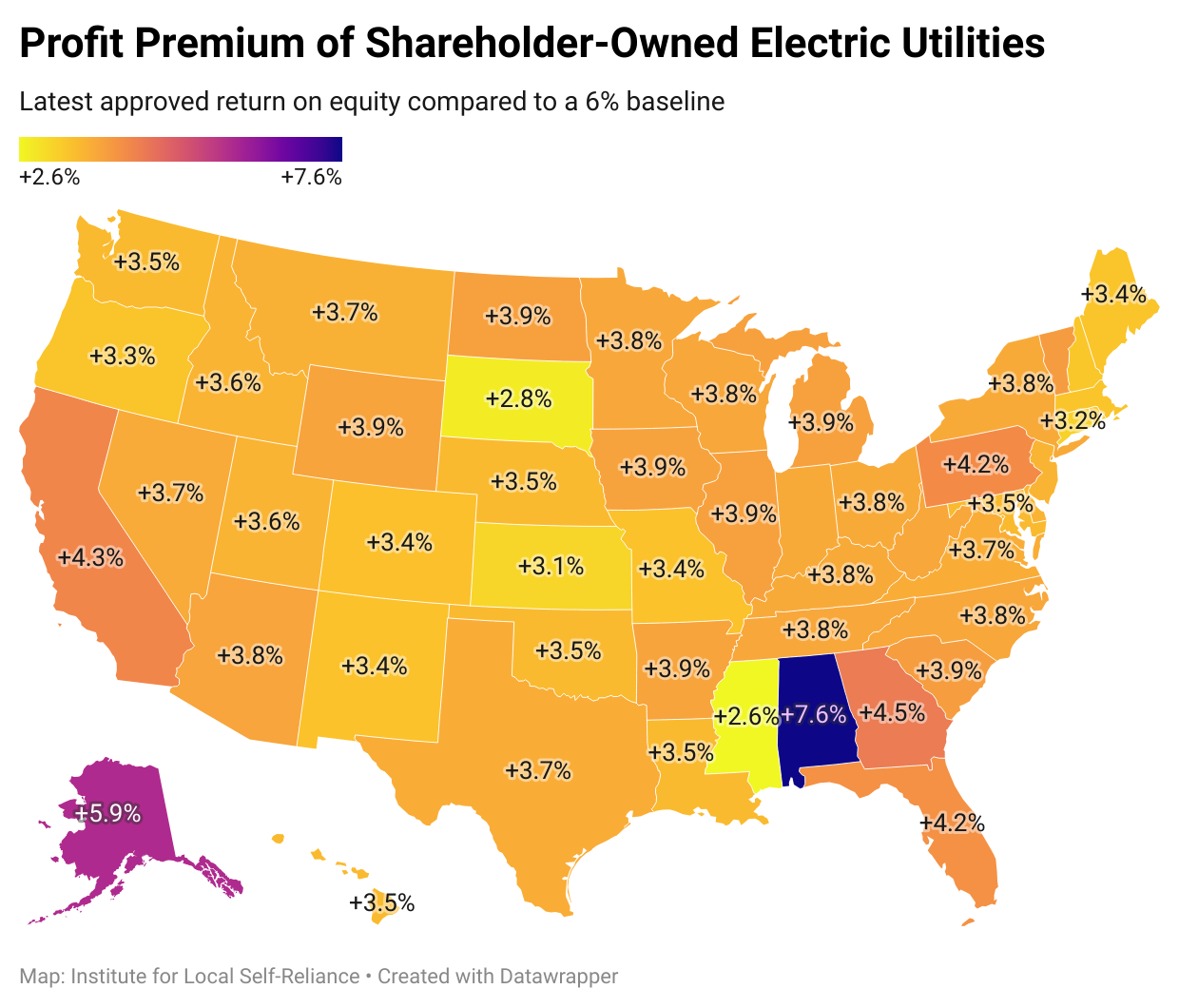
State regulators can lower soaring electric bills practically overnight — by lowering utility profit rates. Investor-owned utilities make a guaranteed profit on every dollar they spend. State public utility commissions (PUCs) determine those profit rates, and they’re way higher than they used to be.
Former utility executive Mark Ellis estimates the average American household overpays utilities by $300 per year, due to utilities extracting 3 to 7 percent more on every dollar of investment than they should.
Utilities routinely try to warn off regulators who seek to lower their excessive profits by claiming service quality would decline or costs would actually increase — but there’s little evidence that either would occur.
We already know that utilities can deliver high quality service with lower profit rates because they’ve done it before. Research nonprofit RMI found that utilities still raised enough capital to build new infrastructure when profits were more moderate in the late 1970s and early 1980s. Returning to those lower profit rates can also more than counter any increases in debt costs from credit ratings.
Pay utilities for performance
Policymakers can save customers billions by realigning incentives to pay utilities for performance rather than construction.
Under current rules, utilities profit more from building new infrastructure than investing in energy efficiency or less expensive upgrades to existing poles and wires. Most analyses of high electricity prices find that utility spending on infrastructure is a main or major culprit.
Utilities profit more when they build more, so they build a lot. To a utility with a gold-plated hammer, every grid problem looks like a nail — and ratepayers end up bent out of shape.
New Yorkers saved big when the state ordered utility Consolidated Edison to curb energy demand via energy efficiency initiatives and solar installations. The resulting investment successfully held off a $1 billion substation upgrade, saving consumers $500 million in profits not paid to utility shareholders and $800 million in avoided hardware upgrades.
The U.S. could reduce electricity use by an estimated 25% with energy efficiency investments that consistently cost less than the fossil fuel power generation utilities tend to favor.
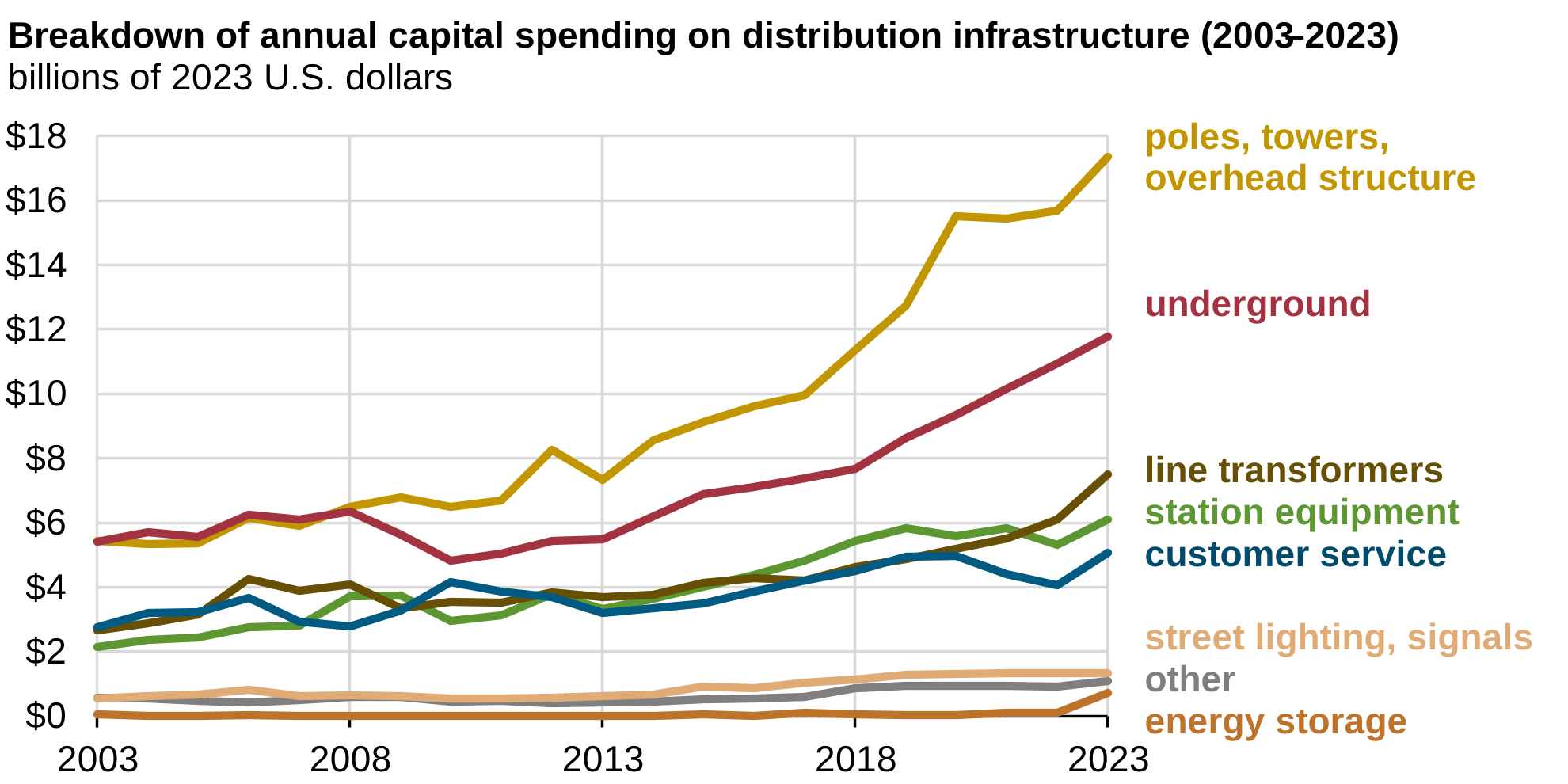
Instead, utility grid spending has soared in recent years, surpassing inflation and electricity sales combined, per the Energy Information Administration. And for each dollar of capital utilities invest in infrastructure –– $38 billion in 2023 alone –– they’ll extract up to 50 cents in profits from consumers over the life of the transformer, pole, or equipment.
A few states require utilities to prioritize cost-effectiveness rather than construction, but only Hawaii has disconnected utility profits from spending. State legislators can and should act now to align profits with performance, or at least efficient investment, and lower power bills in the process.
Unleash local power and storage
Local solar and batteries produce electricity right where we use it, and more of each saves everyone more money. A major expansion of distributed energy resources like rooftop solar and batteries, coordinated with smart thermostats, could cut grid costs by half a trillion dollars. But state and local laws, and utilities’ own policies around critical steps like connecting to the grid, are mostly written to hold back small-scale clean energy.
It’s on lawmakers to remove those obstacles via policies like streamlining and automating permitting and zoning requirements, fairly compensating solar users through net metering, and allowing non-utility ownership of solar projects. They’ll have to push past intense opposition from utilities, which see these kinds of policies as a threat to their profits — and allocate their lobbying dollars accordingly. We’re all sick of paying too much for electricity. We can pay less if state lawmakers and regulators lower utility profits, incentivize utilities to prioritize better service, and unblock opportunities to install local solar and batteries everywhere.
Greetings From Hawaii, Where Utility Profit Depends on Performance — Episode 130 of Local Energy Rules
For this episode of the Local Energy Rules podcast, host John Farrell and guest Isaac Moriwake discuss how Hawaii’s new performance-based utility regulation will adjust...