Intro to Networked Geothermal: Clean Heat for the Community
ILSR's 2-minute explainer video covers the basics of networked geothermal heating and cooling systems for local leaders and residents.
Cities have power over their energy future, and few have exercised that power more than Boulder, Colorado. Famous (among energy nerds) for its long campaign for a publicly owned utility, that campaign obscures numerous ways that Boulder financed and designed strategies for advancing its clean energy aims to the benefit of the community and the entire state of Colorado.
For this episode of the Local Energy Rules Podcast, host John Farrell is joined by Jonathan Koehn, Director of Climate Initiatives for the City of Boulder.
Listen to the full episode and explore more resources below — including a transcript and summary of the episode.
Jonathan Koehn:
Consistency matters as much as ambition. For a city to be doing work in the climate space, we have to be cutting edge. We have to make sure that people recognize the importance and the value of the money that they are contributing.
*****
John Farrell:
Cities have power over their energy future and few have exercised that power more than Boulder, Colorado. Famous, at least among energy nerds, for its long campaign for a publicly owned utility, that campaign obscures numerous ways that Boulder financed and designed strategies for advancing its clean energy aims to the benefit of the community and the entire state of Colorado.
Joining me in April 2026, Jonathan Koehn, Director of Climate Initiatives for the City of Boulder, lays out the many strategies a city can employ to advance energy democracy with or without its own utility company.
I’m John Farrell, Director of the Energy Democracy Initiative at the Institute for Local Self-Reliance, and this is Local Energy Rules, a podcast about monopoly power, energy democracy, and how communities can take charge to transform the energy system.
*****
John Farrell:
Jonathan, welcome to Local Energy Rules.
Jonathan Koehn:
John, how are you? It is so good to be with you. I got to say that intro made me a little squeamish. Yeah, it has been 20 years that I’ve been with the City of Boulder, and it kind of blows my mind. Years just tick by. But to your point, I think that I am just super delighted and honored to have been part of some of the amazing work that our community’s been able to do over the past 20 years.
John Farrell:
It’s funny as I was putting together my show notes for this show and seeing that you had been with the city of Boulder for 20 years, I was thinking, “Oh, we’re sort of tenure twins,” because I started at ILSR 20 years ago as well. So we both have been doing this for a very long time. So hopefully people who are maybe a little less tenured in their positions will still still find a few nuggets of wisdom here that we can share with them.
Jonathan Koehn:
I sure hope so. I sure hope so. Well, how are you holding up?
John Farrell:
I’m doing really well and excited to be doing these podcasts and talking to … I mean, this is one of my favorite parts of the job is talking to people who are out there doing amazing things. It’s what inspires me to keep coming back.
Jonathan Koehn:
Excellent. Well, I’m excited to perhaps dig into some of the things that we’re doing here locally, but just want to say I want to appreciate you and everything that your team does. I mean, I think right now there is a lot of conversations taking place about the headwinds that we’re facing. And just to your point that local jurisdictions are doing amazing work right now and the work on climate is not dead, not even close. And so really, really delighted to just talk about how we’re bringing value to our own local jurisdictions.
John Farrell:
So I’m hoping you can take us into the way back machine a little bit because if people have heard anything about Boulder, they probably heard about the municipalization campaign, which went on for many, many years. But I think the thing to me that is in some ways even more interesting is that Boulder bucked the trend of what many cities have suffered through, which is to say Boulder figured out, hey, if we want to do stuff around energy and climate and we want to have a decision over it, we might have to come up with our own money for it because the federal government is fickle, state governments can be fickle, but we can come up with our own ways to actually resource the things that we’re interested in. I guess I’ll just start by saying the municipal campaign, the sort of public face of it, I guess, started in 2011, but this started before that, right?
When did Boulder start saying, “Hey, let’s tax ourselves. Let’s put some money together so that we can actually resource efforts to address climate change and clean energy.”
Jonathan Koehn:
Yeah, that’s a great question. And so you referred to a topic that will probably stray into around municipalization and the potential ownership of our own electric utility, but you’re absolutely right. We started thinking about how to fund our climate related strategies well before that. So I’ll try to get through this quickly and not do a super long monologue, but way back in 2005, Boulder was at that time passing its first climate action plan. So just like a lot of vanguard or more progressive cities, we were like others that were responding to the US not ratifying the Kyoto protocols and in response to Mayor Nichols in Seattle had signed on the Mayor’s Protection Agreement in I think 2001, somewhere around that time. And so just as many cities did, we started thinking about, well, how do we respond to the issue of climate and how do we do it at the local level?
So what cities did and what cities continued to do is they think, well, let’s develop a climate action plan and that will develop the strategies and the roadmap for what we need to do. We have learned a lot by the way since those days and I want to get back to that comment as we go. But in 2006, our community really faced that discussion point of, well, if we’re serious about this, we need a funding mechanism that is evergreen, one that really has that nexus between what we’re taxing, how we’re raising the funds and where those monies actually go. So Boulder was the first in the US back in 2006 to have a voter approved tax, meaning our citizens decided to tax themselves to really create this funding mechanism. At the time, John, we called it a carbon tax, but I think many listeners will know that our tax did not function like a true carbon tax, meaning it didn’t really decentivize people from doing a certain thing.
It really was an opportunity to generate revenue for the strategies that we outlined in the climate action plan.
John Farrell:
So what was the mechanism by which it raised money? Was it a property tax, a sales tax?
Jonathan Koehn:
Yeah. So we looked at a number of things because this is what cities do. We’re really good at evaluation, developing strategies and thinking about different mechanisms. So we looked at taxes versus fees, we looked at transportation, we looked at property, we looked at sales and in the end there were a number of things that we found to be really important and that was that nexus again. And at the time, you might remember, we’re talking 2006 that electricity by far was the predominant source of emissions, particularly at the local level. So for us, it was a really important opportunity to say, “What is the trigger? How do we develop a collection mechanism? How do we find that nexus?” And so ultimately what we settled on is a surcharge that goes on our utility bills. At the time we realized that one of the things that we could do is at the time it was just electricity and we’ve evolved that since, but it was a small amount that Xcel Energy would collect from residents and businesses and industrial customers here locally and then remit those funds back to the city.
John Farrell:
Let’s talk now a little bit then about what you were able to use it for. So there’s a whole bunch of stuff that Boulder has done over the years. I don’t even know where to ask you to start. Maybe I’ll just ask you to start with smart regs in part because even though I don’t know if the funding had sort of a one-to-one relationship, I thought this was another really interesting exercise of local authority because as I understood it at the time, it was one of the first times when cities were looking at holding rental property owners accountable for the energy consumption of their buildings, but I’m going to let you describe it a litle bit more.
Jonathan Koehn:
Yeah, for sure. And I’m going to get to smart regs in kind of a circular way. So bear with me on this short journey if you would. So one of the things that you started with is how those tax dollars are being used. I think that that was a really critical thing for my team to be thinking about in those early days. We’re collecting money from our community and we wanted to show the value that we are doing good stuff with that money. And one thing that we’ve learned over time is that consistency matters as much as ambition. So for a city to be doing work in the climate space, we have to both be cutting edge. We have to make sure that people recognize the importance and the value of the money that they are contributing. And I will say a lot of the early work that was funded by the tax was about energy efficiency, things that are pretty standard but weren’t at the time.
So putting a lot of money into rebates, audits and we learned a lot during that time that A, you have to pair regulation with incentives. What we were finding early on is we were pumping a bunch of money into the public sector to do energy audits, to really give people the information, to upgrade their homes and businesses, et cetera. And the audit to action ratio was very low. And so that really led us to kind of that emergent learning of, okay, how do we need to have all this? Number one, the amount of money that we are collecting at the time was nowhere near the scale that was going to create the systems level change that we need. Number two, we needed to pair any of the incentive-based dollars that we were floating out into the community with regulation. And that I think really created the different phase that we stepped into.
So now getting back to your question about smart regs, on of the regulations, and that’s one of the things A, that local jurisdictions are very good at. We know how to regulate, but B, really understanding the smart and the right regulation to achieve the outcomes that we are seeking. So we often think about things like building code, energy code, but in Boulder, as in many communities, over 50% of our housing stock is rental. And so we were running into these really interesting quandaries about how were we driving real action and really thinking about the impact to people in sense of how does the regulation incentive work together? And so that is when we devised the Smart Regs program, which was the country’s first efficiency requirements for rental housing. And we gave a really long lead time and runway for property owners. We didn’t want this to be super draconian, but we gave them a 10-year lead time to come into compliance.
But again, it’s one of the things that cities have at their disposal, rental licensing. So having that trigger to be able to have a property owner show that those buildings were actually brought up to not only code but actually performing for some of the most vulnerable in our community was a really important move on our part.
John Farrell:
I love the intentional connection both to the renters who obviously often don’t have a lot of control over their energy bills and to that city mechanism about rental licensing. I remember trying to mimic that in some work that we were doing with folks in Minneapolis and ultimately being unsuccessful in part because the city department that handled rental licensing didn’t want us polluting their process with things about energy, but it was kind of disappointing for them to not take advantage of one of those tools that they had in the toolbox.
Jonathan Koehn:
Yeah. And I think that’s right. And one of the things that I would say about the tax too is that it’s really important to have a stable local funding source to allow us to keep moving. One of the things that we have surfaced over and over again is how do we make sure that we are leveraging the dollars that we have for community benefit, even when federal state policy shifts. And so that’s one of the issues that I think we’re consistently facing at the local level. I would say one of the important learnings, and I want to get into how we evolve the tax over time, is that our work continually moves into different phases. Our work continuously gets more complex. It gets more expensive and frankly more consequential. And so the early years of funding energy efficiency quickly moved on to, again, pairing with regulation, thinking about how we leverage those dollars and really connecting back to something you’re going to hear me say repeatedly: value.
And that is the cool thing about working at the local level and you and I have talked about this, which is it’s the place that we get to touch value, not at the federal level, not at the state level, but that is inherently what local government does. And I think it’s a really great sweet spot to think about how we are bringing our value in terms of funding to the values that our community has around health and safety and economic productivity and happiness. So that’s been a really, really great way to reorient the work that we’re doing and not focus on just we just have to reduce consumption, we have to reduce emissions and really focusing on a metric of metric tons of carbon, which to me is kind of meaningless at this point.
John Farrell:
Could you talk about some of the other ways that the funds were invested and then after that, let’s go ahead and move in and have you talk a little bit about how that funding mechanism has evolved.
Jonathan Koehn:
For sure. Yeah. So I’ll just kind of pick up on that thread of really focused on efficiency and how that evolved into funding a lot of our externally facing work. So for example, a lot of our success has been in the policy space. I have members on my team that are policy experts and regulatory experts that do nothing but write testimony and serve as witnesses in PUC Public Utility Commission proceedings. And that’s the big lever that cities I think often miss in terms of impact. So how we get more comfortable working outside our boundaries has been a really important focus of ours for some time. Building the chops and the literacy to be able to engage at that level has been incredibly effective and important for us. So funds have kind of moved into how do we support that type of work that’s going on, recognizing my comment earlier about how we’re leveraging the dollars, how we’re really supporting our businesses and making the advancements that they need to do.
A lot of the work, of course, is expanding the work of my department beyond just energy. So focusing more on circular economy, really building out our team around nature-based solutions. And so some of the work there has been hiring lawyers, hiring experts, making sure that our staff is up to speed on the things that are most impactful. But along the way, I think we funded some really, really critical work and met the needs of our community. Right now, I’ll give you the example of how we design our programs around three core principles or pillars. So how do we really design our programs to support our community equity, our community resilience and mitigation? So if it doesn’t touch all three of those, it’s not something that we generally fund or dedicate our funds to. Recently, we have been spending a good chunk of our funds in supporting our manufactured and mobile home communities.
As an example, during some of the listeners on your show may have heard of the catastrophic Marshall Fire that we had here several years ago. What was less publicized is the amount of damage that our mobile and manufactured home communities suffered from that straight line wind event. And they were left in this space of not being able to find opportunities or grant dollars to help rebuild or repair some of their homes. Many of those homeowners went without repair for many years through cold winters with holes in their roofs. We caught wind of that and said, why don’t we use our dollars and actually pre-qualify contractors and use those dollars for repairs and up repairing those facilities. So for going in and repairing an apron or we’re repairing a roof, why don’t we look at some health implications and get them off of gas appliances, move them to a heat pump, create a more efficient and healthy home for some of those most vulnerable community members.
And so that’s a direct way of using the dollars. I would also say that a lot of our funds have gone into research and expansion and partnership. So a lot of our work now is understanding the real threats that we face at the local level, looking at heat analyses, partnering with our scientific partners at our federal labs here locally, understanding how we can expand and use some geospatial information to really understand where vulnerabilities and risks exist, what are the interventions that we could actually take and how that changes over time. So research, direct funding for very specific targeted populations and then coming back to the idea of equity resilience and mitigation.
John Farrell:
It’s really helpful to hear you kind of give a sense of sort of the breadth of an evaluation process for how you spend the funds. One of the things I remember coming up a lot, I spent 10 years on the advisory committee to the Clean Energy Partnership in Minneapolis. And one of the things that we were always asking the city was, of those dollars that you’ve raised from the franchise fee increase, and there’s other podcast episodes folks can listen to if they’re interested in learning more about that particular mechanism, we want to make sure that you’re using those dollars to actually help people reduce their bills. When you talk about doing policy or regulatory intervention, how do you sort of communicate back to the community, “Yeah, maybe this money went to pay someone’s salary to do this regulatory intervention, but it comes back around.” We don’t have to write a check as a rebate or something like that to show that this money has value.
Here are the policy changes that happen, for example, here’s the outcome of a rate case or something like that where that intervention by the city really did more in some ways than if we had just directly invested that as a rebate in a energy efficient heat pump.
Jonathan Koehn:
Yeah, John, that’s a really important question and one that I would say has taken a lot of time to develop language and I think some shared literacy in our community to kind of move beyond just as you say, thinking about climate change as a math problem, which is we just need to show that every dollar has an impact on reducing emissions. And we’ve been building that narrative for many, many years. And I think it’s just such an important question when you talk about value. One of the words that we use a lot and the way we describe our work is more around impact. What is the impact of not only the tax dollars but the work that we are doing together in our community and impact shows up in different ways and we do a lot of connecting to story. So how have our interventions, how have our funding really made lives better?
And so I’ll use examples of when we really understood some of the challenges that our community members were facing with respect to rising energy costs, we said, “Well, how can we use our dollars to solve that problem?” So another first, I was really, really honored to be part of a team back in 2010 that created the country’s first community solar gardens legislation and thinking about how we use that moving forward as a really important tool for long-term affordability is an interesting thing to share with your listeners where the city actually became an owner and built our own community solar garden, 100% dedicated to low income residents of a particular mobile home community.
So using dollars to build a community solar garden and giving those community members actual ownership of solar so they are building capacity, not just they see reduction or stabilized energy costs, but they own it. They own those shares of solar. That’s been so powerful in moving people from a particular demographic, economic demographic and just thinking about themselves as a renter to really having capacity and ownership in something. And that’s been really powerful I think for us and a great learning.
One thing I will say is that we don’t always get it right. And in fact, there are many opportunities that I could point to where we went back and said, “Yeah, we tried that and I don’t think that was a good use of the dollars, but how do we know? We know because early on we would hire both RMI, Rocky Mountain Institute, again, a firm that is familiar to probably most of your listeners to do a look at how we have used the dollars that were flowing in, were they most effective? Where areas that we could course correct?” And that was all influenced and informed by conversations with our community.
So we talk about the taxes though it’s been in place since 2006, but we have gone back to voters multiple times because that’s actually the responsible thing I believe for us to be doing, to check in with our voters to say, “Is this still important to you? Is the work on climate still important to you? And if so, do you still see yourselves in it? ” So that’s been a really important kind of point of accountability for the city. So in 2012 and 2015, and then in 2020 where we actually made some major changes to the tax, we were able to check in with our community multiple times just to stay on track.
John Farrell:
I’m curious if you could share an example of something where upon further review, upon evaluation, you said that wasn’t necessarily something that was worthwhile because I feel like for cities that haven’t gone down this path, sometimes that lesson of what didn’t work can be as valuable as something that did work.
Jonathan Koehn:
Yeah. Boy, another great question. You’re really good at this, by the way. You asked the good probing questions. One of the things that we funded somewhat recently, and I will probably get a little flack for this one, but we often, I think, default to the shiny things. It’s something that our community and others can point to and say, “See, we’re doing good work on climate action because there it is. It’s visible, it’s tangible.” And as we know, those of us that are practitioners in this space, often the most impactful and the biggest levers are the things that aren’t quite as visible.
So we spent a good chunk of money several years ago and funded an e-bike rebate and voucher program. Lots of cities do that. I would argue that that was not the best use of taxpayer funds. Did it result in mode shift? Did it result in more people buying and owning e-bikes? Sure, it absolutely did. Our dollars are precious. What I would argue is that that is a transportation program. It is a multimodal shift program. And yeah, you could argue that it reduced emissions, but that requires a whole lot of assumptions. And this was a hundred percent income qualified program, but it assumes someone’s getting out of one particular car and getting on a bike, they’re using it for these purposes, that they didn’t have a bike. And in the end, I think that the program was great. I don’t think it was a good use of our limited dollars and it was about a half a million dollars that we pumped into this program over two years. So that’s just one example.
John Farrell:
I love that you’re bringing that up. I’m thinking about Minnesota had an e-bike rebate and it went through a couple of phases. I remember in the first phase, oh, the design was so terrible. It was open to everybody. There was no income qualification and you applied online in the middle of a workday and I was like, this is a bunch of people like me, I was interested in an e-bike rebate. I didn’t have an e-bike. Here I am applying for an e-bike rebate and it’s like, do I need an e-bike rebate to buy an e-bike? No, I do not. It’s exciting to go after it. And of course the whole system crashes and all sorts of problems actually making it work and many people who arguably didn’t need it. So I’ll salute you in saying the fact that you even did it and as an income qualified program and had that scoping around it, I think is so important just to even understand like, “Hey, let’s at least focus on people who might not make this choice simply because they can, but wouldn’t but for this program be able to make that choice.”
Jonathan Koehn:
Totally.
John Farrell:
Yeah.
Jonathan Koehn:
I like the validation.
John Farrell:
There you go. I was curious then, so you’ve alluded to there was some evolution in the climate tax. So let’s talk about, it started as this surcharge on electricity bills and then you’ve gone back a few times to voters. I know at least one of those times it was one of the fees that you collected, and maybe this is a separate one, was the utility occupation tax. It was actually replacing the franchise fee. So I’m hoping you can maybe help me disaggregate a little bit some of these different streams of funding if they were for different purposes, but also talk about as you’ve been hinting at this evolution in how you’re collecting the fee from residents.
Jonathan Koehn:
Boy, this is everyone listening, grab a cup of coffee, settle in. This one’s going to get a little wonky, but I’ll do my best to try to make it as clear as I can. So forget everything we’ve talked about with respect to the climate tax, the carbon tax for just a moment and I want to take you back to 2010. And John, you mentioned this at the beginning of our conversation. You talked about our effort around municipalization. So this was a 10 year effort where we here in Boulder were really focused on how do we achieve these really big goals that we have as a community when we don’t have the partner there that is going to help us get there. And you know this, we’ve talked about this Colorado being a regulated state, we get what we get. XcelEnergy is our investor owned utility and at that time was not very interested in really being progressive or helping Boulder move beyond what they were required to do by law.
And so that kicked off one of the biggest projects that we’ve ever undertaken and that was to look at the feasibility, the technical, financial and legal feasibility of standing up and owning and operating our own local utility. So for 10 years, this was a really, really important project and effort for the Boulder community and I’d love to come back and talk about my personal feelings on the success and perhaps the things that maybe were not successful with that effort. But nonetheless, in 2010, we went out of franchise with Xceland it is one of the biggest challenges that cities have in evaluating the feasibility of municipalization because they lose that coveted franchise fee. And so for us, 3% of retail sales in Boulder is not a small amount that goes to things like filling potholes and locking up bad guys and putting out fires. It’s important stuff, but we decided we would find another way to fill that loss and that was what we call the utility occupation tax.
And it was a very elegant solution to effectively replace the loss of the franchise fee with a new tax on the utility itself in the same amount. We created the algorithm. We said, “We’re going to tax you for doing work in Boulder and it will essentially create a wash for customers. They will no longer see a franchise fee. They will see the UOT, the utility occupation tax.” I’ll just use that acronym moving forward. So we had the utility occupation tax and then we went to voters again to increase the amount of the UOT in order to pay for the municipalization effort, to pay for our legal fees, our outside lawyers, our FERC lawyers, our engineers, all of the stuff that comes with trying to create a utility. There’s a lot. And so we had those funds available to us for the muni work all the way up to 2020.
And then two things kind of happened at once. Our climate action plan tax was preparing to expire and we were moving from municipalization into a new franchise and partnership agreement with Xcel. So we had the opportunity to do a couple of things. Rather than just do away with the UOT, we actually took the amount that was being collected and shifted it over to the climate action tax. So we increased the amount in 2020. This was all voter approved. We went back to our voters. We’re very good at going to our voters and telling them what we want to do. I think it’s actually been to our benefit to do so. So the utility occupation tax went away. The dollars that were being collected shifted over to the climate action tax.
So that allowed us to really infuse the amount that we were collecting for the climate work up to six and a half million dollars annually. That’s the first time I think I’ve even said how much we collect, so that’s probably an important figure for listeners. And we dedicated a million and a half dollars or earmarked a million and a half dollars each year for wildfire resilience work. That is a really important thing too for us because drawing the connection between what people see, which is justifiably frightening when they look out their doors here in Boulder, wildfire smoke in the air, extreme heat, another record year of drought and it connects the ability to say, these are the things that we are going to work on. So really tangible connection between the dollars that you are authorizing and paying and the work that we’re doing with those monies.
So a few other things that we did, I’m just going to say this right up front. Anytime you have a tax like this, it is regressive. Let’s just be honest about it. And so we wanted to acknowledge the regressive nature of the tax and really once and for all, rather than saying, “Oh yes, we’ll drive dollars to those that can least afford it. We’ll create sliding scales.” We created exemptions within the tax, those that are partnered up with some of our low income housing programs are exempt from paying the tax. And then one of the things that I wanted to point out too is that I mentioned that the tax when it was first created was a tax on the electricity. And so there are a couple of points, at least in my mind, that were really important learnings and that is we are taxing the thing that we’re driving people towards. We’re trying to electrify everything and yet that’s the thing that we’re taxing. That doesn’t seem like a good strategy necessarily.
But you remember back in 2007, eight and nine, it was, “Oh, well, natural gas is the bridge fuel. So let’s drive everybody towards gas because the carbon intensity of our electricity is so high.” So we tried to course correct that and now the tax is for the entire bill, which really helps I think in terms of the nexus. The other thing is that we put the tax out to an expiration date of 2040. And here’s an important thing too is that we passed a complimentary measure in 2020, giving the city bonding capacity against those revenues. We know again, as practitioners, that so much of the work needs to be done today. This is not a, “Oh, we’ll wait 10 years and we’ll just kind of let some of these programs mature.” We have to match the speed and scale of the work that we’re doing with the urgency.
So part of the ballot measure is to give the city the ability to borrow against those future revenues for some larger capital related projects. And I mean, the reality is the work now is harder. It’s more expensive. We have long past all of the low hanging fruit that we can pick at the local level. And so that’s a sign of progress in my mind, but we also need to be real about how much the things that we are funding actually cost.
John Farrell:
It’s really helpful to understand the evolution. And I have to ask you one follow-up question. So you mentioned the taxes on the entire bill. Is that because Xcelprovides gas and electricity in Boulder? Is that what you meant by that?
Jonathan Koehn:
It is. Thanks for that clarification. Yeah, XcelEnergy does provide both electricity and gas to customers here. Residential, we have some transport gas customers, but generally speaking, as a regulated monopoly, Xcel is our utility.
*****
John Farrell:
We are going to take a short break. When we come back, I ask Jonathan about Boulder’s investment in its own utility distribution engineer about their partnership with other cities to do climate advocacy, and the status of the revised franchise agreement with XcelEnergy. You’re listening to a Local Energy Rules podcast with Jonathan Koehn, director of climate initiatives for the city of Boulder.
Hey, thanks for listening to Local Energy Rules. We’re so glad you’re here. If you like what you’ve heard, please help other folks find us by giving the show a rating and review on Apple Podcasts or Spotify, five stars if you think we’ve earned it. As a bonus, I’ll gladly read your review aloud on the show if it includes an energy related joke or pun. Now back to the program.
*****
John Farrell:
Yeah, it’s really incredible to see the way in which you’ve evolved the tax over time increasing the amount, shifting who it applies to, shifting on what fuel it’s applying to. I love this idea of bonding against the revenues, of course, because now you’re talking about being able to use some of those revenues to essentially pay the low cost financing the cities have access to, to make investments upfront. Do you have an example of anything? Has the city exercised that bonding authority yet and on what has it been doing?
Jonathan Koehn:
We have not. Not yet, but we’re building some literacy, I think, in how to scale. This has been, I think, another one of our mantras here in Boulder, which is, look, we are a pretty small community, just over 100,000 people, but what we try to do in terms of the architecture of our work is number one, thinking about it in this way. Individual actions matter, but they matter most when they’re done in a collective way and that collective action should be oriented toward changing systems.
So I’m touching back on my comment from earlier about working outside of our boundaries. We always think about how we scale the work that we do. For example, I mentioned earlier some of the learnings from our efficiency work and it was really the need to build a concierge model. So we built that. It’s a on- stop shop, which is pretty standard nowadays, but we were the first to kind of create that and it was kind of an experiment.
And then we work at the county level to expand that, to make sure contractor training and everything is consistent in a wide geographic area. So it’s not contractors having to do one thing in Boulder and then they go to Longmont or they go to Denver and they have to do things differently. So trying to create that consistency. That scaled action led us to applying for and being successful in a $200 million CPRG grant, which has been fantastic. And the ability to really support the entire region in developing an approach to electrification has been outstanding. So we work with our Denver Regional Council of Government, who is now the owner and operator of Energize Colorado. And that was seeded from an approach that we’ve been trying to get off the ground, which is you have to think about scale. You can’t just electrify a home one after another and assume that we’re going to meet the speed that’s necessary.
It’s going to take us 83 years to get a neighborhood done. I’m exaggerating, but you get the point. So for us, it was really important to think about how do you create a consistent landscape? How do you scale that up? But I mentioned that as an example because it’s those kinds of scaled actions that we are looking to think about using that bonding capacity. I will tell you what I think will likely happen is it’s going to be more in the resilience side of things because as a community that is at the highest risk for wildfire, flood, and most extreme weather in the state of Colorado, that’s really been our focal point over the past couple of years.
John Farrell:
All right. So one of the thing I came into this conversation desperately wanting to give you time to talk about is this distribution engineer. So you talked at the beginning about some of the ways that you’re investing the money are in staff that can actually help you do the work. So you actually referenced that a little bit with the municipalization discussion, right? You were getting attorneys, you were getting outside support for your FERC application – that’s Federal Energy Regulatory Commission. You also at one time or another decided to invest some of those funds into having a distribution engineer, which to be clear is somebody whose job it is understanding how electricity flows work across a grid system. Can you talk about why that role was important and how you’ve been able to use that? And I think then would love to then have you talk a little bit more of how have you been using that role to support the climate work of the city?
Jonathan Koehn:
Yeah, what a trip that our climate department has a distribution system engineer on staff, but we also have a certified landscape architect. We have senior ecologists on my staff because these are the areas I want to connect this a little dotted line back to the things that matter. As a practitioner, we started out as generalists and really it was about if you were doing work on climate, it was synonymous with energy. And now what we have learned is there are so many more connection points into this work, particularly at the local level. And it’s so cool in my opinion to just really see that comprehensive, holistic approach. And it’s been one of the things that I have been really dedicated to here in Boulder, but let me get back to your question. Yeah. So in Colorado particularly and specifically in Boulder, the last two years we have experienced a huge shift in both the frequency and the impact of power outages.
And I think most of our community is feeling that pretty directly. So we’re seeing more, they’re lasting longer, they’re affecting larger parts of our community and it’s not random. I think that’s a pretty fundamental shift in the system itself because what we’re experiencing is tied to how all utilities or most utilities are managing wildfire risk and those outages are becoming more frequent, they’re longer, more consequential, meaning they’re no longer just disruptions. XcelEnergy, our electric utility, is proactively shed enough power during high risk conditions. We’ve all learned this new acronym to our vocabularies, PSPS or public safety power shutoffs. Those are planned outages during elevated wildfire risk times. And I think these are becoming standard wildfire mitigation tools for utilities. And at the same time here in Boulder and in many locations, our grids were built during a time of growth. And so we’re talking about a system that is a hundred plus years old.
So we have an aging grid, we have more extreme weather and taking together this is a structural change in how the grid behaves and what we can expect moving forward. All of that said, I have a distribution system engineer who was on my staff during the muni days and as a result learned so much about how our grid and how our system actually functions, which is just so important. And so when our community starts talking about interventions or strategies like, why don’t we microgrid or why don’t we do more resilience hubs or why don’t we think about nanogriding or other solutions, we need a basic literacy of how that might actually get done. I mean, the reality is we don’t own and operate our system. So the challenge to that is that we do actually have an opportunity to influence through our partnership with Xcel Energy, through regulatory engagement, through our own investments, and how we support our own community in preparing for and responding to future outages.
So it was with all of that in mind that I felt it was absolutely critical that we have a staff member, someone who has not only a basic but a fundamental understanding of the system that we all depend on so much. And he is so critical that Xcel Energy actually relies on him pretty regularly in terms of developing strategies for how they manage their local grid.
John Farrell:
I’m kind of curious if there was any time where you, I don’t know if surprised is the right term, because it sounds like this was very intentional, but are there particular regulatory interventions, discussions in the partnership where it’s like, wow, that wouldn’t have happened if we hadn’t had this person on staff?
Jonathan Koehn:
Oh, a hundred percent, yes. Yeah. And I won’t make this a long response, but I would point to a couple of things, whether it is during times of outage that we have had over the past couple of years. And when I talk about an outage, I’m talking about outages that are lasting multiple days. And I would say that that’s affecting a lot of people in our community. So people with medical needs, our businesses that are trying to stay open during these large and long duration outages, people working from home when the internet goes down, critical services that the city provides all of our critical facilities. And that has been a really important role that he has played in helping map our critical facilities, understanding what are the opportunities to sectionalize parts of the grid, to look at backup power at some of those critical facilities to reroute power through a different feeder.
And so sitting in meetings with him and our Xcel operations team where he can talk about his recommendation has been instrumental in making sure that the near term impacts to our community have been minimalized to the extent that they could. But at the same time, he is also really critical in thinking about some of those longer term forward thinking strategies around where would we do neighborhood scale storage? Where would it make sense to do neighborhood scale electrification? How can the grid respond if we are putting strain on it for some of these purposes? Where can we look at interventions like microgriding? Where does that make the most sense and can the system actually support the kind of technology that we want to implement? So I would say in the energy space, every city should have elects. It’s the first time I’ve said his name, but every community should have one because more and more it’s going to be critical that we have that important understanding of how the basic architecture of our systems work.
John Farrell:
One of the things that you’ve alluded to before is that you scale up your solutions by working with others. You mentioned the Council of Governments and the Denver region, you mentioned working with Boulder County. I was hoping you talked specifically about Colorado communities for climate action and other things as well as if you want, I assume that has both like a legislative and a regulatory role, just about how you’ve really built up that muscle as a city and then with your cohort of cities advocating for things that are helping to address the issues of climate and affordability and resilience.
Jonathan Koehn:
Yeah, I would love to. I’d love to. So I would say that the idea of partnerships and coalition building is not new to cities, but one of the things that we fall into is this default capacity building and sharing best practices, which I think is fine. There are a lot of organizations that are really oriented towards bringing cities together, finding ways to communicate more effectively, sharing those practices. But I want to advocate for taking that a step further, which is the collective action of jurisdictions is a power that we don’t wield often and well enough. And so we are coming up on the 10-year anniversary this year of Colorado Communities for Climate Action. As all things generally do, this was formed over a year and the concept was I was spending a lot of time traveling down to the state capitol, spending time and hearing room A at our Public Utilities Commission.
And look, I’m fully aware of Boulder’s reputation and it certainly was not serving me or my community when it was, “Oh, here comes Jonathan again. Here comes Boulder.” We certainly know what they’re going to say. And it was a recognition that capacity building needed to go further into that collective space. And so Colorado Communities for Climate Action is this wonderful coalition that is focused on climate policy in the state of Colorado.
No, excuse me, 47 jurisdictions across the state, cities and counties that participate in a coalition. We have an executive director and staff. We are focused on policy, a policy being at the legislature and at our regulatory agencies. We have a policy agenda and it’s a beautiful mix of elected officials and staff sitting together as representatives from all of our jurisdictions really speaking together about how do we move collectively in the space of climate policy. And it does two things. Number one, it creates a space for the electeds to do the elected thing. They are very good at showing up and testifying and representing the collective and it allows the practitioners and staff to really think about how the policies are creating space for us to do the great work that we need to do at the local level. And I will tell you the strength of the coalition is in our ability to be unanimous together.
So all of our policies, all of our agendas, our legislation has to have unanimous support from all of the jurisdictions. And we do a very good job of sharing back out the value that that coalition is bringing back to the individual community. And I just want to stress that because it’s easy for a city to be part of coalitions. There’s lots of them out there. We are part of many too, but during times of economic strain, cities like mine look to, well, what are the things that are must haves and what are the nice to do things? And being partners and being part dues memberships to organizations I think are often susceptible and fragile. So we always have to bring back what is the value that we are providing back to jurisdictions and what are we doing that you can’t do or don’t have capacity to do?
So I would encourage your listeners to take a peek at what’s up with Colorado Communities for Climate Action or CC4CA. It’s a great model and we’re trying to expand that into other states right now
John Farrell:
We’ll definitely have some links to resources related to that coalition so that we can share about, because I think it does really speak to what are when we talk about what tools the city has in the toolbox, it’s often to just … There’s this tendency to focus on what’s within my jurisdictional boundary. Instead of thinking about what do I and these other cities have as common interests on these policies that would also give us a little more power. I mean, I always think about how like in the context of Minnesota, Minneapolis trying to get some of its climate action needs met to be able to say, “Oh, well, 10% of Xcel Energy sales happen within our boundary.” It’s like, what if you partner with St. Paul, now you’re up to 20%. If you partner with a few other cities in the metropolitan area mode, maybe you’re up to 30 or 40%, you’re speaking with a pretty powerful voice at that point and can definitely change that.
So speaking of Xcel, I was hoping to ask you at least briefly about the Xcel Energy Partnership. So Minneapolis notably got a clean energy partnership with Xcel Energy and also a gas utility, Center Point, because in Minneapolis the two are provided by different utilities. The conclusion of the municipalization discussion in Boulder was also to form a partnership, I think to some degree informed by what happened in Minneapolis. So there’s some similar features. One of the things that actually struck me as I was doing research for this podcast episode was that you actually had some joint advocacy with Xcel, if I read this correctly, to remove a cap on self-generation, like people putting solar on their roof. In most states, there’s a limit on getting that metering at like 120% of your own use. So if you build the panels and then the next year you buy an electric car, well, too bad you were stuck when you built that solar array on your roof with whatever energy you were using at the time.
I’ve run into this myself. That’s fascinating. In Minnesota, the partnership has more been about programmatic design and not policy advocacy. So would love to hear more about that. And then feel free to take it bigger picture here on how that partnership is helping in terms of achieving some of Boulder’s climate goals, knowing that it was in some ways a compromise on the municipalization effort.
Jonathan Koehn:
Yeah, John, great, but equally huge question.
John Farrell:
Right. We’ve got another hour, right?
Jonathan Koehn:
I love it though, because I think this kind of gets at the heart of what we have learned and where we can be most effective at dealing some of the most consequential challenges that local jurisdictions are facing. Yeah. So just a quick high level, in 2020, our community made the decision to pause our municipalization effort and instead move into a newly constructed franchise and partnership agreement with Xcel Energy. There are three agreements, a franchise, which many of your listeners are familiar with. Those are just public rights of way agreements that utilities have with the cities and communities they serve. The partnership agreement, which really laid out the goals, the objectives, the values, the things that we want to work on together. And then we have a settlement agreement. The settlement agreement lays out the rules for us suspending municipalization and the rules for what happens if this relationship doesn’t work out.
The three agreements work together to really create that architecture of the relationship that we now have with our utility provider. So one of the things that we went into the discussions with Xcel noting is that this was not about looking for shiny objects like, “If you just give us this, then we’re good.” This is about changing the model of how a utility moves from a buyer-seller relationship to one of true partnership. And I think that’s an important distinction to make because the idea that cities typically negotiate from their needs is no longer acceptable when we talk about the impacts that utilities have at the local level, call that cost or wildfire risk, whatever that might be, it is high time that utilities understand that cities are going to continue to exercise their power in reframing those relationships. So a little bit of a soapbox there, but it’s an important on because that is how we went into the negotiations and discussions with Xcel Energy.
Now, many people reflecting on our municipalization effort call it a failure. They say, “Well, you didn’t do it. ” But I would respond by saying that creating our own local utility and owning and operating that utility was never the primary objective. The objective was laid out in a set of energy related objectives and goals that we had related to affordability and renewables and emissions and cost, all of the things that connect directly to a utilities delivery model. And so I share that because in the end, what we agreed to and what we were able to get Xcel to agree to is a partnership that laid out year over year emission reduction targets, not just for Boulder but for the state of Colorado. I’m pausing for dramatic effect because it’s a really important distinction that this was never about Boulder just getting what they could get. This was about how do we scale the impact of the leverage that we have in this moment.
And so it set Xcel on a trajectory to look at a clean energy plan that they had to then file with our state commission that showed how they were going to meet those year over year reduction targets that in the end required them to rapidly decommission a lot of their fossil-based generation, including one coal plant in Pueblo, Colorado, commonly referred to as Comanche 3 that was scheduled for decommissioning in 2070. So they moved that date up to 2030. They looked at their entire portfolio of gas and coal and as a result, created a new clean energy plan that was stimulated and buoyed by our agreement. And that wasn’t just, again, that wasn’t for Boulder, that was for the state of Colorado. So all along, our intention was to help Xcel move more rapidly, become a better company, help them meet some of the objectives that they had outlined.
Are we there? No, of course we have a strained relationship because it’s Boulder and it’s Xcel and it has always been a strained relationship. But I want to say the company has some amazing folks working for the utility and we’ve been able to do some really amazing things together, particularly in the form of policy.
So you mentioned the 120% rule. That was one of the threshold things that we wanted removed. Why? Because we have spaces in our community, as many do, that are perfect candidates for large scale deployment of solar, but they’re limited to very small solar projects because their load is small, a warehouse for example. So if you want to create mechanisms for microgriding or connecting some of those values geographically, you have to remove some of those limitations and barriers.
And through a lot of work with Xcel, we were able to go to the state. We were able to go and pass legislation to free us up. That is the first of many examples.
We partnered on their wildfire mitigation plan on their distribution system plan. We’re working with them on their rate case, we’re working with them on many of their regulatory filings. And so it’s created a space for us to kind of step out of just saying, “Here’s what is good for Boulder,” but more into a space of how can we build coalition, how do we work more effectively with the utility to understand what their needs are and have them understand what ours are.
But the last thing I will say is that we also built in these safeguards into the franchise agreement that give us the opportunity to get out. And that was a fundamental change in the structure of franchise agreements in Colorado. Xcel does a 20-year agreement. It’s kind of the whitebread franchise you get what you get. And in this case, we created a new model that all cities following us will use, which is tying the franchise to outcomes and outputs and deliverables. It’s creating a mechanism that we can take an off-ramp if the relationship is not achieving what we want it to achieve, tying it to things like emissions. And so we’ve passed a few of the milestones, but we have another coming up this year. And so if our voters choose to say that this relationship is not working, we can look to exercise our opt-out. And so the structure I think creates a really compelling argument that we can continue to work with our utility provider. We can focus our investments here locally. And if the point comes that we believe that moving back to municipalization or standing up a muni is the right thing to do, we have the opportunity to do that.
John Farrell:
You got ahead of me in all the questions I was thinking of asking you about this, which is lovely. I think I’ll just ask about sort of to wrap up. I guess I like asking folks in your position what advice you would give to folks in other cities. If you don’t like that question though and just want to say like, “Here’s another big thing that we’ve got in the pipeline,” or maybe you want to try to take both, I’ll leave it up to you.
Jonathan Koehn:
Wow, thanks for the latitude I want to maybe say this. I’ve said a lot in this interview and I so appreciate the time with you and I’m always inspired by the work that you and your team are doing and these are interesting times I’m thinking about this past week where we’re talking here at the end of Earth Week and just thinking about the work that just last night I was presenting to our city council on the progress and the plan to develop a policy roadmap for a reliable and resilient energy system, thinking about the distribution system, how do we use it to get to where we’re going? Just thinking about the headwinds that our communities are facing right now kind of blowing from the federal government and the real impact of that. All of those things are very real, but as we were visiting before you hit record, I have two daughters and I tell them a lot that the most powerful insidious force that we face in addressing the climate crisis is resignation and that’s this numb acceptance that we just can’t change things or that individual actions just won’t matter, but they do and we aren’t doing this alone.
And so I feel so fortunate to every day be inspired by young people, by entrepreneurs, by artists, by musicians, by everyone finding themselves in doing climate work. I’m so proud of all of us to help evolve that thinking that you don’t have to be a specialist, you don’t have to be an energy expert or climate scientist to do meaningful work on climate. And that’s one of the things that I so appreciate about what you bring. It’s really based on community, it’s what is happening at the local level, it’s lifting up the voices and the important things when it comes to the climate crisis and it’s allowing a space to kind of sit in the emotion that we’re all feeling because yeah, I mean, our scientific reports are telling us what people are saying firsthand that climate disruption is not looming in some imagined future, it’s here and now and that is justifiably frightening.
So maybe I would abuse my time here rather than saying, “Here’s my advice,” but turning it to just a huge amount of gratitude. I want to thank people that tune in to listen to your podcast for the work that you are doing because it does matter. We may be in different states, we may be in different jurisdictions, but collectively we are making a powerful difference.
John Farrell:
Well, Jonathan, thank you so much, both of those kind words for everybody who is listening to this, but also for all the work that you’ve done to inspire many of us in the work that we’ve done by leading by example for you and for the many people that you’ve brought into the fold in Boulder. It’s just such a pleasure to talk with you and to give people a sense of the possibility that they have if they’re interested in doing more.
Jonathan Koehn:
Fantastic. I hope that if folks want to reach out and want to dive a little bit deeper into some of the mechanics, whether it’s programs or funding, I’m available at any time.
*****
John Farrell:
Thank you so much for listening to this episode of Local Energy Rules about the many financial and programmatic tools that cities have to advance clean energy, with Jonathan Koehn, director of climate initiatives for the city of Boulder.
On the show page, look for links to Boulder’s climate initiatives and to a website of the Colorado Communities for Climate Action, the coalition of over 40 communities that are collaborating on policy and regulatory intervention. We’ll also have links to some local individuals podcasts with Boulder leaders, mostly about their public power campaign, which includes the former mayor, Susan Osborne, and Steve Fenberg, one-time organizer and future state senator. We’ll also have a link to an expansive Institute for Local Self-Reliance resource, the Local Energy Policy Toolkit, which has a wealth of resources for city and community leaders looking to leverage local power. Local Energy Rules is produced by myself and Ingrid Behrsin with editing provided by audio engineer Drew Birschbach.
Tune back into local energy rules every two weeks to hear how we can take on concentrated power to transform the energy system. Until next time, keep your energy local and thanks for listening.
In 2006, Boulder became the first city in the country to pass a voter-approved climate tax. Taking this approach has meant that climate programs are insulated from shifting federal and state priorities.
Boulder has gone back to voters three times to ensure popular support, evolving the tax each time. The first time broadened the tax from just electricity to the full utility bill to stop penalizing electrification. The second adjustment set a 2040 expiration. The third secured bonding authority against future revenues so the city can make capital investments now rather than waiting for funds to accumulate.
“That’s actually the responsible thing I believe for us to be doing, to check in with our voters to say, “Is this still important to you? Is the work on climate still important to you? And if so, do you still see yourselves in it?”
In the beginning, these city-garnered climate dollars went into audits and rebates, but, Koehn explains, the audit-to-action ratio was dismal. He found that rolling out incentives without accompanying regulation made little structural impact.
“Often the most impactful and the biggest levers are the things that aren’t quite as visible.”
That insight produced SmartRegs, the country’s first energy efficiency standards for rental housing, built on the city’s existing rental licensing authority. Koehn’s advice to other cities is to ask what regulatory authority you already hold before designing a new incentive program. Licensing, permitting, and code enforcement, for example, are mandates that cities often already have that can help them require adjustments and compliance.
“It’s a really great sweet spot to think about how we are bringing our value in terms of funding to the values that our community has around health and safety and economic productivity and happiness.”
“It is high time that utilities understand that cities are going to continue to exercise their power in reframing those relationships.”
Boulder used climate tax dollars to add technical expertise to its staff. The city hired policy experts to write regulatory testimony, and a distribution system engineer with a deep understanding of how local grids function. That in-house capacity lent Boulder a strong position in its negotiations with its utility, Xcel Energy.
The agreement that emerged from those negotiations committed the utility to statewide emissions reduction targets. It also accelerated the decommissioning of a coal plant from 2070 to 2030.
“We created a new model that all cities following us will use, which is tying the franchise to outcomes and outputs and deliverables.”
Koehn recommends that cities band together to advocate for climate action. A single city testifying at the PUC is easy to dismiss. But a 47-jurisdiction coalition of cities, like the one Boulder co-founded, is not. Colorado Communities for Climate Action operates by unanimous consent, meaning no member can be outvoted by larger jurisdictions, which is what keeps smaller cities at the table. It pursues a shared agenda at the legislature and state regulatory agencies, fielding both elected officials and technical staff. If your region lacks an equivalent structure, start with two or three peer jurisdictions and a shared utility or legislative priority.
“Individual actions matter, but they matter most when they’re done in a collective way and that collective action should be oriented toward changing systems.”
See these resources for more behind the story:
This is the 274th episode of Local Energy Rules, an ILSR podcast with Energy Democracy Director John Farrell, which shares stories of communities taking on concentrated power to transform the energy system.
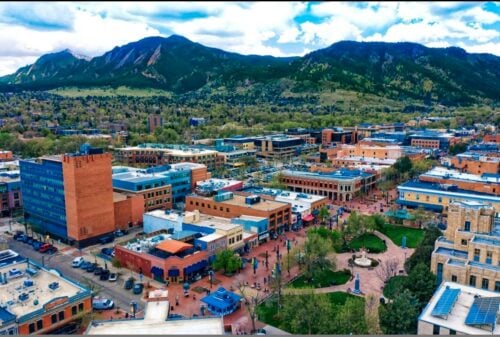
Local Energy Rules is produced by ILSR’s John Farrell and Ingrid Behrsin. Audio engineering by Drew Birschbach. Featured Photo Credit: SLV Native via flickr.
For timely updates from the Energy Democracy Initiative, follow John Farrell on Twitter or Bluesky, and subscribe to the Energy Democracy newsletter.
ILSR's 2-minute explainer video covers the basics of networked geothermal heating and cooling systems for local leaders and residents.
How New Haven financed a municipal geothermal network with a Green Bank loan and tax credits.
Boulder's voter-approved climate tax has funded local climate action since 2006. Its lessons are ones any city can use.
Solar is ready. Thanks to utilities, the rules to connect it to the grid aren't.