Community solar provides a way for people without the financial means for solar on their rooftops and people who don’t own suitable rooftops to reap the benefits of renewable energy.
Community solar programs may be established by lawmakers or regulators. A community solar policy enables virtual net metering, which allows many individuals to be credited for the generation of a single solar installation. The policy should also create a competitive market that allows independent power producers to develop and own community solar installations (sometimes called gardens).
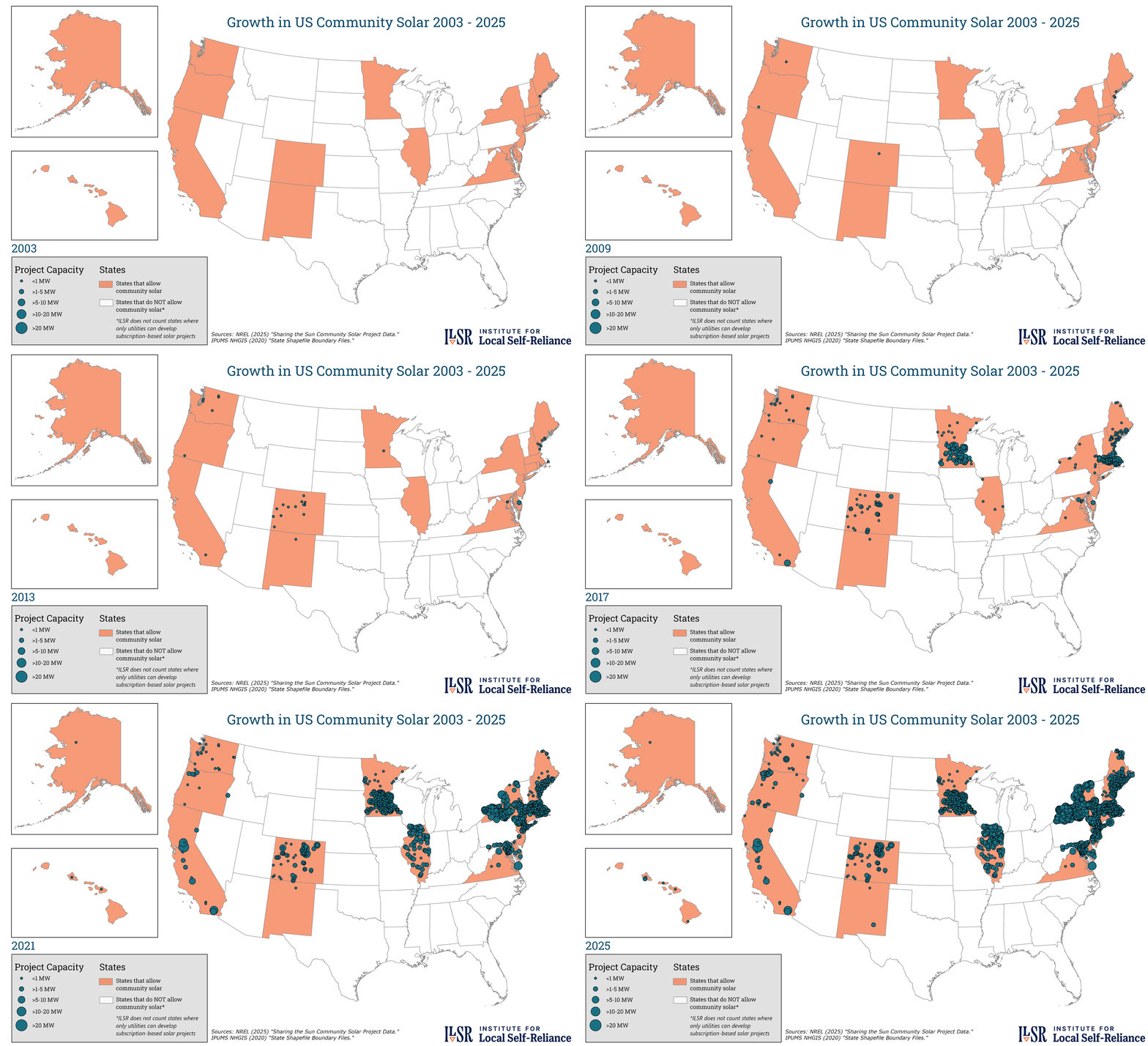
Wondering if your state allows community solar? Explore ILSR’s Community Solar Tracker for a map of states with enabling policy and data on each state’s installed generation capacity, updated quarterly.
Thanks to community solar, households and businesses can support solar on a local children’s museum, house of worship, or public housing project. These subscribers get to see solar in their community and see savings on their electricity bills. Community solar developers may promote other benefits, such as increased resiliency, local job creation, or multiplied financial returns — all of which are boosted when the project is locally-owned.
Featured Reports
Beyond Sharing: How Communities Can Take Ownership of Renewable Power
Equitable Community Solar
Featured Fact Sheets and Guides
State Community Solar Programs
State Community Solar Policy Comparison Table
Community Power Scorecard
Recent ILSR Community Solar Resources
Community Solar Tracker
Explore the latest quarterly update on community solar capacity.
A 2nd State Puts Utility Performance Over Profits — Episode 264 of Local Energy Rules
Oregon tries to tie utility profits to climate, cost, and reliability targets through performance-based regulation.
Big Impact of Small Solar Quarterly Update: 2025 Q3
Find out how quarterly distributed solar capacity growth compares to that of other power sectors.
A Blueprint for Scalable Cooperative Solar Energy — Episode 257 of Local Energy Rules
What happens when you combine cooperative solar ownership with a clever standardized design meant to match the scale and capacity of local communities?
Related Topics
Local Ownership