A Local Self-Reliance Agenda for New York City: ILSR’s Memo to Mamdani
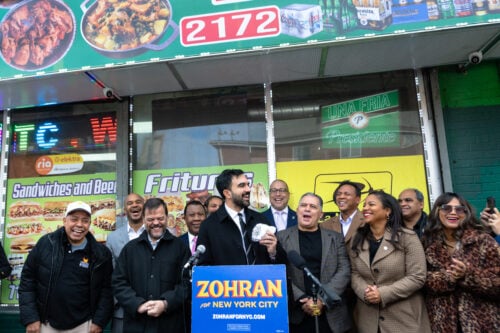
ILSR has delivered a policy agenda to Mayor-elect Zohran Mamdani’s transition team outlining how New York City can tackle its affordability crisis by reclaiming control from distant corporations and rebuilding local self-reliance.
New York is facing an affordability crisis rooted in a deeper problem: too many essential systems are controlled by distant corporations. This has left residents with high grocery and energy costs, substandard broadband and other essential services, disappearing local businesses, and a sense that they have no real agency over the things that affect their lives and the city’s future.
The Mamdani administration has a crucial opportunity to reverse this. When communities can shape the essential systems they rely on, they gain both practical benefits — lower costs, better service, more options — and a deeper sense of meaning, connection, and freedom. By promoting local self-reliance through public and community control over essential services, strong local businesses, and resilient neighborhood institutions, the city can make daily life more affordable, ensure essential systems work better, and expand democratic agency.
This memo outlines a Local Self-Reliance Agenda for New York City. Each section presents a mix of proposals. Together, these recommendations offer a blueprint for a city where New Yorkers are not dependent on corporate gatekeepers but have real power over the systems that shape their daily lives and where the city works for the people who live and work here.
New Yorkers need an energy system that is affordable, reliable, and aligned with the city’s climate goals. Achieving this will require breaking the grip of private utility monopolies, introducing competition across most of the electricity system, and shifting electricity distribution — a natural monopoly — into public control. Although the state holds significant authority over energy policy, New York City can play a pivotal role in advancing change.
Implement a Community Choice Aggregation program New York City could choose for itself where to source its electricity rather than relying on ConEd. Community Choice Aggregation (CCA) — also known as municipal aggregation — is a program that allows local governments to procure electricity on behalf of their residents and businesses from an alternative supplier, while still utilizing the existing utility provider’s transmission and distribution infrastructure.
Direct city officials to intervene in utility regulatory proceedings City climate goals often rely on successful state regulation of for-profit utility companies. New York City officials should formally intervene in utility regulatory proceedings whose outcomes matter to the city, including those that impact the cost of electricity and climate pollution. The city can participate both as a major customer and as a representative of residents and small-business consumers.
Add New York City’s voice to the momentum for public power There is momentum growing for public power in New York state. For example, the Hudson Valley Power Authority Act would convert Central Hudson into a publicly owned utility to lower rates, accelerate clean energy deployment, and increase benefits to the communities it serves. New York City should use its voice to spotlight public power as a key solution.
Streamline residential solar permitting with SolarAPP+ Rooftop solar in Australia costs one-third of what it does in the United States, largely because municipal permitting is far faster and simpler. New York City can help close this gap and drive down the cost of solar by adopting automated, instant permitting for residential solar projects within the city. The Solar Automated Permit Processing Plus (SolarAPP+), developed by the U.S. Department of Energy’s National Renewable Energy Laboratory, is an online tool that streamlines the permitting process. By adopting SolarAPP+, the city can accelerate local solar development while reducing administrative burdens and improving city operations.
Fast-track planned municipal clean energy projects New York City should develop and procure its own clean energy projects to reduce its energy costs, provide clean power to residents, increase community resilience, and promote local economic development. One promising approach is networked geothermal, which uses the earth’s stable temperature to heat and cool multiple buildings through shared infrastructure, lowering operating costs compared to individual systems. The city can build on city-led feasibility studies from 2022 and prioritize these projects in neighborhoods with the greatest need. It can also support community-driven projects like Sunset Park Solar in Brooklyn.
Financial Sector
As the banking and finance sector has grown increasingly concentrated — dominated by a handful of megabanks and marked by the loss of local institutions — New York City’s residents, small businesses, and small developers have found it harder to obtain affordable loans and competitive banking services. Some neighborhoods have become devoid of bank branches. Small community banks and credit unions are deeply tied to their communities’ interests and are the strongest lenders to small business owners, but they have been disappearing for decades. The handful of megabanks that have dominated the industry — many based in New York City — swindle their customers and taxpayers to plump shareholder pockets, while failing to meet the financial needs of New Yorkers.
Set conditions for designated bank eligibility The city collects billions in revenue each year and deposits it in designated banks, a list that the NYC Banking Commission selects every year and includes the biggest banks in the industry. The commission should condition this designation on goals that promote fairness and equitable lending, including fostering access to affordable capital for small businesses. For example, to be designated as a bank, financial institutions should meet a target lending threshold for New York City’s small businesses.
Invest the city’s pension funds and other cash accounts in local banking institutions State and local pension funds hold $4 trillion in investments, including $1.3 trillion in purchased loans. But most of these investments are national or international, not local. By investing pension funds and other cash accounts with local banking institutions — particularly CDFIs and community banks — the city could boost these small-business lenders’ liquidity, enabling them to make more small-business loans. The Fresno County Employees’ Retirement Association (FCERA) did something similar in the first few months of the COVID-19 pandemic to help local lenders better meet their small-business clients’ needs.
Establish a public bank North Dakota is the only state in which community banks have flourished in recent decades, owing to the state’s public bank. The Bank of North Dakota, the only one of its kind in the country, works in partnership with local banks and credit unions to expand their lending capacity. The New York City mayor’s office should push for the creation of a municipal bank in the city, which would likely require state legislation to establish the necessary legal framework, like the New York Public Banking Act.
“When communities can shape the essential systems they rely on, they gain both practical benefits — lower costs, better service, more options — and a deeper sense of meaning, connection, and freedom.”
A Local Self-Reliance Agenda for New York City
Groceries
Creating city-owned grocery stores is an important step toward eliminating food deserts and ensuring all New Yorkers have access to affordable, healthy foods. But once open, these stores will face the sameanticompetitive tactics that undermine the city’s independent grocers and bodegas today. A central problem is price discrimination: when grocery suppliers give large chains lower prices and other favorable terms, while forcing smaller, independent retailers to pay more for the same goods. This means local grocers have to compete on inherently unequal terms, with those operating in low-income neighborhoods (where people can least afford to pay more) most at risk of closing. While federal law bans price discrimination, the law has gone largely unenforced for decades.
Support the NY State Bill on grocery price discrimination To protect both city-run grocery stores and the city’s independent grocery retailers, City Hall should lend its support to the Consumer Grocery Pricing Fairness Act(A09212/S008563), which would give state enforcers and private plaintiffs the power to stop price discrimination in the grocery industry and ensure a fair, level playing field for all food retailers in the state. Combined with commercial rent control measures as discussed above, this bill would help city-run grocers and the city’s many independent stores and bodegas survive and thrive, giving shoppers consistent access to affordable food no matter the borough or neighborhood.
Internet Access
High-speed Internet access is core infrastructure for life in the 21st century. Yet the lack of affordable broadband continues to drive a digital divide that prevents many New Yorkers from fully participating in the city’s economic, educational, and civic life. Although broadband technology has advanced tremendously, monopoly control of this essential infrastructure has left many residents disconnected, underserved, or paying too much for substandard service. Community-scaled Internet Service Providers (ISPs) have consistently demonstrated that they can deliver faster, more reliable, and more affordable Internet. New York City has multiple tools to expand digital access by advancing community-based broadband.
Revive the Internet Master Plan New York City’s Internet Master Plan was an ambitious effort to build affordable broadband access across the city. At its core was a proposal to spend over $150 million to create fiber and wireless open-access networks in underserved neighborhoods — networks that any provider could use to compete. Mayor Eric Adams shelved the plan, replacing it with spotty and costly initiatives that ultimately did not address the logjams created by telecom monopolies. Reviving the Internet Master Plan would directly address the underlying cause of expensive, substandard broadband — a lack of competition — and put the city on a path to universal, high-quality, and affordable Internet access.
Deploy city-owned fiber to public housing and subsidized housing Multi-tenant environments — especially public and subsidized housing — offer some of the best opportunities to improve broadband connection speeds and lower prices for the families who need it most. Nearby Newark, for instance, has a publicly owned fiber network that reaches dozens of high-density buildings, allowing it to work with third-party Internet Service Providers to deliver first-class connections at below-market rates. This unlocks telehealth, microbusiness, remote work, education, and citizen-engagement opportunities for residents. Investing in projects like these in New York City could also connect government buildings, resulting in significant long-term savings across city operations.
Help promote and enforce the state’s affordability requirement In January of 2025, the state of New York passed the Affordable Broadband Act, which required the largest ISPs in the state to offer a $15/month, minimum-quality connection to the 1.7 million residents who previously qualified for the federal Affordable Connectivity Program. California has since followed suit, projecting hundreds of millions of dollars in annual savings for residents at a cost of just one percent of annual revenues for the biggest ISPs. Yet these corporations have a long history of obscuring and sidestepping such mandates, making it difficult for those who qualify to get service. New York City should join nonprofits and community groups in educating residents about the availability of this affordable option and help ensure that providers comply with the law.
Collect accurate data from Internet providers For more than 20 years, the federal government has failed to collect accurate data. New York City should marshal evidence showing the areas that ISPs serve, the speeds they are actually delivering at what price points, and other data, such as latency and reliability.
Strengthen broadband procurement policies Governments are often the largest purchaser of telecommunications service within their boundaries and can use that power to shape the market. First, New York City should prioritize contracting with local broadband providers for public agency connections. Large national providers may be more administratively convenient, because they can connect many locations with a single contract, but they routinely resist procurement policies designed to curb consumer abuses and ensure fair, effective service. Local providers, by contrast, are often already meeting these higher standards. By favoring them, the city can support the development of more competition in the market. Second, as a condition of doing business with the city, broadband contracts should require strong privacy protections for all subscribers and mandate that providers make their middle-mile infrastructure open-access, allowing any ISP to lease access at reasonable rates.
Pharmacies & Local Healthcare Access
Local pharmacies are vanishing across the city, creating “pharmacy deserts” and cutting residents off from a crucial source of health care. A key driver of this is the outsized power of pharmacy benefit managers (PBMs). A poorly regulated part of the health care industry, the dominant PBMs steer customers toward their own mail-order and retail pharmacies and squeeze independent pharmacies with reimbursement rates that are often below cost. To preserve access to health care, New York City must hold PBMs to account and ensure a level the playing field for local pharmacies.
Drop New York City’s PBM contract with Express Scripts The city’s main PBM for prescription benefits for most municipal employees and retirees — Express Scripts, owned by the health insurance giant Cigna — is one of the three dominant PBMs that capture at least 70 percent of the market and have a history of overcharging public health plans and cutting reimbursement rates to competing independent pharmacies. The city should drop its contract with Express Scripts and either opt for a contract with a smaller PBM or administer benefits directly, as some states are doing. The Ohio Department of Medicaid, for example, jettisoned PBMs in 2022 and created its own system for paying for medicines. The result has been millions in savings for the state while boosting dispensing fees for pharmacies.
Small Business
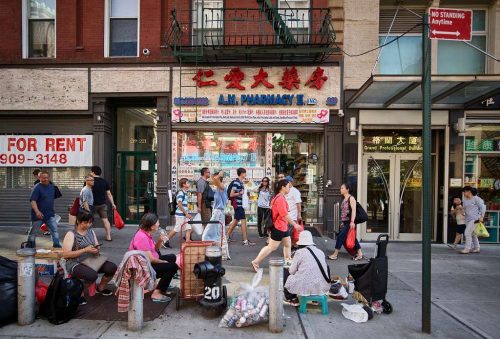
New York City’s small businesses face mounting pressures — from rising rents and a lack of capital to overly complex regulatory systems and costly tollbooths created by monopoly middlemen like Amazon, Visa, and DoorDash. Their struggle has direct consequences for residents. Small businesses are a big part of what makes life in the city great. They sustain the everyday services neighborhoods need to function, create the competition that keeps prices in check, and ensure New Yorkers have real options — all while distributing economic power more broadly. To reverse their decline, policymakers must curb the ability of dominant corporations to use their market power to disadvantage smaller competitors and adopt policies that enable community-based businesses to grow and thrive.
Enact commercial tenant protections and fair lease renewal standards Small business tenants lack even the most basic rights and protections. Landlords can decline to renew a lease with minimal notice, and they’re under no obligation to negotiate lease renewals in a fair, transparent, or good-faith manner. This imbalance in power is exacerbated by the fact that local businesses often create much of a space’s value themselves, by making improvements and driving customers to that location. These sunk costs make businesses even more vulnerable in the negotiation process. The city should pass legislation that gives commercial tenants more rights in the renewal process, including a timeline for lease negotiations, the right to a 10-year lease with a renewal option and, in instances of dispute, recourse to binding arbitration. The Small Business Jobs Survival Act, which has faced strong resistance from real estate and finance lobbies, is an example of this kind of needed policy.
Enable small businesses to own their spaces One of the most effective ways to give small businesses long-term stability is to help them own the spaces they occupy. Ownership protects them from rent increases, gives them an opportunity to build equity, and keeps them rooted in their neighborhoods. The city can advance this by encouraging or mandating the creation of commercial condominiums in both new and existing buildings and by offering incentives — such as density bonuses or, when allowed by state law, property tax credits — to developers who make storefronts available for purchase by small businesses. The city could also provide assistance to small business owners seeking to buy their spaces, including low- or no-interest financing, mortgage loan guarantees, and grants to help cover closing costs. It could also support the creation and expansion of community ownership models like commercial land trusts that ensure that storefronts and other spaces remain permanently affordable for New York’s local businesses (as Philadelphia’s Kensington Corridor Trust does).
Expand the supply of small, affordable commercial spaces There are several distinct threats to the supply of small commercial spaces. First, in many parts of the city, landlords are financially rewarded for keeping storefronts empty, either holding out for future rent spikes or using inflated valuations to secure more favorable financing. This speculative dynamic shrinks the supply of small, affordable spaces for independent businesses, drives up rents, and leaves commercial corridors pockmarked with long-term vacancies. New York City should counter this by enacting a vacancy tax on empty storefronts, targeting the structure of landlords’ incentives. Doing so would require state action, such as through the passage of New York Senate Bill S6804.)
Second, the city’s commercial real estate market increasingly favors large-format spaces suited to national chains, as property owners and developers combine smaller storefronts to attract those tenants, reducing the supply of viable spaces for independent businesses. In Astoria, for example, a Target store replaced a thriving cluster of small businesses, including a Key Food grocery store, driving up nearby commercial rents and increasing vacancies. New York City can counter these trends by using zoning and land-use tools to preserve small-footprint spaces, require a mix of modestly sized, affordable units in new development, and prohibit multiple storefronts from being merged into oversized, chain-oriented footprints.
Adopt policies that direct more of the city’s procurement spending to local small businesses The city’s large stream of spending offers a powerful tool for strengthening local economies, catalyzing startup growth, opening doors for entrepreneurs facing systemic barriers, and promoting competition. New York City should embrace procurement as an economic development strategy by prioritizing local suppliers and streamlining their path into the bidding process. Phoenix offers one model. For more than a decade, the city has focused its procurement systems on reaching out to and building a pipeline of local suppliers. For purchases between $32,000 and $250,000, city staff aim to secure price quotes from at least three local small businesses.
Ban dynamic pricing in city contracts, restrict Amazon purchases, and create transparency Amazon has persuaded thousands of cities, counties, and school districts to shift routine purchasing onto its platform, often under contracts that abandon competitive bidding and rely on dynamic, algorithm-driven prices. This drives up costs, reduces competition, eliminates accountability, and sidelines local suppliers that frequently offer better value. To protect public dollars and ensure fair competition, New York City should restrict agency purchasing from Amazon and adopt a policy prohibiting dynamic pricing in city contracts.Equally important is ensuring transparency. In sharp contrast to our experience with other cities, when we requested spending records from New York, the Office of the Comptroller directed us to submit requests to each of the city’s 62 agencies. Few responded. The city should provide complete and searchable payment records online with standardized coding and item-level data from P-cards.
Create an E-commerce platform for New York City’s residents and local businesses Amazon’s sustained dominance of e-commerce is a product of the illegal exercise of market power. The company’s dominance has led to higher consumer prices, a degraded user experience, and prohibitively high fees for the small businesses that depend on its platform. As federal and state antitrust enforcers pursue action to break Amazon’s grip, the City can also take steps to open up the market for local businesses and residents by creating an easy-to-use public e-commerce platform for the city’s local businesses and residents. (It could potentially adapt an existing platform model, such as that pioneered by G-Commerce for government-focused marketplaces now operating in South San Francisco, Long Beach, and other cities.) To support the use of the platform, the city could provide seed funding and incubation to create local delivery businesses that would provide same- or next-day delivery for goods ordered on the platform.
Make small business voices a standing part of city governance A key way to build smart policies that meet the needs of the city’s small business leaders is to meet and engage with them to better understand their challenges. As Mayor-elect Mamdani did during the campaign, it’s crucial to hear firsthand from business owners about, for example, the high cost of doing business and the challenges of navigating the city’s complex and demanding regulatory environment. The city should institutionalize regular open meetings, listening sessions, sector-specific roundtables, and other forums for city leaders to hear directly from the owners and employees of local businesses. This engagement will ultimately foster more entrepreneurship and stronger economic development.
Strengthen partnerships with community-based small business organizations To better address the needs of New York City’s small businesses, the administration should strengthen partnerships with organizations already supporting local entrepreneurs. The Pratt Center for Community Development provides vital support to immigrant business owners, advances urban manufacturing through its Made In NYC initiative, and promotes cooperative models for institutional food procurement. Similarly, the Yemeni American Merchants Association represents a significant share of the city’s bodegas and delis and plays a crucial role in organizing small businesses and elevating their concerns. Deeper collaboration with groups like these could ultimately lead to the creation of a New York City–based Independent Business Alliance (IBA). IBAs focus exclusively on supporting and growing local, independently owned businesses, and when aligned with local governments, they are highly effective at implementing programs and policies that foster resilient, community-centered economies.
Waste, Composting, and the Circular Economy
How New York City manages the materials discarded by residents and businesses has significant implications for cost, environmental health, and local economic activity. Disposed material doesn’t just go “away”; it fuels a multi-billion-dollar industry dominated by a few big waste companies that extract resources and wealth from local communities. A different approach would produce different outcomes. Community-based composting, repair, and zero-waste programs treat discarded materials as assets, reducing waste, creating jobs, enhancing soils in urban gardens, building neighborhood resiliency, and supporting independent businesses.
Support community-based composters The ecosystem of local, community-based composters in New York City has long been a model for local and distributed composting. Community composters provide co-benefits beyond sustainable organics management, including community education, green jobs, youth engagement, climate resilience, food system support, and greening of urban spaces. The city’s 2024 decision to cut funding to its robust community composting program was devastating to the network of local groups. The NYC Community Composting Network has since received some temporary funding, but many community composters were hit hard by the initial funding cut and would immensely benefit from support and partnership with the city. ILSR’s network includes over sixty community composters in NYC that we can connect the Mayor’s office to. Touring some of these sites would be informative and inspiring.
Ensure New York City’s Organics Collection Program achieves its intended goals The city’s 2023 decisionto make residential organics collection mandatory in all boroughs came with budget cuts to the city’s robust community composting program, as well as a city-run organics collection program. In reality, the city-collected food scraps are sent for co-digestion at wastewater treatment plants, despite the city’s claims that the material is composted. This circumvents the circular picture of composting that is marketed to residents. Mixing source-separated food scraps with wastewater byproducts introduces a range of toxins, producing a contaminated product not suitable for agricultural soils. This is a missed opportunity for NYC soils that need high-quality compost for growing local food, greening neighborhoods, and supporting climate resiliency. Local composters must be re-centered in the city’s efforts to divert organics from disposal and climate planning.
Elevate community composting as a rodent mitigation strategy The former administration made headlines for its war on rats, but there remains much to be done. In addition to education efforts and proper set-out of wasted materials, local composting programs can play a key role. Compost Power, for example, is a New York City-based composter that partners with the NYC Housing Authority (NYCHA) to run six composting sites serving public housing communities. NYCHA recognizes Compost Power’s site management practices as aligned with its integrated pest management approach for eliminating rodent pressure in public housing. ILSR’s webinar, Keep Compost Local: A Roadmap for Public-Private Partnerships, featured NYCHA and Compost Power as presenters.
Prioritize zero-waste businesses and programming that boosts economic activity When identifying businesses and programs to boost the city’s circular economy, consider supporting zero- or low-waste grocery stores and repair-and-fix-it cafes. Encouraging local businesses and programs to invest in reuse, repair, and recycling/composting when necessary has been shown to boost the economy. Austin, Texas, for example, has previously credited its Circular Economy Program with a $1.1 billion boost to total economic activity and the creation of over 6,000 permanent jobs. DC’s Ditch the Disposables grant program could serve as an excellent model for spurring innovation in the transition from single-use disposable foodservice ware to reusables that support local jobs.
Support Intro 696 to expand local composting capacity in all boroughs Proposed NYC legislation Intro 696 seeks to have the city’s Department of Sanitation (DSNY) ensure that 180,000 tons of permitted compost capacity is available in each of the city’s five boroughs. Brooklyn Borough President Antonio Reynoso is a strong supporter of community composting, as outlined in his 2025 report “Expanding Composting in New York City.” DSNY continues to oppose the proposal for increased capacity outlined in Intro 696 and Reynoso’s report. We urge the new administration to support this bill.
About the Institute for Local Self-Reliance: The Institute for Local Self-Reliance (ILSR) is a national research and advocacy organization that partners with allies across the country to build an American economy driven by local priorities and accountable to people and the planet. Whether it’s fighting back against the outsize power of monopolies like Amazon, ensuring high-quality, locally driven broadband service for all, or advocating to keep local renewable energy in the community that produced it, ILSR advocates for solutions that harness the power of citizens and communities. More at www.ilsr.org.
To get in touch, please contact ILSR Communications Director Reggie Rucker at [email protected]
New York City’s Ambitious Broadband Plan Is A Shadow Of Its Former Self
In 2020, New York City officials unveiled a massive new broadband proposal they promised would dramatically reshape affordable broadband access in the city. Instead, the...
In the New York Times: The Real Reason Your Groceries Are Getting So Expensive
Stacy Mitchell explains how big retailers exploit their financial control over suppliers, threatening independent grocers and increasing prices. Enforcing the Robinson Patman Act could help.
Why the 21st Century Antitrust Act is Critical for New York Small Businesses
Rampant market power abuse is endangering the economic dynamism that New York small businesses generate. State lawmakers have an opportunity to level the playing field.