Senate’s vote shows that lawmakers are “ready to take action to lower prices.”
Washington, D.C. (May 13, 2026) — Ron Knox, senior researcher and policy advocate at the Institute for Local Self-Reliance (ILSR), issued the following statement commending yesterday’s vote by the New York Senate to pass the Consumer Grocery Pricing Fairness Act, sponsored by NY Senator Cordell Cleare.
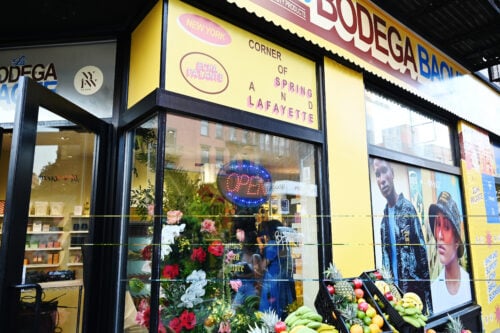
“The Senate’s vote to pass the Consumer Grocery Pricing Fairness Act shows that lawmakers understand the inherent unfairness in the grocery industry today, and that they are ready to take action to lower prices and help defend New York’s small grocers and bodegas.
“Small grocers in New York have faced the same systemic discrimination at the hands of powerful suppliers and massive chain stores that has plagued independent supermarkets around the country. If enacted, the bill would help lower grocery prices in two ways: by ending higher prices suppliers charge to smaller grocers, and by ensuring more small stores can survive and compete for customers’ business.
“ILSR commends Senator Cleare for her clear-eyed leadership to ensure fair markets for businesses and affordability for consumers. The leadership of Senator Cleare and her counterpart in the Assembly, Assemblymember Micah Lasher, have sparked hope among small grocers and bodegas in New York that have been systemically overcharged by powerful suppliers and have seen their ability to stock and sell essential products unfairly cut off.
“We now call on the New York Assembly to advance this crucial bill and send it to Gov. Hochul’s desk to enshrine it in law. Doing so will ensure consumers, communities, and independent grocers benefit from fair competition and open markets.”
The Consumer Grocery Pricing Fairness Act prohibits price discrimination in the grocery industry. Price discrimination in this context happens when chain stores use their size and power to force food manufacturers and farmers to give them discounts and preferential treatment that aren’t offered to smaller stores. While price discrimination has been illegal under the Robinson-Patman Act since 1936, the law has been under-enforced for much of the past half-century.
If the Consumer Grocery Pricing Fairness Act is passed into law, it will give New York’s attorney general the power to sue in state court to ensure fairness within New York’s grocery market, while bright-line thresholds would ensure the law targets only the largest, most powerful retailers and suppliers operating in the state. The law would also ban “access discrimination,” in which food suppliers and manufacturers sell some goods to large, powerful retailers while cutting off access for smaller stores and regional chains; and “channel discrimination,” in which some kinds of stores, such as dollar stores or big box club warehouses, get preferential prices or package sizes.
Knox has worked alongside a coalition of small supermarkets, cooperatives, and policy advocates to support the bill and educate lawmakers about the harmful effects of price discrimination and the considerable benefits the bill would bring to New York shoppers, grocers, and communities.
For over five decades, ILSR has worked to advance policies that disperse economic power and strengthen local communities. In recent years, we have researched and advocated to address the problems and downstream effects of price discrimination in the grocery sector.
INDEPENDENT BUSINESS INITIATIVE
Sign up for updates on the fight for a level playing field
How Corporate Consolidation Broke America’s Grocery System
ILSR's brief explains how corporate consolidation fueled high food prices, and the critical role independent grocers play in building resilient local food systems.
Ron Knox details how a lawsuit against Southern Glazer’s Wine and Spirits marks the Biden FTC’s attempt to restore a fundamental principle of fairness to...
The Policy Shift That Decimated Local Grocery Stores
The decision to stop enforcing a single law decimated the independent grocery market and led to the dominance of big chains.
###
About the Institute for Local Self-Reliance
The Institute for Local Self-Reliance (ILSR) is a national nonprofit research and educational organization founded in 1974. ILSR has a vision of thriving, diverse, equitable communities. To reach this vision, we build local power to fight corporate control. We believe that democracy can only thrive when economic and political power is widely dispersed. Whether it’s fighting back against the outsize power of monopolies like Amazon or advocating to keep local renewable energy in the community that produced it, ILSR advocates for solutions that harness the power of citizens and communities.