Small-scale solar is one of the fastest, most cost-effective tools we have to transition the U.S. to clean energy — but utilities and policymakers keep stifling that potential. Unnecessary permitting and grid connection hurdles are causing costly delays that small solar customers, the grid, and the climate cannot afford. Simple reforms can cut costs and red tape, quickly generate significantly more clean energy, and save customers thousands while building resilience to grid outages and natural disasters.
Small Solar is Fast
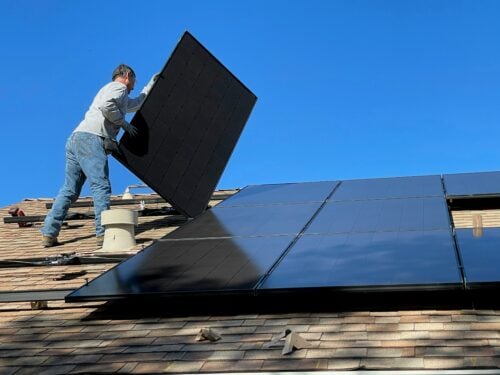
A rooftop solar array can be installed fast — in just 2 to 5 days, on average. Since hundreds or thousands of projects can be done in parallel, small solar can add up quickly, especially compared to large utility-scale solar projects that take several years to build. Several states with significant solar markets have leveraged the speed of small solar to get a lot of clean energy online quickly. New York, New Jersey, and Massachusetts all rank in the top 10 for solar energy capacity, with 70 percent or more of their solar installed by customers on rooftops or in community solar projects. California and Arizona similarly relied heavily on distributed solar, with small projects contributing 46 and 39 percent, respectively, to their top 10 solar state status.
Small Solar Saves Customers Money
Studies show that even in the largest solar markets, like California, small solar delivers big savings to all grid customers — including non-solar customers. Not only can it be installed quickly, but by producing energy right where energy is consumed on the distribution grid, small solar avoids high delivery costs. Solar panels often produce power when grid demands are highest, offsetting high energy use from air conditioners on hot and sunny summer afternoons and relieving the need for new power plants to meet it. When paired with energy storage, small local solar not only cuts down demand for utility-provided power, but also provides resilience to storms and grid outages to local customers. The benefits of small solar added up to $2.3 billion in cost savings to all California customers in 2024 alone.
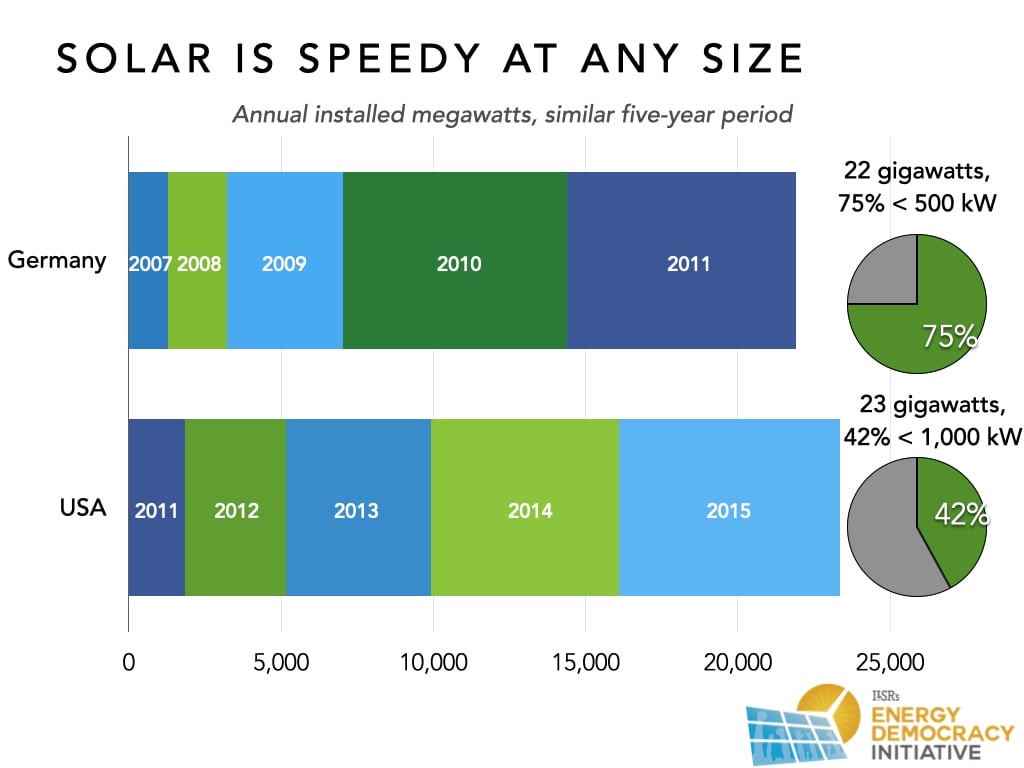
Small solar’s speed, capacity, and cost advantages have already been proven in a head-to-head international case study. When both Germany and the U.S. were expanding their solar markets around 2010, both countries deployed 22 to 23 gigawatts of solar over a five-year period (in Germany, ending in 2011; in the U.S., ending in 2015). Three-quarters of Germany’s solar installations were small enough to fit on the roof of a Target or Walmart. Only about 42 percent of U.S. installations were similarly small. Even relying on much more small solar, Germany ended up with about the same amount of solar capacity as the U.S. and drove its solar installation costs down much more effectively, as well.
We’re Still Overpaying for Small Solar (and Much More)
Cheap, fast, small solar could be even cheaper for American consumers — if we cut unnecessary red tape like our peer countries. Focusing on small-scale solar has also meant that Germans pay way less than Americans do for the same product. In 2012, Germans paid less than half what Americans paid for solar — by the late 2010s, the gap had widened further. Recently, Germans pay one-third what Americans do for solar projects on homes and small businesses.
Australia benefits from a similar phenomenon. One-third of Australian households have rooftop solar, with these small scale projects accounting for over 60 percent of total solar capacity, and the cost of rooftop solar projects is around $1.00 per Watt installed in 2025, one-quarter of what Americans pay for solar.
Our peer nations are getting more clean energy for less money because they’ve cut more red tape on small solar installs than the U.S. If the U.S. can slash small solar costs, it will also unlock cascading savings on everything from electrified heating to electric driving. Here’s an illustration from electrification expert Saul Griffith: “If your electric truck in Idaho were running off Australian rooftop solar, those miles would cost 1/10th of what it costs to drive with gasoline.”
Cut Red Tape to Unleash Small Solar’s Benefits
The U.S. could capture enormous benefits by using the simple, proven strategies that have cut prices to one-third or one-quarter what customers pay here. Australia has online and one-day permitting approvals, compared to the patchwork of permitting policies across U.S. localities that add weeks and significant fees to solar projects. Australia implemented national standards for installations, required certifications for installers, and adopted an audit system that reduces tedious inspections and reviews required in the U.S.. Similarly, going solar can be made super simple as in Germany, where small “balcony solar” arrays for apartments can be simply plugged into a standard outlet to lower the resident’s electric bill. The U.S. is behind — but simple fixes can catch us up.
Small solar can do big things quickly: produce a lot of clean energy, reduce grid costs, cut electric bills. Policymakers must remove unnecessary barriers to unlock its power.
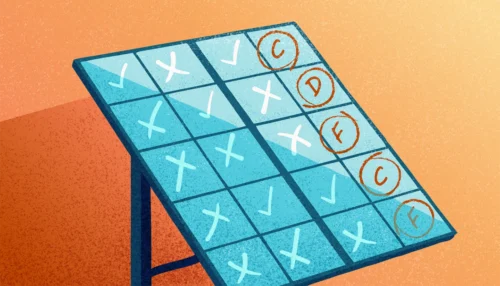
ILSR’s annual scorecard shows which states have the best policies for giving communities control over their electricity and protection from utility abuses.