States Can Stop Utilities From Strangling Local Solar — Episode 273 of Local Energy Rules
Solar is ready. Thanks to utilities, the rules to connect it to the grid aren't.
What makes faith communities such attractive hosts for resilience hubs?
For this episode of the Local Energy Rules Podcast, host John Farrell is joined by Rev. Dr. Ambrose Carroll, Sr., CEO of Green the Church.
Listen to the full episode and explore more resources below — including a transcript and summary of the episode.
Apple Podcasts Spotify YouTube
Podcast (localenergyrules): Play in new window | Download
Rev. Dr. Ambrose Carroll, Sr.:
So we wanted to be a repository and a catalyst that when others saw all the things happening, more congregations would lean in.
*****
John Farrell:
What makes faith communities such an attractive host for resilience? Four Bay Area Black churches will be hosting solar, batteries, and electric vehicle chargers due to a collaboration with a nonprofit called Green the Church. The energy investments will double down on the churches as places of community support, even as they reduce energy costs and increase funding for ministry. Rev. Dr. Ambrose Carroll, Sr., CEO of Green the Church, joined me in February 2026 to talk about the origins and the growth of this Oakland-based nonprofit. I’m John Farrell, director of the Energy Democracy Initiative at the Institute for Local Self-Reliance, and this is Local Energy Rules, a podcast about monopoly power, energy democracy, and how communities can take charge to transform the energy system.
*****
John Farrell:
Reverend Carroll, welcome to Local Energy Rules.
Rev. Dr. Ambrose Carroll, Sr.:
Thank you so much, John. I’m very glad to be here this morning.
John Farrell:
I was hoping that you could start a little bit, I like to ask this of all of my guests, and tell me about how your background and experience growing up helped you make the connection between faith and environmentalism. I was reading some about your bio and I thought it was really interesting how those two things came together for you to get you to Green the Church.
Rev. Dr. Ambrose Carroll, Sr.:
Yeah. I always tell people I grew up here, the family grew up in Oakland, California. I think I came when I was like 11 or 12, but the family is originally from Hollywood. That’s Holly Louisiana down in the woods.
John Farrell:
Love it.
Rev. Dr. Ambrose Carroll, Sr.:
And so my dad was an agriculture major at Southern University, my mom, a school teacher. And then he himself was called into the ministry. Early ’70s, part of the civil rights movement was there in Atlanta when they buried Dr. King and all those pieces. And he pastored in North Carolina, St. Louis, Santa Ana, California. Finally, we moved up to Oakland. But all throughout my childhood, I have two older brothers, three younger sisters. We would always travel home to Holly during the summers. And with my grandfather chopping wood, we’d turn the corner, we’d go to Shreveport, drive another hour into the very rural areas. Right now, it only takes about 20 minutes to get from Shreveport to our home. But we turn the corner, there’d be oil pumping in the land adjacent. But my grandma and granddad’s house didn’t have running water, but they had a lot of soul food, a lot of corn was growing, a lot of greens and a lot of purple hull peas and watermelon that we could just reach our hands down and pull out the heart and sit on the porch.
And so we grew up in a very kind of land-based space, even though we would travel back to the urban areas. So I just think as I grew, the acknowledgement of land, our connection to land was always pretty close. And then when I attended seminary, I heard somebody teaching about if we are Christian and if we are responsible, then we ought to not throw stuff on the ground. And I think that really kind of struck me how we take care of the planet. So I think that’s kind of my leanings into the space.
John Farrell:
I want to dive right into the project that got me excited about talking to you. So I came across you through a story that was about solar energy, batteries and EV chargers that were being installed for churches in the East Bay Area in California. Can you talk a little bit about what those projects have meant for their faith communities?
Rev. Dr. Ambrose Carroll, Sr.:
Yeah. So a lot of our projects are … Green the Church is very holistic. We talk about food and green theology. And then of course, we don’t own a lot of skyscrapers, but the Black community owns a lot of church buildings. So just I care for those buildings and all of them need to be retrofitted, clean air, clean water. And so Glad Tidings, Church of God in Christ, pastored by Bishop Jerry Macklin, we had a national summit at his church in 2018, and he had a vision. He saw that Cal State East Bay, old Cal State Hayward, had EV charging or actually had solar and solar arrays and parking arrays. And he said, Why can’t we have something like that on our campus? And a few months later, I mean, I went to work trying to … I was talking to Bloom Energy and talking to other outlets about how to get something like that done for him.
His campus sits on about four or five blocks and we’ve done a lot of work in community. It used to be a very South Hayward, a lot of drug traffic, a lot of unpleasantness when the church moved in, but he did a lot of work putting housing together, job creations for community, and so it’s a thriving space and he wanted to add the energy piece.
And so finally I met my friend, Dr. Anthony Kinslow, who’s a Stanford graduate PhD who teaches at Stanford and had put together some software that could do feasibility studies at cost that could make it easier. And then he developed the concept of doing solar, battery and electric vehicle charging so that we could do a revenue generating microgrid. And so we shared that with Dr. Macklin and he came afoot. And so right now we have three other projects in, one in Berkeley at the Wake Christian Center, one in Oakland at 23rd Avenue Church of God, and one in Palo Alto at University AME Church.
So those communities will be able to be resilient hubs. They’ll be able to bring down their cost of electricity to zilch. They’ll be able to have their own charging stations for the community. A lot of these communities don’t have that infrastructure yet, so they’re kind of first out putting that infrastructure in, be able to do some workforce development as well for young people and perhaps some ancillary businesses.
John Farrell:
That’s amazing, the wraparound. And I just love the intentional community focus and how it kind of grew out of the other ministry that was going on in the community.
Rev. Dr. Ambrose Carroll, Sr.:
Yeah.
John Farrell:
I was kind of curious about the workforce development. Did you actually have community members who were able to do apprenticeships or be trained and to help install the different projects?
Rev. Dr. Ambrose Carroll, Sr.:
Yeah. So again, our first project at Glad Tidings won’t be live until April 1st, and the other ones are yet being built out. Our first workforce development piece though is happening within Green the Church where we’ve been able to hire about five or six young people to teach them the software that Dr. Kinslow has created around feasibility studies and energy audits. They have been learning the trade of data collection in these buildings. So they’re able to go into the buildings, do all the measures, look at all of the equipment, take all note and put all the information into Conserve, which is our system. And so that’s been our first kind of portion. When we did Glad Tidings, of course, because they’re already a thriving community, already a lot of entrepreneurs. So when it came time for some of the jobs around painting, some of the jobs, some of the odd pieces, they had companies that they knew of in the church that could be contracted for those pieces.
So we’re excited to see the growth and development of that. Our hope is to have at least 50 more contracts in the state of California by the end of this year. We already have about between 12 and 15. So we’re excited to see how much of that we’ll be able to do here in the East Bay and other places in the state.
John Farrell:
Think you kind of already told this a little bit, but in this terms of these particular four projects, it sounds like they came out of that summit back in 2018, 2019, but you founded Green the Church before that. Isn’t that right? Is this what you had in mind when you founded it? Is this exactly a through line of like, this is what I had in mind, this opportunity came about and we’re doing it? Or was there something a little different?
Rev. Dr. Ambrose Carroll, Sr.:
Yeah. So Green the Church was found in 2009. I was a Green for All fellow with Van Jones and learning a lot about environmentalism, sustainability, people of color, people from coal mining areas doing environmental justice, but there were not a lot of church folks. And then I’ve joined Interfaith Power and Light. I think I was still in Colorado, and that was fantastic. I found my tribe, I found people of all faiths doing this work, really leaning in, but not a lot of people of color. So we decided to start Green the Church. Really, the question that continued to be posed to me was, is the Black church and community interested in environmentalism and sustainability?
And my answer was yes, but we just speak a different language and we talk about things differently. So we set out to first of all be a repository. This is where you come to know where the Black church and community is doing environmentalism and sustainability. We may call it revival. We may call it something different, but this is the interpretation of what’s happening. And this is where we can be a place of welcome and a place of connectivity so that we can bring the Black church to the table of interfaith movements and all those pieces. Kind of wake up the sleeping giant that is the Black church on this social movement.
So we wanted to be a repository and a catalyst that when others saw all the things happening, more congregations would lean in. So at the heart, that’s really what we’re about because we started so early. And again, so when I started, it was not to be any of these entities. And even now, when I talk, there are a lot of things that need to be done, but there are a lot of other people I believe that will come into the movement and we really want to help our pastors and clergy to stand up more and more organizations like this.
There’s a young lady, she’s doing health and she’s doing nutrition. And so she just put out a book last week and we want to help her put out her book. We want to help her move throughout the congregations to teach and to train in that. Our three pillars are amplifying green liberation theology, building sustainable practices, which includes renewable energy, building efficiency, and then building power for political and economic change. So our vision is big and broad. It’s very holistic. This is just a part of it. The thing I like about this is that it allows a church and community to really do all of it because with this micro grid, that church and community can lead, even if other churches don’t have all of the pieces, can lead in that resilience hub movement. Because there is revenue now coming in, we can now hold more classes and do more community building around decarbonization.
So this was not the vision itself to kind of have a for- profit business going on. We really just wanted to amplify that it’s happening and then help others to kind of grow. So this is a piece of the pieces.
John Farrell:
I love it. One of the things I thought was really interesting and like a connection I made in reading your story was I just did an interview recently with some leaders from the Community Lighthouse Project in New Orleans, which for folks who listen to the podcast, that was episode 262. I was kind of curious, why do you think it is that faith communities are so often sought out as hosts for clean energy within a community? When I think about a resilience hub, a church is like one of the first things I think of. Maybe the other one might be like a school. What do you think that is that even people I think who are maybe not connected to a church seem to think, “Oh, this is the kind of community institution where this would make sense.”
Rev. Dr. Ambrose Carroll, Sr.:
Yeah. For me, sometimes language catches up. For us, the church has always been the space in place. Again, I say it, our communities, we don’t own a lot of skyscrapers. The truth is we don’t own a lot of the buildings or our facilities. We don’t necessarily own the YMCA. We don’t own the soul food place. We lease there. We don’t own the barber shop or the building that the barbershop is in. We may own the funeral home and we own the church building. So when it comes to where can our communities host these kind of pieces, it really comes down to the practicality of what we have. And when you have a marginalized people who do own some homes, and even with that, because we all own homes in the same place, the banks put less value on our homes just because we own the homes.
And when you look at marginalization and all of those pieces, people who couldn’t afford to buy homes, though our grandmothers, they sold chicken dinners and fried chicken and sweet potato pies in order to put their nickels and dimes together to buy a church building after white flight, and then they had note burning services. And so the space is what we really have. And a lot of our community organizations, things like Operation Push with Jesse Jackson, they had to use the church building, the NAACP, any other kind of community events or organizations, most of them use the buildings because this is the only space that is actually ours outside of the schools and maybe leasing some land from the government to grow food until the government changes and then they take the lease. So for us, there’s not a lot of other options in terms of what we hold together.
John Farrell:
One of the things I thought was really interesting about the project in New Orleans was when I interviewed Joshua about it, he said that it was community led to get the projects developed to get the solar and batteries at these places of worship. And that what was happening though as a result of that is that the city had started reaching out to these places and saying, “Hey, when we’re coordinating our disaster response for a hurricane or whatever, can we work with you? Can we stage some of our stuff at your place? Because now you’ve built this resilience place that is going to be there, that’s going to have resources.” Have you had similar connections with public officials? I think you said a project in Berkeley, Palo Alto in Oakland. Have folks reached out to say, “Hey, this is actually an opportunity for us to work public and faith community together?”
Rev. Dr. Ambrose Carroll, Sr.:
Yeah, definitely. I think because I’ve been in it so long, it’s always come together. So we are already working with organizations and community that have been talking about community hubs. I pastored in Berkeley, and so our city councilman was doing an emerald piece years prior. So we’ve always been part and partial. My church in Berkeley was already considered a hub because the people on the block, we would store all of our equipment there, connections with the fire departments and all these pieces. But the churches, a lot of our churches have already been connected, whether it’s with the Red Cross or other spaces and places for disaster preparedness as much as possible. The micro grid just brings on a different level. In fact, this Providence Baptist Church in San Francisco got a donation from Prince. Prince gave out some money and the church was offered solar panels.
This had to have been in 2005 or so, and they voted because they had to change their lights in order to get in. They had to pay some money for the lights. It won in the trustee board by one vote. But Brother G.L. Hodge, who was over the buildings and grounds for the church, the church administrator was able to take that project and put that solar up. When after Katrina, he and the mayor of San Francisco went to New Orleans and looked around and found, of course, when they went to the 9th Ward and saw the destruction, they came back and said they had to have a plan. So they started Resilient Bayview where Providence actually led the charge to make connections with the Red Cross, with local pharmacies, drug stores, with the local food markets. They even found that the heavy equipment, which is used after earthquakes was in Bayview Hunters Point, but that the plan, if anything, happened was for that equipment to go out of Bayview Hunters Point to the arena first.
So they had to reconstruct and say, “No, we got to take care of the people here as well.” So they were able to develop a resilient plan. And that church is one of the first that moved from … We like to do it the other way around, but they moved from solar to building efficiency, to recycling, to food waste, to this total notion of being the hub. And that is pretty much the model church for us in the Bay Area. And when we think about these pieces, because they’ve been doing it early and they’ve been doing it long without a lot of fanfare and without a lot of connection, G.L. Hodge was then on the board of Interfaith Power and Light, came to knowledge. So then that became a connecting point.
*****
John Farrell:
We are going to take a short break. When we come back, I ask Reverend Carroll about the policies that helped Green the Church develop these resilience hubs, how they’ve developed financing for these projects, and the role of EV chargers at the hubs. You’re listening to a Local Energy Rules podcast interview with Reverend Dr. Ambrose Carroll, Sr., CEO of Green the Church.
Hey, thanks for listening to Local Energy Rules. We’re so glad you’re here. If you like what you’ve heard, please help other folks find us by giving the show a rating and review on Apple Podcasts or Spotify, five stars if you think we’ve earned it. As a bonus, I’ll gladly read your review aloud on the show if it includes an energy-related joke or pun. Now, back to the program.
*****
John Farrell:
When I think about other people who will hear this podcast, one of my hopes is that folks are inspired to think about, how do we do this somewhere else? How do I do this in my community? I’m curious if you have some sense of what policies were particularly helpful, like maybe state policies in California, federal policies. Is there anything that specifically targets faith communities for being resilience hubs, for example? One of the things that’s come up a lot in these conversations, for example, was that the federal changes to the tax credit to direct pay, were going to make it easier for not-for-profit institutions like government buildings or churches to take advantage of the incentives for solar and batteries and things, which is fading out obviously at this point, but what do you see as being the really crucial pieces of policy or rules that have made it easier for this to happen? And what should people be looking to do in order to make sure that this kind of project can happen in their community?
Rev. Dr. Ambrose Carroll, Sr.:
There’s an old adage, kind of do what you can. And there’s always some pieces. I met a young lady, she pastors in Cleveland, Ohio, and she said that she had started a church and they were trying to figure out food and they just started growing food and then they didn’t have much protein. And she said, Well, maybe she should do fish. And somehow in Cleveland, Ohio, African-American lady who started a church started doing, what is it, aquaponics. I was like, When? How did that happen? So I think it’s about ingenuity. I understand that there are some congregations that were able to benefit from the tax credits and a lot move to ownership towards solar, and I think that’s great. I think what Revolve does with leases around solar is also a great option. I think that there are options out there. I think as this particular piece fades, it’s still good practice, it’s still good for the air quality, it’s good for all of us to decarbonize even at a price.
And again, I talk to people, again, our grandparents, they sold chicken dinners and sweet potato pies in order to have these buildings. And I think we have to do the same type of things even to decarbonize. So a lot of it is education. It’s understanding heat pump technology and understanding when it’s time to replace some things that maybe we ought to do it this way. So for me, and I understand public dollars, but there are a lot of private dollars as well, and sometimes it’s understanding what we want. Somebody said, If you don’t know what you want, you can’t have it. So I think that’s important. For us at Green the Church RED — Renewable Energy Development, because we were kind of early movers, we were able to get some of the funding from the Biden administration that allows us to repeat our process and to kind of take care of the development upfront for a lot of these projects.
And because ours is revenue generating, then it’s a little bit different because we have people who want to invest in all of those pieces. But for me, really, it’s so much that we can do. And so it’s really trying to teach and educate so that everybody can do what they can.
John Farrell:
You mentioned having a model in place then when the Biden administration policies were passed that allowed you to capture some of them. Does that also mean then that some of the projects that you have in mind might be a little harder than you initially envisioned because of the rollback of so much federal support?
Rev. Dr. Ambrose Carroll, Sr.:
No, not necessarily. Again, for us, you talk about funding that comes, large scale funding that comes in terms of loans that gives us the ability to do four or five projects, bring them to delivery, bring revenue out of them, and to start over again with that funding. So we’re okay to do projects and do the next projects because they’re not giving more money, it doesn’t stop us. Our next question is, what are the other philanthropic organizations that also leaned in to help? And we’re working, whether it’s Kresge or possibly the MacArthur Foundation and others that sees value in what we’re doing in community that will allow us to move forward. But again, our model is a little different because it is capital. But if you’re doing it for your church in your space in place and attempting to cut costs, that 30% coming back from the government made it more palatable for people. And then without that, then what is it going to take for people who just want to purchase solar or some of the other pieces?
John Farrell:
Can you talk a little bit, I just want to make sure that I understand well, how does the financial model work and what role does Green the Church play relative to the actual faith institution itself in terms of coming up with the money to finance the projects, that kind of component of it?
Rev. Dr. Ambrose Carroll, Sr.:
Yeah. So Green the Church is part owner of Green the Church Renewable Energy Development Corporation, which is an LLC developed by myself and Dr. Anthony Kinslow. That organization was able to bring in some small interest loans from the federal government, small interest loans from philanthropic organizations to give us between six and $10 million to do projects so that we can do the development of projects. So we can develop the projects at the churches, purchase the equipment, set everything up, and then get long-term financing for those projects. When we get long-term financing, then we can go and do other projects.
John Farrell:
Right. That’s great. And you said earlier, I was actually curious to come back to this, that you have, I think it was something like 15 more projects already kind of either in development or-
Rev. Dr. Ambrose Carroll, Sr.:
Contracted.
John Farrell:
Yep. But then you have as many as 50 that you’re expecting to do in the near term.
Rev. Dr. Ambrose Carroll, Sr.:
Yeah.
John Farrell:
That’s amazing. Do you see this continuing to grow? Is it 15 in the next couple years, then 50, then 500 at some point? Is that-
Rev. Dr. Ambrose Carroll, Sr.:
It is.
John Farrell:
Is it kind of feed on itself in that way where it can continue to grow?
Rev. Dr. Ambrose Carroll, Sr.:
Yes. Green the Church is in presently California, Florida, Louisiana, Georgia, Texas, and I may be missing one, that we have Green the Church state representation where we’re building out all of our pillars and really bringing in pastors and clergy. Right now, we also are working on a hub, two hubs in Atlanta and one in Detroit. But because we really see California, Florida, and Maryland as places that the hub will work pretty well because of the cost of electricity, but we’re able to contract with these churches to say this is something that they want to do. And so this is something that the plan is to have over a thousand in the next five years in the country because again, we have a lot of the need for this kind of infrastructure and electric vehicle charging is great. And I understand where we are with the current administration, but when you look globally and internationally at this piece, we want to be a part of helping move into a better space where we’re not trying to live off of dead things, but that we’re being powered by the sun and by things that are alive.
And the need is great to turn that tide. And we believe that in our inner cities and rural places and spaces, there’s a lot of opportunity because a lot of us won’t purchase electric vehicles if we don’t see a place and a space where we can charge them up. And so we’re really excited about the potential and really excited about how this partnership can bring us further into community with like-minded people so that we can cross some barriers and really understand how to love and care for one another in this country and abroad.
John Farrell:
Can you talk a little bit about what the components are of the different … I mean, I’m sure every project is a little bit different, but you’ve got some amount of kilowatts of solar, you’ve got a battery with some amount of capacity. I was curious what kind of EV chargers, if they’re level two or level three chargers to get into the weeds here.
Rev. Dr. Ambrose Carroll, Sr.:
Well, it is a mix. They are both, and most of our chargers are biodiversible. And so we do slow chargers and fast chargers. Like at Glad Tidings, we have, I think, a total of 16 ports. I think three of those are slow chargers and the rest are fast. And again, we put in more solar because we want to take care of the planet, but we also want to send energy to the EV charging stations directly so that energy can be purchased through charging. All of our present models are not as big. We do have smaller ones, but the next phase, we’re leaning towards larger congregations for the next phase, for the next 50 or so. And we do want them to be as like as possible, so that’s our vision at this point.
John Farrell:
I’m curious to what degree you have found other people, I mean, folks like myself who read about the work that you’re doing, but maybe who have reached out and said, oh my gosh, I want to do this in my community. I assume you have a lot of people who are interested in replicating what you’re doing and curious if any of those have come to fruition.
Rev. Dr. Ambrose Carroll, Sr.:
Yeah. Well, again, we are yet pretty early. We’re excited to roll out on Glad Tidings in April and begin to procure that data and then really walk it through. And we believe all the good stuff is always for everybody. So I believe to kind of bring this to bear in other congregations, whether they be Episcopal or Muslim or what have you, that if communities are interested in this, we are definitely interested in helping communities build this out. A part of our piece is revenue to the congregation, but also using a lot of that revenue to build out a 10-month, once a month event for the community that’s educational, whether that’s STEM for the young people, whether that’s classes about utility use, if it’s classes about HVAC systems and home use, we want to do those pieces and build out community in Hayward. They call their hub South Hayward Energy. And so then all of those events will be co-sponsored by Green the Church RED and South Hayward Energy to bring that to bear.
So that’s what we ask as a part of this micro grid. So it doesn’t matter we’re at a Jewish synagogue or what have you. Once this microgrid is established, that is established not just for the people who attend worship in that church or in that congregation, but it’s for people within that community, whatever that community might look like that we reach out. And that’s a very interesting thing because being an African American community and even in the Bay Area, all of these African American churches are not necessarily in African American communities any longer because of gentrification and movement. But I think it gives us a great opportunity to be in community, to not just come in and go out. And that’s whether it’s more fluent African Americans who drive to West Oakland to go to worship and then drive out, or less affluent African Americans who drive to Berkeley to that church and have worship and then drive out.
It’s still, this space and place is built in community. And churches in Berkeley are very interesting. Most of them are not on the main thoroughfare. They’re built in the community. They’re kind of built internally. And so those spaces and places, how they serve the people who live around are very important. And if we can find ways to do that, I think it’ll bridge some gaps. Oh, I know it has the potential to bridge some gaps in terms of people and in terms of silos that people often put themselves in. So really excited to get to that work.
John Farrell:
Is there anything that I didn’t think to ask you about, about the work that you’ve been doing that you think people who are trying to do climate clean energy work might benefit from? It actually made me think of when you were talking about joining Interfaith Power and Light, that you found your people, but there weren’t a lot of Black folks who were part of Interfaith Power and Light.
And I’ve also just really appreciated the way that you’ve talked about a different language maybe is the way I’m thinking of it that the Black church is using to talk about sustainability. I don’t know if there’s more that you wanted to say there. Maybe something about what white folks who are working in climate and often think about greenhouse gas emissions and technical terms could benefit from. Are there lessons that we could learn or are there other things that you’ve been working on just in general that I have missed that I should have asked you about?
Rev. Dr. Ambrose Carroll, Sr.:
No, no, but I think that’s a good question. I think that’s part and partial of why Green the Church exists. We have an ambassadors program that we’re trying to pick back up. In terms of we want to be the place where Black folk learn about the environmental movement, but also where non-Black people really learn about the Black church itself. Because a lot of times there’s a lot of assumptions, there’s a lot of … But people don’t even know if they can come, if they can be in space and place. And so everything that we do is very welcome based. And we try to ensure that even though we’re … And when we first started, of course, I’m Interfaith Power and Light. Sally Bingham is one of my mentors. And even our climate revival in Hayward, sometimes it’s more white folk and Asians than it was Black folk, because we’re trying to get the Black folk on that.
“Y’all come on. It’s all right. It’s good.” So I mean, that’s us pulling together to try to ensure that we are bringing this population to bear. But then understanding that there’s a lot of education because the Black church is not one thing. It’s not even one social economic thing. You got different churches with different social economic space and places, different theologies, different … But it’s a fun space. And so we also have an interfaith group that I host so that we stay and remain together in this walk. So if anything, I’d say lean in. One thing we’ve been talking about this year is not only do we have the Black church that we serve, individuals, but we have people like Harriet Beecher Stowe or Frederick Douglass, those people who were abolitionists that this movement needs abolitionists today. It never can be done in silos that the freedom that’s needed in the world always needs people who will stand up.
And so the church is going to be what it needs to be. We need all people to lean in with the spirit of the abolitionist.
John Farrell:
Well, Dr. Carroll, thank you so much for taking the time to talk with me about Green the church and the projects that you’ve been working on, but also kind of that broader vision of how you’re connecting people to space and place and to one another and into community. Just such a lovely story. And I just wish you and the folks that you’re working with all the best in terms of continuing to grow the different projects across California and all the other places that you’re working.
Rev. Dr. Ambrose Carroll, Sr.:
Thanks, John. Appreciate your spirit and appreciate your work. It’s been great chatting with you today.
*****
John Farrell:
Thank you so much for listening to this episode of Local Energy Rules with Reverend Dr. Ambrose Carroll Sr., CEO of Green the Church, about the four resilience hubs being built in partnership between his organization and four Black churches in the San Francisco Bay Area. On the show page, look for a link to some photos and news stories about the projects. We’ll also have a link to Local Energy Rules episode 262 about the similar community lighthouse project in New Orleans, and episode 259 with Jeremy Kalin about the waning days of the federal direct pay tax incentive for clean energy. Local energy rules is produced by myself and Ingrid Behrsin with editing provided by audio engineer Drew Birschbach. Tune back into Local Energy Rules every two weeks to hear how we can take on concentrated power to transform the energy system. Until next time, keep your energy local and thanks for listening.
“Our three pillars are amplifying green liberation theology, building sustainable practices, which includes renewable energy, building efficiency, and then building power for political and economic change.”
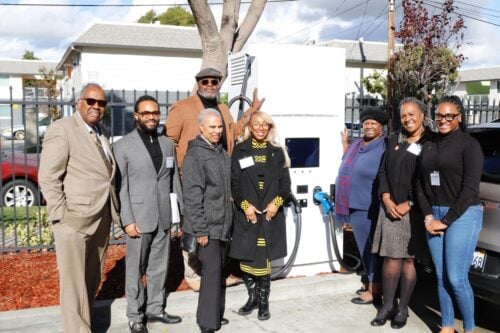
Rev. Dr. Ambrose Carroll, Sr. works with other faith leaders to transform Black churches in the San Francisco Bay Area into green energy hubs. His organization, Green the Church, installs solar arrays, batteries, and electric vehicle charging stations on church campuses. These microgrids provide clean power while also generating revenue for their host congregations. The flagship project at Glad Tidings Church of God in Christ in Hayward, a community just south of Oakland, serves as a model for urban resilience.
“A lot of our churches have already been connected, whether it’s with the Red Cross or other spaces and places for disaster preparedness as much as possible. The microgrid just brings on a different level.”
Black churches are often the only large buildings and land areas owned directly by their communities. This community ownership makes them ideal candidates for serving as resilience hubs that maintain power during disasters, and are already at the heart of the community. Rev. Carroll sees the throughline between historic legacy of Black churches as epicenters of the civil rights movements and now nodes of local energy resilience and economic opportunity. By retrofitting these community buildings, Green the Church expands their role in a grassroots movement addressing not only air quality but also self expression and economic liberation.
“We want to be the place where Black folk learn about the environmental movement, but also where non-Black people really learn about the Black church itself.”
“A lot of it is education. It’s understanding heat pump technology and understanding when it’s time to replace some things that maybe we ought to do it this way.”
Green the Church does more than just lower utility bills and help keep the lights on, Rev. Carroll explains; it creates jobs too. Young community members are taught how to use specialized software to conduct energy audits and feasibility studies. And local entrepreneurs within the church community can win contracts for the resilience hubs’ construction and maintenance. For Rev. Carroll, this holistic approach serves to connect environmental theology and self-determined local economic investment.
“Because we were kind of early movers, we were able to get some of the funding from the Biden administration that allows us to repeat our process and to take care of the development upfront for a lot of these projects.”
To launch and sustain Green the Church, Rev. Carroll partnered with Dr. Anthony Kinslow to form a specialized development corporation. They leverage low-interest federal loans and philanthropic support to fund the initial equipment and installation. Once projects go live, the generated revenue pays back the capital, provides the seed funds for new projects, and lowers costs for the congregations that host them.
“We really see California, Florida, and Maryland as places that the hub will work pretty well because of the cost of electricity.”
With contracts already active in several California cities, Green the Church is looking to build a nationwide movement. The organization is conducting outreach in multiple states including Florida, Georgia, and Texas. Their ambitious goals involve establishing one thousand faith-based hubs across the country within five years, bridging technical climate work and the spiritual heart of communities.
“We want to be a part of helping move into a better space where we’re not trying to live off of dead things, but that we’re being powered by the sun.”
See these resources for more behind the story:
This is the 268th episode of Local Energy Rules, an ILSR podcast with Energy Democracy Director John Farrell, which shares stories of communities taking on concentrated power to transform the energy system.
Local Energy Rules is produced by ILSR’s John Farrell and Ingrid Behrsin. Audio engineering by Drew Birschbach. Featured photo courtesy of Green the Church.
For timely updates from the Energy Democracy Initiative, follow John Farrell on Twitter or Bluesky, and subscribe to the Energy Democracy newsletter.
Solar is ready. Thanks to utilities, the rules to connect it to the grid aren't.
States can slash rooftop solar costs with instant permits and remote visits.
A solar-powered laundromat is changing daily life on the Pine Ridge reservation.
In some states, 30 cents of every dollar a customer pays to their electric utility goes to the utility’s shareholders’ profits. How widespread is this...