2026 Community Power Scorecard
2026 Community Power Scorecard
Discover how all 50 states and D.C. scored on key energy democracy policies
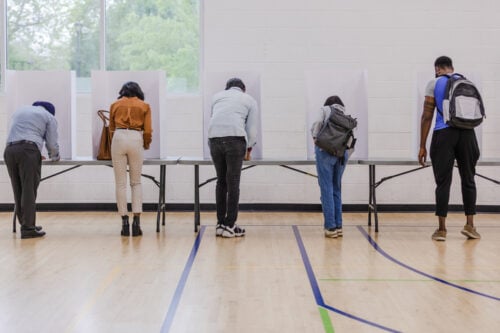
Skyrocketing electric bills, data centers, and utility accountability were top issues in the 2026 midterm elections, as voters all over the country moved decisively to take back control and challenge the power of Big Tech and corporate utilities.
Poor state energy policy grades on ILSR’s Community Power Scorecard foretold this political moment. No state earned above a C on this year’s Scorecard, which grades states on policies that give everyday people control over their energy sources and hold utilities accountable. Those policy failures have material effects on people’s lives — and those people turned out in record numbers to vote for more affordability, agency, and accountability in energy.
Read on for ILSR’s analysis of how the midterm elections affected the balance of power between utilities and communities.
Investor-owned utilities have been on top for decades, thanks to their monopoly power — but the 2026 midterms knocked them down a peg. Every year, the electric utility industry converts billions in ratepayer money into political power. Voters all over the country turned out in record numbers to challenge that power.
Voters rewarded Republican and Democratic candidates who promised to curb utility rate hikes and profits, punish poor service and preventable disasters, and root out corruption. Though state and local ballot measure results were mixed, voters made key moves to affirm community power and challenge monopoly utility power.
Michigan voters approved a historic measure to ban utilities from making campaign contributions in an effort to get utility money and influence out of politics. The overwhelming margin of the measure’s passage is a clear sign of voters’ frustration with monopoly utilities paying to influence their own regulators. The measure is the first of its kind, and will likely spark similar efforts in other states.
Community power triumphed in Colorado, where voters rejected a dark-money-backed measure to preempt local natural gas bans. The proposed constitutional amendment would also have given monopoly utilities legal authority to challenge environmental regulations, including air and water protections. Passing the measure would have threatened Colorado’s overall C grade on the Community Power Scorecard, dragging the state’s score on gas ban preemption policy from A down to an F. In voting down the measure, Coloradans fought back against special-interest political influence that would have blocked local decisionmaking.
In an election otherwise marked by stunning upsets, Goliath did beat David in Ann Arbor, Michigan. A grassroots public power campaign suffered a narrow loss in its effort to municipalize the city’s utility. DTE Energy, the city’s incumbent electric utility, used the typical industry playbook to defeat the measure — almost $2 million in opposition ads, threats of legal challenges, and bought-and-paid-for feasibility studies estimating improbably high costs of municipalization. Nevertheless, this public power campaign will likely continue to work toward a fully city-owned utility.
A measure to create a Clean Energy Fund passed comfortably in Eugene, Oregon. The measure’s success shows that communities are eager to fund local climate action in the absence of federal support — and they’re willing to make big corporations foot the bill. Eugene’s Clean Energy Fund proposal was modeled after a similar program in Portland that has raised a billion dollars (and counting) for climate justice projects by levying a small tax on large corporations.
AI hyperscale data centers suffered the most comprehensive defeat of the midterms by far. Across 10 states, voters passed or are on track to pass every one of 33 ballot measures to limit data center development — with about a dozen similar measures ahead in ongoing vote counts. Candidates who tarred their opponents as supporters of data centers won in Kansas, Ohio, South Carolina, Texas, and more. Voters even recalled the mayors of at least two cities due to their previous support of data center development. These results prove that communities can turn grassroots opposition to data centers into real political power at every level of government.
The people have spoken, but monopoly utilities have plenty of power moves left to play. Communities must continue to push their elected officials to make good on their mandate to make energy affordable and hold utilities accountable.
Start by exploring your state’s 2026 Community Power Scorecard page to see which energy policies need improvement.