A Coal Town Digs Deep for Municipal Clean Heat — Episode 267 of Local Energy Rules
How did this coal town ditch gas lines, win grants, and make municipal networked geothermal the cheapest heating option?
Learn about pending Minnesota legislation to enable distributed power plants and their potential impact on energy affordability.
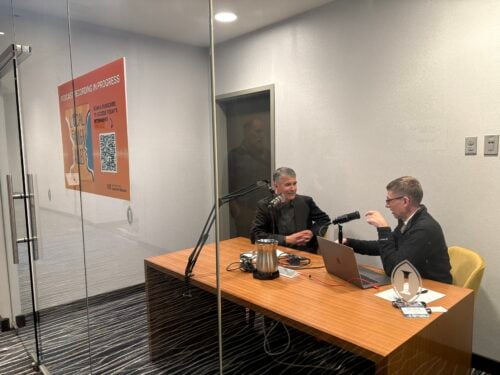
For this bonus episode of the Local Energy Rules Podcast, host John Farrell is joined by Minnesota State Representative Larry Kraft.
Listen to the full episode and explore more resources below — including a transcript and summary of the episode.
Apple Podcasts Spotify YouTube
Podcast (localenergyrules): Play in new window | Download
Larry Kraft:
You have so much more flexibility, resilience, but also the ability to provide for yourself and extract value yourself versus it all going to a centralized location.
*****
John Farrell:
Hey, you’ve stumbled on some bonus content from my two-day nine interview podcast recording marathon at the Gateway to Solar Conference in October, 2025. Consider donating to ILSR to keep conversations like this flowing. Now here’s my conversation with representative Larry Kraft where we discussed pending legislation to enable distributed power plants and their potential impact on energy affordability.
*****
John Farrell:
Well warmed-up for this conversation. Larry, thanks so much for joining me.
Larry Kraft:
It is great to be here, John.
John Farrell:
So I have heard obviously from the conference but from before that that you were working on policy related to virtual or distributed power plants, and I heard you describe in there you want to create a tariff for basically the outlines of how a program like this would work. Could you just summarize for folks who didn’t have the pleasure of being in your panel, how do you see this idea of distributed power plants addressing some of the pressing issues of affordability and climate change?
Larry Kraft:
Yeah, one of the things I’ve been looking at over the past couple of years is how do we make better use of our existing assets, our existing grid? We have to, from a climate perspective, we need to have a clean grid and then we need to electrify as much as we can on that grid. So the challenge, one of the things is we have to build a bigger grid, but that takes a long time and costs a lot of money, and yet our grid isn’t used to capacity nearly most of the time. So virtual power plants is a way of leveraging the tremendous amount of distributed resources that are out there and getting value out of them so that if a utility needs more power they can, one of the things they can do is they can go say, okay, I’m going to turn on a peaker power plant and get some gas fired electrons, which is not good from a climate perspective, but it’s no different to them than if they flip another switch and there’s some software run by a third party aggregator that sucks a bunch of electrons from batteries or that several other appliances that just, you know what, we’re going to delay your use, we’re going to shift your use a little bit. There’s no difference to the utility, but there’s a tremendous difference to the value that a customer can receive because that’s a value that they can be compensated for and that’s stuff that you don’t have to build, so it keeps downward pressure on rates as well.
John Farrell:
I was kind of curious about how this idea of distributing where all the resources are coming from means that to some degree communities could maybe be meeting more of their own needs locally rather than relying on a big utility to provide them with energy resources. I think about that a lot in the context of climate change where you need more local resilience because of course when a disaster happens, sometimes a larger grid goes down. How have you been thinking about how virtual or distributed power plants can help communities meet their own needs affordably.
Larry Kraft:
Excellent points. The resilience aspect of it is one, I didn’t even talk on the panel, but absolutely, and the thing is, utilities move slowly, individual customers and small businesses can move fast, and then when you start thinking about your, let’s say you have a EV or a battery or a smart thermostat and you realize that you actually can shift your usage and save money and also not need to take as much electricity from the utility, it’s a different way of thinking about things. And it was funny a bunch of years ago, I was in the tech space and I was very much involved when the internet was taking off and that was a transition from a centralized model where everything was these big computers in one place and decentralized to computers everywhere else, right? Smaller computers. It’s the same thing that’s happening now in the grid and you have so much more flexibility, resilience, but also the ability to provide for yourself and extract value yourself versus it all going to a centralized location.
John Farrell:
I’m really glad you brought up this idea of centralized versus decentralized. Now, one thing I’ve heard today already, there was a presenter over the lunch period who was talking about distribution capacity and having utilities own it. I’ve heard some questions that came up there and again in your panel about this idea of who would own things. How are you navigating this? Because I think you have, on the one hand, you have the incumbent utility who has a lot of information and knowledge about the system has access to capital at, well, in my personal opinion rather premium rates, but you also have this need for coordination of those resources that would be out there, the decentralized resources. You have this kind of interesting tension between utilities don’t really have a lot of experience running the grid in this way, but they have a lot of information, they have a lot of history, they had a lot of technical expertise. You have a lot of companies, you have a lot of individual homeowners, business owners like you said, who can move quickly. How are you thinking about wading through that as you consider your policy proposal?
Larry Kraft:
I got to tell you, this melange of stuff you talked about was makes this area so complex. I’ve spent a year talking to just about everyone I could about this, but the way I think about it makes sense, especially for Minnesota, is for innovation to happen to unlock distributed energy resources that can happen not limited by the speed of the utility is that we need to create an interface, call it a tariff, that will define how a utility will work with a third party aggregator to call energy resources to say, you know what? I’m going to flip a switch when I flip it. It means I need X amount, I need it this fast. Here’s how I’m going to compensate for it here, to create a structure and also to create clear description of here is the data that I must share with you in so doing this with that, I mean, any business will tell you that what they want in order to build success is they want consistency.
They want reliability. They want to know what the landscape looks like, so what the legislation is trying to do is to create that kind of situation that here’s how it’ll work and here’s what the utility must provide, the data that they must provide. There’s a lot of discussion about, well, who should own what, and that’s a very complex issue with the way we’re regulated in Minnesota, but regardless of how that works out, we need to provide really clear and actionable information for customers for third party aggregators to be able to rely and make business decisions on. That happened when we did net metering and community solar. We’ve had a tremendous, probably one of the best markets in the country because we defined some really clear rules.
John Farrell:
I really appreciate your focus on the rules. I’m thinking of a story from a while back actually that I think is related here in a funny way. So in the early two thousands, wind energy was kind of the key clean energy technology. It was being deployed, and there were some places in the country that were very windy where they were starting to get to the limits of their capacity, and I saw this new story about this one utility out, and I think it was in eastern Washington, and they were saying, we have this new strategies where we can add more wind to our system, but we’ll sometimes ask them to turn down the winch production a little bit, but that will allow us to put more total wind on the system. I was like, oh, this is super interesting. I wonder how they’re doing that.
I sent them an email, got on the phone with them and I was like, Hey, can you just tell me how is it that you’re doing this? I was thinking about this in the context of the rules that you’re talking about here. How will they know when to flip that switch? How will they know when to turn on these resources? He’s like, oh, we just pick up the phone and we call ’em. We’re just like, Hey guys, we’re a little high on energy right now. Can you just turn your turbines down a little bit? But what’s funny about that is when you have a few really big resources, that idea of picking up the phone and making a phone call, it could work. When you’re talking about this idea of distributed power plants, I mean, you alluded to this already, batteries, smart thermostats, electric vehicles, we’re going from tens of devices or tens of power plants to thousands, millions, millions of devices. It is going to be really important that we have clear rules and that we’re not relying on somebody making phone calls.
Larry Kraft:
I mean, that’s the demand response market, right? The largest part of it is still like, okay, in a big user shift your usage a little bit today, and the thing that’s so exciting about this is smart thermostats, EVs, heat pumps, all these things are starting to be deployed more and more en masse for their own reasons, right? EVs are just a better way of driving, right? Heat pumps can be more efficient in heating and cooling our homes, but within them there’s additional tremendous value if you can bind those together and say, you know what, instead of heating my home at 5:00 PM what if I preheated at three and I can do that and the utility will pay me some money or I’ll save a bunch of money by doing it at that time. It’s good for the consumer, but it’s also good for the utility. Then they’re not having to turn on the most expensive resource they have, which is those peaker plants. So I mean, we need to be thinking about this, but it’ll be millions if not billions of devices over time, and if we don’t do this, it will cost people more and our grid will be less reliable.
John Farrell:
There’s one other issue here that I keep coming back to when I think about how this will work effectively, and that is utilities in the structure that they’re in, and so I’m not saying this is their fault, but their primary way of making money right now is to deploy infrastructure, investing their own capital in it, and I keep thinking about distributed power plants is like we’re increasing the efficiency, which means, or at least offsetting some building. I think your argument is right, especially when we think about data centers about electrification, there’s going to be plenty of billing going on anyway, but I guess are you thinking about, man, we need to somehow incentivize the utility to want to do this or more of like we’re going to tell the utility that they need to do some of this and recognize they’ll have plenty of investment opportunities anyway, you’re thinking something else entirely.
Larry Kraft:
I think right now in the conversations I’ve had with some utilities, some IOUs, they’re seeing this demand coming and they don’t see an end in sight and they don’t have a way to meet it all. I think I’ve sensed a transition over the past year or two to yeah, it’s like yes, and. Now, that said, utilities are a certain structure, right? They’re a monopoly. They will act in a certain way, so it’s really important that we carefully regulate them, but I do think that there’s so much building that we need to do even with doing virtual power plants if we still need to build transmission because one of the things that the transmission lines will do is helps reliability and help with things like, okay, if the wind is blowing over in Idaho and not here, we can leverage that electricity, so we need to build a lot more anyway, and so I really think that folks should not have a scarcity mindset in this, that we need every tool in the toolbox. Now, as I said that said, we also need to go in eyes wide open. Utilities are a monopoly and they will act like a monopoly, and so we need to be careful about that and make sure it’s how they do things are regulated and sometimes we have to say, you must do this. That’s just part of the game. I think.
John Farrell:
I want to ask you a blue sky question here. You’ve got the pleasure or displeasure perhaps of having to work within the constraints of a system that already exists, whether that’s through city government, now it’s through state government. If you didn’t have to deal with how the system was set up today, you have a magic wand, what do you wish you got to work on? If you could just clear away the barriers of incumbency, inertia, the way the system has worked, how would you envision the energy system would be designed or how would you envision that it would work for communities? You were organizing with youth for many years who I think get to the advantage of coming into this sometimes not with these preconceived notions. Are there any times when you just think to yourself, I wish I could just say that we want to do X and not have to worry about people who are already in this space saying, no thanks. I don’t want to change.
Larry Kraft:
That’s such a hard question because you hit on two sides of me, right? When I work with young people, what I would counsel them is look, when you start hearing what’s politically possible and all that, you should say BS. This is their future that we’re talking about, so just figure it out. Just do it.
The other side is I do see a goal that we need to get to, and Minnesota has a certain situation that’s in right now and in achieving the goal, what’s not negotiable is we have to achieve the goal. We have to decarbonize by 2050, we have to hit our carbon free electricity by 2040. We have to do that. If the blue sky picture of, wow, how would I want energy to be set up? I don’t even have time to think about that because to change the system in Minnesota, let’s just say, would take years and during those years, my concern is we wouldn’t be putting enough energy on decarbonization, so I do take some constraints, but what kind of things do I think we do? We need to be developing. We need to be investing a half a billion to a billion dollars a year in weatherization and decarbonization, electrification. We’re not doing that. We have to figure out how to do that, so what do I want to work on? And I’m going to work on something to generate that kind of funding to do what we need to in Minnesota because physics doesn’t care and our kids’ future is not negotiable.
John Farrell:
Well, Larry, thank you so much for taking the time to chat with me about this. For what it’s worth, I think already your policy work on distributed power plants is threading that needle between how are we getting system change and how are we acting now? So kudos to you for finding a way to do that, and I look forward to hearing more about what you have coming up.
Larry Kraft:
Thanks, John, really enjoyed this.
*****
John Farrell:
Thanks for listening to one of my nine mini podcasts from the 2025 Gateway to Solar Conference with Minnesota Representative Larry Kraft. We’ll have links on the show page to my interview about distributed power plant policy with Shannon Anderson, episode 241, as well as my interview with Chris Rauscher about what distributed power plants are already doing. episode 203, a reminder that even these mini versions of Local Energy Rules are produced by myself and Ingrid Behrsin when editing provided by audio engineer Drew Birschbach, and as always, we’re talking about taking on concentrated power to transform the energy system. Until next time, keep your energy local and thanks for listening.
Minnesota State Representative Larry Kraft spends a lot of time thinking about how to support distributed power plants (DPPs), also known as virtual power plants. DPPs leverage a network of distributed resources, like batteries, smart thermostats, and electric vehicles, to improve grid efficiency and avoid costly, time-consuming grid expansion projects.
DPPs also offer customers substantial value. Specifically, prosumers who agree to use their devices in certain grid-benefitting ways are compensated for shifting or delaying their energy usage. Leveraging DPP assets also decreases reliance on expensive, climate-damaging gas-fired peaker plants. They can also help boost local resilience, and protect communities when the larger centralized grid fails.
Kraft recognizes that individual customers and small businesses can innovate quickly. And while incumbent utilities move slowly, those utilities, he says, nevertheless hold valuable information and technical expertise that are essential to implementing a successful DPP program. He’s aware of the political pull that the monopoly entities have, and recognizes that regulators have to be willing to mandate system changes.
Policy, Kraft says, must acknowledge and help manage this complexity. Specifically, Kraft advocates for a regulatory tariff to define the relationship between utilities and third-party aggregators. This interface must clearly outline data sharing requirements and resource compensation. For Kraft, achieving critical climate goals, such as Minnesota’s 2040 carbon-free electricity target, is non-negotiable, and DPPs will play a critical role.
See these resources for more behind the story:
This is the 258th episode of Local Energy Rules, an ILSR podcast with Energy Democracy Director John Farrell, which shares stories of communities taking on concentrated power to transform the energy system.
Local Energy Rules is produced by ILSR’s John Farrell and Ingrid Behrsin. Audio engineering by Drew Birschbach. Featured Photo Credit: Ingrid Behrsin
For timely updates from the Energy Democracy Initiative, follow John Farrell on Twitter or Bluesky, and subscribe to the Energy Democracy newsletter.
How did this coal town ditch gas lines, win grants, and make municipal networked geothermal the cheapest heating option?
Who should pay for upgrades to the high voltage transmission network?
San Diego may be the only city to have secured upfront funding from utility shareholders to make clean energy cheaper.
Oregon tries to tie utility profits to climate, cost, and reliability targets through performance-based regulation.