ILSR’s Brenda Platt Honored with Lifetime Achievement Award by US Composting Council
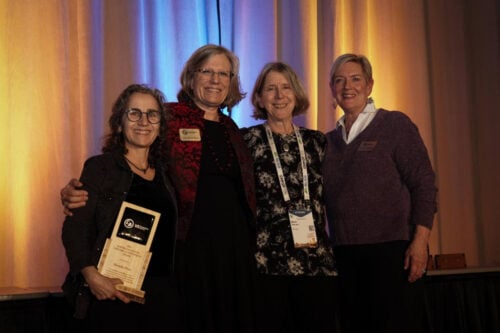
Brenda Platt was awarded the prestigious Jerome Goldstein Lifetime Achievement Award by the US Composting Council.
The Institute for Local Self-Reliance (ILSR) is proud to announce the awardees for year two of the Composting for Community Mini-Grant Program. Recipients include community gardens, farms, schools, tribal communities, and nonprofit organizations across New England coastal states and – for the first time – New York City. This opportunity was again made possible with the support of 11th Hour Racing, as well as an anonymous donor’s significant contribution towards the New York City applicants. In total, ILSR awarded $370,000 in $10,000 sub-awards to 37 grantees.
Projects are diverse in scale and operation but are united in their mission-driven, innovative approach to community improvement. Projects include:
Cities and states on the Eastern coastline of the US are particularly vulnerable to the effects of climate change, as has been exemplified by the extreme summer heat in New England and the recent flooding in New York City. At the same time, declining federal support for climate action and environmental justice means that many of the frontline communities and historically disadvantaged communities are left under-resourced. It’s vital to invest in local initiatives making an impact to combat climate change, divert food scraps, and build healthy soils in their communities. This program partially addresses these disparities by providing resources to the communities that have been historically underserved.
This year marks an expansion on last year’s pilot program. Read more about last year’s awardees.
Providence, RI
With support from non-profit partners Zero Waste Providence and Groundwork RI, Garden Time will expand on the existing composting project at OpenDoors, a public housing complex for formerly incarcerated individuals in Providence, RI. Garden Time will sustain a stipended Compost Steward position at OpenDoors, and this steward will help provide Garden Time’s formerly incarcerated Green Reentry trainees with expanded learning opportunities to develop technical skills for careers in composting.
Cranston, RI
The Pocasset Pokanoket Land Trust (PPLT) is a Rhode Island-based nonprofit serving Indigenous and BIPOC communities across Southern New England. With this grant, PPLT will expand its Indigenous Food Sovereignty composting initiative in Cranston, RI, and Springfield, MA. The project will install additional backyard compost units for Narragansett and Pocasset Pokanoket families; scale a small centralized hub for the Indigenous Roots Forever program; and design and pilot a covered Aerated Static Pile (ASP) system at the Tapley Court community garden. The work integrates Traditional Ecological Knowledge with proven composting practices to build soil health, increase garden productivity, and lower input costs. It will also provide hands-on training for youth and community members and formalize peer learning between the two sites. Finally, the grant supports planning for an Indigenous-led composting enterprise to begin to produce compost at a scale that can generate sustainable revenue.
“This grant will allow us to turn food waste into community power—growing healthier soil, educating our neighbors, and launching Wareham’s first composting initiative right where it’s needed most. It’s not just about compost; it’s about dignity, sustainability, and creating a model for local, inclusive environmental action.”
– Rachel Resendes, The Family Pantry-Damien’s Place
Hamden, CT
The Erdkinder program at Annie Fisher Montessori Magnet School in Hartford, CT focuses on the collection of food scraps as part of their school’s commitment to sustainability and the legacy of Maria Montessori. This program will support the Erdkinder’s microeconomy curriculum in partnership with Auerfarm in Bloomfield. Erdkinder students in 7th and 8th grade, operating as school leaders and young entrepreneurs, will manage the collection and processing of all school food scraps to convert this waste stream into compost for use at the Auerfarm site, where students work on sustainable farming practices. This program will provide a real-world lesson in leadership, sustainable waste management, and circular economics. It will also supply essential soil amendments for the Erdkinder farm plots. The program fosters practical skills, reduces the school’s ecological footprint, and demonstrates the potential for waste to become a usable part of the Erdkinder microeconomy.
New Haven, CT
The Community Placemaking Engagement Network (CPEN) is a Black-led nonprofit in Newhallville, New Haven, CT, dedicated to revitalizing underserved communities through environmental justice and local empowerment. CPEN’s Urban Soil Builders project will transform vacant lots into community composting hubs. Residents and youth from the neighborhood will compost food scraps into rich compost for garden and urban farm use. The project engages BIPOC youth and residents in hands-on training, green job skills, and soil restoration. With support from the 2025 Composting for Community Mini-Grant, CPEN will help build compost infrastructure to cultivate a community-rooted food and soil system to build local skills, restore local land, and nourish a shared sense of environmental responsibility in Newhallville.
Hartford, CT
North Hartford Partnership, based at the historic Swift Factory in Hartford, CT, operates a composting program that diverts food scraps from the waste stream by collecting organic waste from Swift’s nine incubator kitchens and NHP’s three affordable housing properties. In partnership with Blue Earth Compost, the program includes training for tenants, weekly collection, and redistribution of compost to local farms and community gardens to support soil regeneration and climate resilience.
“This grant supports our work in teaching the community that if you care for your environment, your environment will care for you. There is no clearer example than remediating the soil so we can continue to grow food, medicine, and native plants that support the local ecosystem for years!”
– Asmara, Ujamaa Garden
Portland, ME
The Cultivating Community project has two components. The first will build upon a successful 2025 pilot to expand a new community garden compost system across the City of Portland, ME’s Community Garden program. This grant will help them address longstanding challenges with urban community composting and meet the demand for soil development and nutrient management while sharing regenerative growing practices with over 500 participants. The second component of the project will develop and implement a new composting system to support immigrant farmers growing vegetables for subsistence and sale at the 62-acre Hurricane Valley Community Farm, which provides stable land access, training, and shared infrastructure and support to approximately 50 immigrant and refugee families.
Yarmouth, ME
The project aims to transform waste shellfish material into a valuable, community-based resource while addressing environmental, economic, and social justice priorities in Maine’s coastal communities. The Shellfish Repurpose with a Purpose project will collect oyster shells from restaurants and households to prevent organic shell waste from entering the traditional waste stream, reducing environmental burdens and landfill costs. It will also capture and use the biofoul that grows on oyster cages for compost.
Lewiston, ME
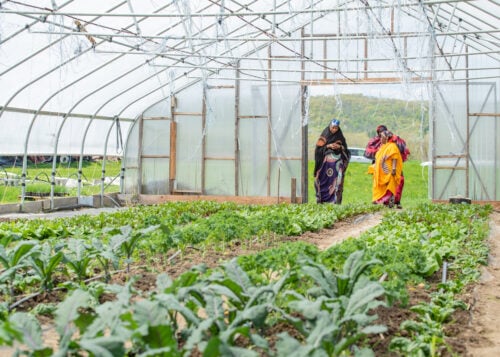
The Somali Bantu Community Association’s agricultural program, Liberation Farms, is thrilled to receive funding from the Composting for Community Mini-grant to expand composting activities at their 104-acre farm in Wales, Maine, that supports over 200 immigrant and refugee farmers. Liberation Farms will create a multi-bay composting pad to aggregate livestock manure and crop waste to sustainably manage soil nutrients and organic matter in their crop, livestock, and hay fields that support culturally appropriate food production and security.
“This grant represents more than just an agricultural improvement—it is an investment in the food sovereignty and sustainability of the Mashpee Wampanoag Tribe. By building healthier soil today, we are ensuring a stronger, more resilient future for the next generations of Wampanoag farmers.“
– Kimberly Maida, Mashpee Wampanoag Tribe
Boston, MA
CERO Cooperative, Inc., a certified minority and woman business enterprise (MBE & WBE) based in Boston, Massachusetts, is a worker-owned cooperative committed to transforming food waste into community and championing environmental justice. This grant will support the “Community Compost Connections” project, which aims to establish and activate one Community Composting Hub (CCH) in a targeted, historically underserved Boston neighborhood, such as Dorchester or Roxbury. This CCH will serve as a secure, local organic waste collection point, which CERO will service using its existing collection routes. Furthermore, the project will conduct a series of three hands-on “Compost Together” workshops to engage at least 50 community members, empowering residents with practical composting and food systems knowledge, directly diverting food scraps from landfills, and enhancing local soil health and food security.
Holyoke, MA
Holyoke Food and Equity Collective will build and manage three additional community compost hubs in Holyoke, increasing its reach in providing free food scrap drop-off and engaging diverse residents in the process of making compost. Like the collective’s pilot hub at Dwight Street Garden, these will be rodent-proof 3-bin composting systems located in safe, public spaces, with a focus on proximity to the historically underserved and primarily Latinx neighborhoods of South Holyoke, The Flats, and downtown.
Mashpee, MA
The Mashpee Wampanoag Food Sovereignty Project operates two greenhouses that supply fresh produce to low-income Tribal members in Mashpee, MA, the heartland of the Tribe. This composting project will greatly enhance the Tribal Food Sovereignty Initiative by covering the cost of essential equipment, supplies, and staffing necessary to establish a composting system that will result in enriched soil, therefore improving nutrient levels and overall growing conditions.
Roxbury, MA
New Beginnings Reentry Services (NBRS) is located in Dorchester, MA. The composting project at NBRS offers job training in composting and sustainable practices to formerly incarcerated individuals. They learn environmental responsibility while advancing economic mobility and community healing. Participants gain practical green industry skills, contributing to personal empowerment, workforce readiness, and environmental justice.
Worcester, MA
Teen leaders in the Regional Environmental Council’s YouthGROW program, located in Worcester, MA will work with adult staff and community partners to develop family-friendly composting workshops to be offered at school garden locations that also
host a Worcester Public Library branch location. They will collaborate with local artist, Sharinna Travieso, to design and install composting systems and educational signage at these gardens with information on what can and cannot be composted.
Wareham/East Wareham, MA
Damien’s Food Pantry, located in Wareham, Massachusetts, is launching the town’s first community composting program to serve low-income, BIPOC, and immigrant residents. This grant will support the installation of composting infrastructure at the pantry’s community garden, a multilingual composting education series, and a part-time Compost Coordinator to engage youth and families. The project aims to improve soil health, reduce food waste, and empower marginalized communities through hands-on environmental action.
“This grant fuels the movement we are growing in the South Bronx. It empowers our BIPOC led regenerative urban farm to expand composting, train new community leaders, and turn a food desert into fertile ground for opportunity. Every pile we turn and every young person we train strengthens a living network restoring balance to our neighborhoods and to the Earth.“
– Hector Bardeguez, Morris Campus Educational Farm Inc
Brooklyn, NY
BK ROT provides fossil fuel-free microhauling and processing of organics to neighborhood businesses and residents in Central Brooklyn, NY, diverting waste from landfills, reducing truck traffic, and creating local compost, all while developing workplace skills for youth of color from environmental justice communities. Funding from ILSR will take the small business microhauling program to the next level by supporting outreach efforts, onboarding new clients, and partnering with additional retail businesses in order to sell finished compost.
New York, NY
Cafeteria Culture, a New York City–based environmental education nonprofit, is expanding its composting and edible garden program at PS 30X in the Bronx with support from this grant. The project will transform cafeteria food scraps into nutrient-rich compost using on-site tumblers and use that compost to revitalize the school’s garden. Students will grow culturally relevant produce for classroom tastings and free community distribution, linking hands-on environmental learning with improved food access. Through integrated lessons, students and families will explore the connections between waste reduction, soil health, and climate resilience, building practical skills and a deeper understanding of food justice. This initiative models a closed-loop system that reduces waste, enriches local soil, and fosters community stewardship—showing how school cafeterias and gardens can work together to nourish both people and the planet.
Brooklyn, NY
The East New York Compost Project (ENYCP) builds on the community-based greening work that East New York Farms! (ENYF) has been doing this for the past 27 years. East New York Farms! compost staff process compost, conduct public workshops, lead educational tours for students, and give away hundreds of bags of municipal compost every year. The goals are to educate local residents and participating youth interns in the fundamentals of community composting; reinforce the significance of composting in creating a greener community; and create nutrient-rich compost using sustainable methods for the community to use in their backyard, community gardens, and agricultural spaces.
New York, NY
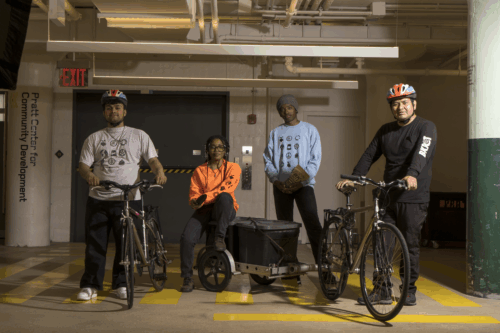
Earth Matter NY Inc. is a 501(c)(3) organization based on Governors Island, NYC with a mission to reduce the organic waste misdirected into the garbage stream by encouraging neighbor participation and leadership in composting. Earth Matter will use the funds to microhaul food scraps primarily by bike and trailer from 4-5 nonprofits in Lower Manhattan to Earth Matter’s site on Governors Island to be composted. Currently, this effort is powered by Earth Matter staff who volunteer their time to support these organizations that do not have the capacity to process their own organics and are not able to be a part of the City’s municipal compost program.
The Bronx, NY
GreenFeen OrganiX, a Bronx-based, Black- and Caribbean-led worker cooperative, is launching Compost Chronicles—a culturally rooted vlogging series making composting accessible, relatable, and engaging for everyday New Yorkers. The project supports GreenFeen’s rebrand and uplifts community voices through storytelling, art, and education centered on environmental justice. Beginning with a community art installation and expanding into a digital storytelling series, Compost Chronicles highlights Bronx composting through a BIPOC-led lens. Led by Founder and Worker-Owner Dior St. Hillaire, the project merges culture, creativity, and climate action to demystify composting, inspire participation, and showcase community-based composting as a neighborhood-driven solution for a just and resilient circular economy.
The Bronx, NY
Growing and Learning About Growing’s goal is to inspire a passion for composting through the joy of growing fresh herbs and vegetables. By understanding soil nutrients and reducing waste in their community, they aim to foster a deeper connection with the natural world. This initiative will promote mental health, physical well-being, and sustainability, uniting communities in creating a healthier planet together.
The Bronx, NY
This project, in collaboration with Compost Power, aims to establish a three-bin composting system at the Morris II housing development. In addition to securing the necessary equipment and personnel for this project, a portion of the funds will also be directed to teaching residents about composting and other green-related employment opportunities.
The Bronx, NY
Renee Keitt, Garden Manager of Kelly Street Garden in the Longwood section of the Bronx, is leading an innovative composting project that uses mushrooms and mycelium to accelerate the decomposition of food scraps. This regenerative initiative transforms organic waste into nutrient-rich soil, supports community-based land restoration, and cultivates mushrooms for both culinary and medicinal use advancing environmental sustainability and local food resilience.
The Bronx, NY
Leave It Better Summer Camp will provide free composting education through hands-on vermicomposting and passive composting at the Leave It Better Kids Garden in the Bronx. Students will make a documentary as they learn: raising red wiggler worms, feeding them food scraps, and then using the “black gold” to grow new food.
Jackson Heights, NY
Mazorca Colectiva is a multicultural community of immigrants and Indigenous Peoples from the Global South, dedicated to reclaiming ancestral memory and practices. Founded in 2020 amidst the pandemic’s challenges, Mazorca Colectiva arose in response to inadequate external support, racial capitalism, and structural inequalities. What began as a community garden addressing food insecurity has grown into a space for cultural revitalization, healing, and solidarity through peacemaking circles. Their mission is to cultivate agency and reconnect with ancestral traditions grounded in Indigenous food sovereignty, embodied knowledge, and intergenerational learning ecosystems. The drop-off site collects and processes in-situ organic materials brought by some parents from the school and, when capacity allows, organics from the East Elmhurst Community School. The finished compost is then applied to the same community garden.
New York, NY
Morris Campus Educational Farm in the South Bronx is a regenerative, education-rooted, and production-driven urban farm devoted to environmental justice, renewal, and community care. As a BIPOC community-serving composter in a neighborhood coming alive with green abundance, the farm turns organic waste into living soil and new life. With this grant, the farm will train new Master Composters and expand its community compost drop-off site, guided by a Certified Master Composter through the NYC Department of Sanitation. Participants will learn regenerative composting, soil healing, and site operations while opening doors to green careers. The expanded site will welcome local schools, families, and gardens, nurturing connection, resilience, and renewal. Morris Campus Educational Farm carries the spirit of transformation, showing how caring for the earth can renew both people and place in the heart of the Bronx.
The Bronx, NY
This project, through the Mott Haven-Port Morris Community Land Stewards, will empower stewards at Maria Sola Green Space, a South Bronx community garden, to expand compost capacity. Stewards will build a new three-bin system and a secure 24/7 drop-off station. It will also support community outreach and education to engage more local residents in composting and environmental stewardship.
The Bronx, NY
NAHE LLC is a Black woman-led agricultural company based in the Bronx, NY, with licensed hemp farms in rural upstate New York and deep roots in community gardening. This project, “From Waste to Wealth,” will expand composting and biochar production across urban and rural sites. The grant will support compost bin installation, youth training, food scrap collection, and the production of biochar from organic waste. Compost and biochar will be used to regenerate soils in Bronx gardens and on upstate farmland, improving food access, soil health, and climate resilience in BIPOC communities.
Flushing, NY
This project will support professional development and equipment purchases for the Queens Botanical Garden (QBG) Compost Program, which has been in operation for over 30 years. Located in Flushing, Queens, NY, QBG’s Compost Program generates nutrient-rich compost from organic food waste collected at sites throughout Queens, and engages in public outreach to improve local skill and training in compost processing. Generated compost is both utilized on-site at QBG for horticultural and farming operations and distributed free of cost to the Queens community.
Brooklyn, NY
Red Hook Farms (RHF) operates a human and solar-powered composting program that collects and processes community food scraps along with farm organic material. RHF offers compost givebacks for community gardeners as well as weekly educational volunteer opportunities for youth, community members, and Master Composters to learn and practice urban farm-based, mid-scale composting techniques using thermophilic windrows as well as aerated static piles.
New York, NY
Riverside Valley Community Garden known locally as “Jenny’s Garden” is a thriving, volunteer-led urban garden in West Harlem. Rooted in sustainability and community spirit, the garden yields a generous harvest each year, much of which supports local community centers and soup kitchens.
Now, Jenny’s Garden is expanding its composting program by partnering with local businesses and involving students from nearby schools. With this funding, volunteers aim to collect organic waste from small businesses across West Harlem, engaging youth and strengthening ties between neighbors and local entrepreneurs.
This initiative will foster meaningful collaboration between small business owners and neighbors, strengthening community ties while transforming waste into a valuable resource. Through this expansion, Jenny’s Garden will continue to promote sustainability, education, and a shared responsibility for the health and future of the urban environment.
New York, NY
The department seeks to establish a sustainable “closed-loop” waste-to-food system, with integrated renewable technology, and to understand the relationship between the system’s components by collecting and analyzing the data generated. The site selection and construction of an indoor composting setup will take approximately 6-8 weeks. Simultaneously, the renewable energy and irrigation systems for the community garden can be integrated in about 4-6 weeks. Once both setups are established, the remaining year will be spent maintaining the system. In the winter season, any additional compost would be collected and distributed to nearby outdoor community gardens maintained with the help of Urban Gardens.
New York, NY
Sixth Street Community Center, located in Manhattan’s Lower East Side, operates a youth- and volunteer-powered composting project at El Jardín del Paraíso. The initiative engages low-income residents in hands-on, sustainable practices that reduce food waste and promote environmental awareness. This community composting program empowers local youth and families to take an active role in building a healthier, more resilient neighborhood. Funding from this grant will expand the program’s reach and enhance compost processing infrastructure to meet growing community demand, while strengthening education and outreach efforts around food justice and sustainability.
The Bronx, NY
The Stewards of Earth Composting Facility (SOECF) aims to create a sustainable, community-led composting site in Bronx Community Board 4 that can process up to 20,000 tons of food waste annually. SOECF is run by Dany Nelson, Managing Rotter. The project will demonstrate scalable composting using earth flow bins and smart monitoring. It will divert food waste from landfills, improve soil health for urban agriculture, educate the community on composting, and foster environmental stewardship. The facility will collaborate with local haulers and city agencies to ensure long-term integration into NYC’s waste management system.
New York, NY
The Brotherhood Sister Sol (BroSis), based in Harlem, New York City, partners with Open Road of NY to expand its “1,000 Composting Systems” initiative. The project aims to establish 1,000 local composting sites across New York City to divert tons of food waste from landfills each month. Through the design and construction of patented HotBox Composting Systems, BroSis trains and employs local youth and community members to manage each site, creating green jobs while reducing emissions and improving soil health. Each composting hub serves as an educational and environmental justice site, teaching residents how to transform waste into nutrient-rich compost for community gardens and parks. Collectively, these sites form a citywide network of climate-resilient spaces that promote environmental stewardship, food security, and sustainable neighborhood development.
The Bronx, NY
Ujamaa Garden is a youth-centered community garden providing a place of respite and connection to nature in the Northeast Bronx. Alongside youth programming and volunteer days, Ujamaa runs a Mom Program which supports over ten families with fresh, organic produce on a bi-weekly basis. In 2022, Ujamaa Garden began transforming an abandoned lot into a space to grow food, gather, and revitalize the local ecosystem. After learning about the deforestation that has occurred in the neighborhood over the past 50 years, Ujamaa Garden forged a partnership with Seton Falls Park Preservation Coalition and shifted their focus to incorporate conservation into their work. Ujamaa Garden is beginning a dynamic soil remediation experiment that will incorporate a new three-bin system to produce nutrient-rich compost. Rooted in environmental justice, the project will engage BIPOC community members in restoring neglected land, building knowledge, and fostering long-term sustainability.
New York, NY
The Uptown & Boogie Healthy Project (UBHP) in Central Harlem leads a community compost initiative to reduce food waste and promote sustainability. It accepts food scraps for free at farmers’ markets, encouraging participation. To inspire young advocates, UBHP offers a $2 incentive for children who bring scraps from home. Farmers and vendors also use compost bins for unsold produce, minimizing waste. The program plans to expand with biweekly educational sessions, allowing families to learn about composting. Informational flyers will outline the benefits and guidelines for collecting food scraps. Through these efforts, UBHP supports local climate action and promotes sustainability in Harlem and the Bronx.
Brooklyn, NY
This project, Community Composting at the Wyckoff House Farm, will support a previously established compost system through updated equipment and materials, increased staff hours and development, and greater community outreach and empowerment. The compost program is integral to so much of the museum’s mission-driven work, delivering benefits not only for the soil at the onsite urban farm, but also for the museum’s education and seasonal teen employment programs, and for the many neighbors who come to drop off scraps, collect fresh compost for home gardens, or join in a workshop or discussion on food sovereignty and justice.
Brenda Platt was awarded the prestigious Jerome Goldstein Lifetime Achievement Award by the US Composting Council.
Across coastal New England and NYC, 37 organizations received grants of $10,000 each to support new or existing mission-driven composting projects focused on community improvement.
Community Composting 101 provides an overview of the importance of and science behind composting, and recommended best practices for implementing community-based programs.
ILSR collaborated with the EPA to include 483 community composting sites on their Excess Food Opportunities Map (EFOM).