“Digital equity work does not cost the federal government money,” says broadband expert Christopher Mitchell
MINNEAPOLIS (July 16, 2026) – Christopher Mitchell, director of the Community Broadband Networks Initiative at the Institute for Local Self-Reliance (ILSR), made the following statement in response to yesterday’s federal court ruling that Digital Equity Act programs should resume without any of the Act’s original race-based factors.
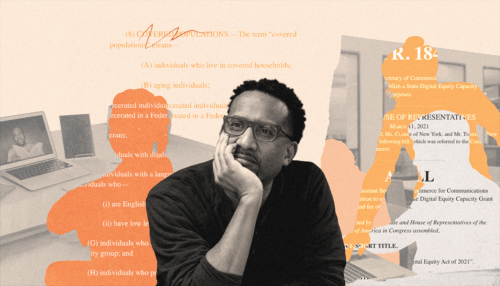
“Yesterday’s ruling on the Digital Equity Competitive Grant Program is, on balance, a victory. The National Digital Inclusion Alliance deserves enormous credit for fighting to get to this point. The court affirmed what should have been obvious all along: the Trump administration had no legitimate basis to hold this program hostage. The only real question now is how quickly NTIA moves to actually implement it.”
“The removal of racial and ethnic minorities as a designated ‘covered population’ is a loss because the Trump administration continues to find ways to undermine populations that have been historically disadvantaged. But I don’t think it will significantly change who the program actually serves or what work gets done on the ground. The Digital Equity Act’s continued focus on low-income communities, older adults, and veterans means that the people who most need to be prioritized will still be prioritized. Due to historic discrimination, many racial minorities will remain the focus of the program due to their disproportionately low income.”
“Digital equity work does not cost the federal government money — our taxpayer dollars are used inefficiently when millions of people cannot access telehealth and similar services. Additionally, the benefits of federal investments into new Internet networks are greatly enhanced when more people are able to take advantage of modern technology.”
The suit was brought by the National Digital Inclusion Alliance (NDIA), which challenged the administration’s decision to halt the Digital Equity Act program after President Donald Trump characterized it as “racist.”
The $2.75 billion Digital Equity Act was passed by Congress as part of the 2021 infrastructure law. It mandated the creation of three different major grant programs intended to shore up equitable, widespread access to affordable Internet, while providing the tools and digital literacy education needed to help neglected U.S. communities get online. But in May 2024, the Trump administration unceremoniously “terminated” the law, froze all program funding, and left countless states, programs, and organizations – many on the cusp of major new efforts – high and dry.
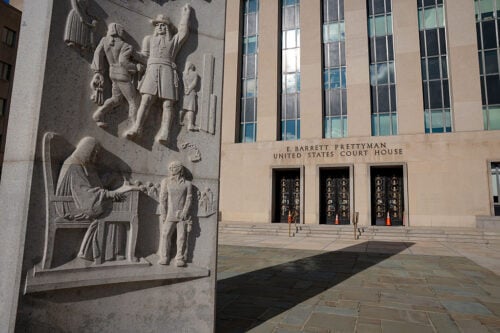
In his ruling, U.S. District Court Judge John D. Bates wrote: “the government has committed to reinstating the Competitive Grant Program upon a judicial determination that the race criterion is unconstitutional and severable.”
Christopher Mitchell Responds to Trump’s Abandonment of Digital Equity Act
The President’s actions “will result in much higher costs for slower, less reliable Internet access for millions of Americans,” says Christopher Mitchell.
ILSR’s Exploring Digital Equity Fact Sheet Series unpacks the issues, challenges, and opportunities of bringing broadband access to everyone. … Read More
The Institute for Local Self-Reliance, founded in 1974, is a national research, advocacy, and technical assistance organization that empowers communities to take charge of their local resources, economies, and environmental future. The Community Broadband Networks Initiative is a program of the Institute for Local Self-Reliance that works with a diverse group of allies, partners, and local communities on policies to improve local Internet access. Through the initiative, we also research and document what communities around the country are doing to improve access to high-quality broadband at communitynetworks.org.