ILSR Advocacy Establishes Maryland’s First Organics Diversion Grant Program
Prioritizing community benefits and high-quality compost, the $250,000 grant fund charts the way towards zero waste. More substantial funding, however, is still needed.
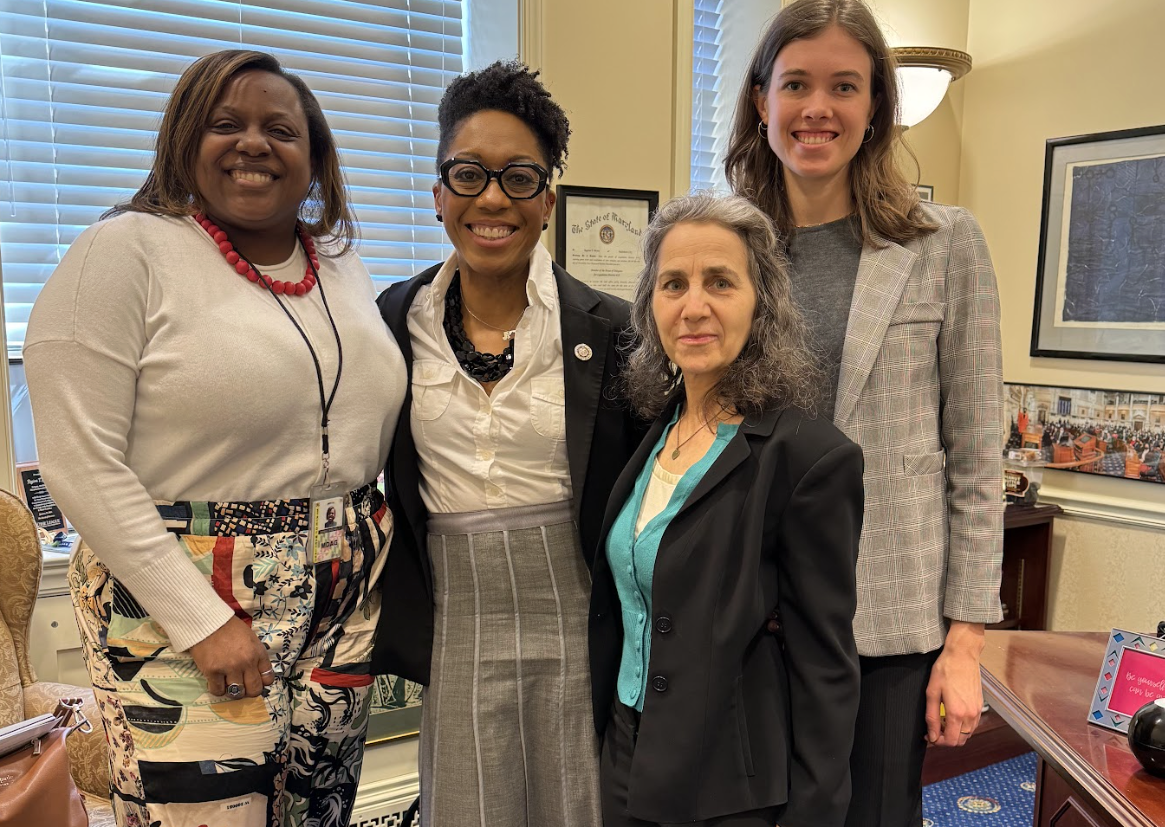
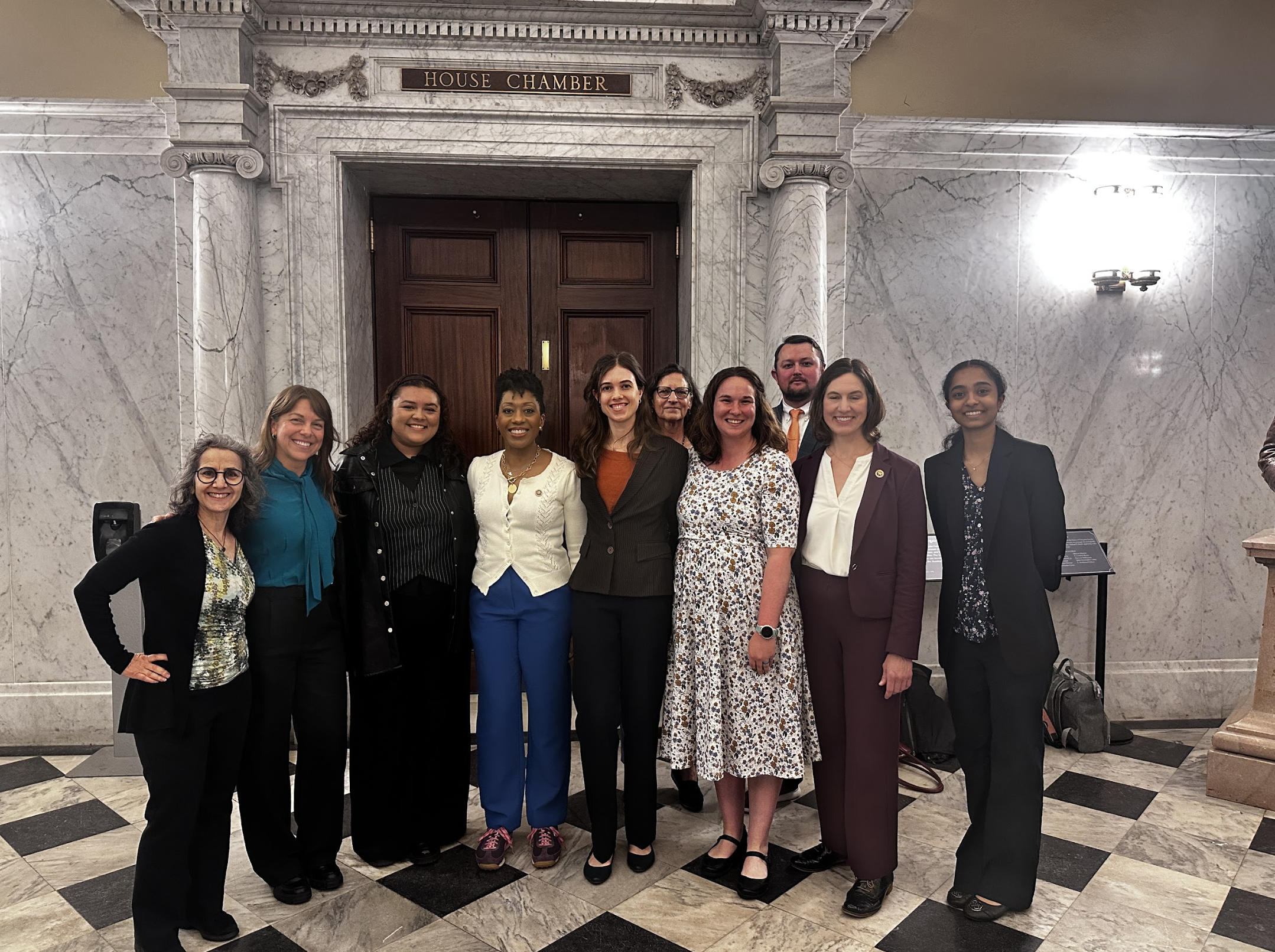
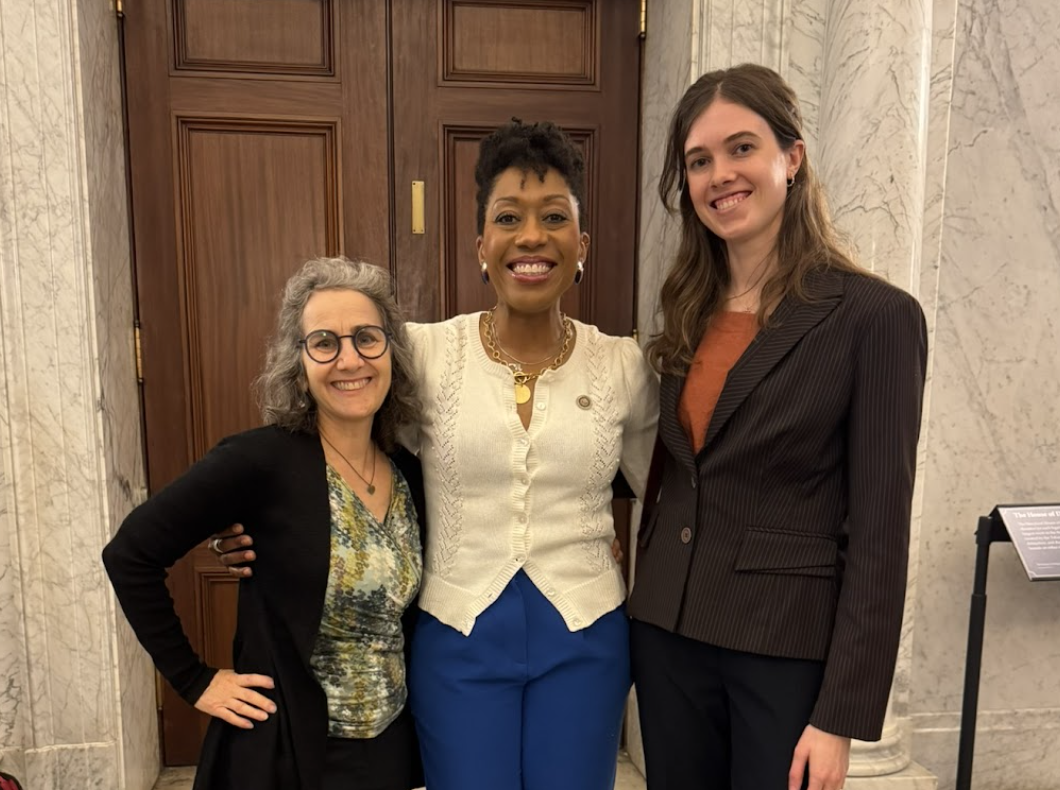
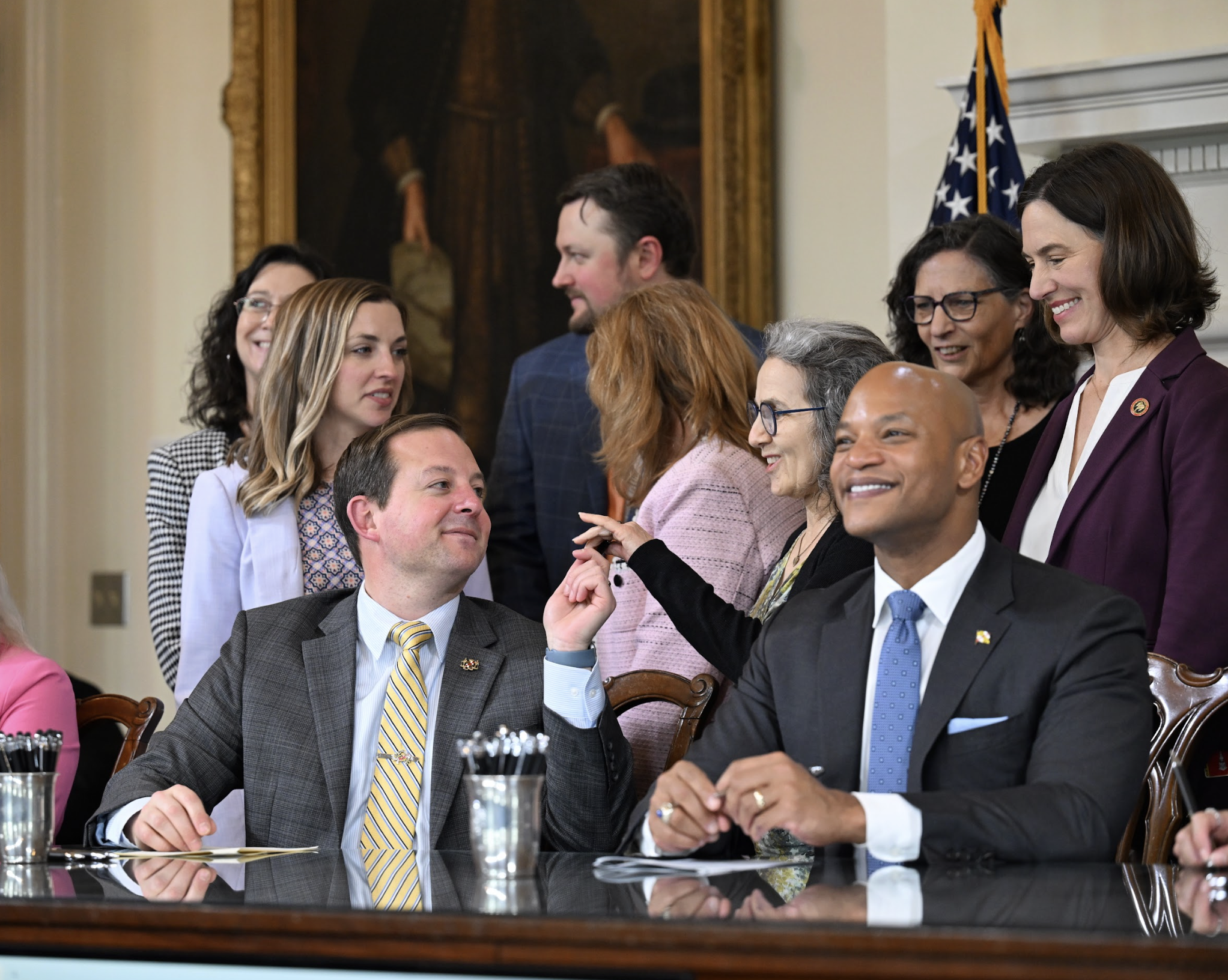
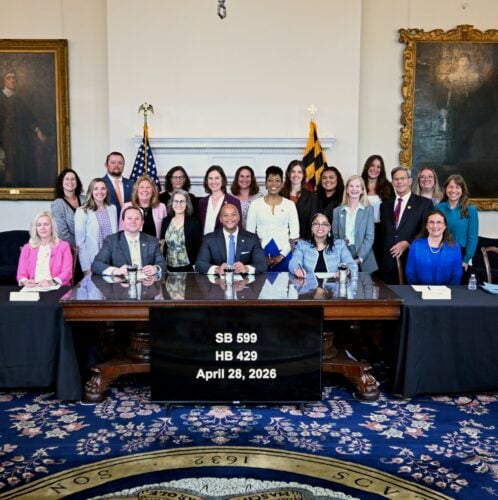
On April 28, 2026, Maryland Governor Wes Moore signed HB 429/SB 599, “On-Farm Organics Diversion and Recycling Grant Program,” into law, establishing a $250,000 annual grant program for on-farm organics recycling and compost use, wasted food prevention, and food rescue. This bipartisan bill is the result of five years of advocacy and policy language development, spearheaded by ILSR’s Composting for Community Initiative and engaging a wide array of stakeholders along the way.
Maryland has been among the national leaders in composting and organics diversion policy, with existing legislation that supports organics diversion, on-farm composting, and wasted food recovery, many of which ILSR played a role in passing. At the same time, in-state landfills emit high levels of methane, landfill capacity is steadily decreasing, and locally-accessible infrastructure for alternatives to disposal is lacking. Funding and financial incentives for in-state food waste prevention, recovery, and composting capacity remain major barriers to progress, especially as the state aims to achieve a 60% reduction in emissions by 2031 and net-zero in 2045. Dedicated funding for solutions was the clear next step.
The establishment of the On-Farm Organics Diversion and Recycling Grant Program reflects a commitment to preventing, rescuing, and diverting wasted food from disposal. Agriculture is the single largest land use and largest commercial industry in the state, and this bill takes an important step toward supporting farmers and growers by providing funding for edible food rescue, on-farm composting, and compost use to build soil health. With proper support for this work, Maryland’s farmers can play a key role in achieving greater food security, soil health, resource conservation, and emissions reductions. As Ellen Polishuk, owner of Plant to Profit, puts it, “Farmers want to use compost as a way to build soil health and thus profitability, while reducing their reliance on synthetic fertilizers and the volatile markets that determine their price. In order to do that, they need access to high-quality compost, specialized equipment, financial support, and technical assistance.”
While the initial budget allocation of $250,000 per year is only a small fraction of the investment needed to achieve these goals, this bill establishes a strong grant program and opens the door for additional funding.
On-Farm Organics Diversion and Recycling Grant Program
Between the 2022 and 2026 legislative sessions, ILSR worked with the bill sponsors and many stakeholders to fine-tune the grant program details. The program is carefully designed to develop alternatives to food waste and organics disposal, while prioritizing projects that directly benefit Marylanders.
The On-Farm Organics Diversion and Recycling Grant Program, launching on July 1, 2028, will award grants to a variety of eligible entities for projects that develop, maintain, or expand infrastructure, collection programs, education, or technical assistance for wasted food reduction, food rescue, composting, or organics recycling. This funding may support things such as:
Cold storage for produce,
Food rescue to feed people or animals,
On-farm composting infrastructure and equipment,
Training on best management practices,
Studies on the impacts of compost application on on-farm nutrient management and water quality,
Associated labor and wages, and
Permit application costs.
Along with farmers, urban farmers, and agricultural producers, other entities eligible to apply for and receive grant funding include: soil conservation districts, universities, nonprofits, and businesses in partnership with farmers.
The grant program will receive a mandated annual budget appropriation of $250,000 starting in fiscal year 2028.
Agricultural Prosperity and Soil Health
Supporting farms and agricultural producers in decreasing wasted food and composting is key to realizing a circular nutrient economy, where food is grown, people and animals are fed, food scraps are composted, and soils are enriched. As the Maryland Department of Agriculture (MDA) noted in their testimony, “the diversion of food waste for on-farm composting will address state environmental goals for food waste reduction and diversion, while creating a circular economy model.” The Maryland Farm Bureau touted this bill’s alignment with “long-standing agricultural policy principles supporting value-added on-farm enterprises, soil conservation, and responsible nutrient management,” as well as the bill’s emphasis on food rescue, source-separated composting systems, local sourcing, community-based benefits, and workforce capacity in their written testimony.
Expansion of composting and organics recycling infrastructure and the availability of high-quality, non-contaminated compost is crucial to supporting Maryland soils by reducing the need for synthetic fertilizers, increasing soil organic matter, and improving water and nutrient cycling. This bill provides opportunities for Maryland farmers to work toward these goals and supports their bottom line, as recognized by the Maryland Farm Bureau:
“HB 429 offers voluntary, incentive-based tools that expand opportunity without imposing new regulatory burdens, ensuring that farmers retain flexibility while gaining access to the resources necessary to enhance economic resilience.”
“From MASCD’s perspective, these activities are directly tied to reducing nutrient losses, improving soil structure and infiltration, and helping producers meet Maryland’s water-quality and climate goals while staying in business. SB 599 continues the tradition of environmental stewardship and economic relief for our Maryland farms and families.”
— Maryland Association of Soil Conservation Districts
Priority Funding for Community Benefits and High-Quality Compost
The bill’s detailed eligibility and priority factors encourage projects that are locally-driven and community-centered, in alignment with ILSR’s framework for distributed food waste reduction and recovery infrastructure. Priority funding will support projects that provide direct benefits to their local communities and address community needs, including by supporting local jobs that provide a livable wage, and those that serve overburdened or underserved communities.
This stipulation gives the funding from this grant program a higher chance of being invested into local communities rather than into monopoly corporations, which siphon the benefits away. The benefits of supporting community-serving projects extend beyond what is neatly quantifiable. From filling infrastructure and accessibility gaps, to reducing greenhouse gas emissions, to community education and connection, community-based wasted food reduction and composting projects are inherently entwined with local economic, environmental, and social prosperity.
Distributed infrastructure can provide unique solutions and benefits that large actors cannot. Small- and medium-sized on-farm composting operations, for example, require fewer resources than a centralized industrial operation and can start up faster, allowing for diversion sooner rather than later. They also return locally-grown plant material and nutrients to the soil, creating a closed nutrient loop that builds soil health, avoiding emissions associated with hauling materials away and distributing compost across long distances.
Investment in overburdened and underserved communities was a driving factor for this bill’s priority funding stipulations. These communities disproportionately bear the burden of food insecurity, mismanagement of materials, pollution, and climate change, yet are often last on the list for investment. In order to tackle wasted food, divert organics from disposal, and achieve food security, the solutions and alternatives must be accessible to all.
The importance of strengthening the local agricultural producers’ connections with their communities and vice versa in both urban and rural communities can’t be overstated. The Maryland Farm Bureau praised the bill’s support for urban growers:
“HB 429’s inclusion of urban farmers and agricultural producers, alongside its emphasis on food rescue and community-based benefits,…strengthens the connection between Maryland agriculture and the communities it serves.”
“By increasing investment in rural food-waste infrastructure and related businesses, this bill helps strengthen local economies and create new opportunities within Maryland’s rural communities.”
— Maryland House Rural Caucus
The priority funding factors also aim to uplift on-farm composting operations that produce high-quality and minimally-contaminated compost, avoiding processes that are linked to microplastic and PFAS contamination. This includes processing only source-separated organic materials, avoiding depackagers, and meeting the US Composting Council’s Seal of Testing Assurance. Production of compost that meets the classification of “General Use” under COMAR 15.18.04.05 is also prioritized.
Waste Industry Lobbies and a Missed Funding Opportunity
While this bill is a positive step forward for Maryland, it mobilizes only a fraction of the funding needed to achieve meaningful statewide wasted food reduction, rescue, and diversion. For example, the Maryland Food Systems Resiliency Council estimated in their 2025 report to the General Assembly that $6.4 million is needed for a cold storage grant program that would support just 60 cold storage units. Investment in on-farm composting site infrastructure and compost spreading equipment can run farmers tens to hundreds of thousands of dollars (which is still a fraction of what a commercial or industrial composting site costs).
According to the bill’s fiscal note, at least $120,000 is needed annually to reasonably cover MDA’s costs to administer the program once it has been set up, which is almost half of the $250,000 annual allocation.
This bill originally aimed to establish three grant programs: the Wasted Food Reduction and Diversion Grant Program, the County Wasted Food Reduction Block Grant Program (both administered by the Department of Environment), and the On-Farm Organics Diversion and Recycling Grant Program (administered by the Department of Agriculture). These three grant programs would have covered a wide array of projects and eligible entities working to broadly advance wasted food prevention, rescue, recycling, and composting projects and infrastructure.
In previous years, versions of this bill included a $2-per-ton disposal surcharge, which could have generated over $14 million in dedicated funding for the grant programs. There are at least 10 other states that successfully utilize a disposal surcharge to generate funding for waste diversion and composting programs. In Maryland, however, the solid waste and hauling industry voiced strong opposition to this funding mechanism, stating that they would oppose any disposal surcharge, regardless of the amount. Although opposition in the 2025 legislative session came solely from waste industry lobbies, this opposition was enough to cause legislators to come to an impasse on the disposal surcharge. The 2025 bill was amended during the legislative session to replace the disposal surcharge with five years of discretionary funding. That version passed the House, stalled in the Senate, and ultimately did not pass in 2025.
For the 2026 legislative session, ILSR worked closely with the house bill sponsor, Delegate Regina T. Boyce (D-Dist. 43), as well as allies at Maryland Clean Water Action, the Maryland-DC Composting Council, and Full Circle Future to determine a reasonable path forward for this bill. Originally, HB 429/SB 599 did not include a funding mechanism, with the understanding that codifying the details of the grant programs would establish the structure into which funding could be mobilized, including funding identified by the Maryland Departments of the Environment and Agriculture. Despite the overwhelming support and lack of opposition for this version of the bill, both Departments expressed some concern over the lack of dedicated funding. Of course, if funding doesn’t exist, the grant programs can’t run, and no one benefits from the legislation.
Ultimately, the legislature identified $250,000 of available annual appropriations starting in fiscal year 2028. By narrowing the bill down from three grant programs to one – the On-Farm Organics Diversion and Recycling Grant Program – the legislators were able to preserve and fund a slice of the original bill, which had been so widely supported. HB 429 had 22 co-sponsors at the time it passed, and SB 599 had Senator Shelly Hettleman sign on as a co-sponsor to Senator Katie Fry Hester. The Maryland Senate voted unanimously (42-0) in favor of HB 429/SB 599, with an overwhelming majority of the House (127-7) also voting to pass the bill.
Codifying the grant program details and getting it set up establishes a foundation for additional funding to be mobilized through the program as it is identified. Advocates in Maryland continue to strategize on how to meet these needs and secure additional funding sources for wasted food reduction and diversion.
ILSR Advocacy Establishes Maryland’s First Organics Diversion Grant Program
A new Maryland law establishes a $250,000 annual grant program for on-farm organics recycling and compost use, wasted food prevention, and food rescue.
Durango, Colorado – Compost and Collection Capacity Building
In 2025, the City of Durango adopted Resolution R-2025-0004, which directed the city manager to execute pilot organic waste management programs, conduct research on ordinances...
Maryland – On-Farm Organics Diversion and Recycling Grants
In 2026, the Maryland Legislature passed HB 429/SB 599 “On-Farm Organics Diversion and Recycling Grant Program,” establishing an annual grant program for on–farm organics recycling...