2026 Community Power Scorecard
2026 Community Power Scorecard
Explore your state's energy policy report card
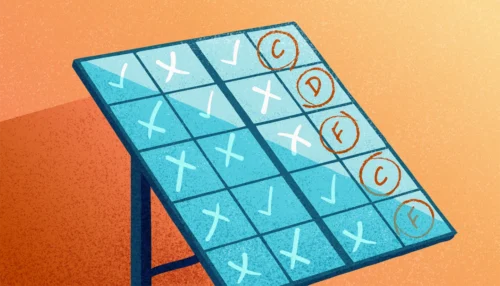
To reveal who has power over the electricity system, ILSR’s annual Community Power Scorecard grades every state on policies that give communities control over their energy and protection from abuses of utility monopoly power.
As electricity demand surges, data centers proliferate, utilities seek major infrastructure investments, and households confront higher bills, our states and systems are woefully unprepared. Consumers are rightfully wondering who will pay for, benefit from, and make decisions about the evolving U.S. electricity system.
States have multiple policy options to meet consumer demands for affordability, agency, and accountability — but they are leaving too many of those options on the table.
Almost every state earned a failing grade on ILSR’s 2026 Community Power Scorecard, which grades all 50 states and D.C. on policies that give communities and individuals greater control over their energy sources and protect ratepayers from abuses of utility monopoly power.
Seven states receive Cs, 13 states and D.C. receive Ds, and 30 receive Fs. Fewer choices and protections contribute to the higher electric bills that households across the country are facing.
ILSR’s Community Power Scorecard rigorously evaluates the design of state policies and regulations, rather than tracking whether or not a particular kind of policy (e.g. interconnection) exists at all. We evaluate policies as they are written, not their implementation. The 2026 Scorecard includes updated methodology and new policies, including plug-in solar, virtual power plants, and solar permitting.
The 20 policies evaluated in the Scorecard are worth a maximum of 110 points. Our full scoring methodology further explains the policies we track and our evaluation rubric. To explore the status of each policy across all states, explore our interactive Community Power Map.
Looking for policy resources for your city, town, or county? Explore our Local Energy Policy Toolkit.