Keep Compost Local: A Roadmap for Public-Private Partnerships
A webinar featuring lessons learned and tips for replication from community-oriented composters in partnership with local governments.
Are you with a local government or agency interested in reducing and recycling wasted food and curious to learn how you can help spur local composting? Are you a community-oriented composter or micro hauler searching for public-private partnerships? Or perhaps you’re an advocate interested in how a local circular economy can actually be implemented.
This webinar shared lessons learned and tips for replication from three local government and community composter partnerships in Providence, Rhode Island; New York City; and Philadelphia. These partnerships serve as successful models for local governments and communities across the country, highlighting how composting goals can be achieved while also generating numerous other environmental, social, and economic local benefits. Speakers from Groundwork RI, Compost Power, and Bennett Compost presented, along with local government representatives. These partnerships are part of the 17 local government programs featured in ILSR’s 2026 report, Keep Compost Local.
Access Details
Access to the recording is $20.
Free access is available for government, farmers, members of tribal communities, educators, and members of the Community Composter Coalition (CCC). Government should use the discount code GOV, farmers should use FARMER, K-12 educators and schools should use EDU, tribal community members should use TRIBE, and CCC members should use CCC at checkout for free registration.
This webinar complements ILSR’s previous series, Government Support for Community Composting, which focuses on the role of policy and public resources in advancing local composting efforts.
Together with our library of composting-related webinar recordings, these resources support the growth of a distributed and diverse composting infrastructure that includes community-scale and on-farm systems.
Panelists
Anita Chan, Program Associate – New York City Housing Authority (NYCHA) As the Program Associate on the Asset and Capital Management Sustainability Programs Waste Team, Anita provides administrative, procedural, and operational support for a portfolio of initiatives that advance waste management and resilience best practices. She brings around a decade of environmental sustainability expertise having worked at Earth Matter NY, East New York Farms!, and Student Conservation Association. Anita holds a Bachelor of Arts in Business Administration and Management from City College of New York.
Domingo Morales, Founder/CEO – Compost Power Domingo Morales is the Founder and CEO of Compost Power, a New York City composting organization that builds sustainable community compost sites across NYC with an emphasis on underserved and marginalized communities. Out of nine total sites, eight are at public housing, providing all residents with access to waste equity, sustainable education, and job training. He is laser-focused on making composting cool and accessible for everyone. His leadership and passion for a healthier and more environmentally-just city was born out of lived experience. As a former public housing resident, he saw first-hand how residents of underserved neighborhoods and public housing suffered from poor access to healthy food and a lack of sustainable infrastructure. Today, Compost Power’s partnership with Green City Force (GCF, a green workforce development nonprofit) and the New York City Housing Authority (NYCHA) offers unique lessons in how to engage the community, reduce rodent problems, create workforce development opportunities, and keep resources local to provide local food. Domingo is a NYC native and inaugural winner of the David Prize.
Ella Kilpatrick Kotner, Director – Compost Programs, Groundwork RI
Ella grew up on an organic lettuce farm, where she cultivated an early passion for local food systems, and especially the communities that make them flourish. She continued to nourish this passion through a degree in environmental science with a focus in land, water, and food security. Ella spent several years as a garden and environmental educator, and is passionate about facilitating connections between people, their food, and the places they call home. As the Director of Compost Programs at Groundwork RI, Ella runs Harvest Cycle Compost, a bike-powered community composting program in Providence. Harvest Cycle – an initiative of Groundwork RI – collects food scraps from all over the city via bicycle and processes them into compost, which is then redistributed to the people whose food scraps it is made from. Harvest Cycle emphasizes local composting, and is currently redeveloping a brownfield into a community composting hub in the West End of Providence. The City of Providence received two federal grants to support the creation of infrastructure for food scraps collection and composting. In both cases, the City subcontracted with existing food scraps service providers in Providence, including Harvest Cycle. The ability of the City to work with existing service providers has made access to food scraps diversion more available for Providence residents. With some of these grant funds, Harvest Cycle is opening six new food scraps drop-off sites and rebuilding some of its 3-bin composting systems currently in use.
Laura Cassidy, Sustainability Manager – Philadelphia Department of Prisons
As Sustainability Manager for the Philadelphia Department of Prisons, Laura has overseen – for more than 12 years – the development and operation of on-site composting while providing incarcerated individuals with hands-on vocational experience to prepare them for meaningful opportunities post-incarceration. During the Covid-19 lockdown, staff and incarcerated persons’ participation in the program was suspended, leading the department to contract with a local composter, Bennett Compost, to continue food scraps collection and composting. Under a second contract, Bennett is now also managing the orchard and greenhouse in the complex and providing vocational training. Under its partnership with the department, Bennett also assisted it in securing a state permit, enabling the department to accept residential food scraps from the neighborhoods near the prison complex.
Tim Bennett, Founder – Bennett Compost
Tim Bennett started Bennett Compost with $100 and a desire to make composting easier for Philadelphians. Today, Bennett Compost actively works with over 6,500 residents, businesses, community groups, schools and municipal partners to collect over 4,000,000 lbs of food scraps for composting every year making it the largest curbside composting program in the Commonwealth of Pennsylvania. Bennett Compost employs 32 people and operates two permitted composting facilities processing 1,000 tons per year of food waste. Tim lives in Philadelphia with his wife and three kids.
Moderator
Brenda Platt, Director – Composting for Community Initiative, ILSR
Brenda and her team at ILSR are supporting community-scale composters via forums, webinars, podcasts, guides, policies, training, and more. In 2017, the US Composting Council awarded her its H. Clark Gregory Award for outstanding service to the composting industry through grassroots efforts. In 2019, BioCycle magazine featured Brenda as one of its organics recycling trailblazers. In 2023, LA Compost presented her with its Community Compost Champion award. She has a B.S. degree in mechanical engineering from The George Washington University.
Education & Outreach to Reduce Contamination in Composting
In this webinar, three presenters will share tips and lessons learned on how to use outreach and education to avoid contamination in drop-off and curbside...
Watch this webinar recording to hear how researchers and programs are measuring contamination and learn actionable strategies for using data to drive results.

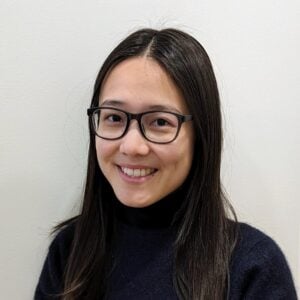 Anita Chan, Program Associate – New York City Housing Authority (NYCHA)
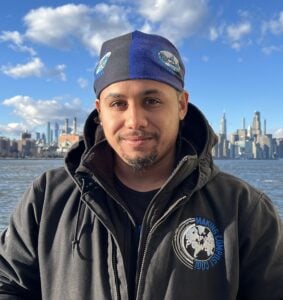 Domingo Morales, Founder/CEO –
 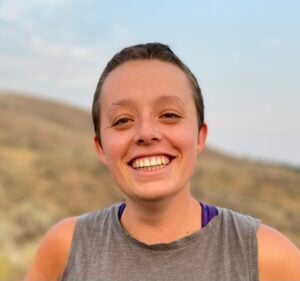 Ella Kilpatrick Kotner, Director – Compost Programs,
  Laura Cassidy, Sustainability Manager – Philadelphia Department of Prisons
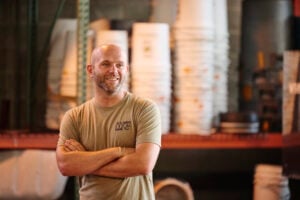 Tim Bennett, Founder – Bennett Compost
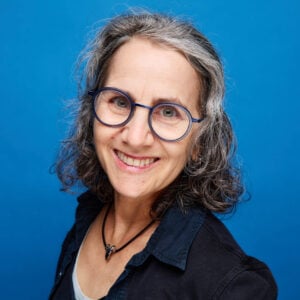 Brenda Platt, Director – Composting for Community Initiative, ILSR