Model Ordinance: Funding for Local Circular Food Systems
This Model Ordinance is a tool local governments can use to establish funding via voluntary fees on commercial transactions to propel local, closed-loop food systems that recover food scraps.
Credit: m.malinika, iStock
For decades, consumer-choice programs have provided a wide array of benefits to communities across the country. Programs like voluntary hospitality levies, renewable energy opt-ins, and beverage container redemption fees are proven ways to address public policy challenges in a legally durable, administratively feasible, and publicly popular manner. This model ordinance, which can be adopted by any local government, applies the consumer-choice framework to generate sustainable, transparent, flexible, and publicly accountable funding to directly address soil health, food security, wasted food, and climate change.
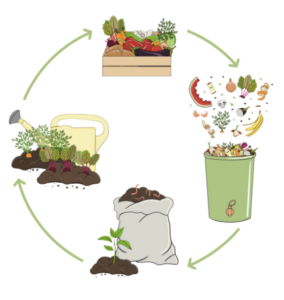
Circular food systems recognize food growing, food waste reduction, composting, and regenerative soil practices as inherently connected. They link food waste diversion efforts to regenerative soil practices, and connect areas of dense food scrap generation to areas that grow food. Policy and funding are often necessary to mobilize efforts toward circular food systems. By closing the loop via voluntary consumer responsibility, everyone has the option to contribute to creating more sustainable food systems.
This Model Ordinance can be adapted and adopted by any local government looking to bolster local food systems and composting with a durable funding mechanism by adjusting the text within brackets to cater to each jurisdiction’s specific context and goals. The document can be downloaded and edited directly.
The language in this model ordinance is an ILSR-adaptation of an original version developed byDLA Piper yZero Foodprint, which focused on generating funding for regenerative agriculture using the same mechanism. ILSR’s version covers circular food systems and prioritizes local and community-centered projects.
Maryland – Expanding Tax Credits for Urban Agriculture
In May 2026, Maryland passed the Urban Agricultural Property Tax Credit, which expands tax credits to urban farmers and broadening the definition of "urban agriculture".
Florida adopted Administrative Code 62-709.305, which exempts backyard composting, small-sized composting, and certain on-farm composting from the state's permit and registration requirements.