How Corporate Consolidation Broke America’s Grocery System
A Companion Policy Brief to ILSR’s Interactive Map of Grocery Stores and Food Deserts
Access to affordable, healthy food is a leading concern for American families. Grocery prices remain high, while millions of people live in communities without a nearby store selling fresh food. Food deserts have become more widespread and entrenched, even as people spend more than ever on groceries
A core driver of these problems is the concentration of market power in the grocery industry — a shift that traces back to a critical policy decision in the 1980s, when federal regulators stopped enforcing the Robinson-Patman Act, a central pillar of antitrust law. Suspending enforcement allowed suppliers to discriminate in pricing in favor of the largest chains, tilting the playing field against independent and small-chain grocers. The result was a wave of consolidation that reshaped the grocery sector, weakened competition, pushed prices upward, and generated food deserts. Reversing these trends requires restoring fair supplier pricing by reviving enforcement of the Robinson-Patman Act.
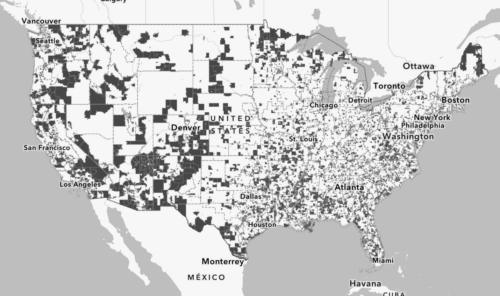
This issue brief is a companion to ILSR’s new grocery map — showing excerpts from the map of specific cities, rural regions, and congressional districts alongside commentary — illustrating how these dynamics have played out on the ground.
The brief also explains how abandoning the Robinson-Patman Act led to consolidation, how that consolidation fueled both rising prices and the spread of food deserts, and the critical role independent grocers play in eradicating food deserts and building resilient local food systems. It concludes with specific steps federal and state policymakers can take to reverse course and fix decades of policy failure.
To demonstrate how corporate concentration has reshaped food access in the U.S., ILSR's interactive map shows food deserts alongside the location of grocery stores.
99% Invisible talks Robinson-Patman Act with Stacy Mitchell
99% Invisible, with Stacy Mitchell's help, devotes an episode to the relationship between food deserts and the federal government's abandonment of Robison-Patman Act enforcement.