A Coal Town Digs Deep for Municipal Clean Heat — Episode 267 of Local Energy Rules
How did this coal town ditch gas lines, win grants, and make municipal networked geothermal the cheapest heating option?
The high prices being paid to power plant owners by power market operator PJM in the competitive wholesale electricity market in the mid-Atlantic region have policymakers screaming about the need for solutions to keep electricity affordable. Could one option be letting utilities back into power plant ownership?
For this episode of the Local Energy Rules Podcast, host John Farrell is joined by Tyson Slocum, Energy Program Director at Public Citizen.
Listen to the full episode and explore more resources below — including a transcript and summary of the episode.
Apple Podcasts Spotify YouTube
Podcast (localenergyrules): Play in new window | Download
Tyson Slocum:
PJM is in crisis right now. PJM is the largest power market in the world. Over 65 million people live in its footprint and PJM shows how to do everything possibly wrong in governance of a power market.
*****
John Farrell:
The high prices being paid to power plant owners by market operator PJM in the competitive wholesale electricity market in the Mid-Atlantic region have policymakers screaming about the need for solutions to keep electricity affordable. Could one option be letting utilities back into power plant ownership? Joining me in September 2025, Tyson Slocum, Energy Program director at Public Citizen explains why the region’s capacity market is broken. How the high costs to consumers mean that every option should be on the table and how, unfortunately, few of those options are likely to be a quick fix. I’m John Farrell, director of the Energy Democracy Initiative at the Institute for Local Self-Reliance, and this is Local Energy Rules, a podcast about monopoly power, energy democracy, and how communities can take charge to transform the energy system.
*****
John Farrell:
Tyson, welcome to Local Energy Rules.
Tyson Slocum:
Well, John, thanks so much for having me.
John Farrell:
I love to start off my interviews by asking people a little bit about their background. So I’m kind of curious, what was your career path to get to Public Citizen and working on these issues of utility ownership? How did this become what you wanted to do with your life, assuming that since you’ve been there for a while, this is in fact what you want to be doing with your life?
Tyson Slocum:
Right. I’ve now been doing this for over 25 years, but it wasn’t my first gig. I grew up in New England, went to college at the University of Texas at Austin because I wanted to study abroad and study a different culture and did a lot of internships and majored in political science, UT calls it Government and actually had several job offers in Austin, but I wanted to go into the big ocean. I wanted to try my hand working on policy issues in Washington D.C. and just two months after graduating, I landed a job working on tax and economic policy with a progressive group called Citizens for Tax Justice. And I loved it. I absolutely loved it, and my only concern was that as a young guy in his twenties, I wasn’t sure if I wanted to be a tax nerd for the rest of my life.
The year was 2000 and I was captivated by reports of sweeping blackouts in California during the so-called West Coast energy crisis. And I saw a job opening at Public Citizen for a researcher on something called electricity deregulation. And at the time, Public Citizen was sort of swimming upstream. It was pretty much the only national group that had fought against deregulation and was sounding the alarm about it. So I had no background in energy, but I had lots of experience untangling complex tax issues. Little did I know that electricity deregulation and electricity issues are far more complicated than taxes are. So I really got into working on energy issues from an energy justice standpoint, from the recognition that access to energy, access to affordable energy, access to clean energy is a justice issue. It is a huge factor in affordability for working families, and that was really my primary sort of entry into working on energy issues. It wasn’t on climate change or things like that. It was the destabilizing impact that poorly structured energy markets can have on reliability and affordability.
John Farrell:
I think our organizations have something in common there, although I have to say I’m delighted to know that I am one step up from a tax nerd being an energy nerd. So that’s really helpful to understand based on that assessment. So I love that you actually got your start at Public Citizen looking at this issue because this is of course exactly what’s going on, this deregulation or market restructuring depending on your favorite word. So again, it’s at the context here. About 30 years ago, a lot of Mid-Atlantic states and other places around the country said, oh, it’s going to be more cost effective if we have utility companies sell off these power plants and just be wires companies and have competition in the power generation markets. There was some fascinating stuff that happened in the federal government kind of deciding how to apportion payments for these assets that have been already built that we won’t get too much into. But now there’s some interesting lobbying going on by utilities in several states. This includes Pennsylvania and New Jersey that would reverse this policy. It would let utilities back into power plant ownership. Can you explain why the competitive market isn’t working well for consumers in the PGM region and whether or not letting utilities back into power plant ownership could address the exploding costs for consumers?
Tyson Slocum:
Yeah, great question, John. So first, you know better than anyone that dealing with traditional monopoly utilities can be very frustrating and they’re not always accountable or responsive to innovation or to public interest priorities. So there was reasons why the state of California, for example, their general assembly voted unanimously — not a single dissenting vote — to deregulate the state’s utilities. And that’s because people had a lot of familiarity working with monopoly utilities. And there was this promise proposed by companies like Enron and others. Enron was not alone, but you really do have to go back and see just how important Enron’s advocacy was. Their fingerprints were in every single state that restructured. They had at the time, just an unprecedented lobbying machine that I think would be very helpful for folks today to sort of go back and really document and revisit because they almost single-handedly sort of changed the narrative.
And I think there have been some benefits from restructuring. It unlocked some efficiencies. There were a lot of things that utilities weren’t doing well and didn’t do well. The problem is, is that replacing traditional regulation with markets introduces its own new inefficiencies, and in some ways the markets are less responsive to public interest demands and less transparent and accountable. I always tell folks to go back to December of 1999 when the Federal Energy Regulatory Commission issued order 2000, which was its seminal order to encourage the voluntary formation of regional transmission organizations. And this was FERC’s effort to promote wholesale competition and encourage states to restructure their state regulated utilities to participate in these restructured markets. And right there in order 2000, it says that a goal of RTO formation is to quote “facilitate lighter handed regulation.” The whole point of it was for FERC to take a backseat and allow private actors, the independent transmission operators, to drive the oversight and the change.
And I think that was probably where the problem started was when you start with a premise that government is going to take a backseat and allow private actors to drive the train, that’s when the problems really happen. I think that we call them public utilities for a reason because they are vested as the Federal Power Act says with inherent public interest functions that necessitate regulation in the public interest. That’s what the Federal Power Act of 1935 says.
So the big focus was that traditional utilities weren’t doing things efficiently and that rate payers shouldered all of the risk. And the thinking was, oh, if we deregulate and we unleash markets, the markets will allow for power generation owners to break free from cost of service regulation and enjoy uncapped profits, right? That was the whole deal was you incentivize unregulated power generation and offer them an opportunity to have unlimited profit potential, but that then in exchange, they accept the risk, right?
And instead what we’ve seen is continued uncapped profits, but the risk continues to be borne by end consumers. Sure, you’ve got bankruptcies and things like that. Rate payers aren’t technically on the hook for all of the costs for a new power plant, but at the end of the day, our market based signals end up foisting that price risk onto rate payers, and we haven’t seen the markets deliver cleaner energy. All the clean energy advancements we’ve seen are because of government mandates and government incentives, and that in turn unleashed unbelievable investment and efficiencies into renewable energies. So now utilities are with all of the upheaval in these markets, this is what you alluded to here at the very beginning. Some of the traditional utilities are like, Hey, we want to get back into building and owning generation. And I think that their primary focus on this proposal is really just their financial bottom line right now.
I think the volatility in markets is casting some risk, although the demand growth projected by AI data centers has vastly increased the market capitalization of deregulated generation owners, and it remains to be seen if that massive market capitalization increase is going to be realized. I think a lot of the data center issues are hype, and I’m actually in Las Vegas right now where I’m going to be speaking tomorrow at an event that is run by the data center industry. And so I’m going to be talking about these issues here. So I think utilities are seeking to get back into the generation game first and foremost because they think Wall Street will reward them if utilities build rate-based generation that is going to deliver guaranteed steady returns. And right now that stability is a potential asset to some investors. I mean, this is where John, you and I are in very close agreement that the problem with utilities is that you have this constant tension between their corporate desire to return profits to their shareholders and their legal and regulatory responsibilities to rate payers and the public interest.
And too often our regulators, because of our politics and the way that our democratic republic privately finances elections and allows significant roles for vested interest lobbyists among other things, we’ve got regulators that too often side with a utility shareholder interest and not the public interest. Now we’re starting to see with very large price increases driven by extremely high capacity prices in the PJM market and elsewhere, you’re starting to see it become a political issue. So all of a sudden a lot of politicians and regulators are saying, what the heck is going on? Prices are high. We need to do something to reign that in. And I think I was quoted in an article where I said, Hey, I think we need to look at all options on the table and we should look at allowing utilities to own and control generation. But that’s not my primary advocacy, and I’m not out there lobbying for that.
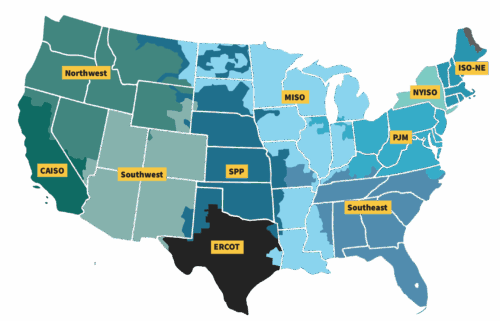
I’m saying I think it’s prudent for states and regulators to look at all options on the table. The problem is is that we still have a utility regulation model that pays way too much deference to utility shareholder interests that still does not adequately allow meaningful public interest participation in the regulatory process. And you still have too many regulators that are looking at the day when they are no longer a regulator and want to cash in and work for the utility, and therefore will make regulatory decisions based upon their personal financial plans rather than their commitment to the public interest. So PJM is in crisis right now. PJM is the largest power market in the world, the largest in the United States. It stretches 13 states from Illinois to the MidAtlantic coast, including DC — over 65 million people live in its footprint. And PJM shows how to do everything possibly wrong in governance of a power market.
It relies heavily upon internal stakeholders that are overwhelmingly comprised of vested corporate interests that not only have voting rights, but can offer constant tweaks to complicated market rules that always benefit themselves. And that’s why the market rules are changing year to year. Because after every year, after every capacity auction, the folks that did great want to do even better, and the folks that didn’t do as good want to try and change the odds. And so you’ve got constant interaction of all of these powerful interests, the transmission owners, the owners of power plants, the financial traders who all have enormous power within the internal governance of the RTO. And again, because FERC takes a very hands-off approach, remember FERC’s entire model was we want to pursue lighter handed regulation, we want to put the independent transmission organizations in the driver’s seat, and that means we end up putting corporate interests in the driver’s seat.
And I just don’t think that that works. And so we’re sort of at a crisis point here, and I don’t know that we’ve got the political capital to do a wholesale overhaul, but John, I share your views on the benefits of well organized municipal and state owned and other forms of public power, and I think we need to amplify those as solutions. Franklin Roosevelt, when he was dealing with an energy crisis as governor before he became president, one of the first things he did was establish a New York Power Authority where he put the state firmly in an aggressive position in being able to not just develop and deploy power generation and transmission assets, but operating them as well. And I think unfortunately right now we’ve got federal models like the Tennessee Valley Authority and Bonneville power that have sort of fallen through the cracks of public interest engagement.
We’ve got a lot of folks over the last few years that have been working on TVA things, but we just haven’t built the congressional power to start installing forward thinking sustainable energy advocates with some of these large federal authorities that I think can play a role. And at the end of the day, I really question whether privately owned transmission assets is a viable solution right now. I think that the complexities and inherent monopolistic features of transmission should really require public ownership and operation of interstate transmission lines in the public interest. And I think that would go a long way to improving efficiencies and operations rather than allowing the utilities that own those transmission lines to continue to have some say whether direct role in the old vertically integrated model or significant indirect control through the independent transmission operator model.
John Farrell:
I’m captivated by the way that you’re telling this story about the problems with the very lightly regulated markets, and then obviously the challenges on the flip side of going back to vertical integration or utility participation in these power markets. For folks who don’t follow the PJM stuff super closely, can you actually explain a little bit about this capacity market and how it works to try to meet the needs of the system? And actually before you do that, and just for contrast, in the approximately two thirds of US states which are not in this PJM region with the competitive wholesale market, they have vertically integrated utilities that still own power plants. And we meet the power demands in those states by having those utilities, those monopolies come in front of the state regulatory body and say, here’s how much power we think we’re going to need. Here’s our demand forecast and here’s how we’re going to get it. For example, we have these three power plants we want to build, or we want this transmission line that we want to build to meet this need. Then there’s a back and forth with the state commission, there will be advocates intervening in the proceeding, but as you mentioned before, that process doesn’t always result in the best outcome for consumers, but at least there is this kind of process happening. What does a market look like? What is happening in PJM for Illinois, Virginia and other states that are in PJM? How are they getting the power plants that are needed or the resources that are needed generally to meet energy demand from these capacity auctions?
Tyson Slocum:
So first, and this is what’s really important, is that PJM CEO actually just had to publicly admit a month or so ago that the capacity auction is actually not designed as a long-term reliability tool. So all the capacity auctions were developed because deregulated power plant owners were complaining that they were not recovering enough revenue in the energy only market. That’s where you are selling your power every hour, every second to meet demand that they were not able to recover enough money to incentivize new construction. So you wanted to be rewarded for capacity. And so PJM embarked and other RTOs like the Mid-Continent Independent System Operator and the market for New England called ISO New England develop, they all have different types of capacity auctions, but they all essentially work on the same principle where once or twice a year, you are bidding capacity for a very short window of time in the future up to three years or so in the future where you are bidding to make your capacity available where you will get paid under the promise that that capacity will be available to operate at that time in the future.
And prices have been fairly volatile in these markets, but they have absolutely exploded in cost in the last couple of years. I’m actually forgetting the exact dollar amounts, but it’s so I’m going to say it wrong. I don’t have it in front of me, but it’s astronomically expensive right now, and that’s the price shock that’s happening. I think it was 14.7 billion for last year’s PJM capacity auction, and the most recent one, I believe came in at over $16 billion. So just a huge sticker shock that just represents a massive windfall if you own generation and the way that the capacity market, the capacity in PJM is dominated by fossil fuels and to a lesser extent by nuclear. But really this is a huge financial windfall for owners of natural gas generation, which is why the share prices, the stock prices for companies that have big exposure to these capacity markets have been going very strong because they believe that all the increased demand from data centers is pushing up the capacity prices, and they’re seeing that that’s going to be the trend for the next couple of years.
I’m not necessarily bought into that. I think a lot of the AI is hype. I think we’re in a bubble, Sam Altman, the CEO of OpenAI said as much a couple of weeks ago, and I think we should take him at his word. And so I think we see a lot of overvaluation right now, but in reality, the capacity prices are not illusionary. This is real money that is going to be collected by end users including households, and it represents just a massive transfer of wealth. We can complain a lot about vertically integrated utilities being inefficient, paying CEOs lots of money inappropriately using rate payer funds to fund dues for corporate trade associations that work against the public interest. And I agree with all of that, but the windfalls being earned by some of these private equity and other financial companies that own these unregulated power plants has just been astronomical, and that’s just a huge transfer of wealth.
I think we need a lot more transparency and accountability into who is making the money and whether or not those massive profits and windfalls are actually translating into more reliable service. And I think the answer is it’s not. I think we’ve got a broken market system.
So I don’t know if I answered your question well, but the capacity market was envisioned as a way to try and provide some additional financial incentive to try and entice more generators to get into the game. And you alluded to the model of the traditional utility, which has a legal obligation to serve, right? They have to go to their regulator, and again, that’s a very imperfect system and continues to be an imperfect system. But we’ve now replaced it with, if you’re in the power plant business and PJM, unless you’ve got a reliability must run contract, or if you have committed into the capacity auction, you don’t necessarily have a legal obligation to serve.
And that’s really a problem. And you’ve got no regulation on the profits that you can earn, so you could earn a little bit of money, you could earn a thousand percent return on your investment. There is no profit regulation. FERC doesn’t engage in profit regulation for any entity that has market-based rate authority, which is every power plant. So I think right now we sort of have the worst of both worlds, right? We’ve got not well-regulated monopoly utilities, and we’ve got, I would say, even less well-regulated FERC jurisdictional things. And I think when it comes down to it, we need better regulators. We need better regulators at FERC, we need better regulators at the state level, and we can figure out with those better regulators a path forward that holds vertically integrated utilities more accountable and deals with this absolute mess at the RTOs like PJM and the generators and the financial traders that are making an absolute killing in these markets.
*****
John Farrell:
We are going to take a short break. When we come back I ask Tyson about his confidence in state regulators overseeing a reentry of regulated utilities back into power plant ownership. We talk about alternatives to meeting capacity needs solely with new power generation, and whether federal electricity market regulation feels a bit like federal vaccine policy right now. You’re listening to a local Energy Rules podcast with Tyson Slocum, Energy Program Director at Public Citizen.
Hey, thanks for listening to Local Energy Rules. We’re so glad you’re here. If you like what you’ve heard, please help other folks find us by giving the show a rating and review on Apple Podcasts or Spotify. Five stars if you think we’ve earned it. As a bonus, I’ll gladly read your review aloud on the show if it includes an energy related joke or pun. Now, back to the program.
Obviously I can see the issues here with the capacity markets, and I want to ask you maybe six more questions about it, but I’m hoping actually to get back to this issue of utility power plant ownership.
*****
John Farrell:
So let’s just say these utilities, the formerly vertically integrated utilities, the now like default distribution utility companies are successful in lobbying to change the rules in New Jersey so that now they can own power plants again. Presumably they’ll go through some regulatory process that they did in the past many years ago. They’ll propose these new power plants that they want to bring onto the system if approved, they’ll earn a regulated rate of return and it will probably be much too high. I’m interested in hearing about what the state regulators will need to do in what they’ll need to pay close attention to in order for this system to at least be superior to the horribly inflated costs that we’re seeing put onto consumers through the capacity markets. I see three issues here. One is that in the same as in states that don’t have competitive markets where regulators have to overcome the utilities’ desire for shareholder profit to choose what benefits consumers most.
So there’s that tension. I’m thinking of a second issue as well where these utilities have regulated power plants, but presumably the rest of the market is still the market. So are the utility regulated power plants sitting out of the capacity market? Are they in there? Are they competing? And then the third thing is that do these utilities now have utilities that are vertically integrated, this bizarre conflict of interest as they might have in the old days where they want to get their power plant built, but they’re now competing with independent producers who still need access to the grid that’s owned by the utility. So now the utility has a power plant that’s competing in some fashion against the independent generator’s power plant, but the utility still owns the grid. So I guess, have I captured it well, what are some of the implications that regulators are going to have to pay close attention to if utility ownership is restored?
Tyson Slocum:
Well, I think the Midcontinent Independent System Operator deals with this a lot because they’ve got a whole bunch of vertically integrated utilities in their footprint. So I am sure that there are going to be some MISO experts out there that are going to take issue with whatever I say here. I acknowledge, I may not know a hundred percent of all the details, but it’s my understanding that the vertically integrated ones that own their own generation are essentially subtracted out of the capacity market calculations, right? Because you’ve got your own generation that you’ve already negotiated with state regulators on. And so I don’t think that’s as much of an issue. I think the bigger issue is predicting the future, right? Predicting future demand and what additional power supplies or other means like energy efficiency or demand response can be utilized in the most cost effective way for rate payers.
And so utilities always are going to have an incentive to overestimate because if you’re able to overbuild capacity, hey, that’s a free ride for your shareholders, you get to have more rate-base, more dividends that you get to hand out to your investors. So I think the challenge is, and this is a lot easier said than done, John, is trying to come up with the best demand forecast as possible. And that means not simply accepting what utilities or what PJM or what power generation owners tell us demand forecast is going to be. We’ve got to have robust independent assessments that we’re able to sift through and go over. I do think that we’ve seen some fundamental changes here in power demand driven by the rise of generative artificial intelligence data centers. But I testified before Congress earlier this year where I said, the demand estimates for these things are all over the map, and there’s a lot of shared financial collusion interest between big tech and utilities to sort of pump up and overinflate those numbers.
And so I think the most important thing we need to do is to really independently assess what future demand is going to be so that we limit overbuilding and that we really try to focus on deployment of lease cost and sustainable technologies at all times. Right now, you’re seeing a huge rush to gas. Gas generation is already the single largest fuel source in United States, and folks are saying that we need to build more gas. There’s a lot of supply chain issues in part because of Trump’s tariffs. We’ve got a Trump administration that we really haven’t talked about here that is just radically unhinged. We’ve got incredibly incompetent leadership at all levels within the Trump administration. It’s just a bunch of ideologues — folks that have absolutely no idea what they’re talking about, what they’re doing. They are playing culture wars in energy going against wind and solar simply because they perceive that as an opportunity to poke their perceived political opponents in the eye.
So at the federal level, we’ve just got the worst of all worlds, just an incredibly aggressive, wildly uninformed and mean-spirited Trump administration staffed by, I’m just going to say it, complete morons, complete and utter morons making decisions that are harming the American people every single day. And they’re doing it maliciously, and this is a big problem. And so they’re going all in on gas. They are attacking renewables at every turn at the same time that they are promoting even higher amounts of gas exports. So we are seeing gas prices go up right now, and that’s because demand for gas is going up being driven by record exports of liquified natural gas. The whole point that folks were trying to do of promoting gas was, Hey, it’s the most efficient and least cost dispatchable power resource that’s relatively quick to build. None of that is true anymore, right?
And nevermind it’s emissions profile and the whole supply chain emissions from the fracked wellhead to the pipeline, it’s abysmal and it’s only going to get more and more expensive. And so what I’m concerned at right now is a bunch of utilities cheered on by the Trump administration is promoting more and more gas to be built not just as independent power producers, but to be built into rate base that is going to stick rate payers with massive cost commitments as natural gas gets more and more expensive. We cannot frack our way to lower prices anymore. That was a short window when the fracking boom started in about 2007 to 2009 where we were doing so much natural gas production and all that natural gas was trapped in North America and it pushed prices down and we had relatively stable and relatively low natural gas prices for quite some time. Those days are over. We cannot go back to cheap natural gas and people are pretending that we can. So I’m seeing huge risk here to the entire system of committing too much capital for new natural gas capacity, both for pipelines and for power plants. That is just going to blow up. It’s going to become unaffordable, and we’re going to be dealing with some extremely expensive stranded assets unless we put the brakes on this gas expansion.
John Farrell:
Coming back to the issue of these regulated utilities wanting to get back into the power plant business, I think that the promise that they’re offering is that capacity market prices are astronomical because demand is increasing rapidly, perhaps because of data centers or other things and utilities saying we can build regulated new generation that will relieve this capacity constraint and it’s going to result in more affordable energy for folks. But there’s a couple pieces to this proposal that I want to disentangle. One of them, and you kind of alluded to this already, was the idea that what is actually the most cost effective way to meet demand? So I still remember this light bulb moment years ago in my career when I realized that because utilities make this regulated and quite excessive rate of return, and because they make it on capital investment, which is generally things like building power plants and power lines, they love to build stuff.
But in contrast, the cheapest stuff that we have, the cheapest tools that we have to meet energy demand aren’t actually the things utilities want to build. It’s things like energy efficiency, demand response. There’s programs out there that switch off somebody’s air conditioner or ask a business to reduce their power demand for a short period of time. These are the really powerful and inexpensive tools, but utilities don’t make the same money on that. There might be some sort of incentive program that encourages utilities to use these lower cost strategies, but the value of the incentives is often swamped by the high profits that regulators give utilities for building new power lines and power plants. So what I worry about on the first hand is that having regulated utilities back in the power plant game means we’re going to switch from something that is astronomically costly, which is this broken capacity market to something that’s just very costly. Instead of focusing on building affordable, clean energy or some of these non-capital investment strategies like energy efficiency and demand response, or even distributed power plants that network together many small distributed assets into something that can deliver a big power output. Do you see any conversation about those alternatives right now? Or are people just sort of panicked and saying, my God, we just need more power plants?
Tyson Slocum:
So again, it varies state to state. You’ve got some states that continue to be leaders that understand that you don’t always need to build a new power plant to meet demand that you can invest in energy efficiency, you can empower customers to do things to be more efficient. And then you’ve got some states that are turning to their traditional utilities and saying, you guys come up with a plan and we’ll rubber stamp it. And so you’re absolutely right. If it’s left up to the utility, the utility will pursue whatever path is going to deliver more value to its shareholders. That’s why you can never allow utilities to unilaterally make those decisions, right? The whole deal is it has to be driven by regulators, and the regulators have to be good at their job. They’ve got to have the resources to be able to be good at their job, and they’ve got to be able to invite other experts in and ensure that those experts have the resources they need to participate in these utility proceedings.
I mean, my Twitter feed is filled with folks who are in utility rate cases and they post hundreds of pages of redacted documents that the public can’t see, journalists can’t see, lawmakers can’t see. It’s just a small group of people inside the deliberations and the utilities are always outgunning the outside experts with all of their lawyers and everything that they get to recover from rate base. So again, I think we know what the solutions are. We know what the sustainable path forward is. We have to have a political and regulatory system that honors that, and that means holding the utilities accountable, having regulators that are principled and that are looking to serve the public interest and not looking on the horizon for when they can get a big payday and get a lucrative job with the utility or with an RTO. We need more robust procedures to make it easier for public interest groups, for community organizations to participate in utility proceedings.
We’ve got to expand intervener funding where qualified experts and qualified organizations are able to get financially reimbursed for their costs just as utilities get to do every single day. It’s about leveling the playing field and about having a clear mandate to deliver lease cost, zero emission reliable resources, and understanding that energy and utilities is not just about building generation. It is about better managing demand and providing incentives to help make that happen. Turning more of our buildings and parking structures into power generation facilities, all of these things are part of the solution, and I don’t mind if utilities are active participants in that as long as the public interest is being prioritized over the shareholder interest. And obviously one way to get around that tension is to have publicly owned or not-for-profit utility ownership models. And again, that’s not always feasible in every single jurisdiction.
And sometimes there are costs involved and sometimes you just don’t have the systems in place to do that. But we should always be exploring, especially at the state level to figure out is there a public option here to solve some of these problems, especially since we are sort of in this little disruptive era, right? We’re on this fascinating cusp where the rise of renewables is not theoretical, right? It’s happening now and it really is a least cost driver in markets. We’ve got batteries and they’re not always perfect, but they are pairing with renewables in just phenomenally efficient ways. And we’re especially seeing that in markets like Ercot, which is the Texas market. So there’s a ton of opportunities here that I’m very excited about, but it all comes down to, at the end of the day, do we have the right regulators in place? And I’m just going to be honest, FERC, I don’t have any confidence right now and things that FERC are going to become much worse by the end of the year when Trump is going to fully politicize FERC and turn FERC into an agency under the White House.
It’s going to be a disaster. And I don’t think folks are really preparing for that. And that was really, I was quoted recently in an article where I suggested, Hey, as part of reform options, I think states should look at utilities getting back into the generation business. But really the motivating factor for me, even considering that is what I’m seeing at the federal level where you’re going to have a FERC that is going to be a disaster for energy affordability and for emissions. FERC is going to push for complex not well understood market rule changes that are going to heavily favor bigger financial incentives for what they call dispatchable generation, primarily natural gas at the expense of renewables. We’re going to see gas go to the front of the queue, get paid more, and get paid first. Renewables are going to go to the back of the queue.
We are going to see these market rules be aggressively implemented and it’s going to be a disaster. So in all honesty, I think it would be prudent for states to sort of bolster their defenses against Trump’s fossil fuel takeover of federal power markets and focus [on] what can we in the state do to insulate ourselves from the damage that Trump is going to unleash on energy affordability and reliability? And I just think it’s a prudent thing for states. We’re seeing states within PJM sending angry letters to PJM saying, Hey, we need you to do this. Some of the states said, we’re going to offer recommendations for the board of directors. PJM completely ignored that recommendation. So we’re not seeing PJM really accommodate state interests. And so states need to figure out what’s our plan B, can states form their own RTO pull out of PJM, create a new one where they control the governance.
One thing about New York, California, and Texas, they’re all very, very different. But what they share in common is state governance over the market. And that’s especially true in Texas with Ercot and in California. I always tell people one of the first things the California Assembly did in response to the Enron crisis was in January, 2001, they passed a law firing all of the board of the California Independent Grid Operator and replacing them with board members selected by the governor. And FERC actually sued, and FERC lost that case in 2004. So California ISO isn’t perfect, but you talk to market participants and you talk to rate payer advocates. You have alignment between state goals and energy market goals because you’ve got a governance structure that is controlled essentially by the state. Could the state do a better job picking better candidates? Of course, just like with BPA and TVA. But the point here is that I see some opportunities here for states to break out of PJM and create a new market governance structure that prioritizes state interests, where states can implement, combine state goals on energy affordability and reducing greenhouse gas emissions in a regional market structure that aligns with that vision.
John Farrell:
That’s sort of an interesting parallel to what I hear happening around things like vaccine policy where the federal government’s gone crazy and states are now aligning together and saying, well, we’re going to come and create our own network of science-based experts to implement this policy to get around the crazy. And you seem to be saying the same thing for the grid.
Tyson Slocum:
Absolutely. And I think I angered some clean energy advocates when I was quoted in another publication about saying some bad things about efforts in California to promote a larger Western power grid. And I said, now is not the time to be talking about that. The last thing you want to do right now is put your fate in the hands of the Trump administration’s FERC, because the Trump administration’s FERC is going to be an enemy to clean energy. It’s going to be an enemy to affordability, it’s going to be an enemy to accountability. They are unhinged radicals, uninformed, unhinged radicals, which is the worst kind. And so we really need to just understand that unfortunately for the next couple of years, federal intervention in power markets is going to increase in severity. It’s going to be extremely destructive and counterproductive, and that states need to start protecting themselves right now, and anything they can do to insulate their utilities from federal intrusions and to build state and regional institutions that can provide affordable development and deployment of generation, resources, energy efficiency and demand response transmission resources, that really should be a focus right now.
John Farrell:
Well, Tyson, thank you so much for coming to explain what is happening in PJM and these complex interactions of markets and regulated utilities. Having read the piece that you were quoted in, I knew that I needed to understand it better and that there was really no better person to do it. So thank you again for taking the time.
Tyson Slocum:
Well, John, thanks so much for having me. I really appreciate the conversation.
*****
John Farrell:
Thank you so much for listening to this episode of Local Energy Rules with Tyson Slocum, Energy Program director at Public Citizen about the broken capacity market run by PJM in the Mid-Atlantic region of the US.
On the show page, look for a link to ILSR’S Report Upcharge, which provides an overview of the broader tension between utility profits and consumer interests. We’ll also share a short podcast overview for the skimmers. In addition, I’ll link to my interview with Patrick Robbins discussing New York’s approach to having public ownership of new power generation.
Local Energy Rules is produced by myself and Ingrid Behrsin with editing by, provided by audio engineer Drew Birschbach. Tune back into Local Energy Rules every two weeks to hear how we can take on concentrated power to transform the energy system. Until next time, keep your energy local and thanks for listening.
Hey, hold on a sec. I know that’s usually our sign-off, but you are still here, and that means we share an interest in great research and storytelling to advance energy democracy. So keep in mind, you can support this work at ilsr.org/donate. Nice. Now I wonder what we’ll start autoplaying next?
“We end up putting corporate interests in the driver’s seat, and I just don’t think that works.”
PJM is the country’s largest power market. It stretches from Illinois to the Mid-Atlantic, and right now, Tyson Slocum says, it’s in crisis.
The most pronounced place this crisis is playing out is through PJM’s wholesale capacity auction, where generation owners bid on producing capacity for a short window. Power plant owners developed capacity auctions because they complained the energy-only market did not provide enough revenue to incentivize new construction.
And now the region’s capacity auction prices are exploding, with a recent auction surpassing $16 billion. Essentially, Slocum explains, this sum represents a transfer of wealth to power generation owners, with electricity consumers picking up egregiously high price increases.
“We need a lot more transparency and accountability into who is making the money and whether or not those massive profits and windfalls are actually translating into more reliable service. And I think the answer is it’s not. I think we’ve got a broken market system.”
“You still have too many regulators that are looking at the day when they are no longer a regulator and want to cash in and work for the utility.”
Behind the highly visible sticker shocks confronting customers is a history of corporate greed coupled with regulatory failure.
For one, corporate interests dominate PJM’s internal governance system. These interests constantly tweak complex power market rules to their own benefit, keeping electricity prices high.
Second, Slocum explains how the Federal Energy Regulatory Commission (FERC) has encouraged lighter handed regulation, which places corporate interests in the driver’s seat. The outcome is lousy transparency and minimal accountability.
“Because of our politics and the way that our democratic republic privately finances elections and allows significant roles for vested interest lobbyists among other things, we’ve got regulators that too often side with a utility shareholder interest and not the public interest.”
“Utilities are seeking to get back into the generation game first and foremost because they think Wall Street will reward them.”
Lured by the astronomical capacity auction figures, regulated utilities in the PJM market are now looking to become power generation owners so they can get in on the lucrative action.
They know Wall Street will reward them with guaranteed, steady returns from rate-based assets, like power plants. These predictably steady returns drive utilities’ financial incentive to overestimate future demand as overbuilding capacity increases profits and dividends for shareholders.
Slocum also cautions that the new push toward new fossil gas power plants poses an enormous risk. Record exports of liquified natural gas have driven up demand, meaning the era of cheap natural gas has effectively ended, he says. Utilities advocating for new gas generation are essentially committing their ratepayers to massive future costs and extremely expensive stranded assets.
“I really question whether privately owned transmission assets are a viable solution right now.”
Slocum advocates for several fixes, emphasizing the need for principled regulators who prioritize the public interest. These authorities, he says, have to establish a clear mandate to deliver least-cost, reliable, zero-emission resources, and must conduct robust, independent demand assessments. They cannot take at face value the inflated projections that utilities and Big Tech push.
Instead of building new plants, the most effective solutions, he explains, involve better demand management, and deploying cost-effective measures like energy efficiency and demand response. Utilities need to focus on more effectively “managing demand and providing incentives to help make that happen.”
Slocum calls for expanding intervenor funding, where “qualified experts and qualified organizations are able to get financially reimbursed for their costs [of participating in rate cases] just as utilities get to do every single day.” He also supports publicly owned or not-for-profit utility models to eliminate the conflict between corporate profit and public duty.
“You have this constant tension between their corporate desire to return profits to their shareholders and their legal and regulatory responsibilities to rate payers and the public interest.”
Slocum suggests there may not be the political capital to do a wholesale overhaul of the complex utility system. Additionally, Slocum predicts that future federal intervention, especially under a Trump administration’s politicized FERC, will be destructive and counterproductive to affordability and renewables.
Given anticipated hostile federal interference, Slocum says states should explore strategies to insulate their utilities from federal intrusions. They should consider creating new regional market structures where governance aligns with local goals on affordability and emissions reduction, pointing to systems in California or Texas as examples.
Bringing it back to the PJM crisis, Slocum says he sees an opportunity for states to peel away from PJM to create new governance structures that prioritize state interests, particularly around affordability and greenhouse gas reductions.
“We need better regulators at FERC, we need better regulators at the state level, and we can figure out with those better regulators a path forward that holds vertically integrated utilities more accountable.”
See these resources for more behind the story:
This is the 248th episode of Local Energy Rules, an ILSR podcast with Energy Democracy Director John Farrell, which shares stories of communities taking on concentrated power to transform the energy system.
Local Energy Rules is produced by ILSR’s John Farrell and Ingrid Behrsin. Audio engineering by Drew Birschbach. Featured Photo Credit: FERC.
For timely updates from the Energy Democracy Initiative, follow John Farrell on Twitter or Bluesky, and subscribe to the Energy Democracy newsletter.
How did this coal town ditch gas lines, win grants, and make municipal networked geothermal the cheapest heating option?
Who should pay for upgrades to the high voltage transmission network?
San Diego may be the only city to have secured upfront funding from utility shareholders to make clean energy cheaper.
Oregon tries to tie utility profits to climate, cost, and reliability targets through performance-based regulation.