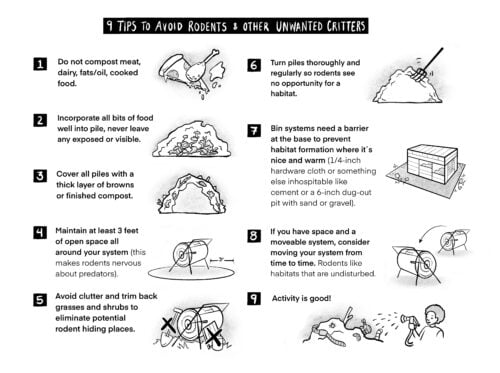
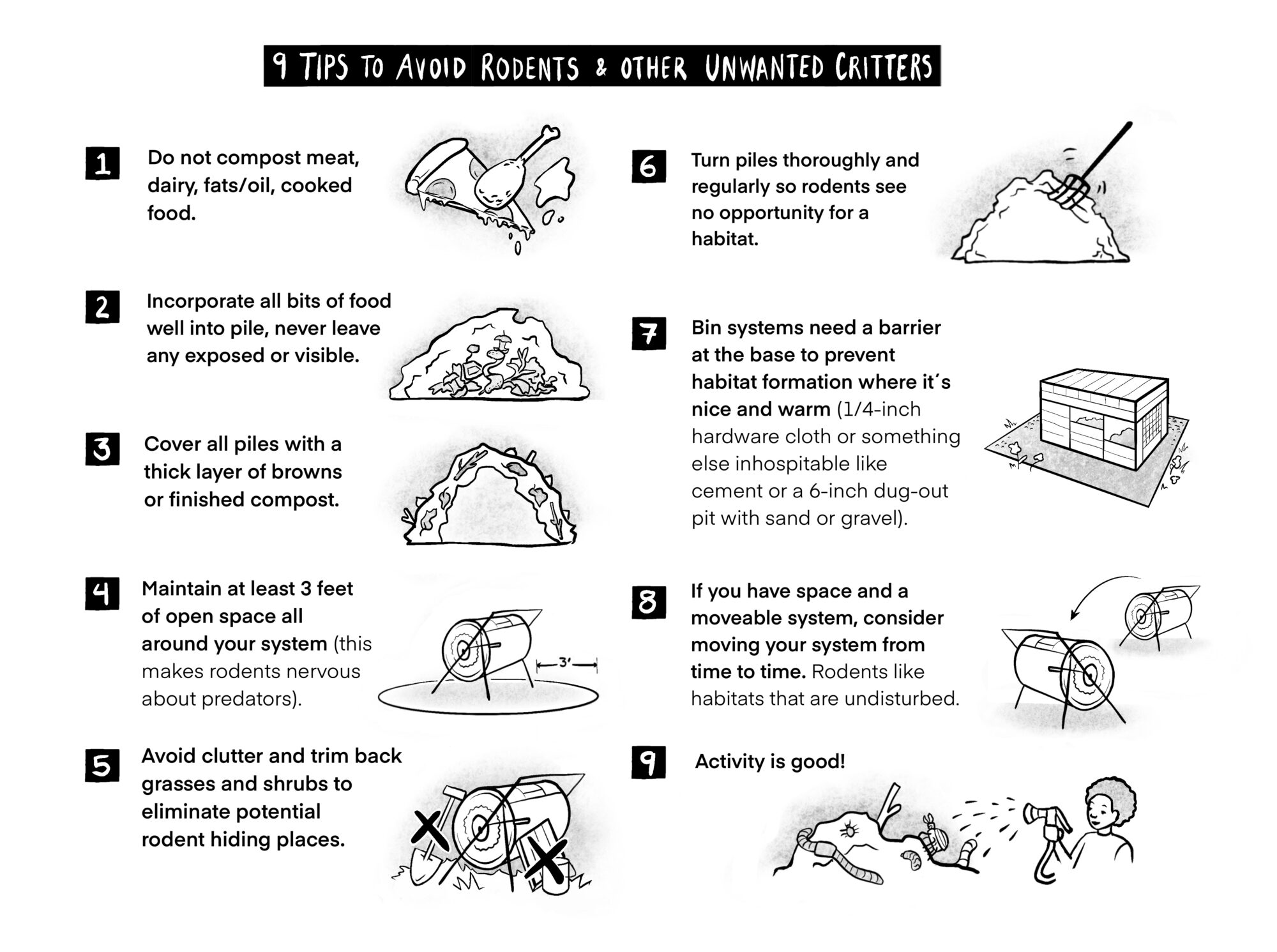
We live in a world full of life – including rodents, such as rats and mice. The way in which we manage our food scraps and other organic residuals can either attract or deter rodents. When they are attracted, rodents can become nuisances and even act as vectors of pathogens and disease. Contrary to popular belief, composting does not cause rodent problems. In fact, careful composting of food scraps has the power to reduce or eliminate rodent activity.
The common practice of throwing wasted food into open trash cans and dumpsters contributes to the proliferation of rodents in urban cities by providing a 24/7 buffet of food. With a basic understanding of rodents’ habits and the incorporation of some simple best practices, composters can keep rodents out of their compost piles and prevent them from establishing a habitat at their composting sites.
Home Composting 101: A Guide to Backyard Hot Composting
ILSR's Home Composting 101 Guide covers the fundamentals of home composting, including benefits of composting, building and managing a compost pile, and troubleshooting.
Community Composting 101 Online Certificate Course
Community Composting 101 provides an overview of the importance of and science behind composting, and recommended best practices for implementing community-based programs.
ILSR’s Vermicomposting 101 Guide covers the fundamentals of composting with worms, including worm facts, managing a worm bin, and how to harvest vermicompost.
ILSR’s Composting 101 Training Guide covers the fundamentals of community composting, including benefits of composting, building and managing a compost pile, and troubleshooting.