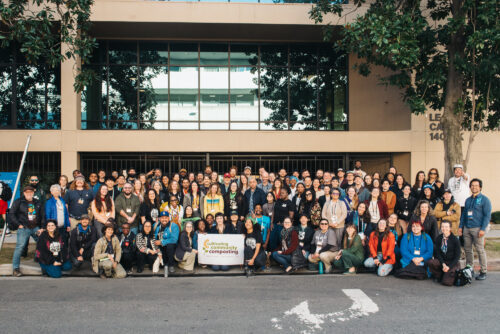
Over 150 community composters, advocates, local government representatives, and allies kicked off 2026 by showcasing community composting as a force of innovation in the broader composting industry, blazing the trail in everything from operations and outreach to holistic systems change.
The 9th National Cultivating Community Composting Forum (CCC26) took place on February 2 in Sacramento, Calif., in conjunction with the US Composting Council’s (USCC) COMPOST2026 Conference and Tradeshow. Hosted by the Institute for Local Self-Reliance (ILSR) in partnership with the USCC and the California Alliance for Community Composting (CACC), the forum brought together attendees representing over 100 unique organizations from approximately 25 states and 5 countries. Thank you to all our sponsors who made this event possible.
ILSR also hosted several events taking place alongside CCC26 and COMPOST2026, including the Young Professionals Community Service Project at Three Sisters Gardens, Gathering Ground: A Celebration of Compost Art and Culture hosted by CACC featuring over 75 artists of composting-related artworks, and four performances of Alex Tatarsky’s Dirt Trip: A Composting Clown Show.
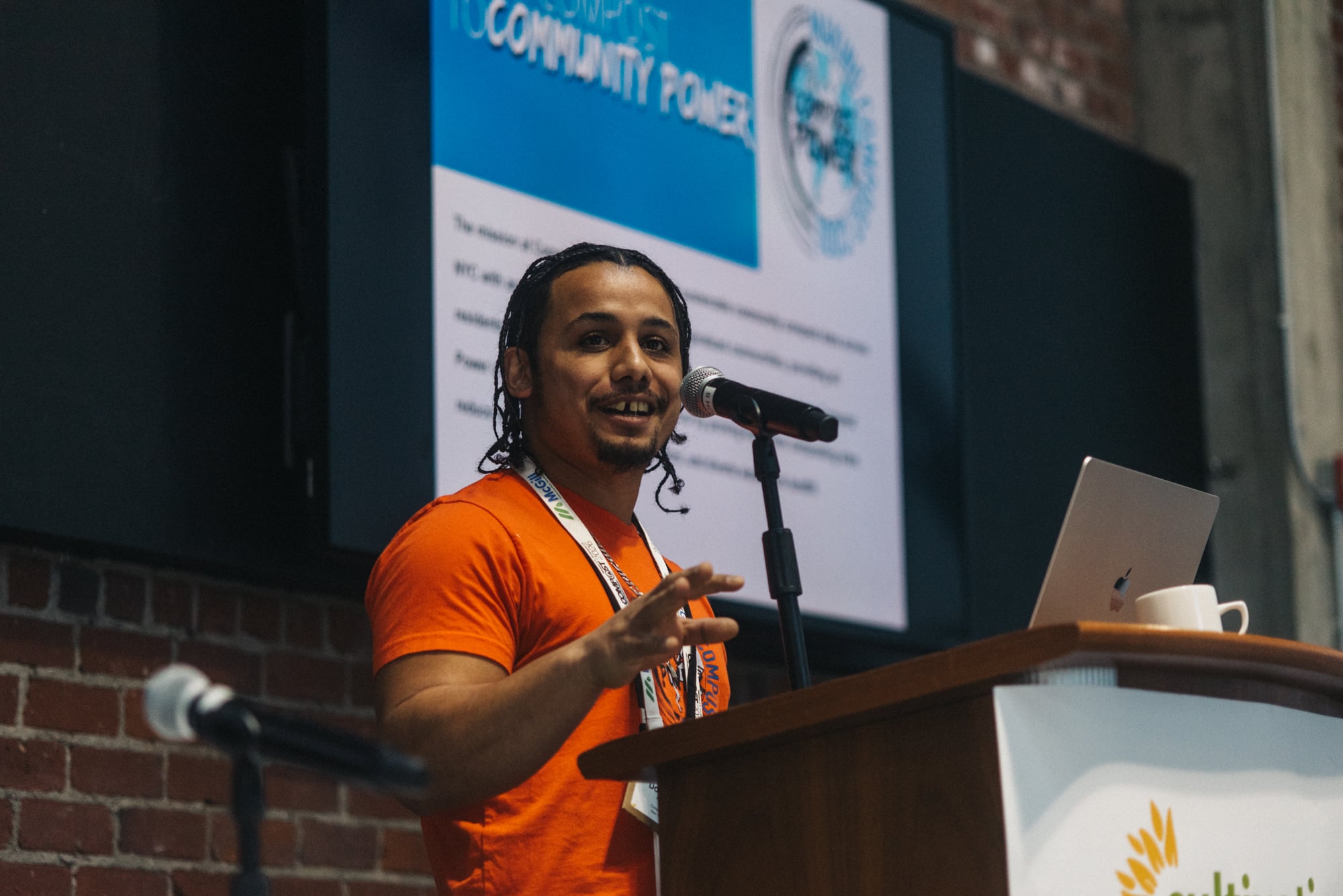
Dany Nelson, Stewards of Earth Composting Facility (New York, NY)CCC26 reinforced for me that community composting isn’t theoretical anymore — people are breaking real ground, literally and figuratively. Connecting with others facing the same barriers, and meeting organizers who have successfully secured land and built working systems, made the path forward feel tangible.

Trailblazers and Industry Leaders
This year’s forum invited collective exploration into how community composters, both in their individual operations and as a movement, were Breaking New Ground. Community composters are a rapidly growing sector of the composting industry, with over 90% of programs starting after 2010. These operations represent a vital expansion of composting infrastructure, often filling service gaps in areas that have no existing organics recycling services. The need for community composters to be resourceful while navigating a landscape built for centralized, industrial operations, combined with their dedication to community, has fostered a scrappy subsector that is constantly innovating in efficient operations, community engagement and education, contamination reduction, maximizing the co-benefits of compost processing, closed loop systems, and much more.
At CCC26, leveraging community composters’ collective knowledge was a key part of the programming. CCC26 was a participant-driven event, offering a mix of small group discussions, presentations, and workshops.
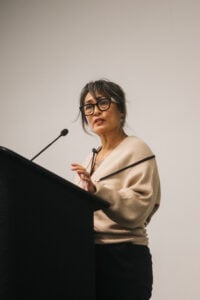
The opening keynote by Michelle Mondia, founder of the Death Workers Alliance, which brings together BIPOC end-of-life practitioners working with and in marginalized communities, invited attendees to draw connections between their composting work and cycles of life, death, and transformation. As a death midwife with 15 years of experience in home funerals, green burials, and culturally grounded end-of-life practice, she discussed the groundbreaking territory of human composting. Michelle also discussed her work as a program manager at Land Together, where she helps create healing garden spaces alongside incarcerated women in Southern California. She invited participants to consider what breaking new ground meant, sharing:
“Breaking New Grounding does not mean tearing everything up, or starting from scratch. Sometimes it means turning towards what’s already here. Towards land, systems, and people that have been overlooked and choosing to tend to them locally, long enough for something new to emerge.”
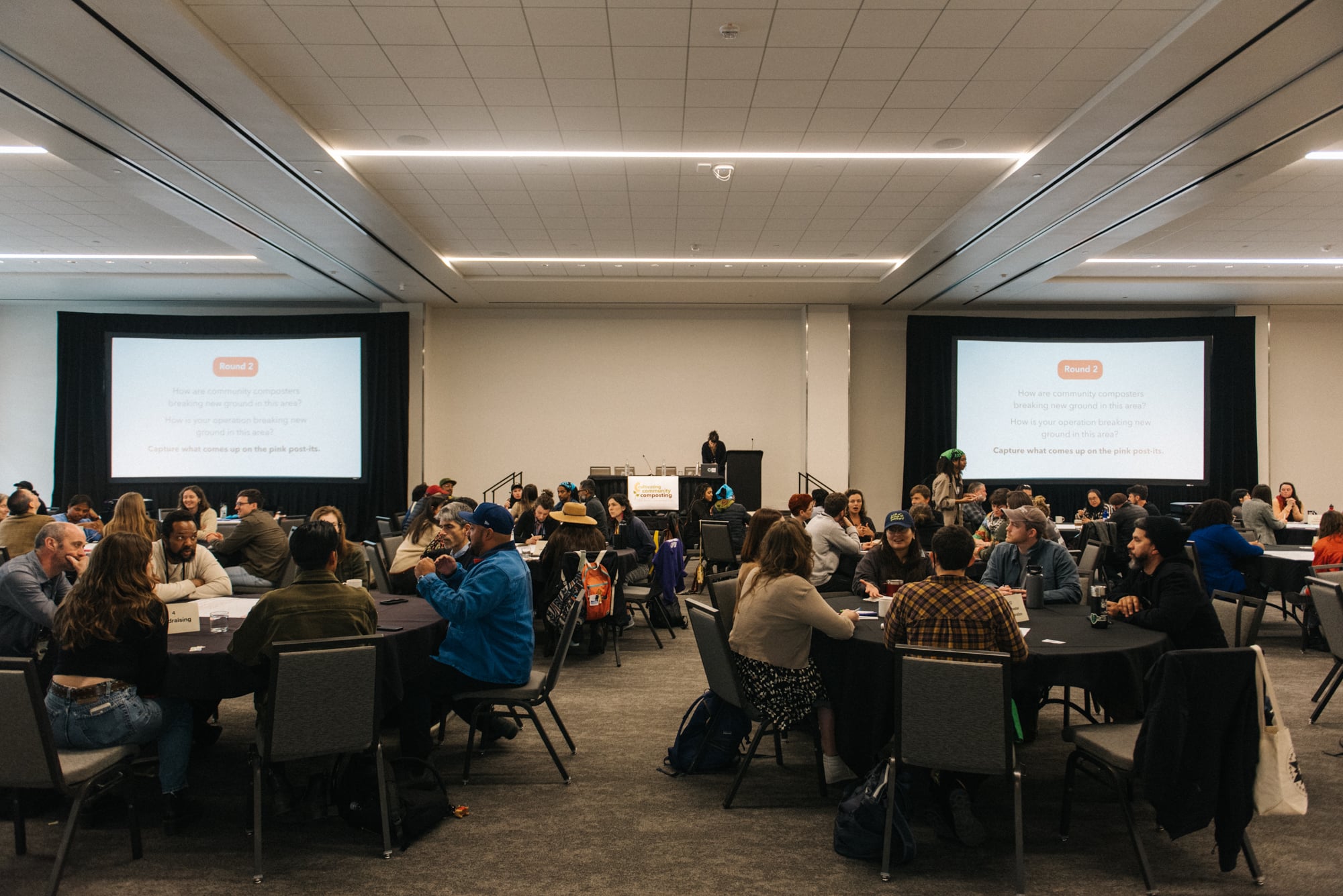
Following the keynote, participants engaged in tabletop discussions organized around key topics of interest mentioned at registration. If there was a topic that attendees were interested in that wasn’t represented, they could also volunteer to lead a small group discussion. Topics included scaling up, navigating municipal programs, education to change behavior, marketing and outreach, fundraising, compost quality, community engagement, and more.


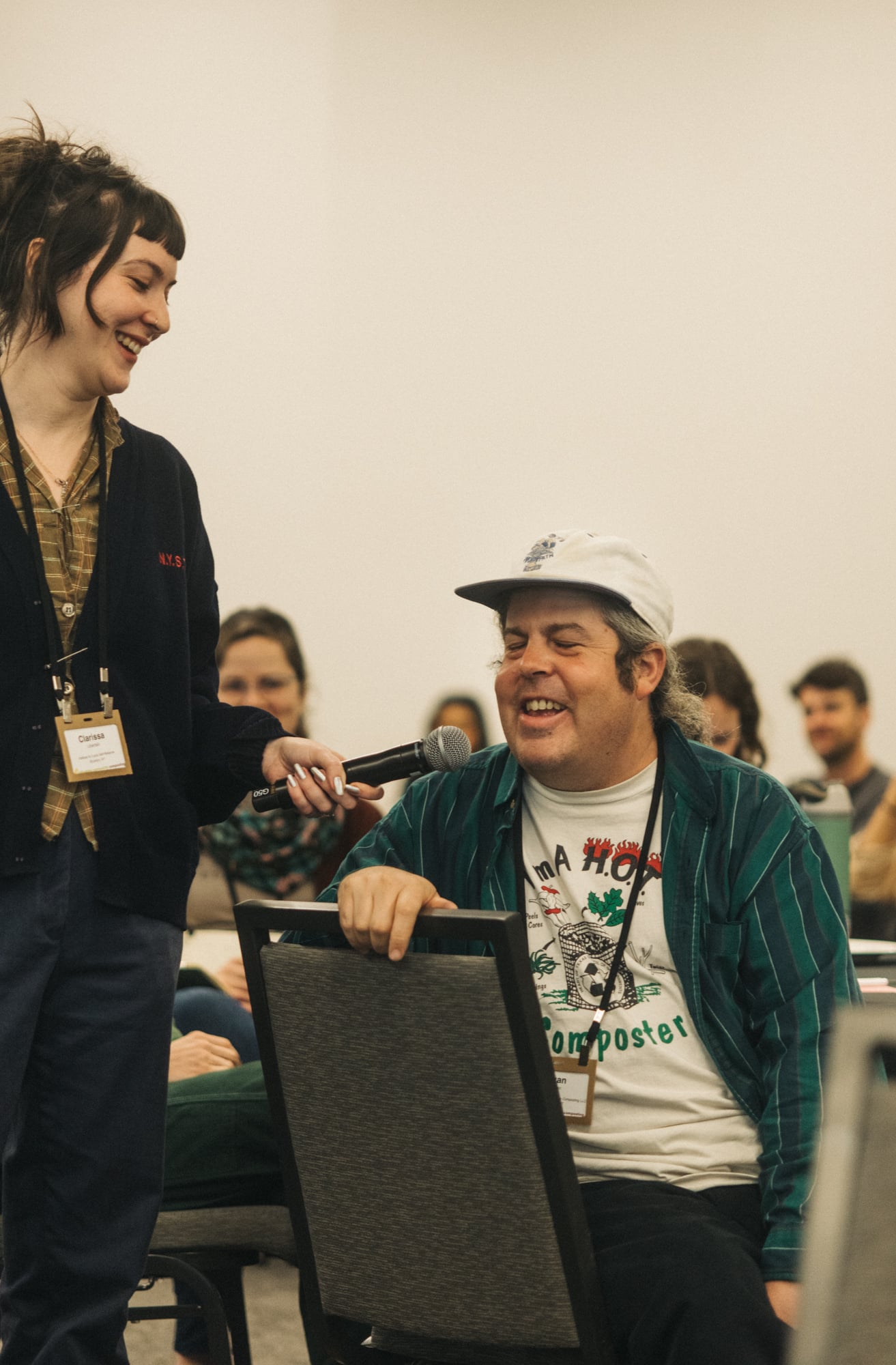

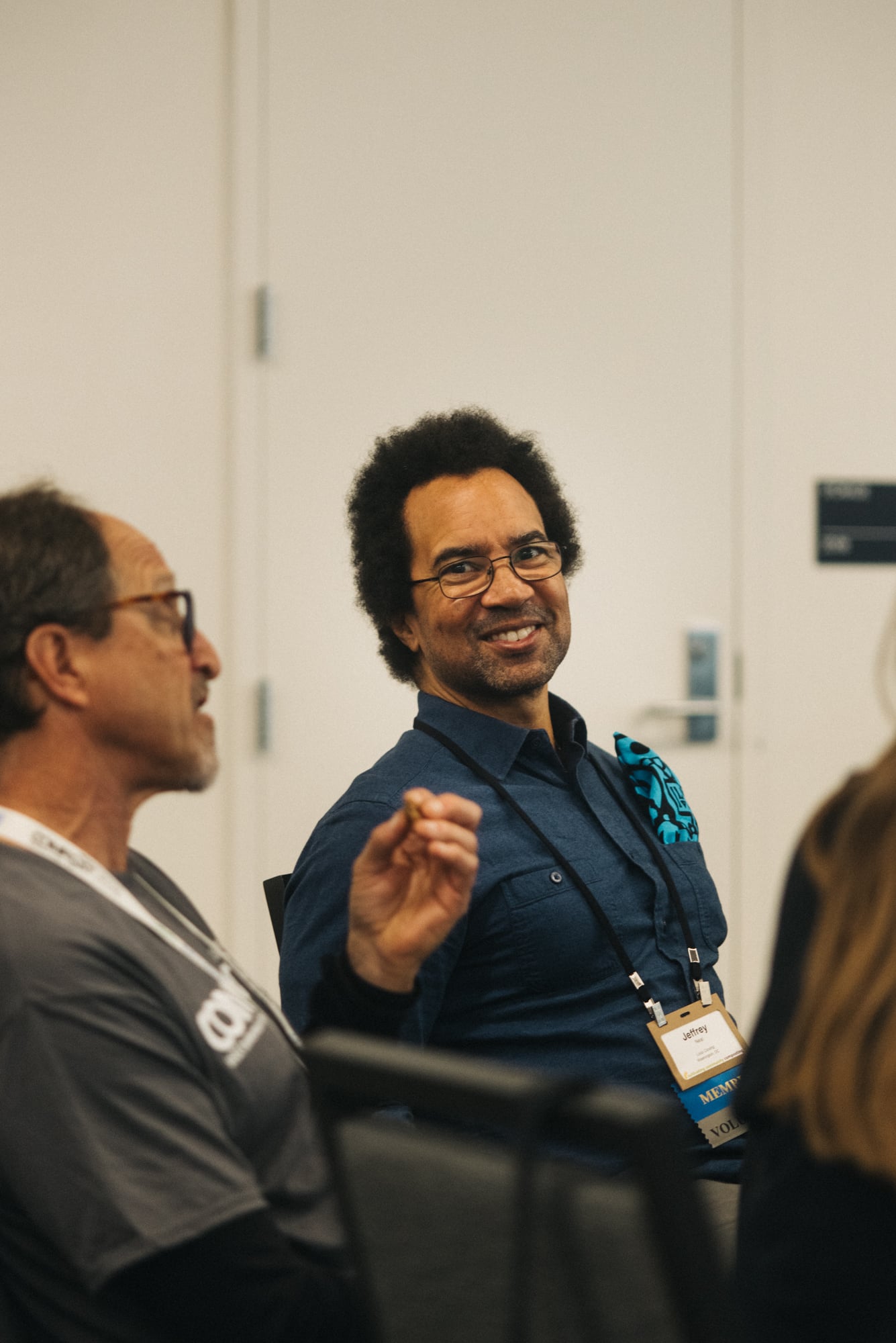
CCC26 AtttendeeThe Cultivating Community Compost Forum brought home how critical community-scale composting is in the global movement to rebuild our soils and recover food scraps.
Grounding and Growing
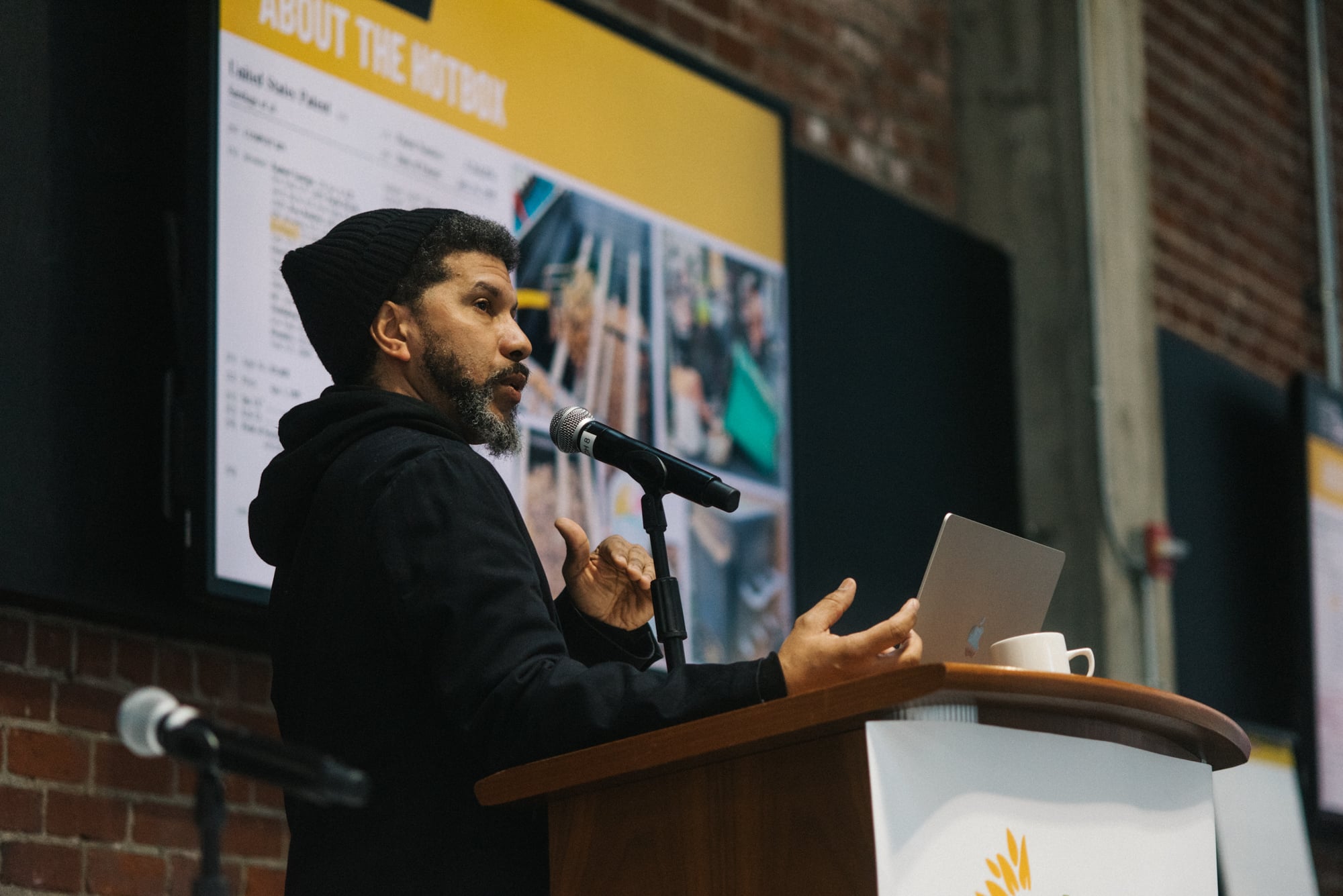
The second half of CCC26 invited attendees to dig deeper into specific themes of interest through workshops and panels.
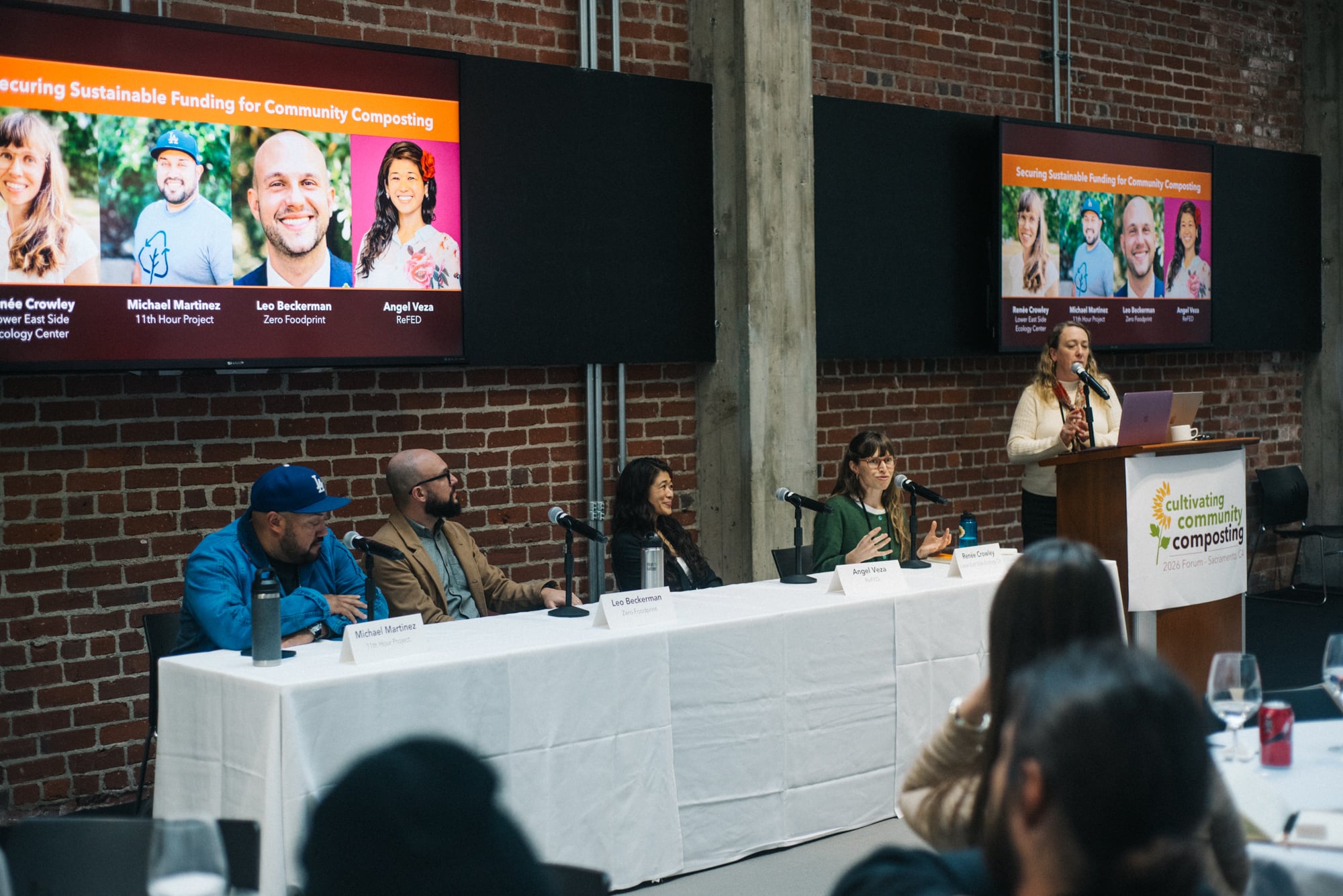
The first session of the afternoon centered around the theme of rooting in community. At the Securing Sustainable Funding Panel, zero-waste funders and community composters shared successful strategies to address one of the biggest concerns for community composters. At the Community-Based Social Marketing workshop, participants learned the importance of going beyond simply awareness raising to implement outreach campaigns that actually change behavior. And at the Compost Art workshop, attendees got their hands dirty, this time with paint instead of food scraps.
The second half of the afternoon invited folks to consider how to grow in the field. The panel focused on Scrappy Solutions & Operational Efficiencies, where composters representing a diversity of operation sizes highlighted successful models and strategies for efficient operations and scaling up. Attendees could also attend a workshop on Soil Science Literacy with a particular focus on soil microbial ecology, soil contaminant bioremediation, and carbon sequestration, or a discussion on the development of a Community Composter Coalition Cooperative for collective purchasing, marketing, and more.



The Art Connection
At the heart of every CCC forum is connection. In an industry where burnout is high and work can feel siloed, new connections are what sustain operations for years to come. Whether through linking someone with a new friend and mentor, or by sparking ideas that can be brought back home, as attendee Sophora Todd expressed, these gatherings are how the mycelia network grows and propels the movement forward.
Alex Thompson, Compost Colorado (Denver, CO)We’re doing more than transforming food scraps into soil. We’re transforming communities and building together something greater than ourselves from the ground up. Throughout the year, it’s easy to get bogged down… but coming to these gatherings and connecting with people helps me reconnect with the why and fuels me for the year to come.
Community composters know there’s often no better connector of hearts, people, and ideas than art. Hosted in conjunction with the California Alliance for Community Composting, the Compost Art gallery included over 75 pieces of compost-related art, from paintings to interactive sculptures to customized Uno cards. At the CCC26 reception, an open mic featured a range of acts, including compost-related songs, poetry, and even juggling. For more humorous evening entertainment, Alex Tatarsky’s Dirt Trip: A Composting Clown Show challenged viewers’ discomfort with “waste” and invited laughter at the underbelly of society.


Community Composters at COMPOST2026
Community composters continue to be a significant and growing subsector of the composting industry. At COMPOST2026, their impact was felt.
Through ILSR’s partnership with the USCC and with the support of the 11th Hour Project, ILSR secured 30 discounted USCC registrations for community composters. At least 15 community composters received full scholarships to attend COMPOST2026.
From panels on financing sustainable growth, to lesson sharing from emerging composters, to presentations on contamination, community composters were not just represented but an integral part of the programming at COMPOST2026. On a panel, “Commercial Composters and Community Composters Work Together,” ILSR’s Brenda Platt, Ryan Jackson of LA Compost, and Michael Martinez of the 11th Hour Project spoke specifically about multi-scalar approaches to creating a more sustainable composting ecosystem.
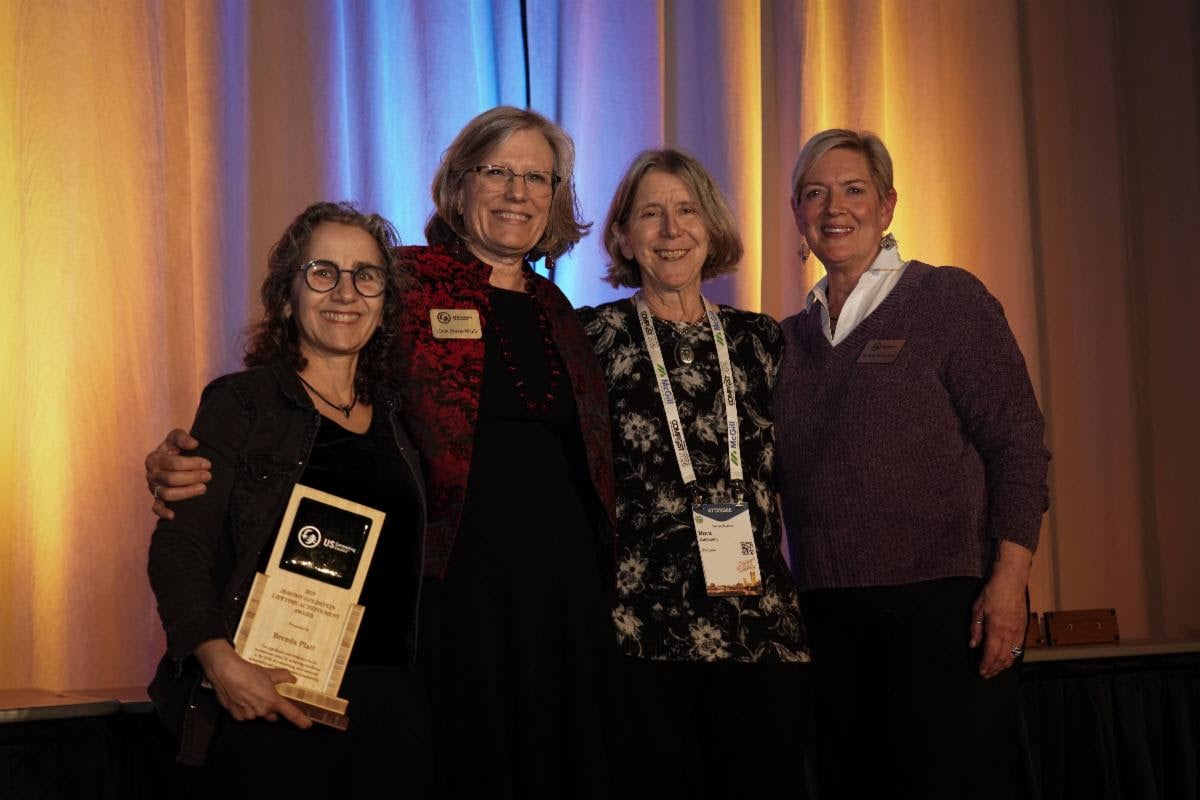
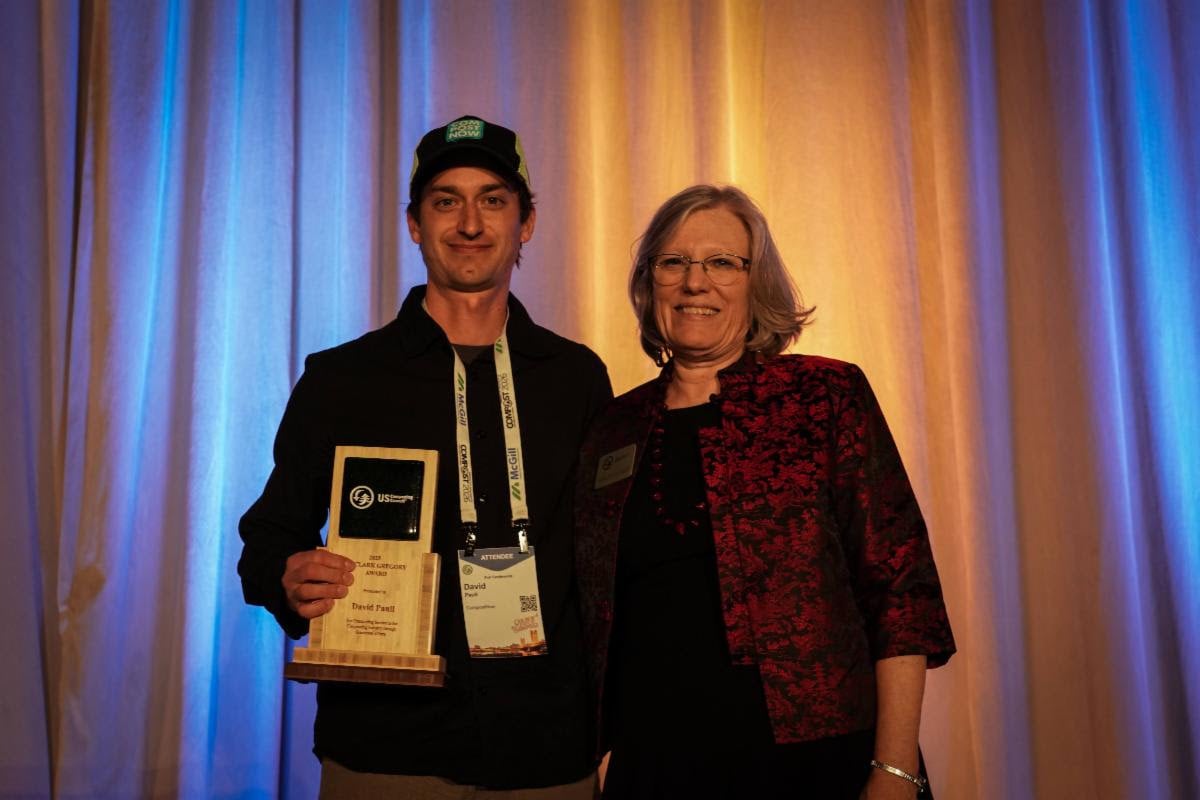
At USCC’s Annual Awards Ceremony, CCC members and affiliates at Happy Trash Compost, CompostNow, and Sanctuary Farms were recognized for their outstanding achievements in the composting industry. Composting for Community Initiative director, Brenda Platt, was the first woman ever awarded the prestigious Jerome Goldstein Lifetime Achievement Award for her 40 years of work in environmental stewardship and natural resource sustainability.

Propelling the Movement
CCC26 showcased the multitude of ways community composters are breaking new ground. Leaving the forum, many attendees expressed renewed passion for their work and preparedness to take their learning back to their communities.
As one attendee summed up:
Dior St. Hillaire, GreenFeenOrganiX & BK ROT (New York, NY)These kinds of gatherings are important because we remember that we matter, not just to ourselves and to our local communities, but to a larger purpose.


Join the Community Composter Coalition
The Community Composter Coalition is a network of community composters that is building the movement by connecting early adopters, spreading lessons learned, and inspiring new operations. The Cultivating Community Composting Forums are just one of many ways community composters connect and support each other in the coalition.
If you are a community composter or direct supporter and want to be the first to know about our next forum, join ILSR’s Community Composter Coalition today.
All photos by Steven Springer
