Five Years of Tribal Broadband Bootcamps – Episode 14 of Unbuffered
The story behind the Tribal Broadband Bootcamps and the growing movement to build tribal networks across Indian Country
From America’s 250th anniversary to BEAD and broadband policy, Chris, Sean, and Karl unpack some of the biggest stories shaping the telecommunications landscape.
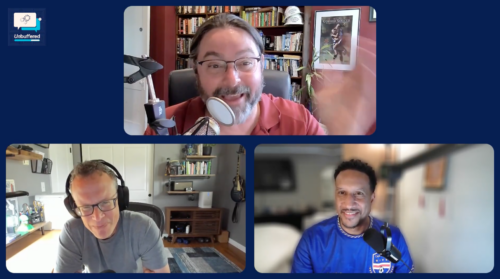
In this episode of Unbuffered, Chris is joined by Sean Gonsalves and Karl Bode for a wide-ranging conversation about the latest stories shaping the telecommunications landscape.
The group begins by discussing the upcoming 250th anniversary of the United States, prompting a broader discussion about the country’s history, civic identity, and how Americans can use the milestone as an opportunity to reflect on the nation’s past while looking toward its future.
From there, they dive into Sean and Karl’s recent article for The Verge: Elon Musk and the Plot to Hijack America’s Broadband, reflecting on the state of broadband policy, the challenges facing community broadband, and how the national conversation around Internet infrastructure continues to evolve.
Finally, Chris, Sean, and Karl unpacked the recent House Committee on Energy & Commerce Hearings regarding Arielle Roth and the National Telecommunications and Information Administration’s revised BEAD guidance, discussing changes to technology neutrality, the growing role of low-Earth orbit satellite providers, and what the new rules could mean for states, communities, and long-term broadband investment.
Along the way, they debate the tradeoffs between Fiber, fixed wireless, and satellite service, and whether the updated approach will deliver the infrastructure communities need.
Throughout the episode, Chris, Sean, and Karl connect today’s policy debates with broader questions about investment, local leadership, and what it will take to ensure communities have access to reliable, affordable Internet for decades to come.
This show is 53 minutes long and can be played on this page
Transcript below.
We want your feedback and suggestions for the show-please e-mail us or leave a comment below.
Thanks to Whitedrift for the song Operator, licensed Creative Commons Attribution (3.0)
Christopher Mitchell (00:15)
It’s time to get Unbuffered. It’s not a problem for this crew, although I will concede that this is the second time I’m recording an introduction, in which I said, Never again will I have a chance to record a show before the 250th anniversary of the founding of the United States of America. So ⁓ irony, irony, not lost on Sean Gonsalves here, who gave a nice little discussion before I cut him off. Welcome back to the show, Sean.
Sean Gonsalves (00:32)
And here we are.
Ha ha. Man, it seems like it’s been forever since I’ve been on.
Christopher Mitchell (00:43)
And we got Karl Bode coming in. Welcome back, Karl.
Karl Bode (00:47)
Hello, thank you for having me.
Christopher Mitchell (00:49)
So ⁓ just ⁓ we’re talking briefly before we get into the discussion, which we’re gonna be we’re gonna talk a little bit about a great article that Sean and Karl wrote that was published on The Verge, which is a wonderful set of podcasts and ⁓ and a website with all kinds of great reporting, ⁓ great news source. ⁓ we’re also gonna talk a little bit about the hearings that just happened with Arielle Roth and for his time we’ll talk about something else, but that’ll be a big surprise. But we wanted to kick it off.
By noting our mixed feelings that we have about July 4th, which I will just say it’s mixed in the sense of like the sorrow of all the like horrible tragedies and mistakes that were made. But I really try to focus on the positive and the things that the United States has done well. And and frankly, some of those things you don’t really pay as much attention to until Elon Musk takes a butcher knife to them or a cleaver or a chainsaw and destroys it and upends the lives of millions of people around the world because
It turns out the USAID was important. It was really, really, really important for millions upon millions of children. but the United States has done a lot of things that I think are worth ⁓ learning from in positive ways and duplicating, replicating. so I I’d given Sean a book and I’ve talked about this book many times, Liberty from All Masters. I think it’s great. Sean was just gonna tell us a little bit about a few thoughts he had ⁓ on it as we head into the 4th year.
Sean Gonsalves (02:12)
That’s right. Well, you know, first I should say happy birthday, America. ⁓ two hundred and fifty years old, which isn’t actually that old when you look at like the history of other countries. So we’re pretty like yeah, well, actually that country’s even younger, ⁓ in in terms of independence. But but I but I’ll say that ⁓ you know, as you alluded to, you know, America’s history is super complicated and and a lot of tragedy. And it feels like we’re in a moment where a lot of the liberty that
Christopher Mitchell (02:22)
Like Cabo Verde.
Sean Gonsalves (02:42)
Many of us have taken for granted, ⁓ seem to be under unique threat right now at the moment, not the least of which is, and of course, ⁓ some of it is being leveraged by like all this new technology and everything around. But the thing that I appreciated that struck me the most about Liberty from All Masters, and I had mentioned before, it’s similar to a book by Richard Rorty called Achieving Our Country. And one of the things in this book, Liberty from All Masters, Barry C. Lynn wrote, is that he talked about.
The anti-monopoly roots of the revolutionary foundings of this country. And that is something that I think is worth thinking about and talking about. So, you know, I’m in Massachusetts where you know the lore of the Boston Tea Party runs pretty deep, but everybody’s heard about it and everybody has these different ideas. But it wasn’t really until this book that I really had ever considered the case that he makes, which is that at the heart of the Boston Tea Party and the in the spark of the revolution.
To, you know, to for there to be an independent United States of America was really an anti-monopoly movement. A movement that said, we don’t want to be buying tea from from Britain. We shouldn’t be forced to, we’re a free country, we’re free people, we shouldn’t have to do it. And the work that we’re we do is really focused around anti-monopoly. And so I really appreciated that kind of frame frame framing around the work, not only helping me understand better the work that we’re doing, but just how rooted it is and how wrong it is for us to allow
a certain segment of the population just because they always talk about liberty or freedom that they should be the only ones to d you know, that they should somehow have a monopoly on even like those ideas and and what those things really mean.
Christopher Mitchell (04:20)
Yeah.
Yeah, we gave them a shot. They’ve ruined it. you know, like you take a survey right now and you ask whether or not ⁓ there’s like a sense of of ⁓ of patriotism among the left. I hope it’s greater than it than it had been before because we can’t let the good things that are part of the United States of America be sullied by ⁓ the bad things, to paraphrase some the others. Last week I was talking at the Tribal Broadband Bootcamp, our fifth.
Tribal Broadband Bootcamp. We talked about that in last week’s show. And and while I was there, I was just saying, like you’re yeah, you’re right. No, you’re right. Fifth year. Sorry. My head is still recovering from from what a wonderful week and trying to get back in the in the the swing of things. fifth anniversary, 23 ⁓ tribal broadband boot camps. And ⁓ I was talking about how it is really frustrating to talk about this in the sense that like most of the people in the room are
Sean Gonsalves (04:55)
No, no, fifth fifth year, not fifth poot boot camp.
Yeah.
Christopher Mitchell (05:16)
members of tribes, ⁓ tribal nations, or they are from Indian country more generally. And it’s weird for me to stand up there and be like, you what, in the United States, history of United States communications policy is actually pretty good. It’s really a global leader in trying to make sure that everyone is well connected. If you were white, you probably had it had a had a good telephone connection, you know, 30, 40 years ago, right? We made sure that just about everyone. Now the tribal nations were largely left out.
⁓ the telephone penetration on on reservation was quite poor actually. And you could certainly head to places in the south where black communities have been sort of left out. but but if you’re in the Appalachians, your deep poverty generally did not prevent you in the same way from having a telephone. And that’s because of government policy that worked. And and right now we’re dealing with the big companies trying to figure out how to scrap that and go to a system in which like
If you could afford it, you get a good connection. And maybe it works well all the time and maybe it doesn’t. And like, who knows? It’s not that important. But like, the United States has a history of taking it seriously and never doing it perfectly and always having room for improvement that is significant, particularly on reservation, but also appreciating that we’ve gone farther than many European nations to make sure that the most remote farmers have good access to tel to the telephone. And we should be continuing that rather than just giving up on it and letting Elon Musk decide who pays what and when.
So Karl, I don’t know if you have any reaction to all that before we go into the first topic.
Karl Bode (06:40)
I will say we have some nice mountains. I think our mountains are very nice. I think a lot of the rivers are pretty cool. I’ve design quite a bit. Yeah, I mean the geography out west is incredible. I’ve you know, I I I have a lot I have a lot I have a lot the music is yep. The food has its moments, you know, there’s a lot I like about it. the humans are aren’t always at the top of that list. ⁓ and I think we have a lot of work to do and I have very complicated
Christopher Mitchell (06:43)
Ha ha ha. ⁓
If you’re into natural disasters, you can find amazing natural disasters here.
Come on man, music.
I I I’m so with you, but
I I spent I spent four months in the Middle East, I spent a month in in Africa and Tanzania, and and I’ve traveled a little bit in other places, and I’ll say that like every time I travel elsewhere, I’m reminded that there’s great people elsewhere and there’s also really bad people elsewhere. Like, know. Yeah.
Karl Bode (07:21)
Yeah, I mean it’s it’s human beings, right? It’s hu just
hu it’s just humans. ⁓ yeah, I have very complicated mixed feelings about all of it. You know, it’s it’s it’s thorny. We’re in a very, very dangerous territory right now, and if we don’t address it, this is not going to last. Any of this, any of the stuff we understand is a functional federal government. Yeah. Yeah. I mean foundationally foundationally poor for for people to have the federal government collapse into a
Christopher Mitchell (07:39)
And that would be bad, right? I mean that’s what you’re gonna driving at. It would be worse.
Karl Bode (07:47)
heaping pile of rubble overseen by tech oligarchs. Yeah, I think that would probably be bad. ⁓ but but I I I do admire our resiliency, you know, I admire ⁓ at its best our inclusiveness in terms of ⁓ cultures which we used to actually defend. ⁓ it has its moments.
Christopher Mitchell (07:53)
All right, I’m glad we’re on the same page.
And we have
we’ve preserved a free press, and The Verge is has used that to publish really great investigations. They do great podcasts. It’s it’s it’s ⁓ it’s really it’s got a good eye for ⁓ a good tone for sarcasm and stuff. And and they occasionally hire ⁓ you know they they take pieces from from amazing writers, right?
Sean Gonsalves (08:09)
Yeah.
Karl Bode (08:10)
Ha ha ha.
Yeah, they’re one
Sean Gonsalves (08:26)
But
Karl Bode (08:26)
of
they’re they’re really one of the few tech outlets I think that’s still you know, Wired, Ars Technica and Verge are probably like the three remaining outlets that do tech policy and tech coverage really pretty consistently well. And that speaks to their editors and chiefs chiefs who have who have some courage in terms of putting stuff out there that’s both challenging and sometimes putting out like complicated policy screeds, you know, that a lot of websites don’t want to even touch.
Sean Gonsalves (08:40)
What
And I appreciate the segue into this article, but I will say that when you said that we’ve preserved a free press, that word preserve is doing a lot of work there because I don’t but but but you know you
Karl Bode (08:58)
We pers we’ve Yep.
Christopher Mitchell (09:01)
It is
you I mean if you don’t own
Karl Bode (09:02)
We’ve pickled a few segments of the free press.
Christopher Mitchell (09:06)
Think I will say I feel like podcasting is a direct embodiment. If Benjamin Franklin was around right now, that man would be maybe not just making podcasts, but running an aggregation facility to get podcasts together. We have preserved the free press. It’s one of the things that I feel pretty strongly about. The corporate control of the free press of the press is certainly also at a high right now. But if you want to go find
Hey, if you want to find the trashiest trash, you can find that. If you want to find good stuff, you can find it. So, but let’s move on. Before we run out of time on before we even get to the first topic, Sean, what did you write about?
Sean Gonsalves (09:42)
Well I it wasn’t just me. Karl and I kind of Exactly, exactly. When I was a kid there was this cartoon, The Wonder Twins and they would, you know, put their fist together and turn it and stuff. That’s what me and Karl did.
Christopher Mitchell (09:45)
Right, I was a plural you, but it’s not clear ’cause the English language sucks.
Sean Gonsalves (09:55)
But I will say that what we wanted to try to do is explain to folks who haven’t been following this closely, which is pretty much everybody, what happened to this BEAD program, this program that, you know, was part of the infrastructure ⁓ law that was supposed to be, or at least aimed to be, this once-in-a-generation ⁓ federal program that was supposed to solve the digital divide once and for all. And it was this program that has
had fits and starts and lots of complaints about delays and then it’s changed quite a bit. And so we wanted to capture that in a piece. And Karl and I decided that we were going to begin the piece by talking about a rocket explosion ⁓ down there in Cape Canaveral ⁓ a couple of well I guess about a month or so ago. Karl, we’ wh why why why why did we want to start that piece with with the explosion of of a rocket?
Karl Bode (10:48)
The original, you know, it starts with the two pieces of legislation in twenty twenty one, the ARPA, the American Rescue Plan Act, and then the infrastructure bill, which both took very different routes towards trying to bridge the digital divide and get affordable Internet access. ARPA was very loosely ruled, you know, states had a lot of control over how money was spent. They threw it at fiber networks. The networks are f relatively impressively quickly deployed by everything we’ve seen. And then BEAD
Which was part of the infrastructure bill had forty-two point five billion dollars dedicated to Internet access to shore up coverage in a lot of neglected areas. And the original BEAD program focused heavily on fiber optic Internet, you know, pushing that as deeply into neighborhoods as you could, a lot of rural areas that it didn’t have good connectivity, that had been on shitty cable and DSL modems for the last 20 years. so the original idea of the plan was great. It just took a lot of time, and the way Congress structured it.
You know, it required that we remap broadband access, it required that we deploy the stuff equitably, it it required the federal government work closely with states. That’s a very complicated muck of soup for a country with a with a with a barely functional Congress to dig into, but they did. The problem is
Christopher Mitchell (11:54)
And no really eff
no effective telecom regulator, really.
Karl Bode (11:57)
Right, right. We don’t really have functional oversight at this point. So you know, the fact that this exists at all is kind of miraculous. But, you know, last election season Republicans started complaining about how long it was taking. You know, they’re b ever every every other day you’d see something in the press about how the BEAD program’s a you know a bureaucracy, it’s a big mess, it’s taking too long, nobody’s connected. The second the Trump administration gets into office, they immediately introduce all sorts of cumbersome new delays.
Sean Gonsalves (11:57)
Right.
Karl Bode (12:23)
they they strip away most of the oversight, they eliminate language requiring that the broadband is affordable and evenly deployed, and they take a you know, a huge chunk of the forty two point five billion dollars and they funnel it away from affordable and high quality fiber and towards ⁓ billionaires like Elon Musk and Jeff Bezos for their Low Earth Orbit satellite ventures, which
Christopher Mitchell (12:44)
Right. They
didn’t use novelty checks, but they really should have. Like the giant ones that are like huge.
Karl Bode (12:47)
Right. Yeah, yeah.
Yeah. You’re yeah, Ed McMahon victory check, that would be that’s what we needed to to dole out.
Sean Gonsalves (12:54)
Right.
And so we we we started the piece off with the rocket explosion because the Blue Origin New Glenn rocket that exploded on the launch pad was supposed to be the rocket that was going to bring up some of the Amazon Leo satellites for Jeff Bezo. So that was we thought was a unintentionally perfect metaphor for what’s happened to the BEAD program, which is that it it started off with this with these lofty goals. It was really focused heavily on fiber.
And and investing in stuff that was going to last for generations instead of just shoveling money over to the world’s richest people for you know satellite Internet that you know needs to be replaced every few years and all that kind of stuff. And lo and behold, the rocket explodes, and that we felt like was kind of a good metaphor for what’s happened to the program. And so in the article, I think a couple things that are worth pointing out is for example.
What it means on the ground. There was one community we spoke to the folks down in East Carroll Parish in Louisiana. That was a state that was gonna do like 90% fiber project after the benefit of the bargain round that the Trump administration put in that delayed this program further. That number dropped to 78%. And for Lake Providence, which is in East Carroll Parish, the Louisiana’s original plan that had been that had been approved a year ago, that community was going to get a community-wide fiber network.
The the state broadband office even said, Yeah, the ISP, they’re we’re gonna give them six point two million dollars and build it out, benefit of the bargain comes along and goes up. Nope, none of those locations are available for fiber. That money’s now gonna go to Starlink. And now those people down in East Carroll Parish, one of the ⁓ most economically challenged areas of the state, are now saying, you know, being told of the nation are now being told, ⁓ well, you know, too bad.
Christopher Mitchell (14:39)
Of the nation of the nation.
Sean Gonsalves (14:44)
Sign up for Starlink, which you could have already signed up for, which nobody did, because it’s expensive and it doesn’t work like fiber. And so that was sort of an on the ground an egg of example in the article. There’s a lot in there, and I’m quite frankly surprised that we got as much as we could get in there, even even as difficult as it was to keep it under like, you know, like twenty four hundred words or whatever the word count was.
Karl Bode (15:06)
Yeah. Yeah. It’s ⁓ the biggest thing to remember or to think about is that a lot of these subsidies going to Musk and Bezos are for services that they already deployed or already plan to deploy. And these are both guys who constantly lament subsidies and insist that subsidies are terrible and we should get rid of subsidies. And here they are gobbling up what could be potentially billions of dollars for services they already plan to deploy. That’s a huge waste of money. it’s probably gonna wind up being duplicative because we’re gonna have to go back into a lot of these areas and deploy fiber anyway.
so it’s a real abandonment of principles and and a kind of an embarrassing failure for a program that honestly had some decent potential to really change people’s lives.
Christopher Mitchell (15:44)
Well, and the change on the ground couldn’t be more significant because before you were gonna have thousands of dollars per home, in some cases more, more than ten thousand dollars per home coming into the area. That money was gonna go to crews that live in the area to build the networks, and then it was gonna go to people to maintain the networks to deliver a service that would be affordable and would be provided by a company ⁓ or a cooperative.
that was likely using local tax preparation and local marketing and stuff like that, rather than going to Elon Musk, who is ⁓ not doing any of those things. None of that money benefits them. In fact, like the only thing you could say about SpaceX is that it’s a vacuum cleaner of resources out of communities. Now, now I mean the thing is is that like if you’re like if you’re on a mountaintop, great. I don’t I I I talk constantly about how Starlink is a miraculous, really amazing system.
Sean Gonsalves (16:16)
That’s right.
That’s exactly it.
Karl Bode (16:30)
Yeah.
Christopher Mitchell (16:39)
But it is not a system for communities because the density of development often precludes everyone from having service. It is not a universal solution. So this is like it’s just worse all around. We are wasting money on services that the private sector was already investing in. ⁓ that money is not gonna go to like providing affordable services to people that need it. We’re gonna have kids continuing to come home from school not having decent Internet access. it’s just you have fewer jobs. ⁓ just
Every part of this is is just bad. And I just the thing that kills me, Karl, and I I think Karl before you, Sean, but like is that like for the next five or ten years we’ll have people being like, ⁓ man, like why is service so bad in some of these places? Like it’s inevitable.
Karl Bode (17:19)
Yeah. Yeah, that’s that’s the th th
the thing that kills me is I know I’m gonna have to write about this. We’re all gonna have to write about this for the next five years and watch people’s slowly dawning awareness that you know that they got ripped off by the government. And then all the people responsible for it, all the people that prioritize Starlink and prioritize giving money to billionaires, they’re all gonna disappear. They’re gonna have nothing to say, they’re not gonna be in policy, they’re gonna be off on some new adventure. Well we’ll well real people like us are stuck here trying to dig through the mess and explain to people why they got ripped off by the government.
Christopher Mitchell (17:41)
Mm-hmm.
Sean Gonsalves (17:48)
And and you know where proof of that is, and one of the things that was interesting in seeing this piece published in The Verge is looking at the numerous comments under the story where we talk about all these things. Now, granted, you you know, certain things you breeze over, you wish you could have spent more time kind of explaining why on certain things, but it’s amazing to me the amount of people, and certainly not the majority of people in the comments, but the amount of people both in the comment section but also you see it online that have this idea that since Starlink is in space and it’s Elon Musk that
That it’s satellite is is is like this future next gen technology and that wireline connections is like this old stuff. And so yeah, Karl, you’re gonna be writing about this and b or we’re both of us are gonna be writing about this for the next five to ten years because there is this perception and and and Elon is is a master at PR in convincing people of stuff of smoke and mirrors that
Christopher Mitchell (18:39)
Yeah, no, we’re we’re talking about this. Southern California has roughly the same number of like wireless mobile macro sites, like for mobile cell service. Has Southern California alone has roughly the same number of antennas as Musk has put in space. You drive around, you can’t get good service in LA. You know, like in few places you can. Some places it’s okay, in other places it’s terrible, just like everywhere else.
And like the idea that, like, we put in space where now millions of people can access each satellite rather than hundreds or thousands. And it’s just there’s magic. You you get the underwear gnome problem, and we’re stuck on step two.
Karl Bode (19:15)
They they really don’t
Yeah. They really do. A lot of people I think and you know, Joe Rogan had Musk on and they talked about Starlink and then there was a big conversation on the right about Starlink and they really view it as kind of like this magic pixie dust that you just has no limits and will immediately scale to like five hundred million subscribers with no issues. When you know there’s data and even Elon Musk himself admitted earlier that it doesn’t scale properly. It can’t it can’t serve, you know, dense even rural communities on a high in any sort of high volume. The congestion starts to be a problem, the prices are high.
Christopher Mitchell (19:45)
Yeah. Well
Karl Bode (19:45)
As you know, more people flood
to the network, it’s gonna have all sorts of weird restrictions in terms of congestion and network limitations and how can you run 4K video after 10 PM it’s gonna be it, you know, Low Earth Orbit satellite is a lot better than the older satellite broadband systems we we all know and hate. but it still has the same physics problem. The capacity is just not there.
Christopher Mitchell (20:04)
John, if
if you wanna add anything, it’s gotta be new. It can’t be anything we’ve already talked about in past episodes.
Sean Gonsalves (20:09)
No, it’s just that it’s worth noting that none of this conversation means that we’re saying that Starlink doesn’t work or that it’s not because people miss this all the time. It’s like you look in the comments and there’ll be somebody saying, But like I I live in an area where I there was no broadband and I have Starlink now and it works great. Cool. And that is so wonderful for you. But we’re not but this idea that just because something works for you in that one household is not the same thing as saying that this is going to work at scale or in
Christopher Mitchell (20:19)
Yeah, yeah.
Sean Gonsalves (20:38)
the solution for hundreds of millions of homes.
Karl Bode (20:42)
Yeah.
Christopher Mitchell (20:42)
Yeah, we got
we have this restaurant that I love here, Nashville Hot Chicken, or it’s a Nashville Coop, which is a it’s a it’s a hot chicken place where they took Ethiopian and East African spices and mixed it in with that. And it’s just it’s amazing. But I think there’s still gonna be hunger and like food insecurity in in Saint Paul after this restaurant, you know, is in business for a while.
Karl Bode (20:58)
Probabl
probably so. Yep. Yep.
Christopher Mitchell (21:02)
All right, I wanna move on to to the next topic, which is ⁓ hearing that was today. Sean, you listened in on it and I think you and Jordan conspired to find a few clips that I have to respond to sight unseen we’re gonna talk about here.
Sean Gonsalves (21:15)
That’s right.
Christopher Mitchell (23:32)
let me start with two responses. One is the sort of honest response, which is that NTIA and Arielle Roth, the leadership are incompetent. They don’t know what they’re doing. And and they made a bunch of of wild claims that they would get all this stuff done, not knowing how to do it. the whole thing about mapping anomalies, yeah, yeah.
Yeah, that’s right. And the question is, are we going to hold up a connection for millions of people so that you can solve, can try to stop one apartment building that might not be permissible from getting service? Like this is this has been one of the consistent issues that we’ve had is that a lot of the conservative members, the Republicans, have said we can’t solve a problem for a hundred thousand people unless we make sure there’s not one undeserving person in there. And that’s a good recipe for not getting done. But the second reaction that I would have is that this is the plan.
Karl Bode (24:18)
Mm.
Christopher Mitchell (24:23)
They don’t want California to get the money. And and so like that’s that’s what’s going on.
Karl Bode (24:24)
Yeah. Yeah, and then yeah.
Yeah, correct. And they want to find, you know, they’ve done in Brendan Carr. The FCC has done this. They find these weird things that they can pretend that there’s fraud about, like in California, the people on the lifeline roles that you saw them make a big stink, you know, the immigrants were stealing money intended for broadband. That’s what they’re putting on here. They’re gonna put on a little stage play where they pretend that California specifically is engaged in fraud, which doesn’t actually exist, so that they can b you know kick the can down the road. The thing that strikes me is she’s really keen on the fact that they deployed
Broadband to Louisiana ⁓ and Nebraska. But you when Sean and I were reporting out the Verge piece, we found, you know, the actual deployments in those areas are literally like a ha in what in I think it was Nebraska. One of the states is literally like two houses. T two two houses can get fixed wireless. And they put on a big, they put out a press release, they had a big press event. They’re like, look, look what we did with BEAD, we launched broadband, amazing. But and you know, those two states combined, I think, are like a hundred people and a handful of houses that have actually gotten service. So that’s a la her her response is laughable.
Sean Gonsalves (25:09)
Right.
Christopher Mitchell (25:24)
Which is not the fault of the ISPs.
I mean, Matt Larson is involved in that project from Vistabeam in in in Nebraska. But like let’s the to be clear for people who haven’t tracked this, if Arielle Roth had come into office and fallen into a coma and not done anything, we would be further along than we are because she was in power and awake.
Karl Bode (25:29)
No. That’s not that’s
Yeah. Yeah.
Sean Gonsalves (25:42)
Right, right.
Karl Bode (25:45)
Yeah. Louisiana was just about to deploy, you know, just when the election happened, wasn’t that the case? Louisiana was like amongst the first states to just about and so the fact that they got service seven months whatever later is not any sort of win. You’re right. Like if they had done nothing whatsoever, the the states would probably be better off. It’s embarrassing.
Christopher Mitchell (26:01)
The costs
have gone up, everything’s gone up in the meantime, while they’re sitting there wasting time and pretending that they’re saving the taxpayers’ dollars when in fact they’re raising the prices for all these folks in rural areas. We are seeing a shift of money from poor rural areas to Elon Musk’s pockets. Like that’s literally what we’re watching, nothing else.
Sean Gonsalves (26:19)
Right. Right.
Karl Bode (26:20)
Mm-hmm.
Sean Gonsalves (26:21)
And well, I’ll just say one little small note about the that that keeps the the historical revisionism that goes on that even the Democratic congressman there, Congressman Peters, kind of engages in a little bit where they everybody tries to pretend like Congress hasn’t for years turned the other way in in getting the and the FCC to get the FCC to actually map things properly. And that the big thing that was holding up BEAD was just that. And now everybody wants to pretend like
That wasn’t a thing or whatever. And then here’s Arielle Roth even trying to make it sound like, well, there were some mapping issues, you think?
Karl Bode (26:54)
Yeah.
Yeah, they tr they fought against the the broadband providers of Republicans together and some centrist democrats fought against accurate broadband mapping for fifteen straight years. They did not want an ac yeah, and they won. They did not want an accurate picture of the lack of competition and the monopoly issues in the country, and they won that fight. So when Congress passed BEAD, a primary part was like let’s actually map broadband access in a relatively competent way, and that doesn’t happen overnight. It’s a big country, you have to work closely with states. It was gonna take multiple years to do this. So when I saw
Christopher Mitchell (27:03)
Yeah, they won.
Karl Bode (27:24)
You know No. No. And and and the thing is it wasn’t just Republicans. Democrats were like Sean said, Democrats were jumping on the Ezra Klein at the New York Times went on Jon Stewart’s podcast and made a big stink about how BEAD was taking forever, how it was a big bureaucracy, Democrats can’t build things anymore. You know, and he didn’t mention ARPA successfully deploying broadband and he’s disappeared from the conversation completely since. I have not seen Ezra Klein mention broadband one time.
Christopher Mitchell (27:24)
And we still didn’t do it!
Sean Gonsalves (27:25)
Right.
Karl Bode (27:49)
Since it was brought up in his podcast tour last fall, despite the fact that Republican policy changes have created massive new delays, which, you know, is not the abundance future he was claiming to look at.
Christopher Mitchell (27:52)
Yeah.
Sean Gonsalves (27:59)
I I didn’t get a chance to watch all of it, but I did see and to his credit there was a congressman from Florida, a Republican congressman that had talked earlier. he talked specifically about how the American Rescue Plan money really connected millions of ⁓ of
Christopher Mitchell (30:06)
Yeah, I mean, expedite it doesn’t mean what you think it does. But I I I think one of the things that I I would take away from that is just that Congress is hearings are broken. I mean, I have to say that like if you want to make me feel sorry for Arielle Roth, one of the things to do would be for me to watch that whole hearing where she has to answer the same question over and over again about her incompetence. ⁓ but each each senator ⁓ each senator and rep has to ask it you know, ⁓ themselves.
do you have a better reaction? Go ahead.
Sean Gonsalves (30:34)
So, well, I’ll just say that Congressman Soto, I guess, just deserves credit for at least recognizing which no one else seems to remember about the American Rescue Plan and and and how much it’s benefited and how much it’s connected people. But the point about it isn’t just that s people are missing that, which he which he rightly points out. It’s that the American Rescue Plan was fundamentally about giving money to the states, getting the ⁓ money closer to the problem, closer to the people that understood where the challenges were, and allow them to figure it out.
Karl Bode (30:42)
Yeah. How much benefit
Sean Gonsalves (31:04)
top down thing and then the Trump administration comes in and essentially tries to turn BEAD into the Rural Digital Opportunity Fund, like it turned it into an
Christopher Mitchell (31:11)
Right.
this is what happened. And I feel like it’s really helpful to remember this because I was deeply frustrated with the American Rescue Plan came out. Because like the American Rescue Plan came comes out, the money the idea is we’re gonna give all this money out through SLFRF, the State and Local Fiscal Recovery Funds, right? I’ve written about this. And ⁓ Treasury is the tr has to write the rules. And Treasury doesn’t know how to write rules about broadband, right? And so they’re trying to figure it out. They bring in some consultants, they bring in some folks that know what they’re doing.
But the cable industry gets in there as well. And the cable industry writes these rules that are basically like, okay, you can only build it where there’s absolutely nothing available. And so a bunch of the cities, the National League of Cities, ⁓ Angela, Angelina Panettieri and I, and a few other people, ⁓ I shouldn’t say a few other people, others, you know, like New America, there’s a lot of folks that pushed. We put together this coalition to basically be like, look, you you can’t write the rules that way. You have to change the rules. And they were like, we gotta get these rules out there, we’re moving fast.
And we’re like, these rules are terrible. You gotta change them. And so they listened to us. The Biden administration changed the rules and said, basically, look, if you’re a local government and you actually know that people aren’t being served because they can’t afford it or it’s not there or whatever, then you can build. And they rejected the cable company argument. That is the argument that Arielle Roth is making over and over again, which is that, like, we have to have perfect information before we write a check. The Biden administration
in the rescue plan rejected that ridiculous line of thought and said we’re gonna move fast we’re gonna trust states we’re gonna trust localities and they’re gonna do the best they can and yeah there might be some wasted investment but it is better to get it out there and get it done they did that and that was a success and now people just I feel like no one recognizes that
Karl Bode (32:51)
No, even the Democrats, like I mentioned with Ezra Klein, they didn’t mention the fact that ARPA was quite successful ⁓ and deployed fiber to a lot of ⁓ you know, lower income not just not just rural neighborhoods, but targeted lower income neighborhoods first. You know, you gave the money to states who knew it, some local municipalities that actually knew what they were doing, and they did a good job with it. And I just it doesn’t get mentioned. Democrats are not great in taking credit for it. and the Republicans just pretend that like ARPA didn’t exist at all when it was really quite effective.
Sean Gonsalves (33:19)
Or or or the Republicans are out like at press conferences taking credit for the connectivity. No other thing voted against both Barbara and their infrastructure law.
Christopher Mitchell (33:19)
Yeah, no it was
Karl Bode (33:24)
Right, or they could right. They vote they voted against it and then they took credit for the press. That happened constantly. Yeah. Yeah.
Christopher Mitchell (33:24)
⁓ absolutely. my god. Yeah.
And and just to be clear though, BEAD was a different kind of program. I don’t think if our goal was to make sure that every last home was covered in each state, then BEAD was needed to go to this level of complexity. I actually think that’s bad policy, though, myself. I think it’s far better to basically say, here’s a tranche of money to the states. And if they and if there’s enough af left over homes that need to be connected still, then we do another tranche. Or like you figure, but you don’t have a massively bloated, like bureaucratic, heavy program with all this stuff.
to do it. That is what you would need if you want to say, we know for certain that everyone’s connected. I don’t think we ever have that level of certainty on earth. Like I just don’t think we do. And so like we need to embrace the rescue plan mentality for making investments.
Sean Gonsalves (34:13)
Yeah, and I’ll just say that what you’re hitting on. In theory, it it it it is kind of related to the non-deployment funds because in theory the non-deployment funds in BEAD are sort of supposed to be used to okay, when everything is said and done, where are the gaps and how can we use the money that’s left over ⁓ to to address those gaps? And that also came up during the hearing
Thank you.
Karl Bode (38:51)
Yeah, it was well that was a that was an excellent line of questioning and she was not ready for that. You know.
Christopher Mitchell (38:51)
Yeah. I mean it’s
Sean Gonsalves (38:55)
At all.
Christopher Mitchell (38:55)
mean, that’s the thing, right? Is that like she came from Ted Ted Cruz’s office. These are hacks. These are not people that are like serious about the policy. And it is incredibly frustrating. I I find it just ⁓ just ⁓ maddening because one of the things that he could have gone further in in that line of questioning was to say the state of Louisiana met with these people. The state of Louisiana asked Louisiana asked them what their preference was.
The state of Louisiana made promises to these people that you are now going back on. And and this should be a part of the calculus when you are taking that money away. And Sean, as we went to that you said the benefit of the bargain is like is like half the money. The only reason is half the money is because they like cut so much investment, right? I mean, like and then they clearly intended the Trump administration wanted to steal the money. They wanted to move it to other things, and now they’re finding it difficult because governors are upset.
Karl Bode (39:25)
Mm-hmm.
Sean Gonsalves (39:40)
Exactly.
Karl Bode (39:44)
Yeah.
Sean Gonsalves (39:44)
Right.
Christopher Mitchell (39:48)
at the idea of losing billions of dollars legitimately. And so that’s why the cuts were made. It was to screw the blue states. It was to screw rural areas and take the money and use it somewhere else. And and so like it’s just the whole piece of it is just so aggravating. And I do not think Arielle Roth even knows most of this stuff.
Karl Bode (40:05)
No,
you can tell she’s reading from a script there that’s been outlined for her. She doesn’t really understand the differences between the technology even. I mean, I could tell from that line of questioning. She doesn’t understand fiber versus Starlink. She’s bought into the idea that Starlink is magic. She doesn’t know that Starlink is too congested to operate at scale. You know, she’s not prepared for that. It’s obvious.
Sean Gonsalves (40:12)
Right, exactly.
And you know, e
I don’t know if it was in this clip or in the previous one, but then she also said something that was blatantly not true. She said, ⁓ this you know, this one project, I don’t know if she I think she was talking about the one in Nebraska, the w a wireless project, that that until they came along that that wasn’t even allowed in BEAD. What? Yes it was.
Karl Bode (40:39)
Right.
Christopher Mitchell (40:39)
Well, it’s
possible. So that project is using Tarana. It’s possible it’s using unlicensed frequencies.
this this was something that we talked about before. The federal government has to make these rules, right? And so the question is, do you allow unlicensed wireless when that network is working very well? Matt Larson built a great network. Now, Sean, you and I could pop into there and start using the frequencies in that area and take away a fair amount of his bandwidth, right? And and like and create interference for him and things like that. And there’s nothing legally to stop us from doing that.
Sean Gonsalves (41:09)
Yes, but yes, well right.
Christopher Mitchell (41:09)
and so so there’s
reasons that the federal government made the decision. I don’t think it was necessarily the right decision, but it was justifiable for why some technologies were excluded.
Sean Gonsalves (41:18)
Well, you’re right about that part of it. But what I’m trying to suggest is that the way she said it, she was trying to make she she was implying that wireless technology was excluded from BEAD. And that is not true. And and and it also just goes to show the level of of ignorance that that that she has about these different Internet access technologies. And so you’re you’re right about there being certain restrictions a around, you know, spectrum and what have you. But but as as it relates to broadly speaking, wireless satellite o like
BEAD was all of the above. It just would it just put its finger on the thumb for for Fiber Networks for good reason. And I think of the various Congress members that were questioning Arielle Roth, I think Carter showed the greatest understanding of that when he fl flat out said, why, how is it a bargain that we’re like going backwards and people are getting an inferior product?
Karl Bode (42:05)
Yeah.
Calling it a downgrade is important because it really is. You know, any telecom policy person is going to tell you you drive fiber into as as far as you can, into as as rural of communities as you can, you fill in the rest with fixed wireless and 5G, and then low Earth satellite peppers the rest of the earth and all the spotty cabins and RVs and boats. That’s that’s how you do it.
Christopher Mitchell (42:22)
Yeah. Yeah. Well, I mean let’s let’s get
real about it. Let’s get real about it, right? Because like what you’re saying, Karl, ⁓ I agree with. But let’s put some numbers to it, right? I think the the Trump administration was basically like, look, if it costs four thousand dollars to do fiber for a home, okay. If it costs ten thousand, no. If it costs twenty two thousand dollars, we’re gonna laugh at you, right? East Carroll Parish, some of those areas some of those average costs for the highest cost are like twenty thousand dollars per home. The question is, should the federal government drop twenty thousand dollars per home?
For a technology. And the answer is not, I would say, totally obvious, but I think the answer is an unqualified yes, because we’re talking about an 20 years, 40 years, 50 years of the kids born in those homes having unparalleled opportunity, which is actually to say equal opportunity. Instead, what she said is we don’t think it is worth it to put $20,000 into a home so that these kids
This family can have economic opportunity on par with the rest of the country. That is wrong. We would get a much more of a return for making sure that those houses are welcome. It is expensive, but on average, it actually works out to being a pretty good deal over forty or sixty years.
Sean Gonsalves (43:34)
Tot totally d totally agree. Great point. But I’ll say it’s actually even a little bit worse because I think that twenty thousand per location cost was for East Carroll Car East Carroll Parish more broadly. They already had the Connexon has already deployed fiber to the most rural parts of East Carroll Parish. Lake Providence, the part that got left in the dust, is the densest part of East Carroll Parish. So the cost per locations were probably lower than that number for the for the more rural parts of the county. But overall
It’s it’s it’s it’s a travesty what’s going on and it it it’s and it’s also ⁓ disheartening to see the person who’s supposed to be the top administrator at NTIA be so like in over her head. Just you can just tell by the responses in in in to these questions.
Karl Bode (44:23)
Yeah. What we’re talking about here is corruption and she was just thrown in the room to kind of be the face of ⁓ having to manage with people’s anger at the corruption.
Christopher Mitchell (44:29)
Yeah,
that’s the part that I don’t get about those people is that like I don’t know, the Arielle Roth I mean even even her boss, Lutnick, like what it the the the future is always that Trump’s gonna like screw him. I I don’t I don’t get all these people that feel like I don’t know, maybe they just can’t look to the future, they don’t think about it, but like this not it’s not like anyone’s gonna come to her aid as as she’s exposed as being incapable of doing her job.
Karl Bode (44:48)
They’re true believers.
No.
No. But the hope is, you know, she still fails up to some other political po political appointment and I think that’s all of their most of their ambitions. This is a just a step gap, you know, to something else for her. Maybe she’ll run for Congress at some point and you know, it’s I don’t think these people even care about the jobs they’re in. I think it’s just stepping stone opportunism and I think they’ve all drank the Kool Aid of the Trumpism stuff and I don’t think there’s a lot of introspection that really goes on with any of it.
Christopher Mitchell (45:17)
And let’s
let’s just end then with an with a with a rant about elites. Cause this is, I do think this is like the culture of of of I want to say the East Coast. I don’t wanna talk the East Coast is full of great people. I grew up in Eastern Pennsylvania and ⁓ and I hate just bagging on it. But I will say there’s this sense of like we’re not gonna call out that we’re not gonna call out Arielle Roth for being a bad person, for taking Internet access away from millions of people, because someday
Arielle might be my boss or a friend of Arielle’s might be my boss or I might be looking for a job and I need a recommendation. And so no one can ever speak honestly about the damage that these people do or how incompetent they are. And so they rise up because there’s always this sense of like, I might be burning a bridge if I’m honest about how bad this person is at their job.
Karl Bode (45:46)
Yeah.
Yeah, and it would just it sorry, go ahead.
Sean Gonsalves (46:01)
True. I was
just gonna say that you’re talking about like, you know, elites and in the East. And I you know, I’m not gonna defend the North Northeast in particular, which is where I’ve you know, which is where I call home, but I take your point. But I tell you what isn’t the answer is to elect a billionaire from the Northeast who is the inner inner circle, the most elite of elite, and somehow think that that was the answer for working class in rural America. That to me is what blows my mind.
Karl Bode (46:29)
Yeah. The the the thing for them is this all gets much worse from here. Like a lot of this is gonna get worse because the high cost of deployments and tariffs and wars and the high costs of fiber running fiber is going to push a lot of people to default on their bids. And when that happens, even more people are gonna get thrown at satellite broadband service and they’re not gonna be happy with it. You know, it’s expensive. Starlink doesn’t have good customer service as we’ve talked about in press past podcasts. So I this all gets much worse from here and I think it’s gonna make the RDOF
Defaults, bidding defaults that we’ve talked a lot about look like child’s play by the time this is all done. So I think ultimately people will get annoyed, but it’s probably gonna come too late f for us to do anything about it. So watching this happen is is very train wreckish.
Sean Gonsalves (47:09)
That’s right.
That’s right. And we won’t we don’t have time to get into it, but we haven’t even talked about the different ISPs that have walked away from BEAD, who actually won a BEAD award and was like, you know what? I’m out of here.
Karl Bode (47:20)
Yeah.
Yeah.
Christopher Mitchell (47:22)
Yeah,
no, there’s a bunch that are walking away, more that are going to walk away. I want to ask Karl first, do you have any quick reaction to I haven’t even read the I haven’t read, I haven’t read coverage of the opinion, but the new the Supreme Court, as we’re recording today, ⁓ has basically given any president, not just President Trump, but presumably any president, carte blanche to fire ⁓ any member of independent boards of the federal government that are not directly involved with the money supply, I guess, for for reasons. ⁓
Karl Bode (47:25)
Lot more.
Christopher Mitchell (47:52)
Did you have any reaction to what this means for the future of the Federal Communications Commission?
Karl Bode (47:56)
it’s just p it’s one part of a continuing series of Supreme Court rulings that are destroying all functional corporate oversight, all labor rights, all environmental light rights. It’s going to be deadly. It’s going to kill millions of people over the next decade, and the press is not explaining any of this to the public effectively. So that’s that’s my breakdown.
Sean Gonsalves (48:13)
Right.
Christopher Mitchell (48:14)
Well, I
mean, I I do think what we’ll see is that Democrats will largely not take advantage of it. I I think we’ll see that ⁓ that there’s this sense that they will continue to play by ⁓ the old rules, which is that ⁓ that both parties should have ⁓ a seat at the table, even if they don’t get their way very often on on the three two agencies, but but that Republicans will ⁓ likely use it to eviscerate any kind of ⁓ action that is hostile to the the big powerful corporations.
Karl Bode (48:20)
No. No.
I
think I think ultimately we’re heading to a situation where the federal government does not function in the public interest and we break down into a bickering coalition of states. I don’t see if this path doesn’t change and the Supreme Court isn’t reconstituted, ⁓ I don’t see federal government in the United States surviving it. I don’t say that lightly, I don’t mean to be hyperbolic.
Sean Gonsalves (48:42)
Right.
Mm-hmm.
Christopher Mitchell (49:02)
Well,
I mean no, I mean I think I think ⁓ my read on history is that like it gets worse and then it gets better because people are forced to put energy into fixing it up and there’s enough motivation. So I do think that this is the Phoenix. I mean, speaking of the 250th, I think we’re we’re heading in Phoenix territory.
Karl Bode (49:15)
I wanna believe that.
I
w I wanna believe that, yeah. Yeah.
Sean Gonsalves (49:19)
Well,
I I hope you’re right. And I suppose the only silver lining to this ruling is that if somehow there’s, you know, a change in administration and and what have you, that they’ll be able to use this power to basically get rid of every last l you know, incompetent lackey that’s been ⁓ put in place to destroy you know these different agencies. I mean maybe that’s really the only good news about it is at least they can say, well yeah, let’s get rid of everybody that you know, some every bozo that was brought in to destroy it,
An agency.
Christopher Mitchell (49:51)
Yeah, we’ll see. It’s ⁓ heading into July 4th weekend here. ⁓ I guess the the the the fireworks may be symbolic of of a number of traditions that and ⁓ and political practices that are going up in smoke. but ⁓ you know I I feel like all this stuff around ⁓ BEAD is is deeply disheartening. but at the same time, we I think we’ve learned some lessons and have evidence that when there’s another effort to try to connect people.
We really need to trust localities that local specialized knowledge that they have. And this is actually a very conservative idea. I mean, if you if you look at like ⁓ Hayek, ⁓ you know, like he’s not a fan of government, but he what he is a fan of is information and and and how like you can actually use it in ways that centralized planning doesn’t work out so well. ⁓ and so we should embrace that when it comes to how we actually solve this and trusting local leaders who are accountable to the community.
to actually make these investments where they’re needed rather than it having dictated by states or the federal government where the big lobbyists can be the ones that are shaping those decisions far away from the people’s eyes. So I think that’s the lesson out of all of this.
Sean Gonsalves (50:57)
Can I just add
Can I just add one footnote to that and also a shameless plug for something that we’re we’ve been involved in that are coming up that speaks directly to that, which is that as much as we’re talking about BEAD and all of the tomfoolery that’s going on with that right now, there are other pathways that there are there are alternatives and there are communities right now who are figuring that out. And we have an upcoming, ongoing series of webinars that we’ve been doing with the American Association for Public Broadband.
where that will be the focus of communities that are actually building community owned fiber and it has nothing to do with BEAD. So it it it it’s it’s important that even as we’re talking about all of these problems with BEAD and and and all of these things that are going on with the federal government, that there are still things that local communities can and are doing.
Christopher Mitchell (51:44)
Yeah, and if you really disagree, I’ll be out at the Fiber Broadband Association here later in July in Bozeman, Montana at the pre-conference where I’ll be hosting a panel and afterwards you could punch me in the nose.
Sean Gonsalves (51:54)
Mm-hmm.
Christopher Mitchell (51:56)
thank you, Karl. Thank you, Sean.
Sean Gonsalves (51:58)
Yeah.
Karl Bode (51:58)
Right on.
Christopher Mitchell (51:59)
All right, we’re gonna leave it there and you can all go back to being buffered.
Jordan Pittman (52:04)
Thanks for listening to this episode of the Unbuffered Podcast. We have transcripts for this and other episodes available at ILSR.org/podcast. While you’re there, check out our other podcasts from ILSR, including Building Local Power, Local Energy Rules, and the Composting for Community Podcasts. Email us at [email protected] with your ideas for the show. Follow us on Bluesky. Our handle is @communitynets.
You can catch the latest research from all of our initiatives by subscribing to our monthly newsletter at ILSR.org While you’re there, please take a moment to donate. Your support in any amount helps keep us going. Unbuffered is produced by Christopher Mitchell with editing provided by me, Jordan Pittman. Until next time, thanks for listening.
The story behind the Tribal Broadband Bootcamps and the growing movement to build tribal networks across Indian Country
Chris, Sean, Jordan, and Karl break down SpaceX IPO and Starlink, before Chris sits down with Jeff Gavlinski to preview this year’s Mountain Connect conference...
A conversation about Longmont's NextLight network, community broadband, affordability, and what it takes to build one of the most successful ISPs in the country
What does it take to build a sustainable model for closing the digital divide? How DigitalC grew to nearly 10,000 subscriber households