For decades, dominant manufacturers of all kinds of products have stripped people of the power to fix their possessions themselves (or choose who should). This imposes burdensome costs on both consumers and small businesses, undermines local repair shops, and is environmentally harmful. Ensuring the public’s “right to repair” the equipment and devices they own has become a priority for consumer and competition advocates, and policymakers have made significant progress toward ending these restrictive repair practices.
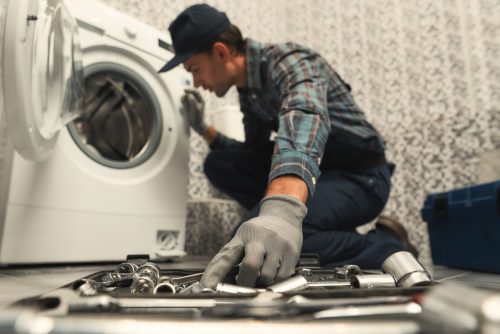
Whether it’s for electronics, televisions and microwaves, cars, motorized wheelchairs, or tractors and combines, many dominant product manufacturers use specific tactics to control the ability to repair the goods they sell. These include using proprietary software that “activates” a repair, restricting access to necessary tools, and using authorized repair providers that prevent users from pursuing repairs outside the manufacturers’ network, among others.
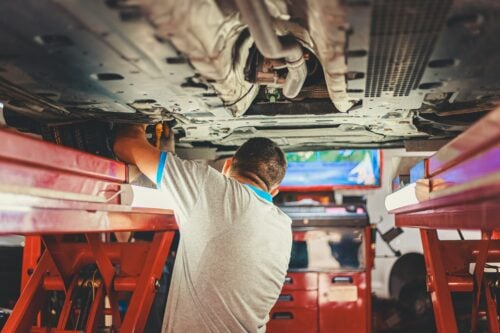
Repair restrictions, for example, have greatly increased the cost of fixing our things, particularly vehicle repairs. John Deere’s monopoly on repairing its tractors and combines has cost farmers an estimated $4 billion in lost income and repair payments. What’s more, restricting the right to repair electronics, appliances, and other equipment has crushed many small business owners — particularly Black, Latino, and other entrepreneurs of color. As the Federal Trade Commission found, a significant number of Black-owned businesses offer repair and maintenance services, and those shops have struggled as equipment manufacturers have restricted their ability to fix cars and other household goods.
For decades, policymakers have recognized the importance of enshrining the ability for consumers and independent shops to repair vehicles and other equipment, particularly for underrepresented entrepreneurs and communities. State and federal lawmakers today can take important steps to ensure the right to repair and take action against companies whose repair restrictions violate antitrust and consumer protection laws.
What federal enforcers and lawmakers can do to protect the right to repair
Pass legislation enshrining a right to repair in federal law. There is currently no federal ban on manufacturers’ repair restrictions. While federal legislation has been introduced at times, Congress has yet to pass a right-to-repair bill, either for specific products or across the economy.
That could change in the current Congress. The bipartisan REPAIR Act, introduced by Representatives Neal Dunn (R-FL) and Marie Gluesenkamp Perez (D-WA) in February 2025, would force carmakers to provide independent repair shops with the tools and technology needed to repair their vehicles. Senators Ben Ray Luján (D-NM) and Josh Hawley (R-MO) introduced mirroring legislation in July. Lawmakers should pass the REPAIR Act as a crucial first step toward a federal prohibition on repair restrictions.
Given their prevalence and the harms they cause consumers and small businesses, lawmakers should also introduce and pass a broad prohibition on repair restrictions for common consumer goods and farm equipment.
Prosecute repair restrictions under the antitrust and consumer protection laws. The Federal Trade Commission in 2019 embarked on a study of repair restrictions, resulting in a report and policy statement suggesting the commission would challenge repair restrictions under the antitrust laws and the FTC Act’s prohibition on unfair acts and practices. The FTC in January 2025, along with the attorney generals of Minnesota and Illinois, sued John Deere, alleging that the company’s restrictions on repairing its equipment broke the antitrust laws.
Along with continuing the John Deere case, the FTC should continue to take action against repair restrictions under the traditional antitrust laws. Repair restrictions often involve tying arrangements, in which the purchase of parts needed for a repair are tied to exclusive repair contracts — a traditional violation under the federal Sherman Act. The agency should also sue to stop repair restrictions under Section 5 of the FTC Act, which bans unfair methods of competition.
What state enforcers and lawmakers can do to protect right to repair
Enact and strengthen right-to-repair laws. Nine states currently have right-to-repair laws in their statutes, while all 50 states have at least introduced legislation that would enshrine a right to repair certain kinds of consumer goods, medical devices and farm equipment. These bills and laws, however, are not uniform and do not create a broad right to repair in any state.
For example, Colorado is so far the only state in the country to have enacted a right-to-repair law that covers farm equipment, although states such as Texas, Florida and others have introduced such legislation. Meanwhile, states such as Washington have enacted right-to-repair laws that protect consumers’ ability to fix personal electronics, appliances and wheelchairs, but not agricultural equipment or vehicles. With many state bills pending before lawmakers in 2025 and 2026, the state-by-state right-to-repair landscape will continue to evolve.
State lawmakers should approve bills currently pending before them, and should draft and enact broad prohibitions on repair restrictions that give their attorneys general significant enforcement powers.
Enforce right-to-repair laws on the books. Two states are involved in the FTC’s case against John Deere — Illinois and Minnesota — but, as of this writing, no other state-level right-to-repair investigations or prosecutions have been made public. State attorneys general in the nine states that have right-to-repair laws on the books should investigate and prosecute repair restrictions, both as a matter of law, and as a deterrent to help end such repair restrictions throughout their states.