Medición de la contaminación en programas de compostaje
Part 3 of 3 in ILSR’s Reducing Contamination in Composting Webinar Series.
Contamination is a major challenge for composting at all scales, often requiring significant investments of labor, time, and money to manage. In this webinar, researchers and programs shared how they are measuring contamination. Whether you’re launching a new program or refining an existing one, this webinar offered actionable strategies for using data to drive results.
Learn how Hutchinson, Minnesota, is reducing compost contamination by combining rigorous measurement with creative, community-driven outreach. Cassandra Meuffels (Outreach Coordinator, City of Hutchinson) and Mimi Shah (Principal, Amplify for Change) shared insights from Compost It Right!, a comprehensive education campaign that uses clear messaging, citywide materials, and strong partnerships to boost participation and reduce contamination in curbside organics collection. The session covered how Hutchinson tracks progress using cart tagging, waste audits, and inbound load assessments — and how these data inform campaign adjustments. They also shared how events, community outreach, local business engagement, and a “three strikes” system reinforce behavior change across the community.
Caroline Barry, Program Manager at Closed Loop Partners’ Center for the Circular Economy, presented on contamination research and analysis conducted at 10 diverse US composting sites. She discussed how to do a waste characterization study, measurement considerations for feedstock, overs, and finished compost (including manual waste sorts and lab tests), the results from their research, and an overview of associated costs.
Caroline’s presentation was followed by a presentation by Dr. Fred Michel, a professor of Biosystems Engineering at The Ohio State University (OSU). He focused on using lab tests and bioassays to identify contaminants as well as shared recent research findings from year one of a two-year project testing for the presence and concentrations of persistent herbicides as well as other contaminants such as PFAs.
A moderated Q&A session followed the presentations.
Inscripción
El registro es $20.
El registro gratuito está disponible para el gobierno, los agricultores y los miembros de la Coalición de compostadores comunitarios (CCC). Government should use the discount code GOV, farmers should use FARMER, K-12 educators and schools should use EDU, and CCC members should use CCC at checkout for free registration.
Mimi Shah is Principal and Co-Founder of Amplify for Change, a firm with over 25 years of experience helping communities design programs and campaigns that drive measurable results.
Over the past decade, Amplify has partnered with dozens of local governments—from highly populated counties like Montgomery County, Maryland, to smaller communities like Red Wing, Minnesota—to advance food scraps collection and reduce contamination in organics programs. Working alongside community partners, Amplify develops and applies tools such as baseline audits, resident surveys, focus groups, and monitoring protocols to identify the root causes of contamination, track progress over time, and design messaging that sticks. Mimi brings a unique blend of field experience and analytical skill—making her a go-to resource for solid waste teams looking to improve program performance through smarter outreach and clearer measurement.
Cassandra Meuffels is the Outreach and Education Coordinator for Creekside Soils, the City of Hutchinson’s municipally owned and operated compost facility. Hutchinson is home to one of the oldest source-separated organics programs in Minnesota, offering citywide curbside collection to more than 4,000 single-family households. The program diverts both food scraps and yard waste, turning them into compost sold locally through Creekside Soils.Cassandra currently leads the MPCA-funded Compost It Right! campaign, a community-wide effort to reduce contamination, increase participation, and raise awareness about the importance of proper organics recycling. Her work combines hands-on education with strategic messaging to shift long-standing resident behaviors and improve the quality of collected materials. She is a member of the U.S. Composting Council and its Minnesota chapter and serves on the leadership team of Minnesota’s Recycling Education Committee, where she helps shape statewide organics education and policy.
Dr. Fred Michel is professor of Biosystems Engineering at The Ohio State University (OSU) in the Department of Food, Agricultural and Biological Engineering. He has taught the Ohio Compost Operator Education Course since 2000 and teaches Composting and Compost Utilization at OSU, where he has been a professor for more than 26 years. Fred conducts research in several areas including composting with a focus on understanding and mitigating the impacts of contaminants such as herbicides, plastics and pathogens, and understanding the effects of composts on the microbial ecology of soils and plant growing media. He serves as the editor of Compost Science and Utilization journal, is a board member of the Organics Recycling Association of Ohio, serves on the US Composting Council’s Persistent Herbicide Task Force, is the President of the Wayne County Sustainable Energy Network, and is the Chair of the OSU Wooster Sustainability Committee. He has published more than 100 peer reviewed scientific papers and in 2011 received the Rufus Chaney Award for Research Excellence from the USCC.
Caroline Barry – Program Manager, Center for the Circular Economy at Closed Loop Partners
Caroline is a Program Manager at Closed Loop Partners’ Center for the Circular Economy, the firm’s innovation center for research, analysis and collaboration. She is a project manager for the Composting Consortium and drives initiatives promoting circularity in organics. Caroline supports strategy, project management, storytelling and stakeholder engagement across key areas including infrastructure, innovation, policy and consumer insights. She holds a Master’s in Sustainable Food Systems from the University of Colorado, Boulder and a BA in Communications from Loyola University Maryland.
Moderador
Brenda Platt – Directora, Iniciativa de Compostaje para la Comunidad, Instituto para la Autosuficiencia Local (ILSR)
Brenda y su equipo del ILSR apoyan a los compostadores a escala comunitaria a través de foros, seminarios web, podcasts, guías, políticas, capacitación y mucho más. En 2017, el Consejo de Compostaje de EE. UU. le otorgó el premio H. Clark Gregory por su destacado servicio a la industria del compostaje a través de iniciativas populares. En 2019, la revista BioCycle presentó a Brenda como una de las pioneras en el reciclaje de productos orgánicos. Es licenciada en Ingeniería Mecánica por la Universidad George Washington.
Este proyecto ha sido financiado en parte por la Agencia de Protección Ambiental de los Estados Unidos en virtud de un acuerdo de asistencia en materia de reciclaje, educación y divulgación (REO) con el ILSR.
Lucha contra la contaminación en las plantas de compostaje
En este seminario web, tres compostadores de residuos alimenticios comparten consejos y lecciones aprendidas sobre cómo reducir la contaminación en su compost terminado.
Educación y divulgación para reducir la contaminación en el compostaje
En este seminario web, tres ponentes compartirán consejos y lecciones aprendidas sobre cómo utilizar la divulgación y la educación para evitar la contaminación en los puntos de recogida y en la acera...


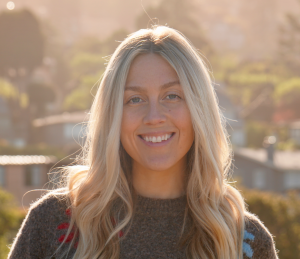 Caroline Barry – Program Manager, Center for the Circular Economy at
  Brenda Platt – Directora, Iniciativa de Compostaje para la Comunidad, Instituto para la Autosuficiencia Local (ILSR)
