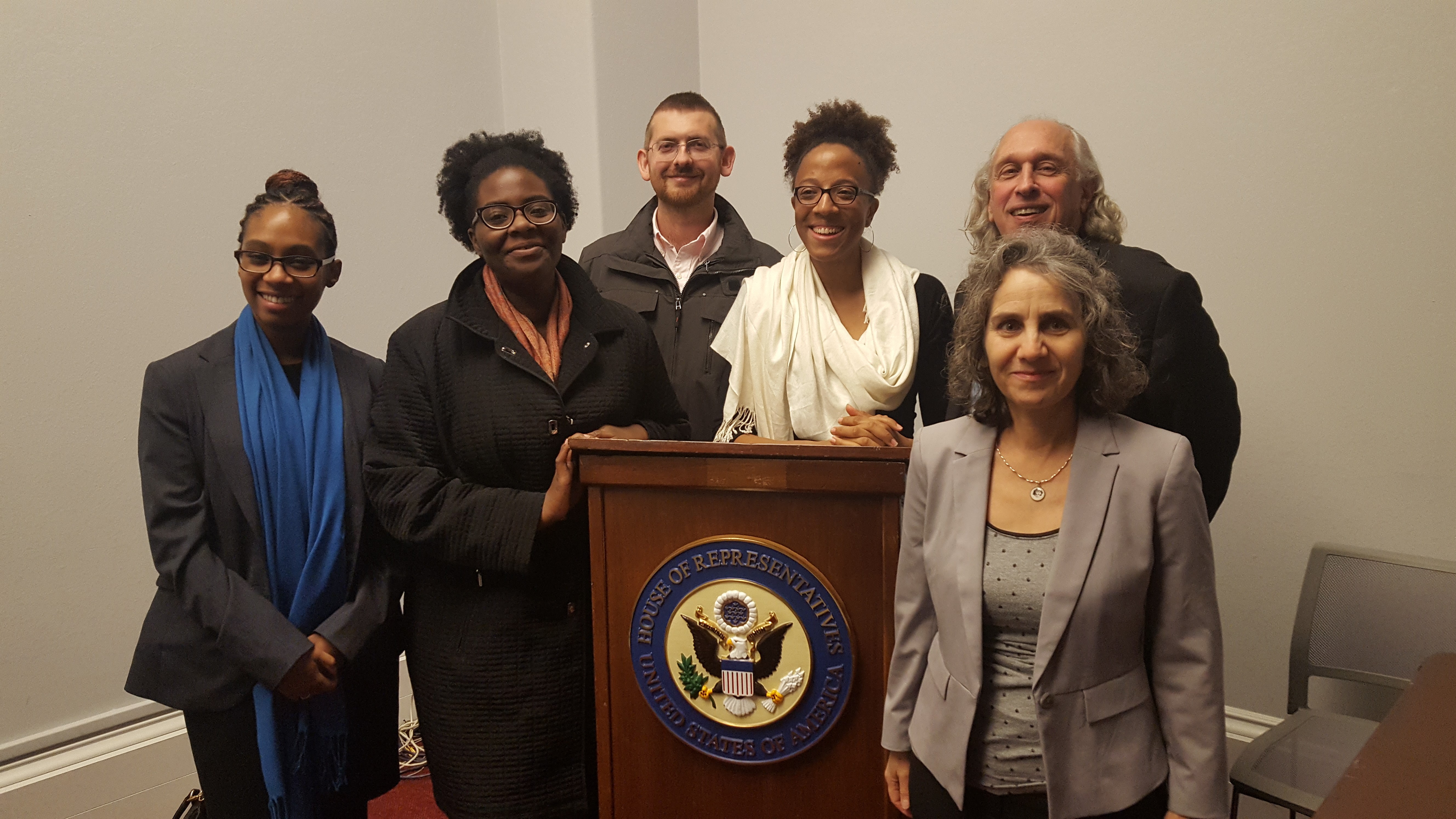
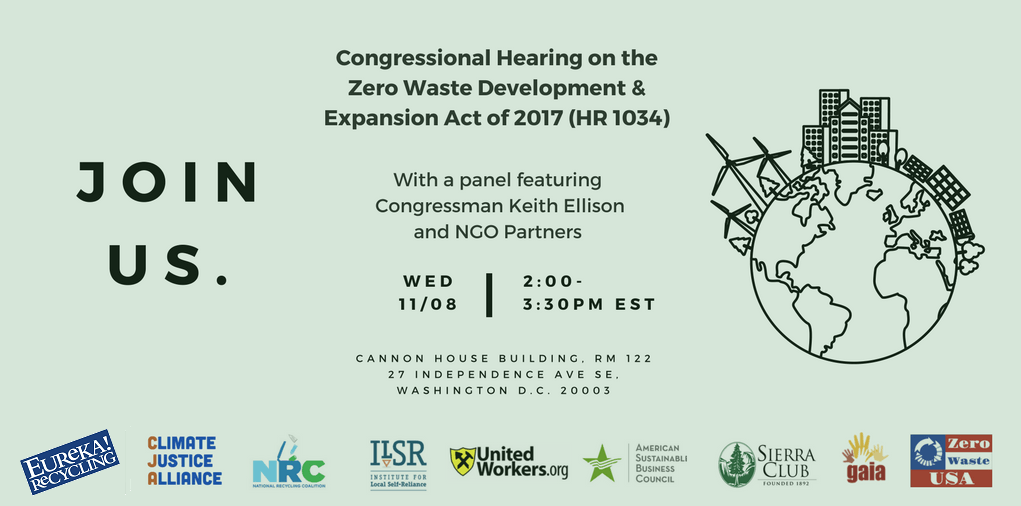
On November 8th, 2017 ILSR co-director and director of the Composting for Community initiative presented to a congressional hearing on the Ley de Desarrollo y Expansión de Residuos Cero de 2017 (HR 1034), sponsored by Representative Keith Ellison (D-Minn.).
You can view the full video below, Brenda’s presentation begins at 45:30:
Along with Rep. Ellison, the panel for the hearing was brought together by the Global Alliance for Incineration Alternatives (GAIA).
El propósito de esta reunión informativa es proporcionar ejemplos reales de los aspectos económicos, sociales y
Beneficios ambientales del reciclaje y la reutilización. Invertir en Cero Residuos:
- crea empleos,
- impulsar el crecimiento de la manufactura nacional,
- reduce los gases tóxicos de los vertederos e incineradoras,
- limpia nuestras vías fluviales y protege la salud de nuestras comunidades,
- ahorra energía,
- ahorra dinero para empresas y comunidades, y
- crece la economía.

On average, it is estimated that recycling creates ten times more jobs than sending waste to landfills or incinerators. A Global Alliance for Incineration Alternatives report found that 2,347,000 total direct jobs would be generated with a 75% diversion rate for municipal solid waste (MSW) and construction and demolition debris (C&D) by 2030. Diverting waste also protects communities from the health hazards associated with landfills and incinerators, such as climate change, pests, and air and water pollution. Diverting waste means keeping more trash out of our oceans, great lakes, and other waters, which are important sources of food and drinking water for our communities.
Brenda Platt spoke as a part of the panel as well as in answer to many of the questions from the audience of congressional staffers and activists, you can view the video here, Brenda’s comments begin at 45:30.
Siga al Instituto para la Autosuficiencia Local en Twitter y Facebook y, para recibir actualizaciones mensuales sobre nuestro trabajo, registro para nuestro boletín informativo general del ILSR.