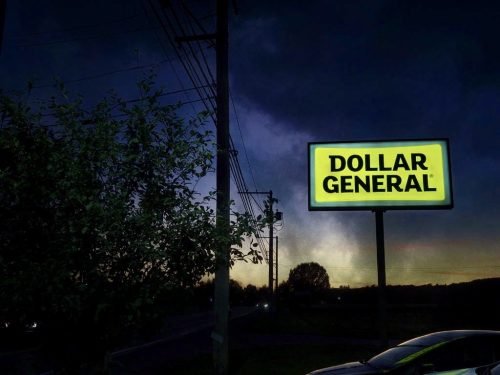
Stop Dollar Store Proliferation in Your Community: A Strategy Guide
Chain Dollar stores are spreading rapidly across the U.S., in both urban neighborhoods and rural areas, having devastating effects on local economies. But communities are successfully fighting back against dollar store proliferation. This guide can help you keep these chains out of your community so that the independent businesses that provide good jobs, customize products and services to meet people’s needs, support community institutions, and help shape the community’s personality can thrive and grow.
This strategy guide is accompanied by two key publications: The Dollar Store Invasion, a report detailing how dollar chains have aggressively targeted rural and urban communities, driving economic harm through predatory tactics, and the federal and local policies enabling their rapid takeover; and 17 Problems: How Chain Dollar Stores Harm Communities, which explores the range of social and economic consequences of these chains.
There are many reasons why a chain dollar store might not meet the community’s planning and land use laws. This section identifies some of them and describes the basics of land use policy.
This section outlines ways to build a strong base of support and mobilize residents and business owners to let decision-makers know that they oppose the proposed chain dollar store.
The threat of a chain dollar store’s arrival is often a wake-up call for civic leaders and residents, alerting them to possible weaknesses in their land use policies. This section discusses some ways to strengthen land use policies to help prevent future battles.
The rate at which chain dollar stores are proliferating is unprecedented in the history of retail. At the beginning of 2022, there were roughly 35,500 dollar stores in the US, accounting for 11 percent of all the nation’s brick-and-mortar stores. And that percentage is soaring: in 2021, a stunning 40 percent of all new stores that opened in the US were chain dollar stores. Since 2018, 75 percent of all Americans have lived within five miles of a Dollar General. In urban areas, it is common to find five or more dollar stores within one mile of one another.1
There are two dominant small-box discount chains in the US: Dollar General and Dollar Tree/Family Dollar (Dollar Tree bought Family Dollar in 2015). Five Below and 99 Cents Only also have a small, but growing, market presence. By mid-2022, Dollar General operated more than 18,000 stores in the US, with Dollar Tree/Family Dollar operating more than 15,000. Together, there are now more chain dollar stores in the US than McDonald’s, Starbucks, Target, and Walmart combined.2
There are many reasons why residents and community leaders might want to stop a proposed chain dollar store from opening. The two big dollar chains have a long history of safety violations, from blocking emergency exits to selling contaminated food. They edge out locally owned businesses — particularly full-service grocery stores, which operate on razor-thin margins and which are vital to a community’s overall well-being. They are easy targets for crime and violence. They target low- and fixed-income residents, and they disproportionately target Black and Brown neighborhoods. They treat their workers poorly. They make roads more dangerous, use sneaky pricing tactics, and drive down property values — and much more.3
Because of the many problems that Dollar General and Dollar Tree create, residents and civic leaders in hundreds of communities have challenged their development, and a growing number of them are succeeding. As of 2022, more than 100 towns and cities have defeated dollar store proposals and scores have enacted laws that restrict the number of dollar stores that can be developed or have banned them altogether. For example:
Micanopy, Florida – Residents of Micanopy, a small town of 600 people near Gainesville in north-central Florida, were able to block a proposed Dollar General after several years of public debate. The decision hinged primarily on two issues. First, the parcel of land is of significance to the Seminole people, the site of a battle in the Second Seminole War and close to a Seminole burial mound. Second, it’s on a quiet rural road popularwith bicyclists. Residents successfully lobbied the state to designate the road a scenic byway, limiting vehicle weights to 50,000 pounds, about half the weight of a typical Dollar General delivery truck. Residents also enlisted a broad network of partners, including members of the Florida Indigenous Alliance and the American Indian Movement, who spoke out against the proposed development. With overwhelming opposition to the store, Alachua County, which had initially approved the development, reversed its decision. Residents also persuaded the County to adopt a size limit for commercial buildings, reducing the maximum size allowed in rural areas, from 10,000 square feet to 3,000 square feet.
Tulsa, Oklahoma – In the half-century after the Civil War, north Tulsa’s Greenwood neighborhood was home to the nation’s largest Black commercial district, known as “Black Wall Street.” But after the horrific 1921 Tulsa Race Massacre the neighborhood suffered from nearly a century of disinvestment. Its last grocery store closed in 2014, and chain dollar stores started popping up. Unlike full-service grocery stores, most of the food that dollar stores sell is processed and nutritionally deficient.4 The health implications of the neighborhood’s lack of fresh food options are alarming: with high rates of diabetes, obesity, and heart disease, the life expectancy of a resident of predominantly Black north Tulsa is 14 years less than that of a resident of predominantly white South Tulsa. Alarmed by dollar store proliferation and its impact on the neighborhood, city councilmember Vanessa Hall-Harper launched a campaign to create a healthy food overlay zone, including prohibiting new dollar stores from opening within one mile of an existing dollar store and creating incentives for full-service grocery stores. Hall-Harper overcame significant opposition to her strategy, rallying residents to turn out for city meetings again and again. With support from the Tulsa Economic Development Corporation, the city of Tulsa, and several private foundations, a full-service grocery store, Oasis Fresh Market, opened in May 2021.
Many other towns and cities have also successfully kept chain dollar stores out or are working to do so. Grant, Ala. denied a proposal to build a combined Family Dollar/Dollar Tree store because of resident concerns about traffic. Princeton, Ind. turned away a proposed Dollar General store, largely because residents believed it would harm the community’s existing grocery store, Sam Food Mart. Officials in Scio, Ore. were concerned that a dollar store developer’s request to rezone land from industrial to commercial use would hurt the city’s ability to expand its industrial base. In Toledo, Ohio, a number of concerned citizens, led by a coalition of ministers, have been working with the city to improve access to healthy food throughout the city, including by limiting chain dollar store development. A Dollar General developer dropped plans to build a new store in Deerfield, Mass. after a residents’ coalition filed numerous complaints and a lawsuit opposing the development over the course of three years. A group of citizen activists in Ebony, Va. has sued Brunswick County over its decision to approve a rezoning application for a proposed Dollar General store because the county’s comprehensive plan clearly calls for preserving the area’s rural character.
There is no one-size-fits-all approach to stopping a proposed chain dollar store. Every community has different priorities and different tools. But the main way that most communities succeed in preventing chain dollar store development and proliferation is through the local land use system. Do not worry if you know nothing about land use policy. Most citizens who succeed in stopping a dollar store development started out with very little knowledge of or experience with planning and zoning.
This guide does two things. It provides guidance on stopping a specific proposed chain dollar store. It also provides guidance on permanently limiting or banning the dollar store chains. It explains not only how to navigate your local land use policies, but also how to organize a citizen-based campaign to stop a proposed dollar store and to permanently change your local land use policies to put citizens in control of how the community grows and develops.
Dollar store developers may try to rush the process of getting permission to build, and local government officials may believe that they are required to approve proposed development projects within a certain number of days. But it is crucial for the community to take the time needed to adequately evaluate the impact of the proposed store before making a decision.
One option could be for the city or county to adopt a temporary moratorium on dollar store development, during which time it can gather information, hold public meetings, and explore and enact policies that impose limits or conditions on dollar stores.
Communities in most (but not all) states have the authority to enact development moratoriums. Regulations for moratoriums vary from state to state. For instance, California requires that cities continue accepting development applications during a moratorium but does not require them to act on applications until the moratorium expires. North Carolina provides certain vested development rights to property owners if land regulations change during the time between when a property owner submits a development permit application and when the local government acts on the application. Some states, like Michigan, have no laws regulating moratoriums at all. A handful of states limit their use in certain circumstances. Check with your state’s department of planning or community development for information on moratorium regulations there.
To enact a moratorium, a local government must be able to demonstrate that the moratorium serves a legitimate public purpose, that it will only be in effect for a limited period of time, and that the local government will proceed expeditiously with its research.
Because regulations vary from state to state, you should consult a land use attorney in your state for specific information on a development moratorium to provide time for your community to gather the information needed to make an informed decision about a proposed dollar store development.
There are often other ways to slow down the process, although they may not provide the amount of time or the methodical process that a development moratorium offers. There are usually multiple stages in the approval process that require city approval, and each of these stages could provide an opportunity to ask the developer for more information and to point out potential problems, slowing down the approval process. Also, local governments are often willing (and sometimes required) to postpone public hearings for short periods if there is a compelling reason to do so, such as not having provided adequate notice of a public hearing, failing to disclose an official’s potential conflict of interest, failing to notify owners of neighboring properties, or making other procedural errors. It is important to use this time to do all the things — gathering information, getting expert opinions, etc. — that a moratorium would otherwise have achieved.
Zoning notice in Cascade, Maryland. Photo: Allison Severance
Begin by determining the status of the dollar store proposal and what is required under your city’s comprehensive plan and zoning code for the development to proceed. You should determine what steps the developer will have to go through, what permits and reviews will be needed, which government bodies will make the decisions (e.g., planning board, board of zoning appeals, city council), and what the timeline is for those decisions.
Basics of Land Use Policy
In most communities, development is governed by two interrelated policies: the comprehensive plan and the zoning code.
The comprehensive plan outlines the community’s vision, goals, and broad policies regarding land use and development. It provides city officials with guidance for making decisions about development projects and serves as the basis for the city’s zoning code.
The zoning code implements the comprehensive plan through specific regulations. It stipulates what types of uses (residential, office, industrial, etc.) are allowed in each area (or “zone”) of the community. It also regulates the scale and character of development through rules governing the height and size of buildings, densities (e.g., number of dwellings per acre), lot sizes, parking requirements, the ratio of landscaping to pavement, and so forth.
The two primary purposes of zoning are to prevent landowners from using their properties in ways that harm the community and to ensure a balanced and efficient pattern of land use that avoids the many public costs and harms of haphazard development.
A local government’s ability to regulate the types and locations of businesses within its boundaries has a solid legal foundation. For almost 200 years, courts have affirmed a community’s “police power” — meaning its ability to make policy — to protect public health, safety, and welfare, including promoting prosperity. Cities (and in some cases counties and regions) derive their planning and zoning authority from state law. Some states require cities to have comprehensive plans and zoning codes; some do not. States may also impose certain rules on how cities implement and exercise their zoning authority.
The Development Approval Process
Some development projects meet all the requirements of the community’s zoning code and do not necessarily need special approval from the planning commission or another government entity. Projects like these are called “by right” development. But, in most cases, a developer may need any number of other approvals and permits (also called “entitlements”) from the local government in order to build. In some cases, a commercial development project may also require permits from one or more state or federal agencies (for example, if it adds traffic to a state road, involves wetlands or impaired waterways, or abuts a historic site).
Each of these points in the process — each review, each permit — offers an opportunity for decision-makers to reject the development. Even if a proposed project is “by right,” the developer will need to submit site and building plans to ensure that the project meets building code and life safety codes, and this process offers opportunities to challenge the proposed development.
Your task is to identify each of these opportunities (see “Questions to Ask” below) and then persuade officials to say no (more on how to do this in the next section).
Your city planner, planning commission chairperson, or other local officials should be able to meet with you to explain what will be required under your zoning code. However, we encourage you not to rely solely on information provided by a local official, who may have unintentional biases or flawed interpretations of land use law. We strongly advise that you read and study the relevant sections of your comprehensive plan and zoning code yourself, consult with experts, and hire a land use attorney.
Having an attorney on your side will not only help you use your city’s land use policies to stop the project, but it also sends a signal to city officials that you are serious and that they may face a lawsuit should they approve a chain discount store that harms public welfare or violates the comprehensive plan. Although raising money to hire an attorney may seem daunting, keep in mind that asking for donations is a routine part of building a grassroots coalition (more on this below). Many residents and local businesses will want to donate, and an attorney is one of the best uses of these funds. Not just any attorney will do. Ideally, you should find one who specializes in land use and who has experience with controversial retail development projects. Many land use attorneys work for developers trying to circumvent local land use laws; if possible, you want to find one who also has experience working for the interests of a community, not just those of developers. Your state’s bar association and its chapter of the American Planning Association can help you find a skilled land use attorney. Depending on local politics, however, there might be instances when finding a general-practice attorney who already has a good working relationship with your planning commission and who can quickly get up to speed on key land use legal issues may be more important than finding an attorney with specialized expertise.5
Police Powers
The Tenth Amendment to the U.S. Constitution states that “The powers not delegated to the United States by the Constitution, nor prohibited by it to the States, are reserved to the States respectively, or to the people.” These powers — known collectively as “police power” — enable state and local governments to promote and protect the health, safety, and welfare of their citizens. Laws that regulate environmental quality, land use, public health, and business licensing are all examples of police power.
Local government entities in at least two communities have used their police power to reject proposed dollar store developments. In one instance, the planning commission in Tangipahoa Parish, Louisiana turned down a developer’s application to build a Dollar General store on an unzoned parcel of land near Ponchatoula, citing its concern that the proposed development was not in the best interest of the health, safety, and welfare of Parish residents. The developer appealed the decision to the Parish Council, which upheld the planning commission’s ruling. The developer then sued the Parish, claiming that, because his proposal met all technical requirements, the planning commission’s decision was “arbitrary and capricious.” During the trial, community members expressed their concerns about the likely problems the proposed store might cause with stormwater runoff, traffic, crime, and other concerns, based on their experiences with problems caused by the Parish’s existing dollar stores. In his November 2023 ruling, the trial judge rejected the developer’s complaint, concluding that the planning commission’s use of police power was not arbitrary and capricious but was a legitimate exercise of its police power to protect the health, safety, and welfare of the community.
Questions to Ask
Here are some key questions to ask as you assess the status of the chain dollar store proposal and your community’s development requirements:
Has the developer formally approached the local government? Once a developer has submitted an application or other formal proposal to the local government, the project is usually subject only to the rules already contained in the zoning code. However, in most states, if the developer has not yet submitted an application, you still have time to revise and strengthen your land use policies. Adopting a moratorium that temporarily suspends dollar store development applications will give the community time to review and revise its policies. But even if the developer has submitted an application, you likely still have opportunities to block the project or otherwise influence the outcome.
Does the project conform to your community’s comprehensive plan? Carefully review your community’s comprehensive plan and highlight any aspects of the plan that the proposed dollar store might violate or with which it might create a conflict. The comprehensive plan might state, for example, that it is the community’s intention to maintain the downtown as the center of commercial activity, to ensure new development is compatible with its surroundings, to support the development of locally owned businesses, to preserve farmland, or to minimize automobile traffic. In the past, comprehensive plans were sometimes treated merely as advisory documents. But many states have passed laws that give these plans greater legal weight and require that local officials use them as a basis for deciding whether to approve development. In most states, the failure of a development proposal to fit the comprehensive plan obligates the community to reject the project or at least provides a solid legal basis for doing so. In some states, comprehensive plans have now attained a status akin to a local constitution: decisions that do not conform to the goals contained in the plan can be overturned by the courts. For example, California’s state code requires that a community’s zoning ordinance be consistent with its comprehensive plan and specifically empowers residents and property owners to bring action against a city or county for failing to do so. Check your state statutes to learn more about how your state defines the relationship between comprehensive plans and zoning ordinances. Your land use attorney can also tell you how seriously your state’s courts treat comprehensive plans. A growing number of communities have successfully defeated proposed chain dollar stores because of the store’s inconsistency with the goals outlined in the community’s comprehensive plan. For example, Crawfordsville, Ind.’s comprehensive plan calls for “protecting and enhancing” land-based natural resources, including “prime farm ground,” which was one of the factors that led to the county commissioners’ decision to deny a dollar store developer’s request in January 2022 to rezone land from agricultural use to commercial use.6 And Scio, Ore.’s 2015 comprehensive plan encourages concentrating business development downtown, one of the factors that led its city council to unanimously reject a 2019 rezoning request from a Dollar General developer.7
Will the developer need the city or county to rezone the land? If the land is zoned for something other than retail (e.g., residential, industrial, or agricultural), then the developer must petition the city to rezone the parcel, a process that usually involves a public hearing and a vote by the planning commission and/or city council. Your task will be to build a case that rezoning the site to allow the proposed dollar store development would negatively affect the community and/or be at odds with the city’s or county’s comprehensive plan. Remember that local officials are under no obligation to change established zoning policies to accommodate a developer. Indeed, doing so may be considered arbitrary “spot zoning” — the rezoning of a single parcel to benefit a property owner rather than carry out an objective of the comprehensive plan — which courts have deemed illegal.
Will the developer need a variance? A variance is an exception to a zoning rule that may be granted by local government officials. For example, due to the constraints of a particular property, a developer may request a variance from having to create a certain number of parking spaces or to set the building back a certain distance from the road. Variances may be granted only if the local government determines that conditions particular to that parcel make it impossible to comply with the rule, that allowing the exception will not harm the community, and that it will not result in the grant of a special privilege to a particular property owner. The zoning code may contain additional criteria for granting variances. In St. Paul, Minn., a developer sought six variances for a proposed Dollar Tree store, involving 26 specific conditions that had to be met. The proposed store met only two of the 26 conditions, and the city denied the variance in May 2022.8 In general, the legal basis for allowing variances is to prevent a situation in which strictly applying a particular zoning rule would deny a property owner all reasonable use of the property. Chain dollar stores are never the only reasonable use of property in a commercial zone and therefore variances requested by dollar store developers should be presumed to be unwarranted exceptions to rules that all other property owners must follow.
Will the developer need a conditional use permit? Zoning rules for the site may define retail, or commercial buildings of a certain size, or other characteristics as a “conditional use,” meaning that it is not normally allowed but can be under special circumstances. In these cases, the developer must apply for a conditional use permit (sometimes called a “special use permit”), which usually involves a public hearing and a vote by the planning board, city council, or other government body. Officials may grant the permit only after concluding that the development will not harm the community, is consistent with the city’s general land use policies for that area, and meets the specific conditions described in the zoning code. You will need to assemble evidence that the proposal does not meet these criteria and that the special use permit should therefore not be granted.
Will the developer need the local government to annex the land? If the proposed chain dollar store is situated just beyond a town’s borders, the developer may need the town to annex the land in order to run water and sewer lines out to the site or for other purposes. The conditions under which a town may annex land are stipulated by state law, but local elected officials often fail to pay attention to these requirements. You should determine what state law mandates and insist that the city comply. Minnesota law, for example, allows cities to annex land only after conducting an “analysis of the fiscal impact on the annexing municipality, the subject area, and adjacent units of local government, including net tax capacity and the present bonded indebtedness. . .” Such an analysis may reveal, as some studies have, that the stores will cost the municipality more in infrastructure and services than they generate in new tax revenue — a compelling reason for officials to deny the annexation.
Will the development be required to undergo an economic impact study? Your city’s zoning code may mandate that a proposed chain dollar store development undergo an economic or fiscal impact analysis — or your city council may be able to require one on a case-by-case basis. A thorough study would reveal many of the hidden costs of a proposed dollar store in terms of job and wage losses, the impact on the neighborhood and local economy, and the cost of public services. It should also analyze the proposed store’s likely impacts on the availability of fresh food, including on existing full-service grocery stores and potential for new grocery stores to open and succeed, particularly in underserved areas. You should insist that the study be conducted by a qualified independent consultant selected by the local government, not by the developer. The specifics of the study will vary according to your community’s market characteristics, but, at the bare minimum, the study should answer the question of whether enough unmet market demand exists to support the proposed store without taking sales away from existing businesses. You should carefully review the study to ensure that its data and methods are sound — that it uses actual local sales data, rather than relying on third-party data services, for example, and that it is making reasonable assumptions about how much unmet market demand exists. The developer should cover the cost of the study.
Will the development be required to undergo a traffic impact study? Chain dollar store projects have often been rejected because of their impact on traffic. A single dollar store can generate thousands of car trips a day, subjecting residents to traffic congestion, safety hazards, and high tax costs for road maintenance and police services. Many communities require developers to submit a professional traffic analysis of the impact their projects will have on road capacity and level of service. At a minimum, the study should include an analysis of the proposed dollar store site’s current traffic volume, by day of the week and time of day; projections of its likely trip generation, traffic volume, and peak hours once the store is open; analyses of its likely impact on turning, weaving areas, ramps, intersections, pedestrians, and bicycles; and analyses of delivery truck weights and delivery schedules. Ideally, you should hire your own traffic engineer to review the developer’s traffic study.
Will the project be required to undergo an environmental impact review? In some states, including California and New York, certain development projects must submit to an environmental impact study. If the findings indicate that the development will have significant environmental impacts, including indirectly causing urban decay by causing store vacancies, officials may reject the project or demand substantial changes to it. The range of impacts evaluated varies but is fairly broad in some states.
Will the development be required to undergo site plan review? Even when the land is zoned for commercial retail and no special use permit is required, proposed commercial development projects still need to undergo a site plan review to ensure that the development meets land use, transportation, environmental, and public safety standards. Your city’s zoning code will indicate whether the review will be carried out by city staff or by the planning board or another body and whether there will be a public hearing and opportunity for citizen input. Site plan review standards vary in their strength and scope, but they may provide the city with the power to demand substantial changes to the project or to reject it altogether.
Will the project need a permit from a state or federal agency? In some cases, a proposed chain dollar store development must obtain a permit from one or more state or federal agencies. If it will be located on a state highway, for example, it will likely need approval from the state’s department of transportation. If it involves sensitive habitat or other important environmental resources, it may need to be reviewed by the state’s department of environmental protection. If the developer intends to fill wetlands, then he or she may need a permit from the U.S. Army Corps of Engineers. If it will be located in or near a historic district, it may need to be reviewed by the state’s historic preservation office. Often these agencies will do no more than require changes to mitigate the worst effects on traffic or the environment, but in some cases, they have concluded that the impacts are severe enough to reject the development. Communicate directly with the state or federal agency to express your concern and find out what information they will need to determine whether or not they should take action to modify or halt the proposed development.
“No Dollar in the Holler” Facebook page. Photo: Sasha Hadfield-Jones
After you have mapped out the process that the chain dollar store proposal must go through — what approvals will be needed, who will make those decisions, and when they will be made — the next step is to persuade decision-makers to deny one or more of those necessary permits or approvals.
In order to vote against a dollar store proposal, local officials need to know:
how the store would harm the community, economy, and/or environment (and thereby violate the goals and policies contained in your comprehensive plan and zoning code); and
that many people in the community support a “no” vote.
The best way to demonstrate that many people oppose the proposed development is through a grassroots campaign that gets the message out about the hidden costs and dangers of dollar stores and that makes citizen opposition to the proposed store highly visible.
Create a Citizens Group
You need a core group of people to lead the campaign and a larger group of volunteers to carry out discreet tasks, such as writing letters to the editor or distributing lawn signs. Ideally, the group should include a broad cross-section of the community: business owners, labor union members, religious leaders, environmental activists, and lots of ordinary citizens.
Many people in the community undoubtedly share your concerns about the proposed store. Here are a few ideas for finding them and getting them involved:
Use social media. Many communities have organized dollar store campaigns on Facebook, for example, creating Facebook groups such as Door County No Dollar General Store (Door County, Wis.) and No Dollar in the Holler (Transylvania County, N.C.).
Use the grapevine. Talk to people you know and ask them to spread the word. Ask each person to talk with five more people to grow your network.
Create a simple website. The website should clearly explain residents’ concerns about the proposed dollar store. It should include the timeline for development decisions and links to news coverage and to any relevant documents, such as any site plans and permit applications the developer has submitted and any impact studies that have been conducted. It should also include a clear call to action, with links to pages where people can volunteer, sign an online petition, and donate money to cover the costs of hiring a land use attorney, making signs, etc. Use meta tags in the page’s source code that will flag the name of the proposed dollar store, and major concerns about the proposed store, in online searches.
Hold a neighborhood or community-wide meeting. Post notices on social media and around town inviting anyone concerned about the proposed store to attend and ask local newspapers to list the meeting. Include a virtual option so that people who can’t be there in person can also participate.
Reach out to local organizations, such as environmental or neighborhood groups, or churches. Ask if you could have a few minutes to talk about the dollar store proposal at their next meetings and/or if you could include a message in their newsletters.
Meet with business owners who are likely to be affected by the dollar store. This is a broader list of businesses than you might think at first. Ask business owners to become involved in the campaign, talk to their employees about the proposed dollar store, and contribute money.
Develop a Campaign Plan
Start by naming your group. A good name should concisely convey the challenge and evoke the community controlling its own future, such as “Keep Ebony Country” or “No Dollar in the Holler.”
Map out a plan and a basic campaign schedule. In particular, note the dates of all public meetings and all deadlines the developer must meet, and be sure that your network is alerted a few days before each meeting and deadline so that they can show up and speak out.
Set up committees to carry out various tasks, such as writing letters to the editor, raising money, developing campaign materials, conducting research, developing talking points, writing press releases, and so on.
Conduct an online petition. Web-based services like Change.org and Sign.MoveOn.org make it easy to create online petitions. Be sure your petition asks for something concrete, such as denying a zoning variance because of the proposed chain dollar store’s inconsistency with the comprehensive plan. Ask all your volunteers to sign the petition right away, and encourage their networks to do so — the more people who sign on early, the more momentum the petition will gain. More than 6,500 people signed an online petition opposing the development of a Dollar General store in Micanopy, Fla., a town of 600. Online petitions are also an excellent way to gather email addresses of supporters you can contact later to attend public hearings, write letters, and do other activities.
Contact local and regional media. Contact local and regional print and broadcast news media to let them know that many people are opposed to the proposed dollar store development. Request a meeting with their editorial boards so that you can fully explain the issues to them, and share examples of other communities that have successfully turned down proposed chain dollar stores because of similar issues. Be sure the media are aware of all upcoming public hearings and other important deadlines, and contact them again several days before each meeting and ask them to cover it.
Find people willing to be public spokespersons. Identify volunteers with interest or expertise in one or more of the topics of particular concern to your community and who are willing to speak publicly about these issues. See 17 Problems: How Chain Dollar Stores Harm Communities for more information.
Urge concerned citizens to show up and speak out at public hearings about the proposed chain dollar store. More than 200 people turned up for a planning commission meeting in Algansee, Mich., in October 2019, forcing the meeting to move from the small city hall chamber to a larger space in a nearby church. Dollar store opponents had circulated a petition before the meeting, opposing the developer’s rezoning request out of concern that the proposed store would force the town’s only grocery store, which opened before the town even had zoning laws, out of business. The commission voted unanimously to deny the rezoning request.9 Large numbers of residents have turned out to speak at public meetings in DeSoto, Miss., Maple City, Mich., Culleoka, Tenn., Tulsa, Okla., and many other places, also, visibly demonstrating the extent of the community’s concern about the proposed chain dollar store.
Find experts, such as a land use attorney, traffic engineer, and retail market analyst. As mentioned earlier, enlisting the help of a good land use attorney is particularly important and should be one of your top priorities. It is also very helpful to engage a neutral traffic engineer and retail market analyst to review any studies submitted by the proposed dollar store developer in support of its application. In fact, your local government might prefer to engage a neutral traffic engineer and retail market analyst, with no vested interest in the project, to conduct the required studies, with the local government selecting the consulting firm and the developer covering the costs.
Enlist support from other groups and organizations. There are a number of other organizations in the community and region who are likely to be concerned about the proposed chain dollar store development. Labor unions and worker rights organizations might be concerned about its impact on jobs and worker safety. Small business and neighborhood revitalization groups might be concerned about the proposed stores’ damage to locally owned businesses and harm to the neighborhood’s long-term prospects for good development and jobs. Health-focused organizations might worry that, by putting grocery stores at risk and providing mostly unhealthy food, the proposed dollar store might increase the rates of diabetes, obesity, and heart disease in the community. Racial equity groups might be concerned about how dollar stores target Black and Brown neighborhoods and create or exacerbate a lack of grocery stores and fresh food availability. Environmental groups might be concerned about the proposed development’s impact on endangered plant or animal species or about its impact on stormwater. These organizations and others might be willing to speak out against the proposed store, organizing their members to send letters to local officials and to turn out and speak up at public meetings.
Make the Case
Develop a list of the negative effects the proposed project will have on your community and repeat these concerns at every opportunity: public hearings, in your campaign materials, letters to the editor, and so on. Emphasize those issues that are likely to have the most influence on your community’s decision-makers.
The Institute for Local Self-Reliance’s website contains information and tools you can use to educate your neighbors and elected officials about the hidden costs of dollar store development. In particular, review 17 Problems: How Chain Dollar Stores Hurt Communities.
Be Visible
Take advantage of every opportunity to get your message out: lawn signs, posters in storefronts, letters to the editor (usually the most-read section of the newspaper), tables at events, flyers, direct mail, neighborhood meetings, and so on. Get in the news often; get your group quoted in every article about the proposed development.
Make sure that decision-makers hear from lots of people. Set up one-on-one meetings with members of the planning board and/or city council and ask people to call or write them. Turn out as many people as you can to public hearings on the project, preferably all wearing buttons, T-shirts, or another item that visibly identifies them as opponents of the project.
Your message will be especially powerful if decision-makers hear it from a broad range of people. Don’t let supporters of the proposed dollar store characterize those who oppose it as a narrow special interest or a small slice of the community. To avoid this, make sure a diversity of people representing different parts of the community are visible in the campaign.
Focus on All Government Entities Involved in the Decision-Making Process
Depending on your community’s laws, the planning commission’s decision may be reviewed by the city or county council, a planning board of appeals, and possibly other boards, as well. The ultimate decision about whether to grant zoning exceptions and/or issue permits often rests with the city or county council. Therefore, it’s crucial to be sure that all the relevant government boards and agencies that might be involved in making a decision about a proposed dollar store development project are aware of the problems the proposed store might create and the reasons they should oppose it. Otherwise, a “no” vote by the planning commission might be overturned by the city or county council — or, conversely, if the planning commission votes to approve the proposed store, the city or county council could step in to reverse its approval.
Ease Concerns about a Lawsuit
Local governments are understandably nervous about being sued by a dollar store chain or developer if they turn down a project. But, while developers may threaten legal action, they are less likely to take it because such lawsuits usually fail. On land use matters, the courts generally defer to local government officials, presuming their decisions are legal, they followed reasonable logic, and the process was fair. Decisions to reject dollar store development should pass legal muster if local officials clearly state in their findings how the store would harm the community, referencing language from the comprehensive plan and/or zoning code.
Watch Out for These Things
Claiming that the chain dollar store is a collection of permitted uses: Both of the major dollar chains use the same North American Industry Classification System code number in their Securities and Exchange Commission filings: 452319, the NAICS code for “All other general merchandise stores”. But, in at least one community in which general merchandise stores were not a permitted use on the parcel of land on which a developer wanted to build a store for Dollar General, the developer claimed that all of the individual products sold in the dollar store would be permitted if they were sold in specialty stores — a toy, grocery, or cosmetics store, for instance — and that the dollar store should therefore be considered an allowable land use. This is a tactic that big box stores have made from time to time, as well, to get around zoning restrictions.
Withdrawing an application before the municipality makes a decision: In many communities, once a planning commission or other local authority denies a permit for a development proposal, the developer cannot re-submit the same proposal on the same site for a certain period (typically one year). There have been instances in which, if a dollar store developer senses potential opposition to some aspect of the proposed development, he or she has withdrawn the permit application in order to resubmit the application, with minor modifications, before it is denied and the project is delayed.
Saying that the store brand is irrelevant: Developers are usually under no obligation to reveal the name of the business for which they are building a store, and they will sometimes claim that the store brand is irrelevant. But there is a world of difference between a chain dollar store and, say, a small regional grocery chain or a locally owned auto parts store, both of which might use a similarly sized building but that would provide greater benefits to the community (better jobs, better consumer value, better economic impact).
Claiming that chain dollar stores are good for poor people: Chain dollar stores offer products at low prices – but they provide poor value and come with many hidden costs that ultimately harm shoppers of modest means. Dollar store developers almost always fail to mention that the new store will hire fewer people and will likely generate less tax revenue than the businesses it will displace. They fail to mention the additional costs that the community will likely incur for additional road maintenance, police services, and other costs. They often imply that opposing a dollar store is elitist, claiming that dollar stores fill an important need for families of modest means, but they fail to mention the essential services those stores will likely displace, the low wages they pay, and the risks to which they expose their workers and customers. And they never mention that what the community really needs are good-paying jobs, strong support for local entrepreneurs, and solid protection for locally owned businesses — not poor-value products.
Claiming that chain dollar stores represent fair competition: Local officials sometimes dismiss concerns about dollar stores harming existing businesses, claiming that dollar chains represent competition. But nothing could be further from the truth. When a major corporation uses its enormous market and political power to tilt the playing field in its favor, free enterprise simply isn’t possible. Chain dollar stores engage in many predatory practices, such as saturating some areas with stores to edge out local grocery stores, asking local governments to sign restrictive covenants to prevent competitors from locating there, and using their deep pockets to lose money in certain markets to keep out competitors. All of these practices undermine fair competition. While some of these anti-competitive practices need to be addressed through federal legislation and enforcement, it is also the responsibility of community leaders to foster fair competition and a vibrant economy through fair and equitable development policies.
What to do with a Bad Decision
If the dollar store development is approved, you still have options:
Appeal. Local zoning regulations may provide a mechanism for appealing a decision on a commercial development project. A decision by the planning board, for example, might be appealed to the city council. You can also appeal the decision through the courts. In both cases, the key to winning is likely to be successfully demonstrating that the decision-making body made a decision that is inconsistent with the vision outlined in the comprehensive plan or the regulations outlined in the zoning code.
Initiate a referendum. In some places, you can gather signatures for a ballot referendum that would allow voters to overturn the decision.
Boycott the store. While Tulsa, Okla. was debating whether or not to enact a dollar store moratorium, a new Dollar General store opened. City council member Vanessa Hall-Harper, who had been pushing the city to implement a dispersal ordinance and adopt a healthy food overlay, organized a boycott of the new Dollar General store. In a few communities, the mere threat of a future boycott, backed up by substantial community opposition during the project’s zoning review process, has been enough to torpedo a proposed dollar store development.
Help create and attract a full-service grocery store.
Whether you succeed or not, don’t disband your group and lose all of your momentum once the fight is over. One thing is certain: win or lose, the dollar stores will be back. More proposals are undoubtedly just around the corner. You can save yourself from having to tackle them one at a time by enacting measures that restrict chain dollar stores and promote development that better serves the needs and aspirations of your neighborhood or town. Working to stop a bad development should be the first phase of a larger campaign to improve your community’s land use and economic development policies.
Keeping out what you don’t want is half the battle. Growing the kind of economy you do want is the other half. Places that lack a vibrant mix of businesses that provide jobs and shopping options are much more vulnerable to an influx of chain dollar stores. Communities need to develop a concrete plan for rebuilding their local economies, with locally owned businesses at the heart of their strategies.
Enact a dispersal ordinance.
Dispersal ordinances require that new dollar stores be located a specified minimum distance from existing dollar stores, helping to protect towns and urban neighborhoods from being overrun by multiple dollar store outlets that, by virtue of their numbers, undercut the viability of existing and future grocery stores. This, in turn, helps ensure that residents have better access to healthy food.
Most dispersal ordinances require a minimum of one mile between dollar stores, although some of the first communities to enact dispersal ordinances have now amended them to increase the required distance. For example, in 2021 Stockbridge, Ga. amended its 2019 dispersal ordinance, increasing the minimum distance required from one mile to five miles, whether within or outside the city limits.
Several communities use dispersal ordinances as part of a broader initiative to help provide residents with better access to healthy food. Fort Worth, Texas, for example, requires that dollar stores devote at least 15 percent of their floor area to fresh produce, meat, and dairy products. And Birmingham, Ala.’s dispersal ordinance, which requires a minimum of one mile of distance between new dollar stores and existing ones, is part of a larger healthy foods ordinance that creates an “overlay” district on top of existing zoning regulations for neighborhoods with inadequate access to fresh food, then making it easier to operate farmers markets, develop local composting systems, and open full-service grocery stores within the overlay district.10
Some communities have made chain dollar stores a “conditional” use, meaning that they might be permitted if they meet certain special conditions. For example, Melvindale, Mich.’s dispersal ordinance makes dollar stores a conditional use, depending on whether a proposed store is likely to harm existing grocery stores or make it more difficult to open a new one. Fate, Texas (see text box) also makes dollar stores a conditional use, dependent on their potential impact on the development of grocery stores and other healthy food options and their distance from an existing grocery store. And Oshkosh, Wis.’s 2021 dispersal ordinance makes dollar stores, big-box discount stores, chain businesses, and franchises conditional uses.
Conditional use permits are similar to, but not the same as, zoning variances. Zoning variances involve physical characteristics, such as the required number of parking spaces, while a conditional use permit involves the ways a building or a parcel of land can be used.
Fate, Texas’s Dispersal Ordinance
(Fate, Texas – Code of Ordinances / Chapter 36 / UNIFIED DEVELOPMENT ORDINANCE / ARTICLE IV. – USE STANDARDS / Sec. 36-4.2 – Additional Use Standards)11
Sec. 36-4.2.3
[…]
9. Small-Box Discount Stores:
(a). Incidental outdoor display is prohibited at all small-box discount stores.
(b). This use may be permitted by special use permit (“SUP”) only. In addition to the criteria for a SUP set forth in Section 2.5.3(3)(h), when reviewing a request for SUP for a small-box discount store use, the City Council shall consider:
i. Whether the proposed small-box discount store will likely have a detrimental impact on the development of grocery stores and other businesses that sell fresh and healthy food items in the area to be served by the proposed use.
ii. The availability of healthy food options in the area of the proposed use including the proximity of full-service grocery stores within one-half mile of the proposed use and effect on the use of the retail food environment
iii. Whether the proposed use is within a food desert, as defined by the United States Department of Agriculture at the time of application.
(c). A nonconforming small-box discount store in existence on September 7, 2021, may relocate on the same parcel or within the same shopping center that it currently exists without obtaining a SUP provided the nonconforming variety store has not been terminated as provided in Section 11.2.4., Loss of Nonconformity Status, and the use complies with all other applicable regulations.
Limit the number of business licenses issued to dollar stores.
Limiting the number of business licenses available for dollar stores can be an effective tactic in instances in which a commercial property owner leases a vacant building that conforms to existing zoning laws. If a new building isn’t required, the developer may not need any zoning approvals. By setting a limit on the number of business licenses available for dollar stores, a community may be able to prevent the area from becoming over-saturated with them.
In late 2021, residents and business owners in Baltimore’s Waverly neighborhood were stunned to find that the owner of a vacant commercial building had leased the space to Dollar General, endangering a popular locally owned variety store that customizes its products to meet community needs and whose owner is deeply committed to the neighborhood.12 The neighborhood already has a Family Dollar and a Dollar Tree. Had the city limited the number of business licenses that could be issued to chain dollar stores, Dollar General might not have been able to lease the space. The lease motivated neighborhood residents and a Maryland state senator to take action to limit development of future chain dollar stores in the city.
While this is a particularly common scenario in urban neighborhoods, it also happens in small and midsize cities. For example, Forest Park, a predominantly Black and Latino town in north Georgia, adopted an ordinance in 2021 that limits the city from issuing business licenses to more than three dollar stores at any given time. Should the city grow beyond 30,000 residents, it will offer one additional license for every 5,000 new residents.
Enact a formula business ordinance.
Formula business ordinances either ban or limit “formula businesses” — businesses that follow a prescribed corporate formula for their signs, architectural design, interior décor, logos, merchandise mix, operating methods, and other characteristics that make them substantially identical to other outlets. Communities of all sizes have adopted formula business ordinances. Port Townsend, Wash.’s ordinance limits formula businesses to a specific commercial zone and requires them to be no more than 3,000 square feet. San Francisco’s ordinance, which covers all of the city’s neighborhood commercial districts, requires formula businesses to undergo a public hearing and obtain special approval from the Planning Commission. Bristol, R.I. prohibits formula businesses larger than 2,500 square feet from its downtown area.
Setting limits on formula businesses will help to foster a diverse mix of independent businesses which, research shows, generates significant benefits for the community.13 You can find more information about formula business ordinances, including some guidance on development and implementation here.
Ban chain dollar stores altogether.
At least one community has established an outright ban on chain dollar store development. Stonecrest, Ga., a predominantly Black suburb of Atlanta, banned chain dollar stores altogether in 2019, citing concerns about market saturation, the need for fresh food, and the poor image that dollar stores create for the overall community. “You’ve seen your last dollar store in Stonecrest,” then-Mayor Jason Lary announced.14
Communicate with nearby communities.
A dollar store developer rejected by one community will often seek a location in a nearby community. Blocked from building a new Dollar General store in Sister Bay, Wisc., after more than 2,400 residents signed a petition urging the city to reject the proposal in 2019, for example, a developer then approached nearby Egg Harbor, 17 miles away, a year later. In 2021, Egg Harbor rejected the proposal due to traffic and safety concerns. The developer next turned to Brussels, a town of 1,600 people about 30 miles south of Egg Harbor. The site the developer chose in Brussels met all zoning requirements there and qualified as “by right” development, and a Dollar General store opened in November 2021, just half a mile from a locally owned grocery store, Marchant’s Foods, in business since 1941.
Help create or attract a full-service grocery store.
Full-service grocery stores are vital to community health and well-being. But grocery stores have been crushed by dollar chains that have taken advantage of the growing lack of grocery stores, itself caused by consolidation in the grocery and financial industry that has gone unchecked by our antitrust laws and weak financial guardrails. Big chains, with their bigger buying power, pressure grocery wholesale networks for better deals over smaller stores. This means grocery stores, with their razor think profit margins, are extraordinarily vulnerable to the opening of a dollar store.15 Their start-up costs are high, requiring substantial outlays for equipment, personnel, and inventory. Financing can be hard to find, particularly in rural and low-income communities in which banking consolidation has closed local banks and in Black and Brown neighborhoods that have experienced decades of banking discrimination.
If the neighborhood or community does not have a locally owned food store, do not settle for a chain dollar store. The presence of the dollar store will make it even more difficult to attract a full-service grocery store. Instead, launch or support an initiative to create or attract one. Locally owned grocery stores not only customize their products and services to meet community needs, they also offer good jobs and opportunities for advancement and support community organizations for the long haul. The business will need capital, a skilled management team, and a solid business plan.
Because grocery stores are so important, local governments and local and regional economic development agencies are increasingly willing to invest in them. A growing number of towns and cities are using Community Development Block Grants (CDBGs), COVID-19 pandemic relief funds, and grants and loans from agencies like the US Department of Agriculture and the US Economic Development Administration to help finance grocery store development.
Greensboro, N.C., for example, used CDBG funds to cover some of the development costs for Renaissance, a co-op grocery store. Springfield, Mass. used $1 million of its American Rescue Plan Act allocation to help finance Big Y, a regional chain interested in opening a new downtown grocery store. San Carlos, Ariz. received a grant from the USDA’s Healthy Food Financing Initiative to help finance the development of a general store on a 90-acre farm owned by the Nalwoodi Denzhone tribe. Many of these recent full-service grocery stores have been financed by an amalgam of public- and private-sector sources, reflecting the crucial anchor that locally based grocery stores provide for the community.
Push for active, versus passive, planning.
Too many local governments allow their communities to grow and change by simply responding to development requests from developers, rather than by actively seeking proposals from developers for projects that support the community’s specific goals. Encourage your local government officials — particularly members of the planning commission and city council — to actively lead the development process instead of finding themselves boxed in by proposals from developers that do not really achieve the community’s long-term vision.
Be sure your community’s comprehensive plan specifically mentions the features important to your community’s development.
Be sure your community’s comprehensive plan is similarly clear about the values that are important to the community and that it clearly describes residents’ preferences for how the community should evolve. Corvallis, Ore.’s comprehensive plan includes a statement affirming the importance of small businesses to the community’s economy, then states that “The city shall support existing businesses and industries and the establishment of locally owned, managed, or controlled small businesses.”16 Laredo, Texas’s 2017 comprehensive plan — Viva Laredo — focuses in large part on strengthening the city’s downtown; developing neighborhoods with a mix of housing, shops, offices, and public spaces within a five-minute walk; and supporting local businesses. Chain dollar stores developed in car-dependent areas are the antithesis of community development goals like these.17
Contact us. We would love to hear about your community’s experiences with regulating chain dollar store development. We may also be able to help you by providing information and/or by putting you in contact with people in other communities who have successfully fought back against dollar store proliferation or who are doing so now.
If you like this post, be sure to sign up for the monthly Hometown Advantage newsletter for our latest reporting and research.
Dollar stores are not merely byproducts of economic distress; they are a cause of it. Through predatory tactics, chain dollar stores are killing off grocery...